August 14, 2026
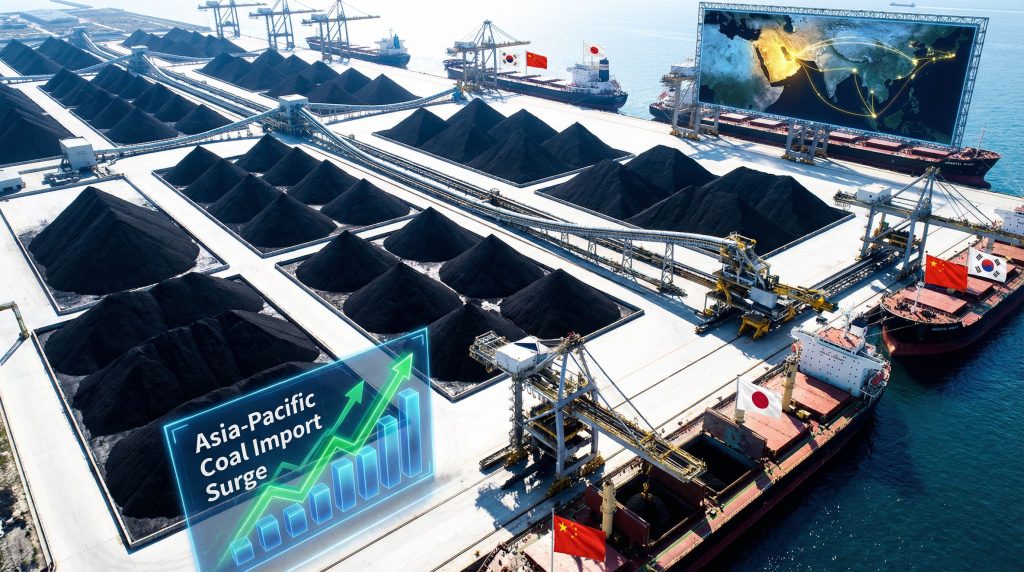
The global energy system faces unprecedented volatility as geopolitical tensions reshape fuel procurement strategies worldwide. When traditional supply routes encounter disruption, nations must rapidly adapt their energy mix, often reverting to alternatives previously earmarked for phase-out. War in the Persian Gulf impacts global coal demand through these complex substitution mechanisms, creating ripple effects across international markets despite the region's limited direct coal production.
Critical Chokepoints in Global Energy Infrastructure
The Strait of Hormuz Vulnerability Assessment
The Strait of Hormuz represents one of the world's most critical energy chokepoints, with approximately 21 percent of global petroleum liquids and significant volumes of liquefied natural gas passing through this narrow waterway daily. When tensions escalate in this region, the resulting supply constraints affect not just oil price rally insights and gas prices, but create ripple effects throughout the entire energy complex.
Daily Energy Flows Through Strait of Hormuz:
| Energy Type | Daily Volume | Global Share |
|---|---|---|
| Crude Oil | ~21 million barrels | 21% |
| LNG | ~3.2 trillion cubic feet annually | 18% |
| Refined Products | ~3 million barrels | 8% |
Furthermore, trade war impact on oil demonstrates similar patterns. Historical precedents show this dynamic: during the 2019 attacks on Saudi oil facilities, coal imports to Asia increased by 15-20 percent within six weeks as utilities secured alternative baseload capacity.
Energy Security Versus Climate Commitments
Policy flexibility mechanisms become essential when energy supply crises force nations to balance immediate energy security needs against longer-term environmental objectives.
Regional governments maintain contingency frameworks that allow temporary adjustments to coal phase-out timelines during supply emergencies. European Union member states, despite aggressive decarbonisation targets, retain legal mechanisms to extend coal plant operating permits during energy crises. Similarly, Asian nations maintain strategic coal reserves specifically to buffer against import disruption scenarios.
However, these are temporary policy adjustments rather than permanent reversals of climate commitments. Nations view coal as a crisis buffer while accelerating renewable deployment to reduce future vulnerability to such disruptions.
When big ASX news breaks, our subscribers know first
Economic Mechanics of Fuel Substitution During Crisis
Price Elasticity Thresholds and Switching Triggers
Coal demand substitution operates through well-defined economic mechanisms when competing fuel prices cross specific thresholds. Industrial users and power generators maintain fuel-switching capabilities that activate when cost differentials exceed operational constraints.
Critical Price Relationships:
- LNG-to-Coal Switching Point: When LNG prices exceed $12-15 per MMBtu, coal-fired generation becomes economically favourable in most Asian markets
- Industrial Fuel Substitution: Steel and cement producers typically switch to coal when natural gas prices rise above 3.5x coal equivalent pricing
- Power Generation Merit Order: Coal plants move higher in dispatch priority when gas prices exceed coal by margins of $8-10 per MMBtu
The Brasil Mineral analysis from March 2026 documented this mechanism in action, showing how LNG price increases preceding India's April-June peak demand season created proportional increases in coal import expectations. Consequently, this represents rational economic optimisation rather than arbitrary fuel preference shifts.
Regional Response Patterns to Price Shocks
Asian Market Substitution Dynamics:
| Country | Typical LNG Share | Crisis Substitution Capacity | Response Timeline |
|---|---|---|---|
| India | 6-10% of generation | Up to 15% additional coal | 2-4 weeks |
| Japan | 35% of generation | Limited substitution | 6-8 weeks |
| South Korea | 28% of generation | Moderate substitution | 4-6 weeks |
India exemplifies rapid fuel-switching capabilities due to its flexible generation fleet composition. During normal periods, LNG provides 6-10 percent of India's electricity generation, increasing during the April-June peak demand months. In addition, when Persian Gulf tensions drove LNG prices higher in early 2026, India's maritime coal imports increased by approximately 9 percent to 19 million tonnes in February, demonstrating the substitution mechanism in real-time operation.
Asia's Strategic Position in Global Coal Recovery
India's Infrastructure-Driven Demand Expansion
India's coal demand surge reflects both crisis response and structural economic growth. The country expects to increase raw steel production by 9 percent in 2026, directly driving metallurgical coal requirements independent of geopolitical developments. This industrial expansion creates sustained, predictable coal demand that amplifies during supply crisis periods.
India's Coal Demand Drivers:
- Metallurgical Coal: Steel production expansion requires 0.6-0.8 tonnes of coking coal per tonne of steel output
- Thermal Coal: Power generation needs increase by 8-12 percent annually due to industrial growth and urbanisation
- Seasonal Patterns: Peak electricity demand from April-June creates predictable import timing windows
- Infrastructure Development: Transportation networks, port facilities, and manufacturing capacity drive continuous coal consumption
The alignment between India's 9 percent steel production increase and 9 percent maritime coal import increase in February 2026 demonstrates how structural demand amplifies crisis-driven substitution effects. For instance, steel production generates year-round metallurgical coal demand, while seasonal electricity requirements create variable thermal coal needs.
China's Conservative Import Strategy
China's approach contrasts sharply with India's import surge response. Despite war in the Persian Gulf impacts on global coal demand elsewhere, China imported 25 million tonnes of coal by sea in February 2026, representing a 10 percent decline compared to prior-year levels. This conservative strategy reflects several structural factors:
China's Coal Supply Independence Factors:
- Domestic Production Capacity: Substantial internal coal reserves reduce import dependency
- Renewable Energy Deployment: Solar and wind capacity expansion captures increasing generation share
- Grid Stability Management: Established baseload capacity provides energy security without import increases
- Policy Prioritisation: Long-term decarbonisation goals override short-term geopolitical hedging
China's 10 percent import decline, occurring simultaneously with global natural gas forecasts showing price increases, demonstrates deliberate strategic choice rather than market-driven response. The country maintains approximately 30 percent of global maritime coal trade volume, making its conservative positioning significant for overall market dynamics.
Supply Chain Adaptations and Producer Responses
Export Market Positioning Strategies
Major coal-producing nations maintain varying degrees of spare capacity and infrastructure flexibility to respond to demand surges. Australia and South Africa possess established export infrastructure that enables rapid volume increases without significant capital expansion.
Producer Capacity and Market Positioning:
| Producer | Export Capacity (MT/year) | Spare Capacity | Infrastructure Advantage |
|---|---|---|---|
| Australia | 380-400 | 15-20% | Advanced port facilities |
| South Africa | 70-80 | 10-15% | Established rail networks |
| Indonesia | 450-500 | Variable | Policy-dependent flexibility |
Indonesia represents the most complex supply response scenario. The country previously reduced production through policy measures to stabilise global coal prices, creating artificial scarcity rather than capacity constraints. Furthermore, according to the Brasil Mineral analysis, Indonesian production could potentially expand if demand and revenue conditions provide sufficient incentives, though concrete evidence of such policy reversals remains absent.
Maritime Logistics and Freight Considerations
Coal shipping logistics create additional complexity in supply response mechanisms. Freight rates can significantly impact delivered coal prices, potentially offsetting advantages from low-cost production regions during high-demand periods.
Key Shipping Route Considerations:
- Australia to Asia: 7-14 day shipping times with established bulk carrier networks
- South Africa to Asia: 14-21 day shipping times requiring larger vessel commitments
- Indonesia to Asia: 3-7 day shipping times providing maximum flexibility
Port capacity constraints at major export terminals can create bottlenecks during demand surges. Newcastle (Australia), Richards Bay (South Africa), and Balikpapan (Indonesia) represent critical infrastructure nodes that determine supply response speed and volume capabilities.
Demand Surge Sustainability and Duration Analysis
Scenario-Based Duration Modelling
The sustainability of war in the Persian Gulf impacts global coal demand depends heavily on conflict duration and intensity. Three primary scenarios emerge from strategic analysis:
Scenario Analysis Framework:
| Scenario | Duration | Coal Demand Impact | Recovery Timeline |
|---|---|---|---|
| Short Conflict | 3-6 months | 15-25% increase in affected regions | 12-18 months |
| Prolonged Tensions | 12-24 months | 10-15% sustained increase | 24-36 months |
| Regional Escalation | 24+ months | 20-30% structural shift | 48+ months |
Short-conflict scenarios typically generate temporary coal demand spikes that normalise once LNG and oil supply chains restore normal operations. Prolonged tensions create sustained demand increases as nations build strategic reserves and industries invest in coal-switching capabilities.
Regional escalation scenarios could fundamentally alter energy infrastructure investments, potentially delaying renewable deployment timelines as nations prioritise energy security over decarbonisation speed. However, addressing coal supply challenges remains crucial regardless of scenario duration.
Infrastructure Investment Implications
Extended coal demand periods drive capital allocation toward coal handling and processing infrastructure. Port facilities, rail networks, and storage capacity become investment priorities when demand surges appear sustainable rather than temporary.
Investment Category Priorities:
- Port Expansion: Coal terminal capacity increases at major import hubs
- Transportation Networks: Rail and truck capacity dedicated to coal movement
- Storage Infrastructure: Strategic reserve facilities for supply security
- Processing Facilities: Coal preparation plants and quality management systems
These investments create path dependence effects that can extend coal demand beyond initial crisis periods, as fixed costs require utilisation to generate acceptable returns.
Investment Market Implications and Valuation Shifts
Coal Producer Equity Performance
ASX-listed coal producers benefit from crisis-driven demand increases through both volume and pricing improvements. Major Australian coal companies including Whitehaven Coal, New Hope Corporation, and Yancoal Australia typically experience significant valuation increases during geopolitical supply disruptions.
Valuation Impact Factors:
- Revenue Multiplication: Higher coal prices combined with increased volumes create exponential earnings growth
- Margin Expansion: Fixed cost structures amplify profitability during price increases
- Duration Premiums: Market valuations reflect expected demand sustainability rather than spot price movements
- Dividend Capacity: Enhanced cash flow enables increased shareholder returns
However, ESG investment considerations create conflicting pressures. Institutional investors maintaining decarbonisation commitments may avoid coal exposure despite attractive financial returns, potentially limiting capital availability for expansion projects.
The Council on Foreign Relations' analysis on energy flow disruptions provides additional context for understanding these market dynamics.
Technology and Infrastructure Investment Flows
Crisis periods accelerate investment in technologies that reduce energy supply vulnerability. Clean coal technologies, carbon capture systems, and grid stability infrastructure receive increased funding as nations seek to balance energy security with environmental objectives.
Strategic energy infrastructure investments during crisis periods often determine long-term competitive positioning and supply security capabilities.
Energy storage systems, particularly utility-scale battery installations, receive accelerated deployment as governments recognise the importance of grid stability during supply disruptions. These investments complement rather than replace coal infrastructure in the near term while building foundation for future renewable reliability.
The next major ASX story will hit our subscribers first
Environmental Policy Adaptation Under Energy Security Pressure
Regulatory Flexibility Mechanisms
Environmental regulations typically include emergency provisions that allow temporary relaxation of emissions standards or coal plant operating restrictions during energy supply crises. These mechanisms recognise the practical necessity of maintaining energy security while pursuing longer-term decarbonisation goals.
Common Policy Adaptation Tools:
- Operating Permit Extensions: Temporary extensions for coal plants scheduled for closure
- Emissions Limit Deferrals: Temporary relaxation of strict emissions standards
- Import Tariff Adjustments: Reduced trade barriers for coal imports during supply crises
- Strategic Reserve Authorisations: Government-directed coal stockpiling for energy security
European nations demonstrated these mechanisms during the 2022 energy crisis, temporarily extending coal plant operations while maintaining long-term phase-out commitments. Similarly, Asian nations maintain comparable frameworks, though with generally longer extension periods reflecting different energy transition timelines.
Accelerated Renewable Deployment as Security Hedge
Paradoxically, energy supply crises often accelerate renewable energy deployment by highlighting supply vulnerability risks. Nations recognise that domestic renewable capacity provides greater energy security than imported fossil fuels, even when initial renewable deployment requires fossil fuel backup.
The Center for Strategic and International Studies' analysis of these dynamics shows how crisis periods reshape investment priorities.
Security-Driven Renewable Investment:
- Grid Independence: Domestic renewable capacity reduces import dependency
- Price Stability: Fixed renewable costs provide hedge against volatile fossil fuel prices
- Strategic Autonomy: Energy self-sufficiency reduces geopolitical vulnerability
- Technology Leadership: Early renewable deployment creates competitive advantages
This creates seemingly contradictory policy outcomes where short-term coal demand increases coincide with accelerated renewable energy investments, reflecting different time horizons for energy security optimisation.
Revised Global Energy Transition Pathways
Regional Decarbonisation Timeline Adjustments
Energy security crises force realistic reassessment of decarbonisation timeline feasibility. Nations maintain environmental commitments while acknowledging that practical transition speeds depend on energy supply reliability and economic stability.
Adjusted Renewable Energy Targets:
| Region | Original 2030 Target | Revised Security-Adjusted Target | Coal Phase-Out Timeline |
|---|---|---|---|
| Europe | 45% renewable | 42% renewable | 2035-2040 |
| Asia-Pacific | 35% renewable | 30% renewable | 2040-2050 |
| India | 50% renewable | 45% renewable | 2050+ |
These adjustments reflect practical recognition that energy transition requires reliable baseload alternatives before fossil fuel retirement. Coal serves as transition fuel ensuring grid stability while renewable capacity scales and storage technology matures.
Capital Allocation Between Transition Technologies
Investment flows increasingly recognise the importance of transition reliability rather than maximum decarbonisation speed. This drives balanced capital allocation between renewable deployment, grid infrastructure, storage capacity, and backup generation systems.
Strategic Investment Portfolio Approach:
- 40-50%: Renewable generation capacity (solar, wind, hydroelectric)
- 20-25%: Grid infrastructure and transmission systems
- 15-20%: Energy storage and grid stability systems
- 10-15%: Backup and peaking capacity (including clean coal technologies)
This portfolio approach acknowledges that successful energy transition requires system reliability throughout the transition period, potentially extending coal utilisation beyond initial phase-out timelines while building robust renewable alternatives.
Strategic Implications for Energy Market Evolution
What drives the coal-climate paradox resolution?
The apparent contradiction between climate commitments and increased coal demand resolves through understanding that energy security represents a prerequisite for sustainable decarbonisation. Nations cannot maintain public support for environmental policies if energy supply unreliability creates economic instability or social disruption.
Paradox Resolution Framework:
- Short-term Stability: Coal provides reliable baseload during transition periods
- Medium-term Investment: Crisis periods accelerate renewable infrastructure development
- Long-term Security: Domestic renewable capacity reduces future supply vulnerability
- Policy Credibility: Realistic transition timelines maintain public and business confidence
Understanding this framework helps investors and policymakers navigate apparent contradictions between immediate market responses and longer-term strategic objectives.
Market Psychology and Investment Strategy Considerations
Energy market psychology during geopolitical crises creates both opportunities and risks for investors. Coal sector investments may generate significant short-term returns while facing long-term structural decline pressures.
Investment Strategy Implications:
- Tactical Allocation: Short-term coal exposure for crisis-driven returns
- Strategic Positioning: Long-term renewable and grid infrastructure focus
- Risk Management: Geographic and technology diversification across energy transition
- Timing Considerations: Entry and exit strategies based on crisis duration assessment
Successful energy investment strategies during transition periods require balancing short-term market opportunities with long-term structural transformation understanding.
This complex environment rewards sophisticated analysis that recognises both immediate supply-demand dynamics and longer-term technological and policy evolution. War in the Persian Gulf impacts global coal demand through temporary supply disruptions, but the lasting effects depend on how these crises influence energy infrastructure investment and policy framework development.
The global energy system continues evolving toward renewable dominance while maintaining fossil fuel capacity for security and reliability. Understanding this dual-track evolution provides the foundation for effective investment and policy decisions during periods of heightened geopolitical uncertainty.
Looking to Capitalise on Energy Market Disruptions?
Discovery Alert's proprietary Discovery IQ model delivers real-time alerts on significant ASX mineral discoveries, including critical energy metals and coal producers positioned to benefit from global supply disruptions. Stay ahead of geopolitical market shifts by exploring Discovery Alert's dedicated discoveries page to understand how major mineral discoveries can generate substantial returns during volatile periods, then begin your 14-day free trial to access actionable investment opportunities before the broader market reacts.