
May 17, 2026
The Complex Web of Global Energy Vulnerabilities
The modern energy landscape operates on interconnected supply networks spanning thousands of miles, creating systematic vulnerabilities that extend far beyond individual facility operations. Middle East energy attacks have emerged as a critical threat to global economic stability, demonstrating how concentrated infrastructure creates cascading effects across worldwide markets. Regional concentration of processing capabilities has evolved over decades based on resource proximity and economic optimisation, yet this geographic clustering now presents unprecedented strategic risks when geopolitical tensions escalate into direct infrastructure targeting.
Furthermore, energy infrastructure attacks represent a fundamental shift from traditional warfare tactics, focusing on economic disruption rather than territorial control. This evolution demonstrates how modern conflicts increasingly target civilian economic foundations through supply chain vulnerabilities, creating cascading effects that contribute to an oil price rally whilst avoiding direct military confrontation between major powers.
When big ASX news breaks, our subscribers know first
Geographic Concentration Creates Systematic Risk
The Persian Gulf region's dominance in global energy supply chains stems from geological advantages and decades of infrastructure investment, yet this concentration creates bottleneck vulnerabilities affecting worldwide economic stability. Multiple critical facilities operate within relatively small geographic areas, enabling coordinated strikes to generate multiplicative disruption effects across interconnected systems.
Recent infrastructure attacks have demonstrated the vulnerability of concentrated processing capabilities. QatarEnergy's Ras Laffan facility, representing the world's largest LNG processing complex, sustained extensive damage following missile strikes in March 2026. Consequently, Shell's Pearl gas-to-liquids plant in Qatar, with 140,000 barrel-per-day capacity, halted output entirely during the same period.
Critical Infrastructure Vulnerabilities:
• Major LNG processing facilities concentrated within 50-kilometre radius
• Refineries and gas processing plants sharing common geographic exposure
• Port logistics systems vulnerable to coordinated disruption
• Pipeline networks crossing multiple jurisdictional boundaries
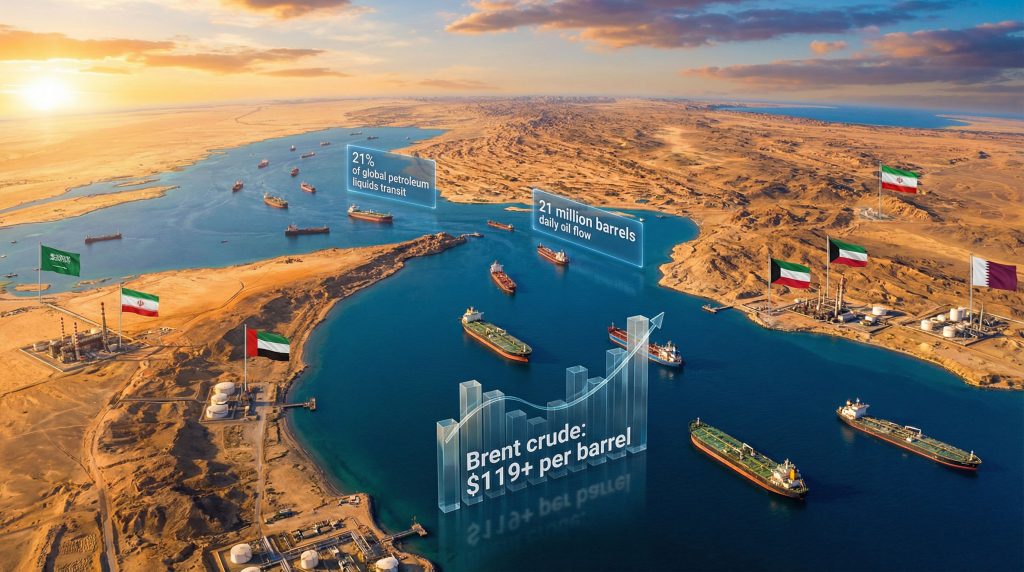
Moreover, the Strait of Hormuz exemplifies how geographic constraints amplify vulnerability. This narrow waterway facilitates approximately 21% of global petroleum liquids transit, creating a natural chokepoint where disruption affects multiple supply chains simultaneously. The strait measures only 21 miles at its narrowest point, making navigation vulnerable to both physical obstruction and military interdiction.
In addition, regional energy facilities demonstrate concentrated exposure patterns that enable systematic targeting. Saudi Aramco's SAMREF refinery in Yanbu experienced aerial attacks affecting Red Sea port operations, while Kuwait Petroleum Corporation's Mina al-Ahmadi refinery faced drone strikes causing fire damage. These simultaneous attacks across multiple countries within 24-hour windows demonstrate coordinated capability to disrupt regional energy infrastructure systematically.
Market Volatility Amplification Through Supply Chain Disruption
Energy markets experience exponential volatility increases when multiple supply sources face simultaneous disruption, creating price discovery challenges and liquidity constraints that amplify initial supply shortages. The interconnected nature of global energy trading means localised infrastructure damage generates worldwide price impacts within hours of confirmed attacks, as reported by Reuters' coverage of recent market movements.
Brent crude oil prices reached $119.13 per barrel on March 9, 2026, following infrastructure attacks across the Middle East region. By March 19, 2026, Brent futures were trading at $113.40 per barrel, representing a $6.02 or 5.6% increase in a single trading session. West Texas Intermediate crude traded at $96.39 per barrel after reaching $100.02 earlier in the day, demonstrating intraday volatility exceeding normal ranges.
Price Impact Analysis:
| Energy Product | Peak Price | Daily Increase | Market Impact |
|---|---|---|---|
| Brent Crude | $119.13/barrel | 5.6% ($6.02) | Multi-year highs |
| WTI Crude | $100.02/barrel | $3.63 intraday | 11-year Brent spread |
| Dubai Crude | $65/barrel premium | All-time high | Regional benchmark surge |
| European Gas | Multi-year highs | 60%+ increase | Supply security concerns |
However, the WTI-Brent spread reached an 11-year maximum differential, indicating regional supply disruption severity affecting global price relationships. Middle East benchmark Dubai and Oman crude premiums hit all-time highs at approximately $65 per barrel, demonstrating how localised infrastructure damage creates premium pricing across regional markets.
Furthermore, European gas prices soared to multi-year highs following attacks on Qatar's LNG processing facilities, whilst Asian LNG spot prices experienced 40%+ premiums over baseline pricing. This demonstrates how concentrated infrastructure damage in one region creates supply tightness affecting global markets, as buyers compete for alternative supply sources with limited spare capacity.
Cascade Effect Mechanisms:
• Processing capacity reductions trigger immediate supply shortages
• Transportation bottlenecks amplify facility-specific damage
• Alternative supply sources lack spare capacity to offset losses
• Financial markets price in extended disruption risk premiums
Strategic Response Scenarios and Timeline Projections
Energy infrastructure targeting creates multiple potential escalation pathways, each with distinct timeline characteristics and global economic implications. Scenario analysis suggests three primary trajectories based on conflict duration, infrastructure damage extent, and political intervention timelines. These challenges intersect with broader energy transition challenges facing many nations.
What Would a Comprehensive Regional Energy War Look Like?
This trajectory involves complete closure of critical energy transit routes, including the Strait of Hormuz, with sustained attacks on major processing facilities across multiple countries. Oil price increases of 40%+ become sustainable as global spare capacity proves insufficient to offset regional supply losses.
Strategic Petroleum Reserve releases provide temporary market stabilisation, yet reserves offer only 60-180 day supply buffers for major consuming nations. Alternative supply sources, including U.S. shale oil, Canadian oil sands, and Norwegian North Sea production, require months to scale production increases sufficient to offset Middle East supply losses.
How Would Selective Infrastructure Pressure Campaigns Unfold?
Rotating facility targeting maintains market uncertainty whilst avoiding complete regional supply shutdown. This approach generates 15-25% sustained energy price premiums as markets price persistent disruption risk without triggering emergency response protocols or international intervention.
Gradual supply chain diversification accelerates as consuming nations reduce Middle East dependency through long-term contract restructuring and alternative supplier development. Investment flows toward energy infrastructure in politically stable regions increase substantially, though new capacity requires multi-year development timelines.
Can Negotiated De-escalation Protect Critical Infrastructure?
Political pressure from energy-importing nations and domestic economic concerns drive rapid negotiation processes. The U.S. administration's focus on counteracting rising fuel costs ahead of November 2026 elections creates timeline constraints on acceptable disruption duration, particularly given concerns about US tariffs and inflation impacts.
Residual risk premiums of 5-10% persist in energy pricing as markets incorporate lessons about infrastructure vulnerability. Enhanced regional security cooperation agreements emerge, potentially including international energy facility protection frameworks and coordinated strategic reserve management protocols.
Alternative Supply Source Positioning and Market Rebalancing
Middle East energy attacks create immediate opportunities for alternative producers to gain market share, though capacity constraints and infrastructure limitations affect response timelines. Non-Middle East oil and gas producers face technical and logistical challenges in scaling production to offset regional supply losses.
Primary Alternative Oil Suppliers:
• United States: Shale oil production capacity expansion limited by drilling rig availability and pipeline capacity constraints
• Canada: Oil sands development acceleration requires significant capital investment and multi-year timelines
• Brazil: Pre-salt offshore field optimisation faces technical challenges and regulatory approval processes
• Norway: North Sea production maximisation limited by field depletion rates and environmental regulations
Moreover, LNG market rebalancing opportunities emerge as Asian and European buyers compete for alternative supply sources. Australian producers, including Woodside and Santos, benefit from existing Asian market relationships and proximity advantages. U.S. Gulf Coast LNG export facilities experience utilisation increases, though terminal capacity constraints limit immediate expansion capability, affecting the broader US natural gas forecast.
Qatar's post-conflict market share recovery potential depends on infrastructure repair timelines and buyer confidence in supply security. The extensive damage to Ras Laffan, the world's largest LNG processing facility, requires specialised equipment and expertise for repair, potentially extending recovery periods beyond initial estimates.
LNG Market Rebalancing Dynamics:
| Supplier Region | Market Advantage | Capacity Constraints | Timeline to Scale |
|---|---|---|---|
| Australia | Asian proximity | Terminal utilisation limits | 6-12 months |
| United States | Export infrastructure | Pipeline bottlenecks | 3-6 months |
| Qatar | Production scale | Facility damage recovery | 12-24 months |
| Russia | European access | Sanctions limitations | Variable |
In addition, Russian energy market re-entry considerations depend on geopolitical relationships and sanctions policy evolution. European energy security concerns may drive pragmatic approaches to supply diversification, though political constraints limit near-term integration possibilities.
Investment Strategy Implications and Risk Management Frameworks
Middle East energy attacks fundamentally alter investment risk assessment methodologies, requiring new frameworks for evaluating geographic exposure, supply chain resilience, and geopolitical premium pricing. Traditional energy sector investment approaches must incorporate infrastructure vulnerability analysis and political risk modelling.
Defence and security technology investments benefit from infrastructure protection requirements, creating opportunities in missile defence systems, cybersecurity solutions, and distributed energy generation technologies. Underground storage and processing capabilities become strategically valuable as surface infrastructure vulnerability increases.
Investment Opportunity Categories:
• Advanced threat detection and defence systems for energy facilities
• Modular and mobile energy processing units with rapid deployment capability
• Enhanced pipeline and facility monitoring technologies
• Energy storage systems providing supply security and grid stability
Furthermore, geographic diversification strategies become paramount for energy companies and investors, with maximum exposure limits to single geopolitical regions. Portfolio optimisation approaches should maintain maximum 30% exposure to any single region, with minimum three-region supply chain distribution requirements.
Risk Management Framework Components:
• Strategic inventory positioning in stable political jurisdictions
• Flexible contract structures enabling supply source switching
• Enhanced facility hardening and defence system investments
• Insurance coverage for geopolitical supply disruptions
Consequently, energy transition acceleration factors include energy independence strategic imperatives and supply chain localisation preferences. Climate goals alignment with security objectives creates policy support for renewable energy development, though transition timelines remain constrained by technology deployment rates and infrastructure requirements.
The next major ASX story will hit our subscribers first
Long-term Policy Evolution and International Cooperation
Middle East energy attacks will likely catalyse fundamental changes in international energy security policies, creating new frameworks for infrastructure protection and supply chain resilience. Multilateral agreements may emerge establishing neutral status for critical energy infrastructure and international monitoring mechanisms.
Treasury Secretary Scott Bessent's indication that the U.S. may remove sanctions on approximately 140 million barrels of Iranian oil stranded on tankers demonstrates how energy infrastructure attacks directly influence government policy responses. This policy flexibility suggests energy market stabilisation takes priority over traditional geopolitical positioning during acute supply crises.
Potential International Framework Elements:
• Neutral status designations for critical energy infrastructure
• Coordinated strategic petroleum and gas reserve management
• Rapid response protocols for supply disruptions
• Enhanced facility protection through multilateral cooperation
Additionally, countries dependent on Middle East energy supplies will accelerate domestic energy production capability development and strategic reserve expansion. National energy security reassessments will likely prioritise alternative supply partnerships and energy efficiency investments to reduce import dependency vulnerability, particularly considering Saudi exploration impact on global markets.
The deployment of thousands of U.S. troops to reinforce Middle East operations, as reported by Al Jazeera, indicates military commitment escalation that could either trigger further conflict or accelerate negotiated settlements through deterrence effects. This strategic positioning affects investor confidence in regional stability and long-term supply security.
Technology Solutions for Infrastructure Resilience
Modern energy infrastructure protection requires integrated technology systems combining physical security, cybersecurity, and rapid response capabilities. Advanced threat detection systems must identify incoming missiles, drones, and cyber attacks whilst coordinating defensive responses across multiple facility types.
Distributed energy generation technologies become strategically valuable as centralised infrastructure vulnerability increases. Modular processing units with rapid deployment capability provide operational flexibility during facility damage recovery periods, though scale limitations affect economic viability for large-volume operations.
Critical Technology Development Areas:
• Hardened facility design resistant to missile and explosive attacks
• Automated shutdown and damage containment systems
• Remote monitoring and control capabilities for personnel safety
• Rapid repair and restoration technologies reducing downtime
Moreover, grid modernisation investments support energy security through improved load balancing and alternative source integration. Cross-border energy transmission capabilities provide supply diversification options, though international coordination requirements create implementation challenges.
Energy storage systems for supply security become essential infrastructure components, providing buffer capacity during supply disruptions whilst supporting renewable energy integration. Battery technology advancement and pumped hydro storage development offer complementary solutions for different scale requirements and geographic constraints.
How Can Renewable Energy Enhance Infrastructure Resilience?
The intersection of energy infrastructure protection and climate transition goals creates investment opportunities in resilient renewable energy systems. Solar and wind facilities with hardened designs and distributed configurations offer supply security advantages compared to centralised fossil fuel processing facilities, though intermittency challenges require storage system integration.
Market psychology during infrastructure attacks creates self-reinforcing volatility cycles, as traders anticipate further escalation whilst buyers secure supplies from increasingly limited alternative sources. The U.S. Federal Reserve held interest rates steady whilst projecting higher inflation as policymakers assessed war impacts, demonstrating how energy infrastructure attacks constrain monetary policy options for major economies.
This analysis examines Middle East energy attacks through strategic scenario modelling, focusing on supply chain vulnerabilities, market dynamics, and long-term investment implications for global energy security planning. Investors should carefully evaluate geopolitical risk exposure and consider diversification strategies to mitigate infrastructure attack vulnerabilities.
Want to Capitalise on Energy Market Volatility?
Discovery Alert's proprietary Discovery IQ model delivers instant notifications on significant mineral discoveries across the ASX, including critical battery metals and energy transition commodities that often surge during periods of global energy uncertainty. With geopolitical tensions driving unprecedented market volatility, subscribers gain immediate access to actionable investment opportunities in Australian mining companies positioned to benefit from supply chain diversification and strategic resource demand.