August 25, 2026
Understanding Global Energy Vulnerability Through Critical Maritime Passages
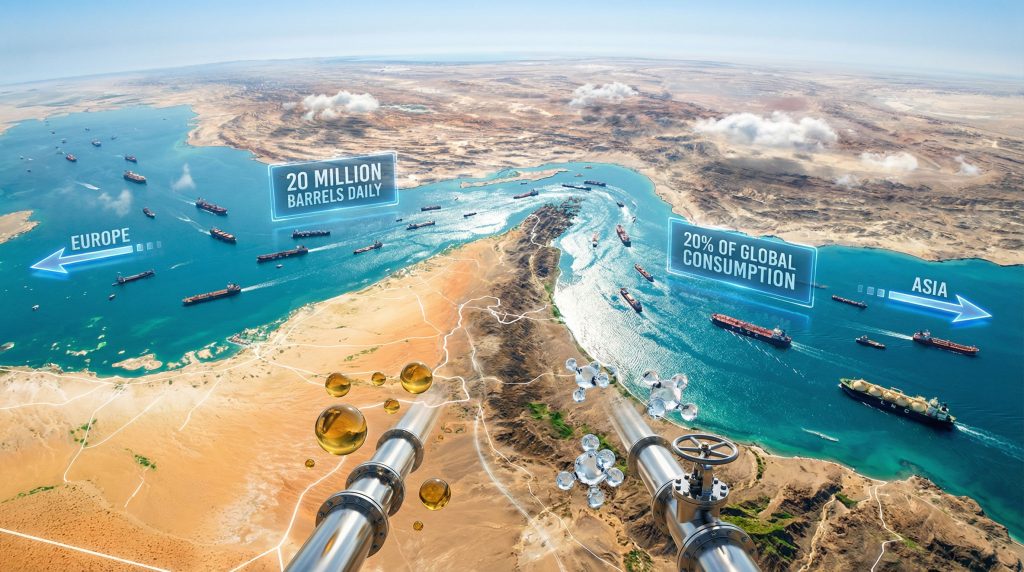
Maritime chokepoints represent the most fragile links in global energy infrastructure, where economic prosperity and national security converge at narrow geographic bottlenecks. These strategic waterways carry the lifeblood of modern civilisation, yet remain susceptible to disruption from geopolitical tensions, natural disasters, and military conflicts. The impact of Strait of Hormuz blockade on global energy trade demonstrates how quickly energy security can transform from a background concern into an existential crisis for nations worldwide.
When big ASX news breaks, our subscribers know first
The Architecture of Global Energy Dependency
Quantifying Energy Flow Concentration
The concentration of global energy flows through a handful of maritime passages creates unprecedented vulnerability in the world economy. Current data reveals the extent to which modern civilisation depends on uninterrupted shipping through these critical waterways.
Critical Energy Transit Statistics:
- Petroleum liquids: 35-40 million barrels daily through major chokepoints
- Natural gas shipments: 25-30% of global LNG trade
- Refined products: 45-50% of international diesel and gasoline flows
- Strategic materials: Rare earth elements and lithium concentrate shipments
Regional Energy Import Dependencies
Different regions face varying degrees of exposure to energy supply disruptions, with some nations critically dependent on imports that traverse vulnerable shipping lanes. Furthermore, understanding these dependencies helps explain the cascading effects when major chokepoints face disruption.
Table: Regional Energy Import Vulnerabilities
| Region | Oil Import Dependence | Gas Import Dependence | Primary Chokepoint Risk | Alternative Supply Options |
|---|---|---|---|---|
| Northeast Asia | 85-90% | 70-75% | Multiple chokepoints | Limited pipeline alternatives |
| Europe | 60-65% | 80-85% | Suez Canal, Bosporus | Norwegian production, US LNG |
| India/South Asia | 85-90% | 50-55% | Hormuz primary concern | Emerging pipeline projects |
| Southeast Asia | 60-70% | 40-45% | Malacca Strait dependency | Regional production capacity |
Economic Shock Transmission Mechanisms
Immediate Market Response Patterns
Energy disruptions trigger predictable yet severe market reactions that extend far beyond commodity prices. Moreover, the speed and magnitude of these responses reflect the critical role energy plays in modern economic systems, particularly visible in oil price movements during major crises.
Price Volatility Scenarios During Major Disruptions:
- Week 1: 20-30% crude oil price increases
- Week 2-4: 50-75% sustained price elevation
- Month 2-3: 100-150% above baseline for extended closures
- Long-term: Permanent structural price adjustments
Secondary Economic Impacts:
- Transportation costs: 40-60% increase in global shipping rates
- Agricultural inputs: Fertiliser price spikes of 200-300%
- Manufacturing: Production slowdowns in energy-intensive industries
- Consumer prices: 15-25% increase in energy-related goods
Industrial Supply Chain Vulnerabilities
Modern manufacturing depends on complex supply chains that become severely disrupted when energy flows face interruption. Consequently, certain industries face particular exposure due to their energy-intensive nature and geographic concentration.
Most Vulnerable Industrial Sectors:
- Aluminium smelting: Requires continuous power supply and feedstock access
- Steel production: Energy costs represent 20-30% of total production expenses
- Petrochemical manufacturing: Direct dependence on crude oil and gas inputs
- Fertiliser production: Natural gas represents primary feedstock and energy source
National Energy Security Threat Assessment
Tier 1: Maximum Vulnerability Nations
Certain countries face existential threats from energy supply disruptions due to their geographic location, economic structure, and limited domestic energy resources. In addition, these nations must prioritise energy security above cost considerations.
Japan's Critical Dependencies:
- Import reliance: 99% of crude oil, 97% of natural gas
- Strategic reserves: 180-day government stockpile plus commercial inventories
- Alternative sources: Extremely limited due to island geography
- Economic impact: $50-80 billion annually for each sustained disruption
South Korea's Vulnerability Profile:
- Energy imports: 95% of total energy consumption
- Refining capacity: 3.2 million barrels per day at risk
- Industrial exposure: Heavy manufacturing dependent on stable energy prices
- Emergency protocols: 90-day mandatory commercial reserves
Tier 2: Significant Exposure Nations
Countries with substantial but manageable exposure to energy supply disruptions possess some diversification options but still face considerable economic and political pressures during crises. However, nations like China have implemented sophisticated strategies to mitigate their exposure.
China's Risk Management Approach:
- Import dependency: 70% of crude oil, 45% of natural gas
- Strategic reserves: Estimated 90-120 day supply across multiple facilities
- Domestic production: Declining oil output, growing gas production
- Alternative suppliers: Overland pipelines from Russia and Central Asia
European Union's Diversification Strategy:
- Regional variations: Southern Europe more exposed than Northern members
- Infrastructure development: Expanded LNG import terminals and pipeline connections
- Renewable acceleration: Target 42.5% renewable energy by 2030
- Emergency coordination: Integrated gas and electricity market mechanisms
Disruption Scenario Modelling and Response Planning
Partial Restriction Scenarios
Not all disruptions result in complete blockades. Furthermore, partial restrictions can create sustained market pressure while allowing some continued energy flows, often creating more complex policy challenges than complete closures.
50% Capacity Reduction Impact:
- Duration estimate: 6-18 months for resolution
- Price impact: Oil prices reach $110-130 per barrel
- GDP effects: Global economic growth reduction of 0.8-1.2%
- Policy response: Coordinated strategic reserve releases and demand management
What happens during complete closure scenarios?
Total blockades represent the most severe disruption scenario, typically triggering immediate international intervention but causing massive economic damage in the interim period. According to the International Energy Agency, such disruptions can fundamentally reshape global energy markets.
Zero Flow Disruption Consequences:
- Timeline pressure: International intervention likely within 30-60 days
- Market panic: Oil prices potentially reach $150-200 per barrel
- Emergency measures: Fuel rationing and industrial priority systems
- Long-term effects: Permanent shifts in energy trade relationships
Alternative Energy Infrastructure and Bypass Options
Existing Pipeline Bypass Capacity
Several nations have invested in pipeline infrastructure specifically designed to bypass vulnerable maritime chokepoints. Nevertheless, these alternatives often operate at capacity constraints during normal operations, particularly in regions affected by Saudi Arabia exploration activities.
Saudi Arabia's Strategic Pipeline Network:
- East-West Pipeline: 5 million barrels per day capacity
- Current utilisation: 60-70% during normal operations
- Expansion potential: Additional 2 million barrels per day possible with infrastructure investment
- Alternative export terminals: Red Sea ports bypassing Gulf waters
UAE's Emergency Response Infrastructure:
- Abu Dhabi-Fujairah Pipeline: 1.8 million barrels per day capacity
- Strategic location: Direct access to Arabian Sea
- Current status: Fully operational and regularly utilised
- Expansion plans: Additional parallel pipeline under consideration
Emergency Shipping Route Analysis
When primary shipping routes become unavailable, alternative passages exist but impose significant additional costs and time delays that ripple through global supply chains. For instance, the complexity of these trade disruptions explains the current trade war impact on global energy markets.
Table: Alternative Maritime Routes
| Alternative Route | Additional Distance (miles) | Extra Transit Time | Fuel Cost Premium | Capacity Limitations |
|---|---|---|---|---|
| Cape of Good Hope | 6,000-8,000 | 14-21 days | $4-6 per barrel | Tanker availability |
| Suez Canal (reverse) | 4,000-5,000 | 10-14 days | $3-4 per barrel | Canal capacity limits |
| Arctic passages | 5,000-7,000 | 12-18 days | $5-8 per barrel | Seasonal accessibility |
| Panama Canal | 8,000-10,000 | 18-25 days | $6-9 per barrel | Vessel size restrictions |
The next major ASX story will hit our subscribers first
Accelerated Energy Transition Dynamics
Renewable Energy Investment Surge
Energy security crises historically accelerate adoption of domestic energy sources, particularly renewable technologies that cannot be weaponised by foreign powers. Consequently, this dynamic creates massive investment opportunities while reshaping global energy markets and affecting the natural gas forecast outlook.
Investment Flow Redirection:
- Solar capacity: 75-100% acceleration above baseline projections
- Wind power: 60-80% increase in offshore development commitments
- Energy storage: 200-300% growth in battery deployment funding
- Grid infrastructure: $500-750 billion in resilience upgrades globally
Technology Innovation Acceleration
Crisis-driven innovation often produces breakthrough technologies that reshape entire industries. Moreover, energy security pressures create both demand and funding for revolutionary solutions that might otherwise take decades to develop.
Emerging Technology Priorities:
- Floating LNG storage: Emergency deployment capabilities for crisis response
- Advanced battery systems: Grid-scale storage for renewable energy integration
- Green hydrogen production: Domestic fuel production from renewable electricity
- Small modular reactors: Distributed nuclear power for energy independence
Strategic Reserve Management and Emergency Protocols
International Coordination Mechanisms
Effective crisis response requires coordinated action among major energy-consuming nations. Furthermore, leveraging collective strategic reserves and demand management policies helps minimise economic disruption during major supply chain crises.
International Energy Agency (IEA) Emergency Response:
- Member obligations: Maintain 90-day net import equivalent reserves
- Collective action: Coordinated reserve releases during supply disruptions
- Demand restraint: Transportation fuel conservation measures
- Information sharing: Real-time market monitoring and analysis
National Emergency Response Frameworks
Different countries have developed varying approaches to energy emergency management, reflecting their unique vulnerabilities, resource availability, and political systems. In addition, these frameworks often incorporate critical minerals energy security considerations.
United States Strategic Petroleum Reserve:
- Current capacity: 714 million barrel maximum capacity
- Release mechanisms: Presidential authorisation for emergency drawdowns
- Refill strategies: Market-based purchasing during low-price periods
- Infrastructure: Four underground salt cavern storage facilities
European Emergency Coordination:
- Gas storage requirements: 80% minimum fill levels before winter heating season
- Solidarity mechanisms: Mutual assistance agreements between member states
- Demand reduction: Industrial curtailment protocols during severe shortages
- LNG coordination: Shared terminal access and cargo allocation agreements
Geopolitical Realignment and New Partnerships
Regional Energy Security Alliances
Energy crises often catalyse formation of new international partnerships focused on collective energy security, trade diversification, and infrastructure development. However, these alliances can reshape global geopolitical relationships for decades.
Emerging Alliance Structures:
- Indo-Pacific Energy Partnership: Japan, Australia, India, South Korea cooperation on LNG and renewables
- Atlantic Energy Corridor: United States, Norway, Brazil collaboration on oil and gas trade
- Mediterranean Gas Hub: Egypt, Cyprus, Greece, Italy integration for regional energy security
- Arctic Development Consortium: Norway, Canada cooperation on northern energy resources
Technology Transfer and Industrial Cooperation
Energy security partnerships increasingly focus on technology sharing, joint research and development, and industrial supply chain integration to reduce dependence on potentially hostile nations. For instance, comprehensive analysis from UNCTAD on strait disruptions demonstrates the global implications of these partnerships.
Critical Technology Collaboration Areas:
- LNG technology: Floating storage and regasification capabilities
- Renewable manufacturing: Solar panel and wind turbine supply chain diversification
- Critical minerals: Rare earth processing and battery material supply chains
- Nuclear technology: Small modular reactor development and deployment
Long-term Market Structure Evolution
Permanent Trade Relationship Changes
Major energy disruptions often trigger permanent shifts in trade relationships as countries prioritise supply security over cost optimisation. Consequently, this leads to lasting changes in global energy flows.
Structural Market Changes:
- Premium for reliability: Stable suppliers command higher prices long-term
- Infrastructure redundancy: Multiple supply route development becomes standard
- Inventory management: Higher strategic reserve levels become new normal
- Contract structures: Security of supply clauses become more common
Regional Energy Hub Development
Countries and regions with spare capacity or strategic locations often emerge as new energy hubs following major disruptions. Furthermore, they attract infrastructure investment and establish new trade patterns.
Potential New Energy Hubs:
- Guyana: Emerging oil producer with Western political alignment
- Mozambique: LNG export potential for Asian markets
- Cyprus: Eastern Mediterranean gas hub development
- Trinidad and Tobago: LNG expansion for Western Hemisphere supply
Investment Strategy Implications for Energy Markets
Value Chain Opportunity Assessment
Energy security concerns create investment opportunities across the entire energy value chain, from upstream production through midstream infrastructure to downstream distribution and storage. Moreover, these opportunities become particularly pronounced during periods of geopolitical instability.
High-Value Investment Sectors:
- Storage infrastructure: Underground facilities and floating storage units
- Pipeline development: Bypass routes and interconnector projects
- Renewable energy: Solar, wind, and energy storage system deployment
- LNG infrastructure: Liquefaction, shipping, and regasification facilities
Risk-Adjusted Return Analysis
Traditional energy investment models must incorporate geopolitical risk premiums and security-of-supply considerations. Consequently, this fundamentally alters project evaluation criteria and expected returns.
Investment Evaluation Changes:
- Geopolitical risk pricing: Security premiums of 2-5% on required returns
- Infrastructure resilience: Additional capital expenditure for redundancy and security
- Technology diversification: Portfolio approaches across multiple energy sources
- Geographic distribution: Risk spreading across different political jurisdictions
Crisis Preparedness and Mitigation Strategies
Early Warning Systems and Monitoring
Effective energy security requires sophisticated monitoring systems capable of detecting emerging threats and triggering appropriate response measures before crises fully develop. In addition, these systems must integrate multiple data sources for comprehensive threat assessment.
Monitoring System Components:
- Satellite surveillance: Real-time shipping traffic and infrastructure monitoring
- Market intelligence: Price signal analysis and inventory tracking
- Political risk assessment: Geopolitical tension monitoring and scenario planning
- Infrastructure vulnerability: Critical asset protection and redundancy planning
Demand Management Protocols
During severe energy shortages, governments often implement demand management measures to ensure critical services continue operating while distributing limited supplies fairly across the economy. Furthermore, effective protocols require careful balancing of economic and social priorities.
Demand Reduction Measures:
- Transportation rationing: Fuel allocation systems for essential services
- Industrial curtailment: Temporary shutdowns of energy-intensive manufacturing
- Heating and cooling: Temperature restrictions in commercial buildings
- Public transportation: Enhanced service to reduce private vehicle fuel consumption
Future Energy Security Framework Development
Integrated Resilience Planning
Future energy security strategies must address multiple threats simultaneously, from cyber attacks and climate change to traditional geopolitical conflicts and supply chain disruptions. Moreover, resilience planning requires coordination across multiple government agencies and private sector partners.
Multi-Threat Resilience Elements:
- Cybersecurity: Protection of critical energy infrastructure from digital attacks
- Climate adaptation: Infrastructure hardening against extreme weather events
- Supply chain security: Diversification of critical component sourcing
- Emergency response: Rapid deployment capabilities for crisis situations
Innovation Ecosystem Development
Long-term energy security requires continuous innovation in energy technologies, storage systems, and distribution networks to stay ahead of emerging threats and changing global conditions. However, innovation must be balanced with practical implementation considerations.
Innovation Priority Areas:
- Energy storage breakthroughs: Next-generation battery and hydrogen technologies
- Grid modernisation: Smart grid capabilities for distributed energy management
- Alternative fuel development: Synthetic fuels and biofuel advancement
- Efficiency improvements: Demand reduction through technological innovation
Energy security in the modern world requires balancing economic efficiency with supply reliability, a challenge that becomes more complex as global energy systems grow increasingly interconnected. The impact of Strait of Hormuz blockade on global energy trade serves as a stark reminder that energy security cannot be taken for granted, even in an era of abundant global energy resources. Nations that invest proactively in diversified energy sources, robust storage capabilities, and emergency response systems will prove more resilient when the next energy crisis inevitably occurs. The cost of preparation, whilst substantial, pales in comparison to the economic devastation that results from prolonged energy supply disruptions in today's interconnected global economy.
Ready to Capitalise on Energy Market Volatility?
Energy security crises create significant market opportunities as commodity prices surge and companies within critical supply chains experience dramatic valuation shifts. Discovery Alert's proprietary Discovery IQ model delivers real-time alerts on significant ASX mineral discoveries, including those related to critical energy materials and rare earth elements essential for renewable energy infrastructure. Begin your 14-day free trial today to position yourself ahead of energy market disruptions and secure actionable insights when global supply chains face uncertainty.