
August 4, 2026
Understanding Global Energy Vulnerability Through Critical Maritime Chokepoints
Maritime transportation networks form the backbone of global energy security, with narrow waterways serving as essential conduits for crude oil and liquefied natural gas shipments. These strategic passages, while geographically constrained, carry disproportionate influence over international energy markets and economic stability. When geopolitical tensions threaten these vital arteries, the ripple effects extend far beyond regional boundaries, creating complex scenarios that demand comprehensive risk assessment and strategic preparation. The strait of Hormuz disruption represents one of the most significant risks to global energy flows.
The interconnected nature of modern energy supply chains means that disruptions in key transit routes can trigger cascading effects across multiple continents. Understanding these vulnerabilities requires examining not just the immediate logistical challenges, but also the broader economic, political, and strategic implications that unfold when critical energy flows face interruption.
When big ASX news breaks, our subscribers know first
What Makes the Strait of Hormuz Critical to Global Energy Security?
Geographic Chokepoint Analysis
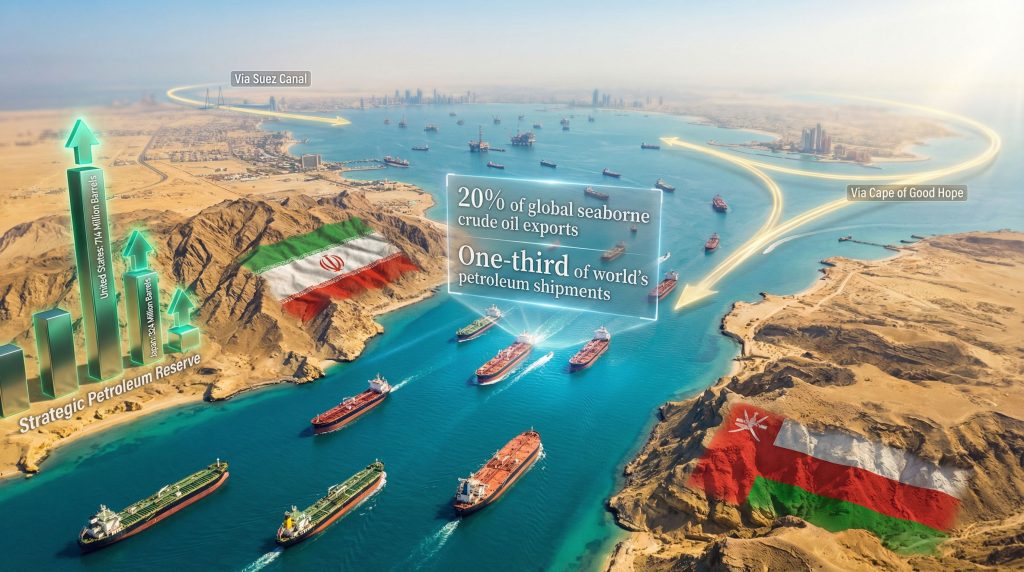
The Strait of Hormuz represents one of the world's most strategically important maritime passages, spanning just 33 kilometers at its narrowest point between Iran and Oman. This geographic constraint creates a natural bottleneck where shipping lanes are compressed to approximately 5.5 kilometers in each direction within territorial waters, separated by a minimal 2-kilometer buffer zone.
The passage facilitates the transit of approximately 21-22 million barrels per day of crude oil and petroleum products, representing roughly 20-21% of global petroleum trade. According to recent analysis, this volume encompasses not only crude oil but also significant quantities of refined products that supply markets across Asia, Europe, and beyond. Furthermore, these oil price trade war effects demonstrate how geopolitical tensions can amplify market volatility.
Key Transit Statistics:
- Daily crude oil flow: 21-22 million barrels
- Global petroleum share: 20-21% of total trade
- LNG shipments: 20% of global liquefied natural gas
- Regional production: Persian Gulf produces 28-30% of global crude output
The geographic constraints of this waterway create operational challenges that extend beyond mere throughput capacity. Navigation through the Strait requires 12-24 hours depending on vessel size, with large tankers requiring careful coordination to avoid congestion. The presence of small islands and shallow areas forces commercial traffic through specific monitored shipping lanes, creating predictable patterns that can become vulnerable during periods of heightened tension.
Energy Flow Dependencies by Region
Regional dependency on Strait of Hormuz transit varies significantly, creating different vulnerability profiles across major importing nations. India imports approximately 2.5 million barrels per day through the passage, representing roughly half of the country's total crude oil imports of over 5 million barrels daily. This dependency reflects India's 88% reliance on imported crude oil, with more than 50% sourced from Middle Eastern suppliers.
The concentration of global energy reserves in the Persian Gulf region amplifies the Strait's strategic importance. The region contains approximately 48% of the world's proven crude oil reserves and 38% of natural gas reserves, making alternative sourcing challenging during prolonged disruptions. Consequently, even temporary closures can create immediate supply pressures across multiple importing regions.
Regional Vulnerability Assessment:
- Asia-Pacific: 30-45 days coverage without Hormuz flows
- Europe: 60-90 days with strategic reserve deployment
- India: 40-45 days based on current commercial stocks
- China: 60-70 days through strategic petroleum reserves
Historical precedents demonstrate the real-world impact of strait of Hormuz disruption scenarios. During the 1980-1988 Tanker War, approximately 400-500 merchant vessels were attacked, with roughly 100 vessels sunk or severely damaged. Oil prices increased by 250-300% during peak periods, while global crude supplies temporarily declined by 2-3 million barrels per day. These historical examples provide benchmarks for modeling potential future disruption scenarios.
How Do Current Global Oil Inventories Prepare for Supply Disruptions?
Strategic Petroleum Reserve Systems Worldwide
Global strategic petroleum reserves represent the primary buffer against supply disruptions, with major consuming nations maintaining varying levels of emergency stocks. The United States holds 714 million barrels in its Strategic Petroleum Reserve, providing 90+ days of import coverage through facilities in Texas and Louisiana. Recent releases during 2022-2024 demonstrated the system's capacity to sustainably release up to 1 million barrels per day for extended periods.
Major Strategic Reserve Holdings:
| Country | Reserve Capacity (Million Barrels) | Days of Import Coverage | Storage Facilities |
|---|---|---|---|
| United States | 714 | 90+ days | Texas and Louisiana SPR sites |
| China | 500+ | 60-70 days | Underground strategic reserves (Phase IV) |
| India | 39+ (SPR) / 100 (total) | 10-12 days (SPR) / 40-45 days (combined) | Mangalore, Padur, Visakhapatnam |
| Japan | 324 | 150+ days | Coastal and underground facilities |
| South Korea | 96 | 90+ days | Ulsan, Yeosu, Dangjin facilities |
The International Energy Agency mandates member countries maintain minimum 90-day emergency oil stocks under the International Energy Program agreement. This requirement creates a coordinated global buffer system capable of collective action during major supply disruptions. The IEA's emergency response protocols permit releasing up to 10 million barrels per day collectively for up to 90 days with proper authorisation procedures.
Commercial Inventory Buffer Analysis
Beyond government strategic reserves, commercial inventories provide additional supply security through multiple storage mechanisms. Global commercial crude stocks typically range between 1.5-1.7 billion barrels across refinery, terminal, and floating storage facilities. These commercial holdings complement strategic reserves by providing immediate operational flexibility during supply disruptions.
India's Inventory Composition:
- Total commercial crude stocks: 100 million barrels
- Coverage period: 40-45 days of current consumption
- Storage components: Tanks, underground reserves, in-transit vessels
- Strategic facilities: Three government SPR sites
According to market analysis, India's layered inventory approach combines strategic petroleum reserves with commercial stocks held by refiners and oil marketing companies. These buffers are specifically designed to manage temporary supply shocks rather than sustained outages, with in-transit shipments providing additional short-term cushioning during initial disruption periods. However, the US oil production decline adds another layer of complexity to global supply security.
Floating Storage Utilisation: During supply crises, Very Large Crude Carriers (VLCCs) convert to floating storage, holding 2-3 million barrels per vessel. The 2020 demand collapse demonstrated this flexibility, with global floating storage peaking at 160-180 million barrels. However, geological constraints limit underground facility withdrawal rates to 50,000-150,000 barrels per day per facility.
What Are the Immediate Economic Consequences of Hormuz Closure?
Oil Price Volatility Modeling
Market reactions to strait of Hormuz disruption threats create immediate price volatility that extends far beyond the physical supply impact. Recent tensions have already demonstrated this sensitivity, with Brent crude crossing $80 per barrel, representing approximately a 10% increase from pre-crisis levels. This price response occurs even before actual supply interruptions, reflecting market anticipation of potential disruptions.
Price Impact Scenarios:
- Short-term closure (7-14 days): 15-25% price spike
- Medium-term disruption (1-3 months): 40-60% increase
- Extended blockade (6+ months): 100-150% price surge
These price projections draw from historical precedents and current market structure analysis. The 1973-1974 Arab Oil Embargo created a 7-9 million barrel per day shortfall (approximately 7% of global supply), resulting in 40-50% price premiums for countries with minimal reserves. More recent disruptions, such as the September 2019 attack on Saudi Aramco's Abqaiq facility, temporarily reduced global supply by 5.7 million barrels per day, causing immediate price spikes across international markets. These patterns align with broader oil price rally insights that demonstrate market sensitivity to geopolitical risks.
Import Cost Impact Analysis:
- India's FY2024-25 crude import bill: $137 billion
- April 2025 – January 2026: $100.4 billion for 206.3 million tonnes
- Average import cost: $485-487 per tonne ($63-65 per barrel equivalent)
Freight and Insurance Cost Escalation
Strait of Hormuz disruption scenarios trigger immediate increases in maritime insurance and freight costs that compound the direct commodity price effects. War risk insurance premiums escalate dramatically during geopolitical crises, with specialised underwriters requiring additional coverage for vessels transiting conflict zones. These insurance costs typically increase by 200-500% during active conflict periods.
Alternative routing through the Cape of Good Hope adds approximately 5,000-6,000 additional nautical miles and 10-15 extra days of transit time to European and Atlantic markets. This extended routing increases fuel consumption by 15-20% per voyage while reducing overall tanker fleet availability through longer cycle times.
Freight Market Implications:
- Extended voyage duration: 10-15 additional days
- Increased fuel consumption: 15-20% per voyage
- Fleet availability reduction: Longer cycle times
- Charter rate premiums: 50-100% above normal rates
Which Alternative Supply Routes Could Compensate for Hormuz Disruption?
Atlantic Basin Crude Oil Alternatives
During strait of Hormuz disruption scenarios, importing nations must rapidly identify alternative supply sources across the Atlantic Basin. West African suppliers including Nigeria and Angola possess combined production capacity that could partially offset Middle Eastern shortfalls. Nigeria's current production of approximately 1.8 million barrels per day and Angola's 1.2 million barrels per day provide readily available alternatives for traditional Middle Eastern customers.
Latin American supply options have expanded significantly through Brazil's pre-salt field development and Guyana's offshore discoveries. Brazil's current production exceeds 3.2 million barrels per day, with substantial export availability during crisis periods. These Atlantic Basin alternatives offer the additional advantage of avoiding other potential chokepoints while providing crude grades compatible with existing refinery configurations.
Alternative Supply Capacity:
- Nigeria: 1.8 million bpd production capacity
- Angola: 1.2 million bpd current output
- Brazil: 3.2+ million bpd with export flexibility
- Guyana: 400,000+ bpd rapidly expanding
- United States: Strategic reserve releases plus shale production
Pipeline Bypass Infrastructure Assessment
Existing pipeline infrastructure provides limited but crucial bypass capacity during maritime disruptions. Saudi Arabia's East-West Pipeline offers 5 million barrels per day capacity, enabling crude exports through Red Sea terminals rather than Persian Gulf ports. This infrastructure represents the most significant single alternative to Strait transit for Saudi crude exports.
Key Pipeline Alternatives:
- Saudi East-West Pipeline: 5 million bpd capacity to Red Sea
- Iraq-Turkey Pipeline: Variable operational status
- UAE-Oman pipeline projects: Future expansion potential
- Iran bypass routes: Limited current alternatives
The Iraq-Turkey Pipeline provides additional bypass potential, though operational status varies due to regional security conditions. Future UAE-Oman pipeline projects could enhance alternative routing options, but current capacity remains limited relative to total Persian Gulf export volumes. In addition, OPEC production impact decisions significantly influence available alternative supplies during crisis periods.
Russian Energy Pivot Opportunities
Russian crude oil availability creates significant alternative supply potential during strait of Hormuz disruption scenarios. Existing pipeline infrastructure to Asia and available seaborne crude in spot markets provide immediate sourcing options for traditional Middle Eastern customers. According to market analysis, Russian cargoes currently floating in Asian waters without firm buyers could be absorbed relatively quickly if required.
Russian Supply Advantages:
- Existing Asian pipeline infrastructure
- Available spot market cargoes
- Price competitiveness during disruptions
- Reduced transit risk profile
However, geopolitical considerations complicate Russian sourcing strategies. India's previous agreement to reduce Russian oil purchases as part of trade arrangements with the United States creates policy constraints, though emergency situations might override normal commercial considerations.
How Would Major Oil-Importing Nations Adapt Their Energy Strategies?
India's Energy Security Response Framework
India's response to strait of Hormuz disruption would involve coordinated deployment of multiple strategic tools designed to maintain domestic energy security. The country's 100 million barrel commercial crude stock position provides approximately 40-45 days of coverage for imports typically transiting the Strait, creating a crucial buffer period for implementing alternative sourcing strategies.
India's Strategic Response Elements:
- Inventory deployment: Commercial and SPR reserves
- Alternative sourcing: West Africa, Latin America, United States
- Russian crude absorption: Available floating cargoes
- Export curtailment: Policy intervention tools
- Domestic prioritisation: Government allocation controls
The government possesses policy intervention capabilities that could redirect refined product exports to domestic markets during crisis periods. India exported 23.7 million tonnes (474,000 bpd) of petroleum products in 2024-25, representing 10% of the country's fuel consumption. Redirecting these export volumes to domestic supply would provide additional buffer capacity beyond crude oil reserves.
Export Redirection Potential:
- Current refined product exports: 474,000 bpd
- Domestic consumption percentage: 10% of total fuel use
- Crisis response capability: Export volume redirection
- Policy tools: Government allocation controls
China's Strategic Petroleum Management
China's strategic petroleum reserve system encompasses over 500 million barrels across multiple underground facilities, providing 60-70 days of import coverage during supply disruptions. The coordinated release mechanisms enable rapid market intervention while alternative supplier relationships activate to replace Middle Eastern sourcing.
China's enhanced relationships with Russian energy suppliers provide immediate alternative sourcing during strait of Hormuz disruption scenarios. Existing pipeline infrastructure and expanded crude import agreements create supply security that reduces dependence on Persian Gulf transit routes. Additionally, China's domestic shale oil development programmes offer potential production acceleration during extended crisis periods.
Chinese Response Capabilities:
- Strategic reserve deployment: 500+ million barrel capacity
- Russian supply enhancement: Existing pipeline infrastructure
- Domestic production acceleration: Shale development programmes
- Alternative routing: Reduced Strait dependency
European Union Crisis Response Coordination
European Union energy security relies heavily on coordinated response mechanisms through International Energy Agency emergency sharing agreements. These protocols enable collective strategic reserve releases while maximising Norwegian North Sea production and accelerating renewable energy deployment as crisis-driven transition policies.
EU Coordination Mechanisms:
- IEA emergency sharing: Collective release protocols
- Norwegian supply maximisation: North Sea production surge
- Renewable acceleration: Crisis-driven transition
- Import diversification: Alternative supplier networks
European nations benefit from greater geographic diversification of supply sources and more developed alternative energy infrastructure compared to Asian importing countries. However, the interconnected nature of global oil markets means that European consumers still face significant price impacts during major supply disruptions, even when physical supplies remain available.
The next major ASX story will hit our subscribers first
What Are the Long-Term Implications for Global Energy Markets?
Supply Chain Restructuring Scenarios
Strait of Hormuz disruption events create permanent shifts in global energy supply chain architecture that extend far beyond the immediate crisis period. Sustained disruptions accelerate investment in alternative pipeline development, regional refining capacity expansion, and supply route diversification that reduces long-term dependence on the Persian Gulf chokepoint.
Structural Changes:
- Permanent route diversification: Reduced Strait dependency
- Infrastructure investment: Alternative pipeline development
- Regional refining expansion: Closer-to-market processing
- Supply security prioritisation: National energy strategies
Major importing nations respond to disruption experiences by fundamentally restructuring their energy security approaches. This includes developing closer relationships with non-Middle Eastern suppliers, investing in domestic strategic reserve capacity, and accelerating alternative energy infrastructure development to reduce overall import dependency. Furthermore, these shifts interact with natural gas price trends as nations diversify across multiple energy sources.
Geopolitical Power Shift Analysis
Long-term geopolitical implications of Strait disruptions include enhanced leverage for alternative energy suppliers and reduced strategic influence for traditional Persian Gulf producers. United States energy independence provides significant advantages during global supply crises, as domestic production capabilities reduce vulnerability while creating opportunities for strategic reserve releases or increased exports.
Power Shift Dynamics:
- US energy independence benefits: Reduced vulnerability exposure
- Russian enhanced leverage: Alternative supplier positioning
- Middle East producer adaptation: Revenue model evolution
- Asian consumer diversification: Supply security investments
Russia's positioning as an alternative supplier gains strategic value during Middle Eastern supply disruptions, potentially reshaping long-term energy relationships and geopolitical alignments. Traditional Middle Eastern producers must adapt their revenue models and regional influence strategies as importing nations reduce their dependence on Persian Gulf supplies.
How Do Financial Markets Price Hormuz Disruption Risk?
Oil Futures Market Response Patterns
Financial markets incorporate strait of Hormuz disruption risks through complex pricing mechanisms that extend across commodity futures, options markets, and broader financial instruments. Oil futures term structures shift dramatically during crisis periods, with contango patterns (higher future prices) reflecting anticipated supply restoration costs and extended disruption scenarios.
Market Pricing Mechanisms:
- Futures term structure: Contango vs. backwardation patterns
- Volatility premiums: Options market calculations
- Hedge fund positioning: Commodity speculation patterns
- Risk premium incorporation: Crisis probability weighting
Hedge fund and commodity trading advisor positioning creates additional volatility amplification during disruption events. Large speculative positions in crude oil futures can magnify price movements beyond fundamental supply-demand imbalances, creating feedback loops that increase overall market volatility and price discovery challenges.
Currency and Inflation Impact Modeling
Strait of Hormuz disruption creates cascading effects through currency markets and inflation expectations that extend the economic impact beyond direct energy costs. Petrodollar circulation effects influence USD strength as oil-exporting nations reduce dollar earnings while importing nations increase dollar-denominated energy purchases at higher prices.
Macroeconomic Implications:
- Currency effects: USD strength dynamics
- Import cost pressures: Current account deficits
- Inflation transmission: Energy price pass-through
- Monetary policy responses: Central bank adjustments
Import-dependent economies face current account deficit pressures as higher energy costs increase foreign exchange requirements while potentially reducing competitiveness in manufactured goods exports. Central banks must balance inflation control objectives against economic growth support, creating complex policy trade-offs during extended disruption periods.
What Military and Diplomatic Solutions Could Restore Hormuz Transit?
Naval Coalition Response Capabilities
Military responses to strait of Hormuz disruption require coordinated international naval operations combining specialised capabilities and sustained resource commitment. US Fifth Fleet deployment provides the foundation for maritime security operations, with carrier strike group positioning enabling air cover and missile defence for commercial shipping. According to recent analysis by The Conversation, such naval operations face significant logistical and strategic challenges.
Naval Response Components:
- US Fifth Fleet: Carrier strike group positioning
- Allied cooperation: UK, French, and regional partners
- Mine clearance: Specialised vessel requirements
- Convoy escort: Commercial shipping protection
Mine clearance operations present particularly complex challenges requiring specialised vessels and trained personnel capable of detecting and neutralising underwater threats. These operations typically require weeks to months depending on the extent of mining activities and the sophistication of deployed systems. Convoy escort protocols provide immediate protection for commercial vessels while clearance operations proceed.
Diplomatic De-escalation Pathways
Diplomatic solutions to Strait transit restoration require multi-layered approaches combining regional mediation, international pressure mechanisms, and economic incentive structures. Gulf Cooperation Council and Arab League frameworks provide regional diplomatic channels that may prove more effective than direct international intervention.
De-escalation Mechanisms:
- Regional mediation: GCC and Arab League roles
- International pressure: UN Security Council options
- Economic incentives: Sanctions relief negotiations
- Confidence-building measures: Maritime security agreements
Economic incentive structures including sanctions relief negotiations and regional development assistance can create positive motivations for conflict resolution beyond military deterrence. These diplomatic approaches often require extended timeframes but may provide more sustainable long-term solutions than purely military responses. As reported by Reuters, the duration of any disruption significantly impacts the effectiveness of various response strategies.
How Should Businesses and Investors Prepare for Hormuz-Related Risks?
Corporate Risk Management Strategies
Businesses facing strait of Hormuz disruption risks must develop comprehensive risk management strategies addressing both supply chain vulnerabilities and financial market exposures. Supply chain stress testing involves identifying alternative sourcing protocols that activate automatically when primary Middle Eastern suppliers face disruption.
Corporate Preparedness Elements:
- Supply chain diversification: Alternative sourcing protocols
- Inventory optimisation: Strategic stockpiling decisions
- Financial hedging: Risk mitigation instruments
- Contract protection: Force majeure planning
Strategic inventory optimisation requires balancing carrying costs against disruption insurance value. Companies with high energy input costs may justify elevated inventory levels during periods of heightened geopolitical tension, while service-oriented businesses focus more heavily on financial hedging instruments to manage cost volatility.
Force majeure contract provisions become critically important during extended supply disruptions, as standard commercial agreements may not adequately address the extraordinary circumstances created by major maritime chokepoint closures.
Investment Portfolio Adjustments
Investor portfolio strategies during strait of Hormuz disruption scenarios require careful consideration of energy sector positioning, geographic diversification, and alternative energy acceleration timing. Upstream versus downstream energy exposure creates different risk-return profiles, with upstream companies potentially benefiting from higher commodity prices while downstream refiners face margin pressure from elevated input costs.
Investment Considerations:
- Energy sector positioning: Upstream vs. downstream exposure
- Geographic diversification: Non-Middle East energy assets
- Alternative energy timing: Renewable transition acceleration
- Currency hedging: Commodity-linked FX exposure
Geographic diversification toward non-Middle Eastern energy assets provides portfolio protection against regional supply disruptions while potentially capturing relative value opportunities. Alternative energy investments may experience acceleration during crisis periods as governments and consumers prioritise energy security and supply diversification.
Currency hedging strategies become particularly important for investors with exposure to energy-intensive industries or emerging market economies that face significant current account pressures during extended energy price spikes.
Building Resilience Against Future Chokepoint Disruptions
Systemic Vulnerability Assessment
Critical infrastructure mapping reveals that the Strait of Hormuz represents just one of several global energy chokepoints that create systemic vulnerabilities in international supply chains. The Malacca Strait, Suez Canal, and Bab el-Mandeb each handle significant portions of global energy trade, creating multiple potential failure points that require coordinated risk management approaches.
Global Chokepoint Analysis:
- Multiple vulnerability points: Strait, Suez, Malacca, Bab el-Mandeb
- Redundancy development: Multiple route strategies
- Technology solutions: Remote monitoring systems
- Early warning capabilities: Intelligence integration
Technology solutions including satellite monitoring, artificial intelligence-powered threat assessment, and automated early warning systems can provide advance notice of developing disruption scenarios. These technological capabilities enable more effective preparation and response coordination among international partners.
Policy Recommendations for Energy Security
International cooperation frameworks provide the foundation for effective response to major energy supply disruptions that affect multiple countries simultaneously. Multilateral reserve sharing agreements can extend individual country coverage periods while distributing the economic burden of major crisis responses.
Policy Framework Elements:
- International cooperation: Multilateral frameworks
- Reserve sharing: Coordinated crisis response
- Infrastructure incentives: Alternative development
- Emergency protocols: Crisis management coordination
Investment incentive programmes supporting alternative infrastructure development create long-term supply security while reducing dependence on vulnerable chokepoints. These programmes require sustained commitment and coordination among major consuming nations to achieve meaningful diversification of global energy supply routes.
Emergency response protocols must address the complex coordination challenges that arise during major disruption events, including information sharing, resource allocation, and decision-making authority among multiple national governments and international organisations.
Disclaimer: This analysis presents scenario-based modelling and speculative assessments of potential strait of Hormuz disruption impacts. Actual outcomes during supply disruption events depend on numerous variables including crisis duration, international response coordination, and alternative supply activation effectiveness. Investors and businesses should conduct their own risk assessments and consult with qualified advisors before making strategic decisions based on these scenarios. The geopolitical and economic implications discussed represent potential outcomes rather than predictive forecasts, and historical precedents may not accurately predict future disruption patterns or market responses.
Ready to Capitalise on Energy Market Volatility?
Discovery Alert's proprietary Discovery IQ model instantly identifies significant ASX mineral discoveries that could benefit from energy market disruptions and commodity price volatility. Join thousands of investors who receive real-time alerts on actionable opportunities, ensuring you're positioned ahead of major market movements in critical minerals and energy-related discoveries. Begin your 14-day free trial today to transform complex market dynamics into profitable investment insights.