July 29, 2026
Understanding the Strategic Landscape of Global Energy Vulnerability
Contemporary energy security frameworks operate within a complex web of geographic chokepoints, geopolitical tensions, and market interdependencies that create systematic vulnerabilities across global supply chains. The concentration of energy transit through narrow maritime corridors represents one of the most significant structural risks facing the international economy, where disruptions can cascade through multiple sectors simultaneously.
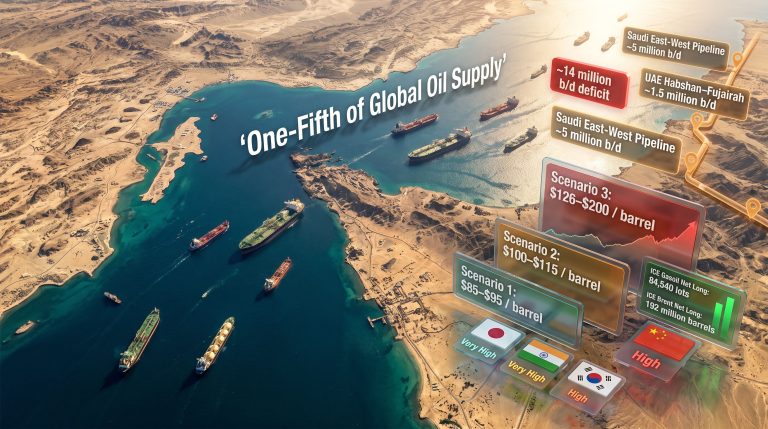
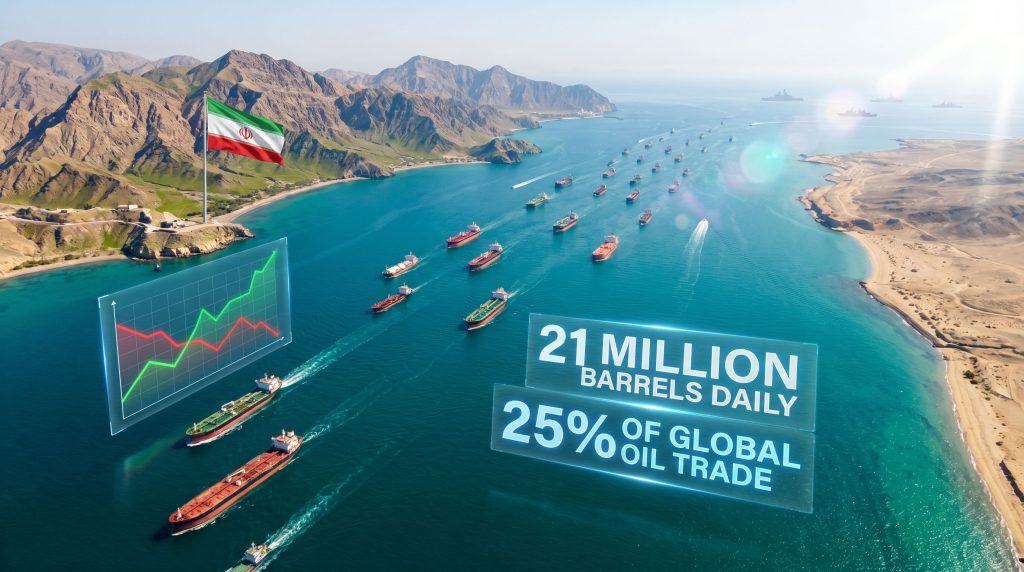
The Strait of Hormuz crisis exemplifies how geographic constraints intersect with political volatility to create leverage points that affect billions of consumers worldwide. This strategic waterway carries approximately 21 million barrels of crude oil daily through its narrow passage, representing roughly 20-21% of global petroleum trade according to the U.S. Energy Information Administration.
When big ASX news breaks, our subscribers know first
What Drives Regional Maritime Security Tensions?
Nuclear proliferation concerns have intensified regional security dynamics significantly. Iran's uranium enrichment program has advanced to 60% purity levels, as documented by the International Atomic Energy Agency (IAEA) through 2024 reporting periods. This enrichment level represents a substantial technical advancement from the 20% threshold and significantly reduces the time required to achieve weapons-grade material if such a decision were made.
The progression from 60% to 90% enrichment (weapons-grade) requires only 2-3 additional enrichment cycles, potentially achievable within 4-8 weeks depending on cascade configuration and operational capacity. Furthermore, the uranium market volatility affecting global supply chains adds another layer of complexity to nuclear concerns. The IAEA has maintained monitoring capabilities at declared facilities including Fordow, though access limitations at certain sites create verification gaps that contribute to international uncertainty.
Regional power dynamics reflect broader alliance structures across the Middle East. Iran's support for proxy forces throughout the region creates multiple potential flashpoints where local incidents can escalate into broader confrontations. These competing influence networks have historically demonstrated their capacity to transform minor maritime incidents into major geopolitical crises.
Key Nuclear Program Factors:
• Technical capacity exists for rapid advancement to weapons-grade material
• Facility dispersal strategy reduces single-strike vulnerability
• International verification faces access limitations at undeclared sites
• Enrichment acceleration correlates with perceived security threats
Maritime Sovereignty vs International Navigation Rights
The fundamental legal dispute centers on Iran's territorial claims versus international maritime law principles. Under the United Nations Convention on the Law of the Sea (UNCLOS), Iran possesses legitimate territorial rights within 12 nautical miles of its coastline, but transit passage provisions explicitly prevent restrictions on continuous navigation through international strait waters.
Iran's enforcement actions through the Islamic Revolutionary Guard Corps Navy (IRGCN) have periodically exceeded UNCLOS-permitted activities. The 2019 seizure of the British tanker Stena Impero exemplifies how environmental inspection authority can be expanded to justify vessel detention, creating de facto discrimination prohibited under international maritime law.
The practical enforcement challenge involves distinguishing between legitimate security inspections and prohibited navigation restrictions. Iran's use of approximately 200+ fast attack craft provides tactical flexibility but creates unpredictable enforcement patterns that increase insurance costs and transit uncertainty for commercial shipping.
How Maritime Disruptions Transmit Through Global Markets
Historical price volatility data reveals consistent patterns in energy market responses to supply disruptions. The 2011 Libya crisis, which removed 1.6 million barrels per day from global markets, caused Brent crude to rise approximately 23% to $130 per barrel over three months. The 2012 Iran sanctions escalation demonstrated even faster transmission, with 0.6-0.8 million barrels per day disruption driving Brent from $90 to $110 within weeks.
Market Response Mechanisms:
• Oil prices typically spike 15-25% within 24-48 hours of closure announcements
• Natural gas markets surge 20-40% as LNG shipment delays compound supply concerns
• Speculative trading volumes increase 300-500% during crisis periods
• Futures contracts embed risk premiums extending 6-12 months forward
The differential impact on West Texas Intermediate (WTI) versus Brent crude reflects regional supply diversification. In addition, understanding WTI vs Brent dynamics becomes crucial during crisis periods. WTI shows lower volatility due to North American production buffers, while Brent captures Middle Eastern supply risk premiums more directly. This spread expansion serves as an early indicator of geographic supply stress.
Strategic Petroleum Reserve Deployment Patterns
Global strategic petroleum reserves provide emergency supply buffers, though coordination mechanisms vary significantly across major consuming nations:
| Country | Reserve Capacity (Million Barrels) | Release Authority | Response Time |
|---|---|---|---|
| United States | 714 | Presidential directive | 2-4 weeks |
| China | 500+ (estimated) | State Council approval | 1-3 weeks |
| Japan | 324 | METI coordination | 1-2 weeks |
| Germany | 244 | Federal government | 2-3 weeks |
| South Korea | 146 | Ministry of Trade | 1-2 weeks |
Reserve deployment faces several operational constraints. Release mechanisms require weeks to reach markets, creating temporary supply gaps during acute crises. Political coordination between major consuming nations affects release timing and volume, with economic interests potentially conflicting with strategic objectives.
Alternative Energy Transit Infrastructure Analysis
Existing pipeline bypass capacity provides partial alternatives to Strait transit, though combined infrastructure covers only 35-40% of normal waterway volumes. The UAE's Abu Dhabi Crude Oil Pipeline maintains 1.5 million barrels per day capacity, while Saudi Arabia's East-West Pipeline can handle 5 million barrels daily when operational.
Pipeline Infrastructure Limitations:
• Maintenance requirements create periodic bottlenecks
• Political instability affects pipeline reliability in several transit countries
• Infrastructure age and capacity constraints limit surge capability
• Alternative routing adds $2-4 per barrel in transportation costs
Maritime rerouting through the Cape of Good Hope adds 15-20 days to Asia-bound shipments while increasing shipping costs by $2-4 per barrel. The Suez Canal alternative faces capacity constraints of 50-60 ships daily and creates Mediterranean delivery bottlenecks, while remaining vulnerable to separate geopolitical risks.
Economic Transmission Channels
Complete waterway closure scenarios create cascading economic effects through multiple transmission channels. Energy cost increases affect manufacturing expenses globally, while transportation fuel price spikes reduce consumer discretionary spending. However, the impact on natural gas trends can create additional market complications. Central bank policy responses vary based on inflation expectations versus economic growth priorities.
90-Day Complete Closure Economic Projections:
| Economic Indicator | Baseline Impact | Worst-Case Impact |
|---|---|---|
| Global GDP Growth | -0.8% to -1.2% | -2.1% to -3.4% |
| Inflation Rate | +1.5% to +2.3% | +3.8% to +5.7% |
| Oil Price Range | $140-180/barrel | $220-300/barrel |
| Shipping Cost Increase | +150% to +250% | +400% to +600% |
Military Asset Positioning and Capabilities Assessment
Iranian maritime forces utilize asymmetric warfare strategies designed to maximise disruption capability while minimising conventional force exposure. The IRGCN operates over 200 fast attack craft alongside coastal missile batteries and sea mine deployment capabilities. Regular Iranian Navy assets include 3 destroyers, 4 frigates, and 23 submarines of varying operational status.
International coalition response typically involves 2-3 U.S. carrier strike groups maintaining approximately 40+ vessels in regional waters. Allied contributions from UK, France, and Australia provide additional naval assets, while regional partners including UAE and Saudi Arabia operate coastal defence systems.
Technological Warfare Considerations:
• GPS jamming affects civilian navigation systems throughout the region
• Communications disruption impacts shipping coordination and port management
• Cyber attacks target critical infrastructure including port operations
• Underwater sensors provide submarine movement detection capabilities
Surveillance and Intelligence Networks
Satellite monitoring provides real-time vessel tracking across vast ocean areas, while drone surveillance offers continuous coverage of maritime approaches. Electronic warfare capabilities create additional complexity layers, as GPS jamming and communications interference affect both military and civilian operations.
The intelligence gathering infrastructure extends beyond traditional military assets to include commercial satellite imagery, automated identification systems (AIS) monitoring, and signals intelligence collection. This comprehensive surveillance network enables rapid response to vessel movements but also creates potential escalation triggers when defensive actions are misinterpreted.
Insurance Market Risk Assessment and Premium Calculations
War risk insurance markets demonstrate severe capacity constraints during extended crises. Lloyd's of London typically excludes war risks from basic marine insurance, requiring separate policies costing 0.25-2.5% of cargo value during crisis periods. Total global war risk capacity approximates $2-3 billion, with single vessel limits ranging from $500 million to $1 billion maximum.
Premium Structure Changes During Crises:
• Transit-specific surcharges: 0.1-0.5% of cargo value
• Vessel age and flag state significantly affect premium calculations
• Route deviation coverage becomes essential for alternative passages
• Coverage availability decreases as risk assessments deteriorate
Market capacity constraints become binding during extended disruptions. Reinsurance markets reduce available capacity when claims probabilities increase, forcing primary insurers to either withdraw coverage or price policies at prohibitive levels. Consequently, this insurance market feedback loop amplifies the economic impact of geopolitical tensions even before actual supply disruptions occur.
Cargo and Hull Insurance Impacts
Hull insurance for vessels operating in disputed waters faces similar capacity constraints. Older vessels and those flagged to politically sensitive states experience higher premium increases, while modern vessels with favourable flag states maintain better coverage access. The insurance market effectively creates economic incentives for routing decisions that may not align with operational efficiency.
The next major ASX story will hit our subscribers first
Regional Alliance Coordination and Crisis Management
Gulf Cooperation Council members play critical roles in crisis management through both economic and diplomatic channels. Saudi Arabia's control of 25% of global oil reserves and maintenance of 2-3 million barrels per day spare production capacity provides market stabilisation capability during supply disruptions.
The UAE's economic diversification strategy positions Dubai as a regional financial hub during crises, while Abu Dhabi's sovereign wealth fund provides market stability through strategic investments. Jebel Ali port offers alternative shipping routes that become critical when primary waterways face restrictions.
Multilateral Engagement Mechanisms:
• UN Security Council emergency session procedures
• International Energy Agency coordinated response protocols
• G7/G20 economic policy coordination frameworks
• Regional diplomatic mediation through Qatar and Oman
International Diplomatic Frameworks
Mediation efforts rely on countries maintaining relationships with all parties to the conflict. Qatar's diplomatic relationships across regional divisions and Oman's traditional neutral stance provide essential communication channels when direct negotiations become impossible. For instance, understanding Australia's strategic response to such crises demonstrates the global nature of these challenges. European Union economic leverage through energy imports creates additional diplomatic pressure points.
The effectiveness of multilateral frameworks depends on alignment between economic interests and strategic objectives among major powers. When these interests diverge, as often occurs during energy crises, diplomatic solutions become significantly more difficult to achieve.
Central Bank and Financial Market Response Patterns
Federal Reserve policy considerations during energy crises involve balancing inflation control against financial stability concerns. Energy price shocks complicate inflation targeting frameworks, as temporary supply disruptions can create persistent price level increases if they become embedded in expectations.
European Central Bank responses face additional complexity due to energy import dependency creating stagflation risks. Regional banking sector exposure to energy companies affects financial stability assessments, while currency stability becomes a priority when energy imports strain current account balances.
Capital Market Reaction Patterns:
• Energy sector stocks typically outperform during supply disruptions
• Transportation and manufacturing sectors underperform due to input cost increases
• Defensive assets (utilities, consumer staples) attract capital flows
• Gold prices historically rise 8-15% during energy crises
Commodity Complex Interactions
Energy price spikes create ripple effects throughout commodity markets. Agricultural commodities increase due to fertiliser and transportation cost impacts, while industrial metals often decline on economic growth concerns. These cross-commodity correlations amplify the broader economic impact of energy supply disruptions.
Currency markets reflect both inflationary pressures and current account adjustments. Energy-importing countries typically experience currency weakness, while energy exporters benefit from improved terms of trade. These currency movements create additional transmission channels for regional crises to affect global markets.
Long-Term Strategic Transformation Implications
Energy transition acceleration represents one potential long-term consequence of prolonged crises. Historical analysis shows that energy security concerns drive increased investment in domestic energy production and renewable alternatives. Government subsidies for clean energy adoption typically expand during supply disruption periods.
Corporate renewable energy procurement strategies accelerate when conventional energy sources face supply uncertainty. This demand shift creates investment opportunities in clean energy infrastructure while potentially reducing long-term dependence on geopolitically sensitive supply routes. Furthermore, analysing the OPEC production impact becomes crucial for understanding market dynamics.
Supply Chain Reconfiguration Trends:
• Energy-intensive industries relocate closer to stable supply sources
• Regional trade agreements gain importance over global optimisation
• Inventory management strategies shift toward higher safety stock levels
• Autonomous shipping systems gain strategic importance for security
Technology Development Priorities
Maritime security technology investment increases during extended crisis periods. Alternative energy transportation methods, including hydrogen and biofuel infrastructure, receive accelerated development funding. Strategic reserve diversification extends beyond petroleum to include alternative fuel stockpiling capabilities.
Technology solutions for supply chain resilience become strategic priorities. Autonomous shipping systems offer potential security advantages by reducing crew vulnerability, while advanced materials and energy storage technologies provide buffers against supply volatility.
Investment Portfolio Positioning Strategies
Direct energy exposure through sector-specific exchange-traded funds provides broad access to price increase benefits. Oil futures contracts offer direct commodity exposure, though they require sophisticated risk management due to contango and storage cost considerations. Master Limited Partnerships (MLPs) benefit from increased pipeline utilisation during supply route diversification.
Defensive Positioning Approaches:
• Treasury bonds typically outperform during geopolitical crisis periods
• Dividend-focused equity strategies provide income stability
• Currency hedging becomes essential for international portfolio exposure
• Real estate investment trusts (REITs) in energy-producing regions offer inflation protection
Alternative investment considerations include infrastructure funds focused on pipeline and storage assets, which benefit from increased utilisation during supply disruptions. Commodity-linked bonds provide inflation protection while maintaining fixed income characteristics.
Geographic and Sector Diversification
North American energy independence reduces regional supply risk exposure, making domestic energy investments attractive during Middle Eastern instability. Scandinavian renewable energy exposure offers stability through diversified energy sources, while Asian energy efficiency investments benefit from higher input cost environments.
The Strait of Hormuz crisis demonstrates how geographic chokepoints create systematic vulnerabilities in global energy systems. However, understanding the broader context of oil price stagnation helps investors navigate these complex markets. Investor positioning requires balancing immediate crisis hedging with long-term structural transformation trends, as short-term disruptions often accelerate permanent changes in energy infrastructure and supply chain design.
Investment Disclaimer: This analysis contains forward-looking statements and speculative scenarios based on current geopolitical conditions. Energy market investments carry substantial risk, including potential total loss of capital. Past performance does not guarantee future results. Investors should consult qualified financial advisors before making investment decisions based on geopolitical analysis or crisis scenarios.
Ready to Navigate Energy Market Volatility?
Discovery Alert's proprietary Discovery IQ model delivers real-time alerts on significant mineral discoveries that could benefit from energy sector upheavals, instantly empowering subscribers to identify actionable opportunities ahead of the broader market. Begin your 14-day free trial today and secure your market-leading advantage during times of global uncertainty.