May 14, 2026
Global Fertilizer Markets Face Structural Transformation
The intersection of geopolitical tensions and agricultural commodity flows has created unprecedented volatility in global fertilizer markets over the past several years. Supply chain disruptions stemming from the Ukraine conflict, coupled with widespread sanctions regimes targeting major producing nations, have fundamentally altered traditional trading patterns and pricing mechanisms. Furthermore, the recent development where the US eases sanctions on Belarus potash companies demonstrates how diplomatic breakthroughs can significantly impact commodity flows and food security infrastructure worldwide.
Within this complex landscape, diplomatic negotiations occasionally yield unexpected market-moving outcomes. The conditional nature of sanctions relief mechanisms has emerged as a new tool in international economic statecraft, creating opportunities for targeted policy adjustments that can influence commodity flows without comprehensive diplomatic normalisation. Understanding these dynamics requires examining both the immediate transactional elements and the broader structural implications for global agricultural input markets.
When big ASX news breaks, our subscribers know first
Economic Pressures Behind Diplomatic Concessions
Humanitarian Diplomacy as Market Catalyst
The December 2025 prisoner exchange between the United States and Belarus demonstrates how humanitarian considerations can intersect with economic policy in ways that reshape commodity markets. Belarus released 123 political prisoners on December 14, 2025, including Nobel laureate Ales Bialiatski and opposition figure Maria Kalesnikava, in negotiations brokered by US President Donald Trump's envoy John Coale.
This humanitarian gesture created the political foundation for subsequent economic concessions, illustrating how prisoner-exchange diplomacy can serve as a bridge mechanism between adversarial nations. The timing suggests careful coordination between diplomatic and economic policy teams, with the prisoner release occurring on Saturday and sanctions relief announced the following Monday, December 15, 2025.
The scale of this prisoner release represents the largest by President Alexander Lukashenko since the Trump administration opened talks with Belarus in 2025. Trump envoy Coale indicated that approximately 1,000 remaining political prisoners could be released in coming months, suggesting this initial exchange may be part of a broader, phased diplomatic framework rather than an isolated concession.
Belarus's Strategic Resource Leverage
Belarus's position in global potash markets provides significant economic leverage despite its international isolation. As a top-5 global potash producer controlling approximately 20% of world supply, the country possesses a strategic commodity that remains essential for global food security regardless of political considerations.
The economic pressure on Belarus has been substantial since wide-ranging sanctions were imposed after 2020 following violent crackdowns on protesters after a disputed election. These restrictions were further tightened in 2022 when Lukashenko allowed Belarus to serve as a staging ground for Russia's invasion of Ukraine, creating comprehensive isolation from Western markets.
Despite these restrictions, Belarus's potash reserves represent a potential source of foreign currency earnings that could help stabilise the country's economy. The conditional nature of the December 2025 sanctions relief suggests both sides recognise the mutual benefits of limited economic engagement while maintaining broader political pressure.
Targeted Companies and Strategic Importance
Three Beneficiaries of Limited Relief
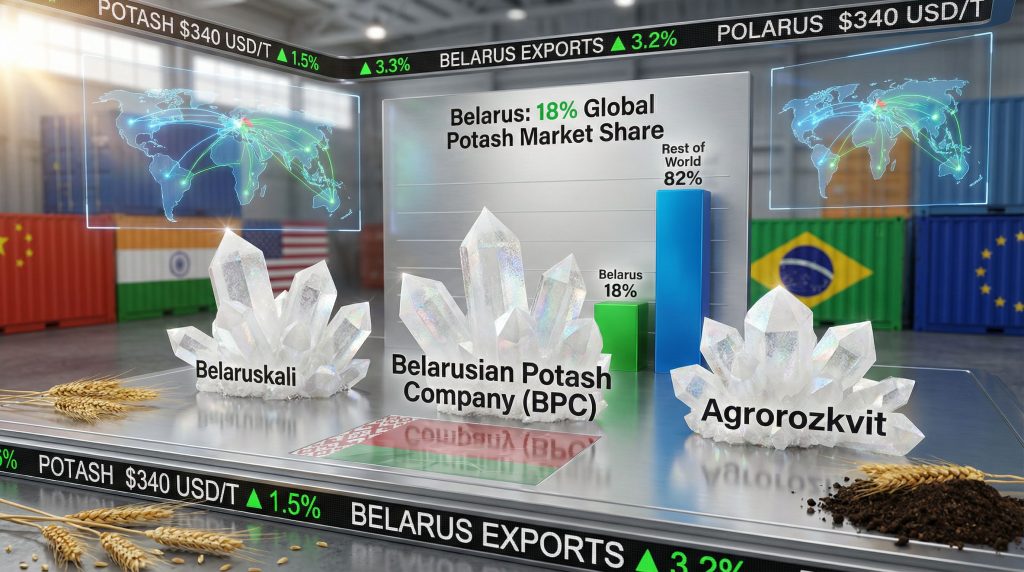
The US Treasury Department authorised certain transactions with three specific Belarus entities on December 15, 2025:
- Belaruskali: The state-owned flagship potash producer
- Belarusian Potash Company (BPC): A marketing consortium managing export distribution
- Agrorozkvit: A BPC subsidiary handling specialised operations
This targeted approach reflects careful consideration of Belarus's potash sector structure. Belaruskali functions as the primary production entity, while BPC operates as a marketing consortium coordinating global distribution networks. Agrorozkvit's role as a BPC subsidiary suggests specialised functions within the broader export framework.
The authorisation covers unspecified transactions without elaborating on scope or limitations, creating uncertainty about operational parameters. This ambiguity may be intentional, allowing flexibility in implementation whilst maintaining leverage through unclear boundaries.
Conditional Relief Mechanisms
The sanctions relief operates under strict conditional terms requiring sustained improvements in behaviour and President Lukashenko's fulfilment of his pledge to immediately cease all politically motivated arrests. This creates measurable benchmarks for continued authorisation.
Importantly, the sanctions can be reapplied at any time, providing immediate enforcement mechanisms if behavioural conditions are violated. The US has explicitly warned Belarus that it will not tolerate any abuse of the relief to circumvent sanctions on Russia, establishing anti-circumvention provisions as a central monitoring priority.
Market Structure and Supply Chain Implications
Critical Infrastructure Constraints
Despite US sanctions relief, Belarus faces fundamental logistical challenges that limit immediate market impact. As a landlocked country, Belarus previously exported potash through European Union ports, which remains prohibited by EU sanctions. This geographic constraint creates a significant gap between sanctions relief and actual market access.
The EU's position became even more restrictive on December 15, 2025, when the European Union broadened sanctions on Belarus to address actions undermining democracy and security in member states. This timing suggests limited coordination between US and EU sanctions policies, creating asymmetric market access conditions.
Alternative export routes through non-EU channels would require substantial infrastructure development and potentially encounter secondary sanctions concerns. Russian Black Sea facilities, Turkish ports, or other alternatives would involve higher transportation costs and extended shipping times, affecting competitiveness.
Global Potash Market Dynamics
The global potash market exhibits high concentration among major producers, creating significant leverage for countries controlling substantial reserves. This situation reflects broader challenges facing European supply challenges across various commodity sectors.
Belarus's 18% estimated market share represents substantial supply that could influence global pricing if full market access were restored. However, the EU port access restriction significantly limits immediate impact potential.
Economic Implications for Belarus
Foreign Exchange Revenue Potential
Potash exports historically represented a crucial source of foreign currency for Belarus, with estimated annual values reaching $2-4 billion during peak export periods. This revenue stream became critical for import capacity and currency stabilisation amid international isolation.
The restoration of potash export capability, even under limited conditions, could provide significant economic relief. However, the EU port access restriction creates a fundamental constraint that may limit revenue realisation until alternative logistics solutions are developed.
Currency stabilisation effects depend on export volume recovery, which remains uncertain given infrastructure constraints. The Belarusian ruble's exchange rate stability has been challenged by limited foreign currency inflows, making potash revenue particularly valuable for monetary policy management.
Infrastructure Development Imperatives
Alternative export route development has become essential for Belarus to capitalise on sanctions relief. This requires substantial capital investment in transportation infrastructure, port facilities, and logistics networks outside EU jurisdiction.
Moreover, the broader trend towards us economy tariffs and protectionist policies creates additional complexity for international trade relationships. Potential routes through Russia, Turkey, or other Black Sea access points would involve significant cost premiums compared to previous EU port utilisation.
US Agricultural Security Considerations
Import Dependency and Supply Diversification
The United States imports approximately 85% of its potash requirements, creating strategic vulnerability to supply disruptions. This dependency became particularly concerning during the Ukraine conflict when major producing regions experienced significant disruptions.
Belarus sanctions relief potentially provides an additional supply source that could reduce import concentration risks. However, the conditional nature of the authorisation means this supply remains uncertain for long-term planning purposes.
Agricultural sector stakeholders have emphasised the importance of supply chain diversification following recent market volatility. Belarus potash access, even under restrictive conditions, represents one element of broader risk mitigation strategies.
Food Security Policy Integration
The timing of sanctions relief during early weeks of the Trump administration suggests integration with broader agricultural and trade policy objectives. Interestingly, this development coincides with the administration's broader approach to trump mining permits and resource security initiatives.
Food security considerations may increasingly influence sanctions policy, particularly regarding commodities essential for agricultural productivity. The Belarus case could establish precedents for targeted relief in other strategic commodity sectors.
The intersection of sanctions policy and agricultural security creates complex trade-offs between diplomatic objectives and food system resilience, requiring careful calibration of economic tools.
The next major ASX story will hit our subscribers first
Market Response Mechanisms and Price Discovery
Immediate Trading Implications
Financial markets have begun incorporating potential Belarus supply restoration into commodity pricing models, though uncertainty regarding actual export volumes limits immediate impact. Potash futures markets show modest response to sanctions relief announcements, reflecting scepticism about near-term supply increases.
The conditional nature of relief creates ongoing volatility potential as markets assess compliance with behavioural requirements. Any indication of political prisoner arrests or Russia sanctions circumvention could trigger immediate market reactions.
Inventory management strategies among major fertiliser distributors may adjust to account for potential Belarus supply, though the EU port access restriction limits operational planning confidence. These considerations align with broader concerns about tariffs impact markets and supply chain resilience.
Seasonal Demand Considerations
Global fertiliser demand follows agricultural cycles, with peak application periods during planting seasons. The December 2025 timing of sanctions relief aligns with planning for Northern Hemisphere spring planting, potentially influencing procurement decisions.
However, the logistics constraints mean actual supply availability may not align with immediate seasonal demand, limiting short-term market impact despite policy changes.
Precedent Effects on Other Sanctioned Economies
Diplomatic Strategy Implications
The Belarus prisoner-exchange model demonstrates potential frameworks for other sanctioned economies to pursue limited economic relief. Iran, North Korea, and Venezuela may examine similar approaches, though their specific circumstances and available leverage differ substantially.
The conditional structure creates a template for graduated sanctions relief tied to specific behavioural benchmarks. This approach allows diplomatic engagement without comprehensive normalisation, potentially applicable to various international disputes.
However, the success of this model depends on continued compliance with conditional requirements and the absence of actions that would trigger reapplication of restrictions.
Russian Strategic Responses
Russia's response to Belarus sanctions relief remains unclear, though potential competitive adjustments could include intensified economic integration with Belarus's potash sector or alternative supply chain development through Asian markets. This situation is further complicated by ongoing ukraine vat suspension measures affecting regional trade flows.
The explicit US warning against Russia sanctions circumvention suggests this remains a primary monitoring concern. Any evidence of coordinated efforts to use Belarus relief as a Russia sanctions workaround could result in immediate reversal.
Long-term Structural Market Evolution
Supply Chain Resilience Development
The global fertiliser market has undergone fundamental restructuring since the Ukraine conflict began, with agricultural stakeholders prioritising supply chain resilience over cost optimisation. Multi-sourcing strategies have become standard practice among major agricultural input buyers.
Belarus sanctions relief represents one element of broader diversification efforts, though the conditional nature limits its role in long-term supply security planning. Permanent structural changes may require more comprehensive diplomatic resolution.
Risk Premium Integration
Commodity markets have increasingly incorporated geopolitical risk premiums into pricing mechanisms, particularly for products from politically unstable regions. Belarus potash may continue carrying risk premiums even with sanctions relief due to reapplication possibilities.
Insurance and hedging instrument development has accelerated to address political risk in commodity trade. Belarus-related products may require specialised risk management tools given the conditional relief structure.
Investment and Stakeholder Implications
Portfolio Considerations for Fertiliser Exposure
Investment strategies regarding fertiliser companies with Belarus exposure require careful assessment of sanctions relief sustainability. The conditional nature creates ongoing policy risk that may limit institutional investor participation.
Agricultural commodity price forecasting must account for potential Belarus supply restoration while recognising infrastructure constraints that limit immediate impact. This creates complex modelling challenges for commodity-dependent sectors.
Currency hedging strategies for emerging market exposure may need adjustment given potential Belarus revenue restoration, though the uncertainty regarding actual export volumes complicates risk assessment.
Monitoring Framework Development
Ongoing political prisoner release tracking has become essential for assessing sanctions relief sustainability. The US commitment to 1,000 additional prisoner releases in coming months provides measurable benchmarks for continued authorisation.
EU policy coordination with US sanctions approaches remains uncertain, creating asymmetric market access conditions that require specialised monitoring. Agricultural season timing optimisation may depend on resolution of these coordination challenges.
Market participants have developed sophisticated frameworks for tracking compliance with conditional sanctions relief requirements, including political prisoner monitoring, Russia sanctions circumvention assessment, and export route compliance verification.
Strategic Outlook and Market Evolution
The decision where the US eases sanctions on Belarus potash companies demonstrates the growing complexity of international economic statecraft, where humanitarian diplomacy intersects with commodity market dynamics to create new policy tools. The conditional structure provides flexibility for graduated engagement whilst maintaining leverage through reapplication mechanisms.
However, the fundamental constraint of EU port access restrictions illustrates the limitations of unilateral sanctions relief in globally integrated commodity markets. Full market impact requires coordinated policy approaches among major economic powers.
The precedent established may influence similar negotiations with other sanctioned economies, though each situation involves unique strategic considerations and available leverage. The integration of humanitarian and economic policy objectives creates opportunities for targeted diplomatic progress without comprehensive normalisation.
For global fertiliser markets, Belarus represents a significant potential supply source that remains constrained by geopolitical factors and infrastructure limitations. The conditional relief provides a framework for gradual market reintegration dependent on sustained behavioural improvements and creative solutions to logistics challenges.
Agricultural stakeholders must balance the potential benefits of supply diversification against the ongoing uncertainty created by conditional authorisation structures. Long-term planning requires careful assessment of both policy sustainability and operational feasibility given current infrastructure constraints.
Furthermore, the broader implications of how the US eases sanctions on Belarus potash companies may influence potash market dynamics and create ripple effects across global agricultural supply chains. As stakeholders continue to monitor developments, the intersection of geopolitical considerations and agricultural security remains a critical factor in market evolution.
Disclaimer: This analysis examines publicly available information regarding US sanctions relief on Belarus potash companies and potential market implications. Commodity markets remain subject to significant volatility from geopolitical, economic, and operational factors. Investment decisions should be based on comprehensive due diligence and professional financial advice. Political and regulatory developments may materially affect market conditions and investment outcomes.
Looking for Your Next Strategic Investment Opportunity?
Discovery Alert's proprietary Discovery IQ model delivers real-time alerts on significant ASX mineral discoveries, instantly transforming complex geological data into actionable investment insights for both experienced traders and newcomers alike. Explore how major mineral discoveries have historically generated substantial returns and begin your 30-day free trial today to position yourself ahead of the market.