May 20, 2026
Understanding Global Fertilizer Subsidy Mechanisms in Agricultural Policy
Government intervention in agricultural input markets represents a critical policy tool for balancing food security, farmer economics, and fiscal sustainability. Across developing economies, nutrient-based subsidy frameworks have emerged as sophisticated mechanisms for managing agricultural productivity while responding to volatile international commodity markets. These systems operate through complex interactions between government fiscal policy, manufacturer economics, and farmer-level affordability objectives, creating significant tariff‐driven market impacts that affect global trade dynamics.
The strategic design of fertilizer subsidies reflects broader agricultural development priorities, including soil health optimization, crop yield enhancement, and rural income stabilization. As global commodity markets experience unprecedented volatility, particularly in key nutrients like nitrogen, phosphorus, and sulphur, government subsidy mechanisms face increasing pressure to maintain effectiveness while preserving fiscal discipline.
When big ASX news breaks, our subscribers know first
India's Nutrient-Based Subsidy Framework and Market Dynamics
Technical Structure of the NBS System
India's nutrient-based subsidy system operates as a market-responsive framework targeting specific agricultural nutrients rather than fixed fertilizer products. The system encompasses 28 grades of phosphatic and potassic fertilizers, with direct subsidy payments flowing to manufacturers and importers rather than individual farmers. This structure enables cost reduction transmission through supply chain economics while maintaining market discipline.
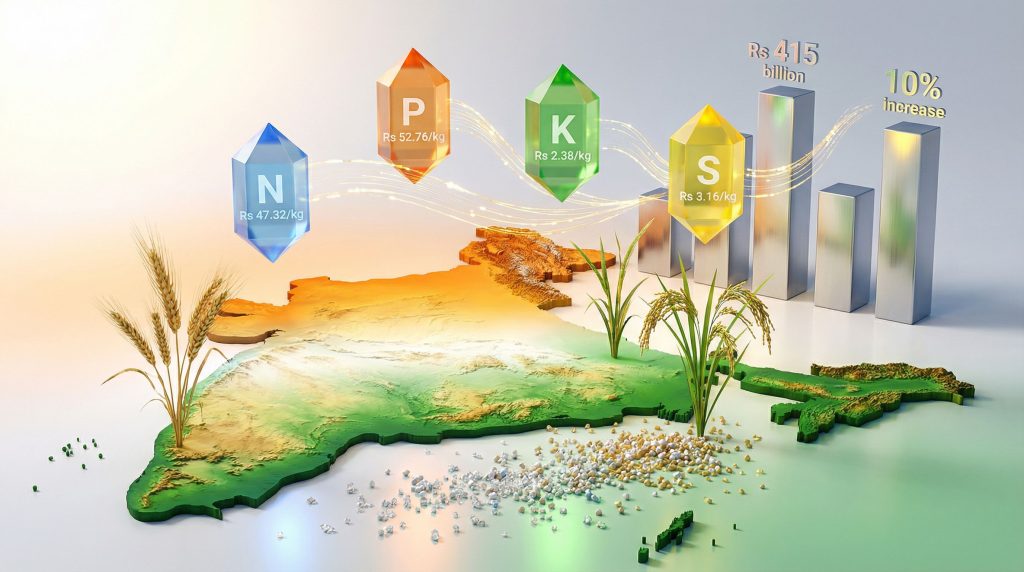
The framework specifically targets four essential nutrients:
- Nitrogen (N): Primary growth nutrient for vegetative development
- Phosphorus (P): Critical for root development and energy transfer
- Potassium (K): Essential for plant water regulation and disease resistance
- Sulphur (S): Secondary macronutrient for protein synthesis and oil formation
Notably, urea remains excluded from the NBS mechanism, creating a dual subsidy structure within India's fertilizer policy landscape. This exclusion reflects distinct policy approaches for different nitrogen sources, with urea subject to separate direct subsidy frameworks.
Subsidy Calculation Methodology
The NBS framework employs nutrient-specific pricing rather than product-specific rates, allowing flexibility across different fertilizer formulations while maintaining consistent nutrient cost objectives. Subsidies are calculated based on actual nutrient content percentages within each fertilizer grade, enabling manufacturers to optimize product formulations while receiving proportional government support.
This technical approach contrasts with fixed-rate subsidy systems, providing market participants with greater flexibility in product development and sourcing strategies. Furthermore, the nutrient-specific structure enables policy makers to adjust support levels for individual nutrients based on soil deficiency patterns and crop production requirements.
Economic Drivers Behind Recent Policy Adjustments
International Commodity Price Pressures
The Indian government raises nutrient-based subsidy for fertilizers policy adjustment for 2025-26 reflects acute international commodity market volatility. Sulphur prices reaching $720-730/t CFR Brazil in April 2026 represent a dramatic escalation from December 2025 levels of $540-550/t CFR Brazil, demonstrating approximately 31-33% cost inflation in less than four months. However, these pressures also create broader inflation and tariff pressures affecting global agricultural markets.
Table: NBS Rate Adjustments (April-September 2025)
| Nutrient | Previous Rate | Current Rate | Absolute Change | Percentage Change |
|---|---|---|---|---|
| Nitrogen | Rs 43.02/kg | Rs 47.32/kg | +Rs 4.30/kg | +10% |
| Phosphate | Rs 47.96/kg | Rs 52.76/kg | +Rs 4.80/kg | +10% |
| Sulphur | Rs 2.87/kg | Rs 3.16/kg | +Rs 0.29/kg | +10% |
| Potash | Rs 2.38/kg | Rs 2.38/kg | No change | 0% |
Strategic Budget Allocation Framework
The government has approved a nutrient-based subsidy of Rs 41,534 crore for the 2025-26 kharif season, representing a Rs 43 billion increase from the previous year's allocation. This 11.5% budget expansion demonstrates substantial fiscal commitment to maintaining agricultural input affordability despite external commodity market pressures.
The decision to maintain potash subsidy rates at previous levels while increasing nitrogen, phosphate, and sulphur support suggests strategic prioritization of specific nutrient affordability. Consequently, this selective approach reflects government assessment of differential input cost dynamics and strategic nutrient deficiency concerns across India's agricultural regions.
The uniform 10% increase across nitrogen, phosphate, and sulphur reflects proportional response to international commodity market pressures while acknowledging the critical importance of balanced soil nutrition for sustainable agricultural productivity.
Market Economics and Fertilizer Profitability Analysis
DAP Market Dynamics Under Current Subsidy Structure
Diammonium Phosphate (DAP) economics under the revised NBS framework highlight structural challenges in fertilizer import economics. With the new subsidy calculation yielding approximately Rs 32,787/t for DAP and maximum retail pricing capped at Rs 27,000/t, importers and producers continue facing profitability shortfalls despite the 10% subsidy increase.
Key DAP Economic Indicators:
- NBS-derived support: Rs 32,787/t ($355/t)
- Retail price ceiling: Rs 27,000/t
- Profitability gap: Continued losses requiring additional support mechanisms
- International reference pricing: Egypt's recent DAP sales at $840/t FOB demonstrate global pricing above Indian domestic levels
This profitability gap necessitates supplementary financial assistance beyond the nutrient-based subsidy framework. Market participants anticipate additional government support mechanisms, though official confirmation regarding specific additional assistance remains pending.
MOP Market Stability Strategy
Muriate of Potash (MOP) subsidy rates remained unchanged at Rs 1,428/t, suggesting government strategy to maintain market equilibrium in potash segments while managing overall fiscal allocation. This stability reflects assessment that potash market conditions do not require immediate intervention compared to nitrogen and phosphate segments, particularly given commodity price impacts affecting other agricultural inputs.
The potash rate freeze enables fiscal resources to concentrate on nutrients experiencing more acute international price pressures while preserving established MOP market dynamics.
Agricultural Supply Chain Impact Assessment
Manufacturer and Importer Economic Considerations
Direct government-to-manufacturer payment mechanisms enhance working capital predictability for fertilizer companies. The Rs 415 billion seasonal allocation provides quantified government commitment, enabling medium-term production planning and inventory optimization across seasonal demand cycles.
Key operational benefits include:
- Enhanced cash flow management through direct government payments
- Production capacity optimization based on subsidy rate certainty
- Strategic import timing aligned with NBS reimbursement schedules
- Reduced working capital requirements compared to farmer-level subsidy systems
Farmer-Level Economic Transmission
The 10% subsidy increase theoretically provides partial cost absorption for farmers purchasing phosphatic and potassic fertilizers. However, the persistence of DAP profitability gaps suggests potential constraints in transmitting full subsidy benefits to farmer-level pricing.
Farmer impact considerations:
- Improved affordability for balanced nutrient application
- Soil health optimization through subsidized secondary macronutrients
- Regional production support during kharif season crop cycles
- Input cost stability despite international commodity volatility
The exclusion of urea from NBS coverage limits comprehensive farmer cost benefits, requiring coordination with separate urea subsidy mechanisms for complete nitrogen nutrition support.
Long-term Policy and Fiscal Sustainability Framework
What Drives Budget Trajectory Analysis?
The consistent year-over-year expansion in subsidy allocation, with an 11.5% increase for 2025-26, raises important questions regarding long-term fiscal sustainability under continued international commodity price inflation. The government's multi-year commitment framework demonstrates strategic prioritization of agricultural input affordability while requiring ongoing assessment of fiscal impact. In addition, global market volatility continues to influence these policy decisions.
Fiscal sustainability considerations:
- Commodity price correlation: Subsidy costs directly linked to international market volatility
- Budget allocation efficiency: Cost per unit of agricultural productivity supported
- Economic multiplier effects: Agricultural output gains versus fiscal expenditure
- Alternative policy mechanisms: Potential for targeted rather than universal support systems
Strategic Agricultural Development Objectives
The NBS framework's emphasis on balanced nutrition through nitrogen, phosphorus, potassium, and sulphur support aligns with soil health optimization objectives. For instance, the recent 10% increase in sulphur subsidies reflects explicit policy recognition of secondary macronutrient deficiency issues in Indian agricultural systems.
Long-term agricultural benefits:
- Soil fertility enhancement through balanced nutrient application
- Crop productivity optimization across diverse regional conditions
- Sustainable farming practices supporting long-term land productivity
- Food security reinforcement through domestic production capacity maintenance
The next major ASX story will hit our subscribers first
Global Context and International Policy Comparisons
How Do Alternative Subsidy Mechanisms Work?
International fertilizer subsidy frameworks employ varied approaches to agricultural input support. Direct payment systems, price control mechanisms, and tax incentive models each present distinct advantages and implementation challenges compared to India's nutrient-based approach. Nevertheless, these systems must also contend with investment market insights affecting global fertilizer trade.
Comparative framework elements:
- Brazil's targeted support: Regional and crop-specific subsidy applications
- Indonesia's price stabilization: Government procurement and distribution systems
- Tax-based approaches: Reduced import duties and value-added tax exemptions
- Credit subsidy models: Concessional financing for agricultural inputs
Implementation Challenges and Technical Considerations
The NBS system faces ongoing implementation complexities including digital monitoring capabilities, quality control verification, and subsidy leakage prevention. Rural distribution tracking limitations and fertilizer grade verification systems require continued technical enhancement to ensure farmer-level benefit realization.
Critical system requirements:
- Digital infrastructure: Real-time subsidy distribution monitoring
- Quality assurance: Nutrient content verification across supply chains
- Financial transparency: Audit trails for government payment systems
- Farmer access optimization: Rural delivery and affordability confirmation
Market Psychology and Investment Implications
How Does Investor Sentiment Shape Market Dynamics?
The Indian government raises nutrient-based subsidy for fertilizers policy adjustment signals commitment to agricultural sector stability, influencing investor perceptions of fertilizer industry viability. Predictable subsidy frameworks enhance investment confidence in domestic fertilizer production capacity and infrastructure development.
However, the persistence of DAP profitability challenges despite subsidy increases highlights ongoing structural tensions between international commodity pricing and domestic affordability objectives. This dynamic creates both opportunities and risks for market participants across the fertilizer value chain.
Future Policy Evolution Scenarios
The NBS framework's responsiveness to international commodity markets suggests continued adaptation potential as global fertilizer markets evolve. Policy refinement opportunities include crop-specific targeting, precision agriculture integration, and enhanced private sector engagement mechanisms.
Potential development pathways:
- Technology-enhanced targeting: GPS and soil testing-based subsidy optimization
- Regional customization: State-specific nutrient deficiency response mechanisms
- Private sector partnerships: Manufacturer investment incentive alignment
- Environmental integration: Sustainable farming practice incentive coupling
Furthermore, the success of the Indian government raises nutrient-based subsidy for fertilizers initiative will depend on continued monitoring of international fertiliser subsidy analysis and global market conditions. The policy demonstrates how developing economies can maintain agricultural competitiveness whilst managing fiscal constraints in volatile commodity environments.
Please note: This analysis is based on available market data and policy information as of April 2026. Fertilizer market dynamics and government policy frameworks may evolve rapidly in response to international commodity conditions and agricultural production requirements. Investment and operational decisions should incorporate current market conditions and professional financial advice.
Looking to Capitalise on Agricultural Commodity Market Opportunities?
Discovery Alert's proprietary Discovery IQ model delivers real-time alerts on significant ASX mineral discoveries, including critical agricultural commodities like phosphate and sulphur that directly impact fertiliser markets. Explore Discovery Alert's dedicated discoveries page to understand how major mineral discoveries have generated substantial returns for investors, then begin your 14-day free trial today to position yourself ahead of commodity market movements.