
August 7, 2026
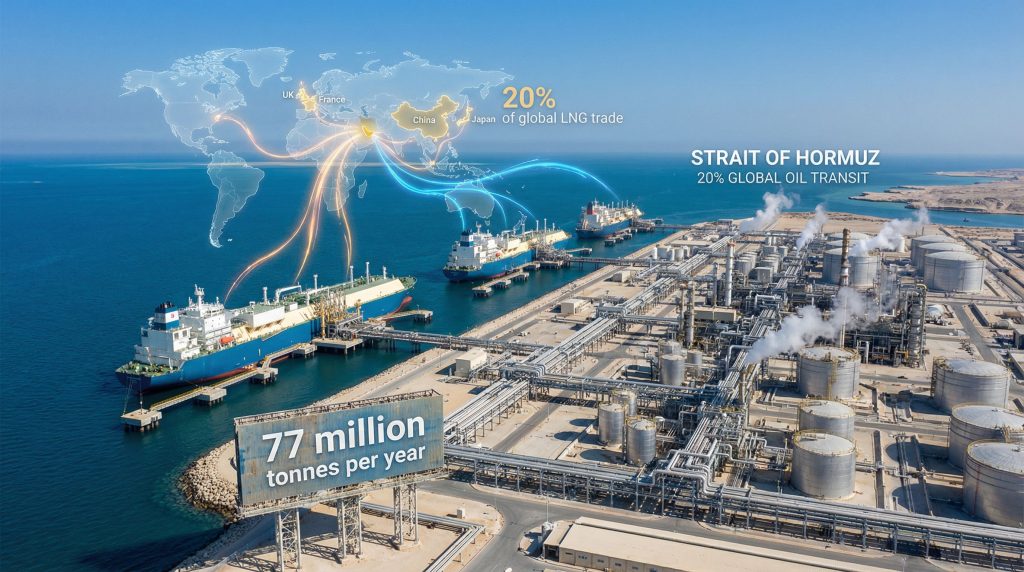
Global LNG Market Architecture Under Unprecedented Stress
The intricate web of global energy interdependencies faces its most severe test since the 1973 oil embargo, as supply chain vulnerabilities in liquefied natural gas markets expose fundamental weaknesses in the world's energy security framework. The Qatar LNG output halt due to drone attacks demonstrates how modern economies built on just-in-time delivery systems and concentrated production hubs now confront the reality that geographical concentration creates systemic risks extending far beyond individual facilities or regions.
Qatar's position as a critical node in global LNG infrastructure demonstrates how single-point failures can cascade through interconnected energy markets, affecting everything from industrial manufacturing to household heating across multiple continents. The concentration of 77 million tonnes per year of export capacity at the Ras Laffan Industrial Complex represents approximately 20% of global LNG trade, creating dependencies that extend through Asia-Pacific and European security frameworks. Furthermore, this situation highlights broader global trade tensions affecting energy markets worldwide.
When big ASX news breaks, our subscribers know first
Strategic Chokepoints and Infrastructure Vulnerabilities
Geographic Concentration Risk in LNG Export Terminals
The Ras Laffan Industrial Complex exemplifies the dangerous concentration of critical energy infrastructure in geopolitically unstable regions. This facility operates as the world's largest LNG terminal whilst simultaneously hosting associated LPG, ethane, sulphur, and NGL production units, creating multi-commodity exposure that amplifies disruption impacts across various industrial sectors.
When three LNG carriers were berthed at Ras Laffan during the production halt following drone attacks, the immediate supply implications extended beyond the facility itself. QatarEnergy halted production after coordinated strikes affected multiple facilities across the region. The broader infrastructure ecosystem includes Shell's 1.1 million tonnes per year Pearl GTL plant, which depends on natural gas feedstock for Group III base oils production.
Key Infrastructure Vulnerabilities:
- Single-facility concentration of global LNG export capacity
- Integrated multi-commodity production creating cascade effects
- Limited alternative routing options during transit disruptions
- Insufficient strategic reserve capacity in major importing regions
Comparative Analysis with Global LNG Export Hubs
Unlike distributed systems found in Australian LNG infrastructure or the US Gulf Coast facilities, Qatar's concentration model creates unique systemic risks. The Strait of Hormuz transit dependency affecting 20% of global oil flows compounds these vulnerabilities, as LNG carriers face routing constraints that increase transportation costs and delivery timelines.
Alternative export hubs in Australia, the United States, and Russia provide some supply diversification, but long-term contract structures and technical specifications limit rapid supply reallocation during crisis periods. However, natural gas price trends indicate market volatility continues across major trading hubs. The industrial architecture supporting LNG production requires specialised infrastructure that cannot be quickly replicated or substituted when primary facilities face operational disruptions.
Market Mechanics During Supply Disruption Events
Price Discovery and Volatility Transmission
Energy market volatility demonstrates immediate price transmission mechanisms during supply disruption events. Related market analysis shows Ice gasoil futures briefly pushed above $900/t on 2 March, from $752.75/t at the 27 February settlement, representing approximately 20% price increases in benchmark energy derivatives within single trading sessions.
European gas markets face particular vulnerability given their dependence on spot market mechanisms and limited strategic storage capacity. European gas futures surged over 30% following the Qatar LNG output halt due to drone attacks. TTF (Title Transfer Facility) benchmark pricing reflects immediate supply tightening, whilst Asian markets experience cargo diversion effects as buyers compete for available supply through alternative routing arrangements.
Market Response Patterns:
- Immediate futures curve backwardation during supply announcements
- Spot market premium expansion for prompt delivery
- Increased price correlation across regional markets
- Accelerated long-term contract renegotiation discussions
Emergency Response Mechanisms and Strategic Reserves
Government intervention frameworks reveal significant limitations in coordinated emergency response capabilities. Unlike crude oil markets with established Strategic Petroleum Reserve systems, LNG markets lack comparable emergency supply mechanisms, forcing industrial users to implement demand destruction strategies during prolonged supply disruptions.
Industrial switching capabilities between LNG and alternative fuels provide limited flexibility given infrastructure constraints and economic switching thresholds. In addition, US natural gas forecast models suggest continued price volatility affecting switching economics. Energy-intensive manufacturing sectors face particular challenges as production processes require specific fuel quality standards that alternative supplies may not meet without significant capital investment in conversion technologies.
Geopolitical Risk Amplification Through Critical Transit Routes
Strait of Hormuz Dependencies and Alternative Routing
The complete halt of LNG carrier transits through the Strait of Hormuz since conflict onset on February 28, 2026, demonstrates how geopolitical tensions can entirely disrupt critical energy chokepoints. Maritime insurance markets responded immediately, with major P&I clubs cancelling war risk cover for Middle East Gulf operations, effectively preventing commercial vessel operations regardless of physical infrastructure availability.
Alternative routing through the Cape of Good Hope adds approximately 14-21 days to delivery schedules for European destinations, whilst increasing transportation costs by $50,000-$80,000 per cargo depending on vessel specifications and fuel prices. These cost premiums translate directly into consumer energy prices across importing regions. Consequently, this situation mirrors broader oil price crash analysis patterns observed in related energy commodities.
Multi-Commodity Cascade Effects Across Industrial Sectors
Energy supply disruptions create cascading effects throughout interconnected industrial systems. Chinese markets demonstrate these linkages through PDH (propane dehydrogenation) production cuts following propane supply disruptions, whilst Chinese polymer futures rise on Middle East conflict concerns affect downstream manufacturing sectors globally.
Petrochemical feedstock availability constraints impact industries ranging from automotive plastics to pharmaceutical packaging, as natural gas serves dual roles as both energy source and chemical feedstock. Fertiliser production faces particular vulnerability given ammonia synthesis dependency on natural gas, affecting global food security through agricultural input cost increases.
Industrial Sector Impact Analysis:
| Sector | Primary Impact | Timeline | Cost Premium |
|---|---|---|---|
| Petrochemicals | Feedstock shortage | Immediate | 15-25% |
| Fertilisers | Production cuts | 2-4 weeks | 20-30% |
| Steel | Energy costs | 1-2 weeks | 10-15% |
| Chemicals | Multi-input disruption | Variable | 18-28% |
Strategic Adaptation and Market Structural Changes
Accelerated Diversification in Energy Supply Chains
Supply shock events catalyse strategic realignments in global energy trade relationships. Market participants demonstrate immediate adaptation through alternative supplier development, as evidenced by US midcontinent refiners planning to increase heavy sour crude intake, including Venezuelan oil following sanctions relief after political regime change.
Long-term contract structures undergo fundamental reassessment as buyers prioritise supply security over cost optimisation. Traditional 20-year LNG agreements face renegotiation pressure as force majeure clauses become contested issues and buyers demand greater supply source diversification within individual contracts. Furthermore, tariffs impact analysis suggests additional trade barriers may accelerate these diversification trends.
Infrastructure Resilience Investment Acceleration
Crisis-driven investment patterns reveal market preferences for distributed energy systems over concentrated mega-projects. Strategic reserve capacity expansion receives renewed political and commercial support, whilst cross-border energy infrastructure redundancy planning becomes central to national energy security policies.
Technology transfer acceleration for domestic energy production capabilities reflects long-term strategic responses to supply vulnerability exposure. Countries with significant LNG import dependencies announce domestic production facility development programmes and renewable energy infrastructure acceleration to reduce exposure to geopolitical supply disruptions.
Long-Term Risk Pricing and Economic Integration Trade-offs
Forward Market Structures and Risk Premium Evolution
Energy derivatives markets incorporate long-term geopolitical risk premiums through forward curve adjustments and volatility surface modifications. Credit risk assessment for energy infrastructure investments requires fundamental reassessment as traditional project finance models prove inadequate for facilities in geopolitically contested regions.
Sovereign risk pricing for energy-dependent economies reflects immediate current account balance implications and long-term economic competitiveness concerns. Central banks face complex policy trade-offs between inflation control and economic growth support during energy price shock periods affecting the Qatar LNG output halt due to drone attacks recovery.
Macroeconomic Transmission Through Energy Price Channels
Energy price shocks create immediate inflation transmission effects, with consumer price increases reaching €16 per 100 litres for suppliers in European markets during crisis periods. Central bank policy response frameworks require coordination between monetary authorities to prevent competitive devaluation pressures in energy-importing economies.
Current account balance implications vary significantly across importing regions, with Asian economies facing particular challenges given concentrated LNG dependency and limited alternative energy infrastructure. GDP growth forecast revisions reflect both immediate energy cost impacts and longer-term structural adjustment requirements.
The next major ASX story will hit our subscribers first
Post-Crisis Energy Market Architecture
Distributed vs. Concentrated Infrastructure Development
Regional energy market integration benefits face reassessment against concentration risk considerations. Supply chain localisation trends in energy-intensive manufacturing reflect strategic autonomy priorities over economic efficiency optimisation, fundamentally altering global industrial location decisions.
Technology transfer agreements for domestic energy production capabilities become central to bilateral trade relationships, as countries seek to reduce dependency on concentrated supply sources through indigenous production development and alternative fuel infrastructure investment.
Strategic Policy Framework Comparison:
| Region | Primary Strategy | Investment Focus | Timeline |
|---|---|---|---|
| Europe | Diversification | LNG terminals | 2-3 years |
| Asia-Pacific | Strategic reserves | Storage capacity | 1-2 years |
| North America | Export capacity | Pipeline infrastructure | 3-5 years |
| Middle East | Supply security | Alternative routes | 1-2 years |
Economic Security Versus Market Efficiency Balance
Post-crisis energy markets demonstrate permanent structural changes reflecting security prioritisation over cost minimisation. Emergency supply coordination mechanisms receive enhanced funding and operational authority, whilst international energy trade agreements incorporate explicit security provisions previously considered unnecessary.
The Qatar LNG output halt due to drone attacks serves as a catalyst for fundamental reassessment of global energy architecture vulnerabilities. Market participants, policy makers, and strategic planners must balance immediate crisis response requirements with long-term structural adaptation needs to create more resilient energy supply systems.
This analysis reflects market conditions and geopolitical developments as of March 2026. Energy market dynamics and geopolitical situations remain highly volatile, and readers should consult current market data and expert analysis for investment and operational decision-making. The scenarios discussed represent potential market outcomes and should not be considered predictive of specific future events or investment performance.
Are You Prepared for Energy Market Volatility?
The Qatar LNG crisis demonstrates how quickly energy supply disruptions can cascade through global markets, creating immediate trading opportunities for prepared investors. Discovery Alert's proprietary Discovery IQ model delivers real-time alerts on significant ASX mineral discoveries, helping subscribers identify energy and commodities opportunities before broader market recognition creates price movements. Begin your 14-day free trial today to position yourself ahead of volatile commodity markets.