May 18, 2026
Global Mining Sector Transformation Accelerates Through Strategic Partnerships
Commodity market dynamics have fundamentally shifted as traditional mining operators face mounting pressures from capital allocation efficiency demands, infrastructure bottlenecks, and margin compression across multiple resource segments. The BHP and Rio Tinto partnership exemplifies how collaborative operational models represent a strategic response to these macro-economic headwinds, where shared asset utilization delivers superior returns compared to standalone expansion strategies. This transition marks a significant departure from the historically competitive nature of resource extraction, as major operators increasingly recognise that partnership structures can unlock value creation opportunities previously unavailable through independent operations.
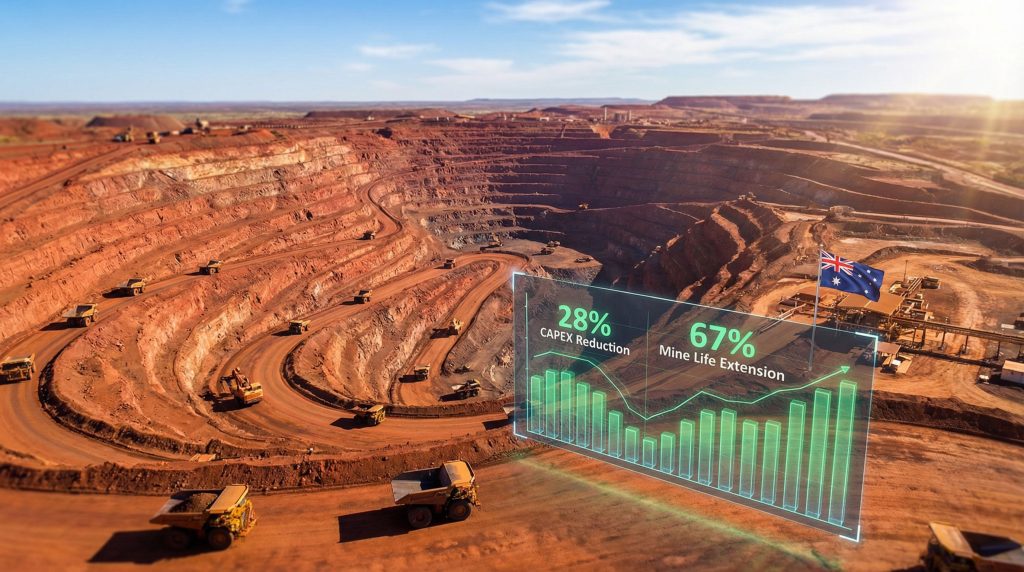
Western Australia's Pilbara region exemplifies this transformation, with recent partnership announcements between major iron ore producers demonstrating how collaborative frameworks can extend mine life cycles, optimise infrastructure deployment, and enhance operational efficiency metrics. The region's position as a dominant force in global seaborne iron ore markets creates compelling incentives for operational coordination, particularly as individual companies encounter limitations in expanding processing capacity and transportation networks independently. Furthermore, current iron ore price trends continue to support the economic rationale for such collaborative ventures.
When big ASX news breaks, our subscribers know first
What Economic Forces Are Driving Mining Giants Toward Collaboration?
The Strategic Shift from Competition to Cooperation
Capital efficiency pressures have intensified across the mining sector as investors demand higher returns on invested capital while commodity price volatility creates uncertainty around long-term project economics. Traditional expansion strategies requiring billions in new infrastructure development face increased scrutiny from shareholders seeking more disciplined capital allocation approaches. This environment has created powerful incentives for established operators to explore shared infrastructure models that can deliver production growth without proportional capital investment requirements.
The BHP and Rio Tinto partnership demonstrates this strategic evolution through their coordinated approach to the Pilbara region, where both companies have identified opportunities to leverage existing processing infrastructure rather than construct duplicate facilities. Their collaboration on the Wunbye deposit exploration and coordination of Yandi Lower Channel Deposit ore processing through Rio Tinto's established wet processing plants exemplifies how shared asset utilisation can unlock additional production capacity while minimising capital expenditure requirements.
Recent market performance data supports this collaborative approach, with BHP shares delivering 22.6% returns over the past twelve months while maintaining a 3.5% fully franked dividend yield. Similarly, Rio Tinto shares generated 24% returns over the same period with a 4% fully franked dividend yield, indicating that markets are responding positively to strategic partnership announcements and operational efficiency initiatives.
Pilbara's Position in Global Iron Ore Supply Chain Dynamics
The Pilbara region's geological advantages and established infrastructure networks create unique opportunities for collaborative development that may not be replicable in other global iron ore districts. Existing rail networks, port facilities, and processing plants represent sunk capital investments that can generate additional returns through coordinated utilisation across multiple operators rather than through individual capacity expansion projects.
Infrastructure optimisation becomes particularly valuable when considering the logistics complexity of iron ore operations, where transportation costs from mine site to port can represent significant portions of total operating expenses. Coordinated production schedules and shared transportation assets can deliver substantial cost reductions while improving delivery reliability to international customers, particularly in the crucial Asian steel production markets.
The success of the 2023 Mungadoo Pillar collaboration between BHP and Rio Tinto provided proof-of-concept for cross-tenure mining operations, demonstrating that technical and commercial frameworks exist for more extensive partnership arrangements. This precedent enables the expanded collaboration targeting up to 200 million tonnes of iron ore extraction from their neighbouring Yandicoogina and Yandi operations, with first ore production expected in the early 2030s.
How Do Joint Mining Ventures Impact Shareholder Value Creation?
Financial Engineering Through Asset Optimisation
Joint venture structures enable mining companies to optimise asset deployment across larger operational footprints while sharing both capital requirements and operational risks. This approach becomes particularly attractive in mature mining regions where individual companies may face constraints in expanding production through their existing tenure holdings, but coordinated development can unlock additional ore reserves that would otherwise remain uneconomical to extract independently. Indeed, these joint venture strategies are becoming increasingly prevalent across the mining sector.
Market reactions to the BHP and Rio Tinto tie-up announcement provide early indicators of investor sentiment regarding value creation potential. BHP shares jumped 2.6% on the announcement day, while Rio Tinto shares closed up 0.4%, suggesting that investors perceive the collaboration as value-accretive for both companies. The sustained performance of both stocks, with BHP trading near its recent highs despite some daily volatility, indicates continued confidence in the strategic direction.
The partnership structure specifically leverages Rio Tinto's existing wet processing infrastructure to handle ore from BHP's Yandi Lower Channel Deposit, eliminating the need for BHP to construct duplicate processing facilities. This arrangement allows both companies to capture value from increased throughput without the capital intensity typically associated with expanding processing capacity, potentially improving return on invested capital metrics for both organisations.
Risk Mitigation Through Diversified Production Portfolios
Operational risk sharing represents another significant advantage of joint venture structures, particularly in mining operations where equipment failures, weather disruptions, or geological challenges can temporarily impact production schedules. Coordinated operations across multiple ore bodies provide built-in redundancy that can maintain delivery commitments to customers even when individual sites experience operational disruptions.
The extended mine life projections associated with coordinated development also reduce long-term operational risks by providing greater certainty around future production schedules and employment stability. Both company executives emphasised the benefits for "Western Australian jobs and local communities," indicating that partnership structures can deliver social and economic benefits beyond direct shareholder returns.
Quality diversification through ore blending represents an additional risk mitigation benefit, as coordinated operations can optimise product specifications for different customer requirements while maintaining consistent delivery schedules. This flexibility becomes increasingly valuable in volatile commodity markets where customer preferences and pricing differentials can shift based on global steel production patterns.
What Are the Broader Industry Implications of Mining Consolidation?
Market Concentration Effects on Pricing Power
The coordination between two of the Pilbara's largest iron ore producers creates potential implications for global iron ore market dynamics, though the full impact will depend on the scale and operational integration achieved through the partnership. While the agreements remain non-binding and subject to final investment decisions, the collaboration represents a shift toward more coordinated supply management in a region that supplies a significant portion of global seaborne iron ore trade.
Customer relationships and pricing negotiations may be influenced by increased operational coordination, particularly as Asian steel mills evaluate supply chain reliability and product consistency from Australian producers. The partnership's emphasis on infrastructure sharing and coordinated production schedules could enhance delivery predictability, potentially supporting premium pricing for reliable supply commitments. Consequently, this aligns with broader trends in mining industry innovation where collaboration drives competitive advantage.
Regulatory oversight will likely focus on ensuring that operational coordination does not extend to price coordination or market manipulation. The non-binding nature of current agreements suggests that competitive authorities have not yet conducted comprehensive reviews of potential market concentration effects, though this scrutiny may intensify if the partnership expands or achieves significant market share consolidation.
Technology Transfer and Innovation Acceleration
Collaborative arrangements can accelerate technology deployment and innovation sharing across operations, potentially delivering efficiency gains beyond those achievable through independent development programmes. Shared research and development investments in areas such as autonomous equipment, environmental monitoring systems, and ore processing optimisation can reduce individual company costs while accelerating implementation timelines.
Digital integration opportunities emerge from coordinated operations, as shared data-driven operations platforms can optimise production scheduling, equipment maintenance, and logistics coordination across multiple sites. These technological synergies may prove more valuable in the long term than immediate operational benefits, as they establish foundations for future efficiency improvements and cost reductions.
Environmental technology deployment can also benefit from partnership structures, as shared sustainability initiatives and emissions reduction programmes can achieve greater scale and impact than individual company efforts. This coordination becomes increasingly important as mining companies face growing pressure to demonstrate environmental stewardship and carbon reduction commitments. Additionally, AI in mining efficiency continues to drive operational improvements across collaborative ventures.
How Will This Partnership Model Influence Future Resource Development?
Replicability Across Other Commodity Sectors
The success of iron ore partnerships in the Pilbara may encourage similar collaborative arrangements in other commodity sectors and geographic regions, particularly where infrastructure constraints or capital intensity challenges limit individual company expansion capabilities. However, replicability will depend on specific geological, logistical, and regulatory factors that vary significantly across different mining regions and commodity types.
Copper mining operations, particularly in regions with established infrastructure networks, may offer opportunities for similar partnership structures. Lithium extraction in Australia's emerging battery mineral districts could benefit from coordinated development approaches, especially as demand growth outpaces individual company capacity expansion capabilities.
The progression from the 2023 Mungadoo Pillar collaboration to the expanded 2026 dual joint venture structure suggests that successful partnerships can evolve and expand over time as companies develop organisational capabilities for operational coordination and build commercial confidence in shared infrastructure models.
Geopolitical Implications for Resource Security
Strategic resource partnerships may influence global supply chain dynamics and resource security considerations, particularly as countries and regions seek to maintain reliable access to critical minerals and materials. Australia's position as a major supplier of iron ore and other minerals means that partnership structures could impact international trade relationships and supply chain resilience.
The coordination of major Australian iron ore producers may prompt responses from international customers, competitors, or governments seeking to diversify supply sources or develop alternative production capabilities. These dynamics could influence future investment flows and partnership opportunities in other global mining regions.
Trade route optimisation and shipping coordination may benefit from partnership structures, potentially reducing transportation costs and improving delivery reliability for international customers. However, these benefits must be balanced against potential concerns about supply chain concentration and competitive market dynamics.
What Investment Opportunities Emerge from Mining Sector Evolution?
Infrastructure and Services Beneficiaries
Partnership-driven production growth creates downstream opportunities for infrastructure providers, transportation services, and specialised mining equipment suppliers. Increased throughput through existing facilities may require infrastructure upgrades, maintenance services, and logistics optimisation that benefit regional service providers and equipment manufacturers.
Port facility utilisation and rail network optimisation represent potential beneficiary sectors as coordinated production schedules may require enhanced transportation capacity and more sophisticated logistics coordination. However, the partnership's emphasis on utilising existing infrastructure rather than building new capacity suggests that benefits may be incremental rather than transformational for infrastructure providers.
Technical services providers specialising in mining optimisation, environmental monitoring, and operational efficiency may benefit from partnership arrangements that require sophisticated coordination and integration capabilities. The complexity of managing shared operations across multiple companies creates opportunities for specialised service providers with relevant expertise.
Downstream Processing Value Chain Development
Extended mine life projections and increased production volumes may support regional economic development and downstream processing opportunities, particularly if partnership success encourages additional investment in value-added mineral processing capabilities. However, the current partnership focuses on ore extraction and primary processing rather than downstream manufacturing development.
Regional employment stability and community economic benefits represent important considerations for long-term investment attractiveness, as successful mining partnerships can provide more predictable economic foundations for regional development and infrastructure investment decisions.
The next major ASX story will hit our subscribers first
How Do Environmental and Social Factors Shape Partnership Structures?
Sustainability Metrics in Joint Venture Design
Environmental considerations increasingly influence mining partnership structures as companies seek to optimise resource utilisation while minimising ecological impacts. Coordinated operations can potentially reduce overall environmental footprints through shared infrastructure utilisation, consolidated rehabilitation planning, and integrated environmental monitoring programmes.
Both company executives emphasised community benefits in their partnership announcements, with Rio Tinto's CEO stating that collaboration will "further support Western Australian jobs and local communities," while BHP's representative noted that shared infrastructure will "deliver benefit to our people, partners, customers and communities." These commitments suggest that social impact considerations played important roles in partnership design.
Water usage optimisation and waste management coordination represent potential environmental benefits from integrated operations, though specific sustainability metrics and targets have not been publicly disclosed for this partnership. Future partnership agreements may incorporate more explicit environmental performance criteria as sustainability pressures continue to intensify across the mining sector.
Community Impact Management Through Coordination
Employment stability benefits from extended mine life projections may provide important social and economic advantages for regional communities dependent on mining operations. The early 2030s production timeline suggests sustained economic activity and employment opportunities extending well beyond what might be achievable through individual company operations alone.
Indigenous engagement protocols for shared tenure areas may require coordinated consultation processes and benefit-sharing arrangements that reflect the collaborative nature of partnership operations. However, specific details regarding Indigenous community engagement and traditional owner consultation processes have not been publicly disclosed for this partnership.
Regional economic development through sustained mining operations can support broader community infrastructure and services, though the magnitude of these benefits will depend on the scale and success of partnership implementation over the coming years.
What Regulatory Framework Governs Mining Collaboration Agreements?
Competition Law Considerations for Joint Ventures
The non-binding nature of current agreements indicates that comprehensive regulatory review processes have not yet been completed, including potential Australian Competition and Consumer Commission (ACCC) evaluation of market concentration effects and competitive implications. Final partnership implementation may require ACCC approval, particularly if operational coordination could be interpreted as affecting market competition.
International trade law implications remain largely unaddressed in public announcements, though coordination of iron ore exports from major Australian producers could potentially influence global market dynamics and customer relationships. The partnership's focus on operational efficiency rather than market coordination may limit regulatory concerns, but comprehensive legal review will likely be required before final implementation.
Foreign investment review processes may also apply if partnership structures involve cross-border elements or if international customers or competitors seek to participate in future arrangements. However, the domestic Australian nature of the current BHP and Rio Tinto partnership suggests that foreign investment considerations may be limited for this specific arrangement.
Environmental Approval Coordination Mechanisms
Mining operations in Western Australia require comprehensive environmental approvals and ongoing monitoring compliance, which may need to be coordinated or modified to accommodate joint venture operations. Streamlined assessment processes for adjacent operations could potentially reduce regulatory complexity and approval timelines for partnership activities.
Cumulative impact evaluation frameworks may require updates to account for coordinated operations across multiple tenure areas, particularly regarding environmental monitoring, rehabilitation planning, and long-term land use considerations. The integration of environmental management systems across partnership operations represents both an opportunity for improved environmental outcomes and a regulatory compliance challenge.
Traditional owner consultation requirements for shared tenure areas may necessitate coordinated engagement processes that respect existing agreements while accommodating new partnership arrangements. The complexity of managing multiple regulatory relationships across integrated operations will require sophisticated legal and operational coordination capabilities.
How Will Market Dynamics Respond to Increased Operational Integration?
Supply Chain Optimisation Through Coordinated Production
Shipping schedule coordination and quality blending opportunities represent immediate operational benefits from partnership arrangements, as coordinated production planning can optimise vessel loading, reduce port congestion, and improve customer delivery reliability. These logistics improvements may provide competitive advantages in securing premium pricing and long-term customer contracts.
Customer delivery reliability improvements through coordinated operations may become increasingly important as global steel production patterns evolve and supply chain resilience becomes a higher priority for international buyers. The partnership's ability to maintain consistent production and delivery schedules during operational disruptions could support market share gains and pricing premiums. Moreover, this Pilbara iron ore partnership demonstrates the strategic value of coordinated supply chain management.
Quality optimisation through ore blending across multiple sources provides opportunities to tailor product specifications for different customer requirements while maintaining consistent production volumes. This flexibility may prove valuable in capturing pricing premiums for specialised product grades or meeting specific customer technical requirements.
Financial Market Valuation Adjustments
Asset revaluation based on extended mine life projections and improved operational efficiency metrics may support higher equity valuations for both partner companies as markets recognise the value creation potential of collaborative arrangements. The positive initial market reaction to partnership announcements suggests that investors perceive these arrangements as value-accretive strategies.
Dividend sustainability improvements through reduced capital intensity and improved operational cash flows may enhance the investment attractiveness of both companies for income-focused investors. The combination of capital efficiency gains and extended production timelines could support more predictable dividend policies and potentially higher payout ratios over time.
Credit rating implications of reduced operational risks and improved cash flow predictability may benefit both companies' debt financing capabilities and borrowing costs. Rating agencies may view successful partnership implementation as evidence of improved operational risk management and strategic execution capabilities.
| Partnership Benefit Analysis | Individual Operations | Joint Venture Approach | Strategic Advantage |
|---|---|---|---|
| Capital Deployment | High individual investment | Shared infrastructure utilisation | Reduced capital intensity |
| Operational Risk | Single-site dependency | Multi-site coordination | Enhanced reliability |
| Mine Life Extension | Limited by individual tenure | Coordinated resource access | Extended production timeline |
| Market Position | Competitive positioning | Collaborative optimisation | Enhanced customer service |
"The transformation of mining operations toward collaborative models reflects fundamental changes in how resource companies approach value creation. Rather than pursuing traditional competitive expansion strategies, leading operators are increasingly recognising that partnership arrangements can deliver superior returns through infrastructure optimisation, risk sharing, and operational synergies that benefit all stakeholders while maintaining competitive market dynamics."
Redefining Mining Industry Strategic Frameworks
Long-term Implications for Resource Sector Investment
Portfolio diversification benefits for mining-focused investors emerge from partnership structures that reduce individual company operational risks while providing exposure to larger resource bases and extended production timelines. The success of collaborative arrangements may encourage additional partnership formation across the sector, creating new investment opportunities and risk management approaches.
Enhanced sustainability credentials through coordinated environmental management and community engagement may attract ESG-focused capital as investors increasingly prioritise environmental and social performance alongside financial returns. Partnership arrangements that demonstrate improved environmental outcomes and community benefits may command valuation premiums from sustainability-conscious investors.
Reduced volatility through operational risk sharing and diversified production portfolios may enhance the investment appeal of mining companies for risk-averse investors seeking exposure to commodity price upside while minimising operational and geological risks associated with individual mining operations.
Global Commodity Market Structural Changes
Supply reliability improvements through coordinated production planning and shared infrastructure may reduce market volatility and enhance price stability by minimising supply disruptions caused by individual operational issues. This enhanced reliability could support premium pricing for Australian iron ore in global markets and strengthen customer relationships with Asian steel producers.
Competitive positioning of Australian iron ore versus global alternatives may be enhanced through partnership-driven efficiency gains and improved customer service capabilities. The combination of lower operating costs, higher reliability, and enhanced product flexibility could help maintain Australia's dominant market position despite emerging competition from other iron ore producing regions. In addition, the strategic implications of this BHP and Rio Tinto partnership will likely influence competitive dynamics across the global iron ore market.
Price stability improvements through reduced operational disruptions and enhanced production predictability may benefit both producers and customers by reducing supply chain uncertainty and supporting more stable long-term contracting arrangements. This stability could encourage additional investment in downstream processing capabilities and regional economic development initiatives.
Investment Consideration: The information provided in this analysis is for educational purposes only and should not be considered as financial advice. Potential investors should conduct their own research and consider their individual circumstances before making investment decisions. Past performance is not indicative of future results, and all investments carry inherent risks including the potential for capital loss.
Ready to Capture the Next Breakthrough in Mining Partnerships?
Discovery Alert's proprietary Discovery IQ model instantly identifies significant ASX mineral discoveries, including partnership announcements and strategic collaborations that can drive substantial market movements. Stay ahead of major mining sector developments with real-time alerts on discovery-rich opportunities and begin your 30-day free trial today to gain the market edge needed for successful mining sector investing.