May 22, 2026

The global nuclear energy landscape operates through intricate governance networks that determine technological deployment, financial allocation, and security coordination across multiple jurisdictions. Strategic scenario modeling reveals how these frameworks adapt to evolving geopolitical pressures, technological advancement, and climate imperatives that reshape energy infrastructure decisions. Furthermore, global nuclear policy coordination continues to evolve as nations balance energy security with non-proliferation objectives.
Understanding Nuclear Policy Coordination Architecture
Nuclear governance operates through layered institutional frameworks that coordinate policy implementation across sovereign boundaries. These structures balance national energy security interests with international non-proliferation obligations, creating complex decision-making environments where technical, economic, and strategic considerations intersect.
The International Atomic Energy Agency (IAEA) maintains comprehensive safeguards systems designed to verify nuclear material accountability across member states. Through regular inspections and technical assistance programs, the agency facilitates information sharing while monitoring compliance with international agreements. However, enforcement mechanisms remain primarily diplomatic rather than binding, limiting intervention capabilities during compliance disputes.
NATO's Nuclear Planning Group coordinates policy among alliance members possessing nuclear capabilities, establishing consultation mechanisms for strategic doctrine development. This framework enables information exchange regarding deterrence strategies while preserving national decision-making autonomy over weapons deployment and modernization programs.
The Nuclear Suppliers Group, comprising 48 participating governments, coordinates export control guidelines for nuclear technology and dual-use materials. These voluntary guidelines establish common standards for technology transfer approvals, though implementation varies significantly across member jurisdictions based on domestic regulatory frameworks and bilateral relationships.
Treaty-Based Compliance Mechanisms
The Non-Proliferation Treaty (NPT) framework establishes legal obligations for nuclear weapon states and non-weapon states, creating structured review processes every five years. These conferences enable multilateral negotiation over interpretation of treaty obligations, though consensus requirements often limit substantive policy adjustments.
Bilateral cooperation agreements between nuclear-capable states establish specific protocols for technology sharing, safety coordination, and incident notification. These agreements typically include provisions for:
• Emergency response coordination procedures
• Technical data exchange protocols
• Joint research and development frameworks
• Regulatory harmonization initiatives
Regional safety networks have emerged to address shared geological and technological risks. The European Nuclear Safety Regulators Group exemplifies this approach, coordinating safety standard implementation across EU member states while maintaining national regulatory authority over licensing decisions.
When big ASX news breaks, our subscribers know first
What Drives Coordination Between Nuclear Weapon States and Civil Nuclear Powers?
Strategic balance considerations shape how nuclear weapon states coordinate policy while maintaining independent deterrence capabilities. This balance requires formal consultation mechanisms that enable information sharing without compromising operational security or strategic autonomy.
The Multinational Design Evaluation Programme facilitates regulatory coordination for reactor designs seeking approval across multiple jurisdictions. This framework enables technical standard harmonization while preserving national licensing authority, reducing development costs for reactor vendors operating in international markets.
Economic Integration Pressures
Global nuclear supply chains create interdependencies that influence coordination requirements across allied nations. Uranium enrichment services, reactor component manufacturing, and waste management capabilities are concentrated among a limited number of suppliers, creating strategic vulnerabilities that drive coordination initiatives. Furthermore, the Russian uranium ban impact demonstrates how geopolitical tensions reshape supply chain strategies.
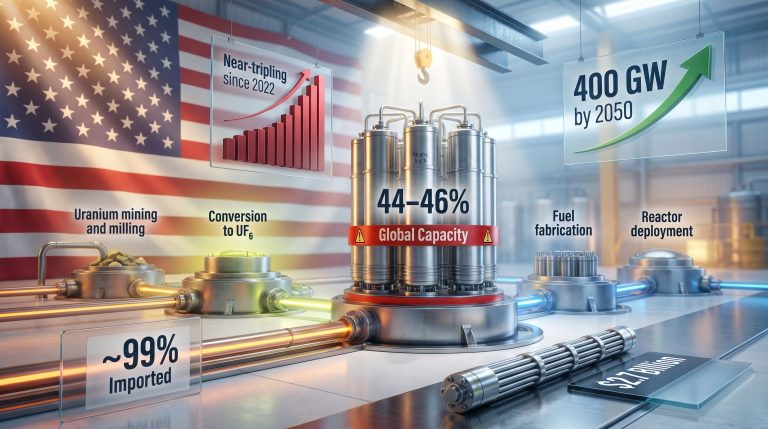
The U.S. Department of Energy's $2.7 billion commitment announced in January 2026 to rebuild domestic enrichment capacity illustrates how supply chain concentration drives policy responses. This investment aims to reduce Western dependence on Russian enrichment services while strengthening allied coordination in nuclear fuel cycle management.
Cross-border nuclear infrastructure financing requires coordination among export credit agencies, development banks, and national investment promotion organisations. These arrangements typically include:
• Risk-sharing mechanisms for large-scale projects
• Regulatory approval coordination timelines
• Technology transfer oversight protocols
• Political risk insurance coordination
Market access coordination enables nuclear technology exporters to navigate complex approval processes across multiple jurisdictions. The World Nuclear Association facilitates industry coordination through standardisation initiatives and policy advocacy, though implementation depends on government adoption of recommended frameworks.
Why Are Traditional Nuclear Governance Models Under Pressure?
Emerging technology challenges create regulatory coordination requirements that existing frameworks struggle to address effectively. Small Modular Reactors (SMRs) represent a fundamental shift toward standardised, factory-manufactured nuclear systems that challenge traditional site-specific licensing approaches.
SMR deployment requires coordination across multiple jurisdictions to achieve economies of scale through standardised designs. Factory manufacturing enables cost reductions and quality improvements, but regulatory frameworks must adapt to evaluate standardised designs rather than site-specific engineering approaches. Consequently, uranium market volatility reflects these technological transitions and infrastructure demands.
Advanced Fuel Cycle Coordination
Thorium reactor development requires international coordination for fuel cycle management, safety standard development, and waste disposal protocols. Unlike uranium-based fuel cycles, thorium utilisation involves different neutron physics, breeding characteristics, and waste stream compositions that existing regulatory frameworks do not fully address.
Fast breeder reactor programs create coordination requirements for plutonium management, reprocessing technology oversight, and proliferation risk assessment. These technologies enable uranium utilisation efficiency improvements but require enhanced security protocols and international monitoring mechanisms.
Fusion energy development necessitates new governance frameworks for tritium handling, magnetic confinement safety systems, and radioactive material management. The International Thermonuclear Experimental Reactor (ITER) project demonstrates multilateral coordination for fusion research, though commercial deployment will require additional regulatory development.
Geopolitical Fragmentation Risks
Sanctions regime complexity creates coordination challenges when nuclear cooperation agreements conflict with geopolitical restrictions. The Russian nuclear fuel supply situation illustrates how energy security considerations compete with sanctions compliance, requiring case-by-case policy adjustments.
Chinese reactor technology competition in international markets creates technology transfer oversight requirements for Western allies seeking to maintain market access while preventing sensitive technology sharing. This dynamic requires coordination between export control agencies and nuclear regulators across allied jurisdictions. Additionally, US-China trade impact influences nuclear technology cooperation and supply chain strategies.
Alliance system evolution through initiatives like AUKUS nuclear submarine cooperation creates new coordination requirements for naval reactor technology sharing, weapons-grade uranium management, and strategic deterrence coordination. These arrangements require integration of nuclear cooperation frameworks with defence alliance structures.
Which Institutional Mechanisms Prove Most Effective for Crisis Management?
Crisis response effectiveness depends on pre-established coordination protocols that enable rapid information sharing and decision-making across institutional boundaries. Different mechanisms offer varying response capabilities based on their authority scope, membership composition, and operational procedures.
| Mechanism | Response Time | Coverage Scope | Decision Authority |
|---|---|---|---|
| IAEA Incident Emergency Centre | 24-48 hours | Global notification | Advisory only |
| NATO Nuclear Planning Group | 72 hours – 2 weeks | Alliance members | Consensus required |
| Bilateral hotlines | Immediate | Country-specific | Executive level |
| UN Security Council | Days to weeks | Global authority | Veto-constrained |
The IAEA Incident Emergency Centre provides rapid notification capabilities for nuclear security events, enabling coordinated technical response across member states. However, advisory authority limits enforcement capabilities during complex political or security crises.
Bilateral communication channels between nuclear weapon states enable immediate consultation during escalating situations. These mechanisms proved critical during the 1995 Norwegian rocket incident, when Russian radar systems detected what appeared to be a submarine-launched ballistic missile but was actually a scientific research rocket.
Information Sharing Protocols
Technical data exchange mechanisms enable operational experience sharing across nuclear operators and regulatory agencies. The World Association of Nuclear Operators facilitates peer review programs, incident reporting systems, and best practice coordination among nuclear plant operators globally.
Intelligence coordination for proliferation monitoring requires integration of satellite imagery analysis, communication intercepts, and human intelligence collection across multiple agencies and allied governments. This coordination faces significant challenges from:
• Classification level differences between allies
• Legal restrictions on intelligence sharing
• Technology transfer security concerns
• Competing national intelligence priorities
Critical Challenge: Export control regimes depend on voluntary compliance by member states, with limited enforcement mechanisms against non-participating countries or private sector violations operating outside established frameworks.
Public communication strategies during nuclear incidents require coordinated messaging to prevent panic while maintaining transparency about safety measures and response actions. The Fukushima disaster response illustrated coordination challenges when different national authorities provided conflicting information about radiation risks and evacuation requirements.
How Do Regional Nuclear Governance Networks Address Local Security Concerns?
Regional coordination mechanisms enable more detailed cooperation frameworks suited to specific geographic, political, and technical conditions. These networks often serve as testing grounds for coordination mechanisms later adopted globally.
European Integration Model
EURATOM represents the most comprehensive regional nuclear governance framework, establishing shared fuel cycle management, common safety standards, and coordinated research programs across EU member states. This framework enables:
• Pooled procurement for nuclear fuel supplies
• Harmonised radiation protection standards
• Coordinated nuclear research funding
• Shared nuclear waste management strategies
The Franco-German nuclear cooperation demonstrates bilateral coordination within broader European frameworks. Joint reactor development programs, waste management coordination, and export policy alignment create operational templates for broader European integration initiatives.
Cross-border electricity trading enabled by the European Grid Integration requires coordination of nuclear plant operations with renewable energy fluctuations. Nuclear facilities provide grid stabilisation services that enable higher renewable energy penetration across interconnected systems.
Asia-Pacific Coordination Challenges
ASEAN nuclear energy cooperation focuses on peaceful use promotion while managing proliferation concerns across member states with varying nuclear capabilities and regulatory frameworks. This coordination addresses:
• Nuclear security training programs
• Emergency response coordination
• Regulatory framework harmonisation
• Public acceptance coordination strategies
Japan-South Korea-US trilateral coordination enables North Korean threat response while facilitating technology sharing and security cooperation. These arrangements require integration of nuclear cooperation with broader security alliance structures.
Australia-Canada-Kazakhstan uranium producer coordination addresses market stability through informal consultation mechanisms among major producing countries. This coordination influences:
• Production timing decisions
• Long-term supply contract strategies
• Exploration investment coordination
• Environmental standard harmonisation
Middle East Stability Frameworks
Gulf Cooperation Council nuclear coordination enables UAE-Saudi cooperation on civilian nuclear programs while maintaining regional security stability. These frameworks address shared concerns about nuclear security, waste management, and regional proliferation risks.
Israel-Arab state confidence building operates through indirect coordination mechanisms within international organisations rather than direct bilateral cooperation. These arrangements enable technical cooperation while avoiding direct political engagement.
The Iran nuclear agreement experience provided operational protocols for verification, sanctions relief coordination, and international monitoring that could inform future regional agreements. Despite political challenges, technical mechanisms developed during implementation offer frameworks for future coordination initiatives.
What Role Do Non-State Actors Play in Nuclear Policy Coordination?
Industry standardisation bodies facilitate technical coordination across national boundaries through voluntary standards development and best practice sharing. These organisations operate independently from government oversight while influencing regulatory development and operational procedures.
Industry Coordination Mechanisms
The World Nuclear Association coordinates global industry positions on regulatory frameworks, technology standards, and policy advocacy initiatives. Through working groups and technical committees, the organisation develops industry consensus positions that influence government policy development.
Nuclear reactor vendors including Westinghouse, Rosatom, and China General Nuclear coordinate international project development through technology sharing agreements, joint venture arrangements, and supply chain coordination. These relationships create:
• Standardised component specifications
• Coordinated regulatory approval strategies
• Shared research and development programs
• Integrated project financing arrangements
Uranium mining companies coordinate market information sharing and environmental standards through industry associations and voluntary coordination mechanisms. Companies like Energy Fuels are developing integrated critical mineral processing capabilities, combining uranium production with rare earth element separation and metals processing. In addition, US uranium production trends reflect technological advancement in extraction methods.
According to Energy Fuels CEO Mark Chalmers, the company is building a critical mineral hub focused around their White Mesa Mill, integrating uranium business with rare earth cycle processing. The company recently acquired Australian Strategic Materials to add metals and alloys capabilities, creating vertical integration from mining through electric vehicle components.
Academic and Research Networks
International nuclear research collaboration through organisations like CERN provides operational models for shared facility management, multinational funding coordination, and intellectual property sharing arrangements. These frameworks enable:
• Shared research facility development
• Coordinated funding from multiple governments
• Personnel exchange programs
• Technology transfer protocols
Nuclear security training programs coordinated through the IAEA enable capacity building across developing nuclear programs while maintaining international standards. Fellowship programs and university partnerships create professional networks that facilitate ongoing coordination.
Think tank policy coordination enables Track II diplomacy through unofficial channels that complement formal government negotiations. Organisations conducting scenario planning exercises and policy recommendation development influence:
• Policy option development
• Stakeholder consultation processes
• Public opinion formation
• Academic research priorities
The next major ASX story will hit our subscribers first
How Effective Are Current Sanctions and Export Control Regimes?
Technology transfer restrictions operate through multilateral coordination among supplier countries, though implementation effectiveness varies based on domestic enforcement capabilities and political commitment levels.
Nuclear Suppliers Group Coordination
The Nuclear Suppliers Group guidelines establish common standards for sensitive technology exports among 48 participating governments. These guidelines address:
• Nuclear reactor technology transfers
• Enrichment and reprocessing equipment
• Dual-use materials and components
• Nuclear-related software and technology
Australia Group controls coordinate restrictions on dual-use chemical and biological technology that could contribute to nuclear weapons development. This coordination requires technical assessment capabilities to distinguish legitimate commercial applications from weapons-related uses.
The Wassenaar Arrangement addresses conventional arms and dual-use technology coordination among 42 participating states, though nuclear-specific controls operate through separate frameworks to maintain non-proliferation focus.
Financial System Coordination
SWIFT banking network restrictions enable nuclear-related transaction monitoring across international financial systems. These controls require coordination between financial intelligence units and nuclear regulatory agencies to identify suspicious transactions.
OECD export credit guidelines coordinate nuclear project financing among developed economies, establishing common standards for political risk assessment and environmental review requirements. These arrangements influence:
• Project financing availability
• Insurance market coordination
• Political risk assessment standards
• Environmental impact evaluation
Insurance market coordination enables nuclear liability coverage across jurisdictions with different legal frameworks and compensation requirements. The International Nuclear Liability Regime facilitates coordination among insurance providers and government compensation programs.
Enforcement Mechanism Analysis
Export control effectiveness depends on voluntary compliance by member states, with limited enforcement mechanisms against non-participating countries or private sector violations. Key limitations include:
• Lack of binding enforcement authority
• Technology transfer through non-participating states
• Private sector compliance variations
• Dual-use technology identification challenges
Recent developments in 3D printing technology create new challenges for component manufacturing oversight, as sensitive nuclear components could potentially be produced using widely available manufacturing equipment and materials.
Which Emerging Technologies Require New Coordination Frameworks?
Artificial intelligence integration in nuclear operations creates coordination requirements for safety system standards, cybersecurity protocols, and human oversight mechanisms across international nuclear facilities.
AI Applications in Nuclear Operations
Nuclear plant automation using AI systems requires coordinated safety standards to ensure reliable operation across different reactor designs and operational environments. These systems enable:
• Predictive maintenance scheduling
• Automated safety system responses
• Operational efficiency optimisation
• Anomaly detection and response
Proliferation detection systems using artificial intelligence enable enhanced monitoring capabilities for satellite imagery analysis, communication pattern recognition, and facility activity assessment. International coordination enables:
• Shared algorithm development
• Training data coordination
• Detection capability standardisation
• Information sharing protocols
Decision support systems for crisis response and escalation management require coordination to ensure compatible response protocols across nuclear weapon states and alliance structures.
Advanced Manufacturing Coordination
3D printing controls for sensitive nuclear components require new oversight mechanisms as manufacturing capabilities become more widely distributed. Traditional export controls focused on complete systems may become ineffective when components can be manufactured locally using widely available equipment.
Advanced materials regulation addresses carbon fibre composites, specialised alloys, and precision manufacturing equipment that enable nuclear technology development. These materials have legitimate commercial applications, making export control decisions technically complex.
Space-based nuclear systems for planetary missions and satellite power require coordination for debris management, dual-use oversight, and safety protocol development. The Artemis Accords provide frameworks for space nuclear cooperation while maintaining non-proliferation objectives.
How Do Climate Change Commitments Reshape Nuclear Cooperation?
Carbon reduction frameworks increasingly recognise nuclear energy's role in decarbonisation strategies, creating new coordination requirements between climate policy and nuclear governance institutions. Moreover, global nuclear policy coordination adapts to address climate imperatives alongside traditional security concerns.
Paris Agreement Implementation
Nationally Determined Contributions (NDCs) under the Paris Agreement increasingly include nuclear capacity expansion as a decarbonisation strategy, creating demand signals that influence international coordination priorities.
Green taxonomy coordination addresses nuclear energy classification within sustainable finance frameworks. The EU Taxonomy Regulation influence on global investment classification creates coordination requirements among financial regulators and nuclear policy agencies.
Carbon border adjustment mechanisms create trade implications for nuclear electricity exports, requiring coordination between climate policy and nuclear trade frameworks to ensure consistent carbon accounting methodologies. Furthermore, energy transition coordination becomes essential for integrating nuclear power with renewable energy systems.
Energy Security Integration
Renewable energy coordination with nuclear baseload power requires grid management coordination across interconnected electricity systems. Nuclear facilities provide grid stability services that enable higher renewable penetration levels.
Grid stability mechanisms enable cross-border electricity trading that maximises renewable energy utilisation while maintaining system reliability through nuclear baseload coordination.
Storage technology development coordination addresses nuclear-renewable hybrid systems and hydrogen production using nuclear electricity. These applications require coordination between nuclear safety regulators and renewable energy agencies.
What Are the Long-Term Scenarios for Nuclear Governance Evolution?
Strategic scenario modelling reveals three primary pathways for nuclear governance development based on different assumptions about geopolitical stability, technological advancement, and climate policy urgency.
Scenario 1: Enhanced Multilateral Coordination
This scenario assumes continued international cooperation strengthening through:
• Expanded IAEA authority with binding safety standards and enhanced enforcement mechanisms
• Regional integration deepening following the EURATOM model across Asia-Pacific and other regions
• Technology sharing acceleration through standardised reactor designs and shared fuel cycle facilities
• Coordinated research programs addressing advanced reactor technologies and fuel cycle innovation
Under this scenario, global nuclear policy coordination operates through strengthened multilateral institutions with enhanced technical capabilities and broader political mandate for nuclear energy promotion.
Scenario 2: Fragmented Bloc Competition
This pathway assumes increasing geopolitical competition leading to:
• Western alliance consolidation through NATO-aligned nuclear cooperation separate from China-Russia frameworks
• Technology decoupling creating incompatible reactor designs, fuel cycles, and supply chains
• Parallel governance structures with competing safety standards and coordination mechanisms
• Sanctions regime expansion restricting technology transfers and financial flows across blocs
This scenario results in reduced global nuclear policy coordination effectiveness while potentially accelerating innovation within competing alliance systems.
Scenario 3: Crisis-Driven Centralisation
Emergency coordination acceleration through:
• Nuclear incident response creating enhanced international coordination following a major safety event
• Proliferation crisis management driving tighter controls following non-state actor threats
• Climate emergency acceleration requiring rapid nuclear deployment with streamlined coordination
• Energy security crises forcing accelerated coordination among allied nations
Under this scenario, external crisis pressures override traditional sovereignty concerns, enabling more centralised coordination mechanisms than current political constraints allow.
Disclaimer: The analysis presented in this article involves forecasts and speculation about future nuclear governance developments. Investment decisions should be based on comprehensive due diligence and professional financial advice. Nuclear policy coordination remains subject to significant political, technical, and regulatory uncertainties that could substantially affect outcomes.
FAQ Section
How do nuclear weapon states coordinate policy while maintaining strategic independence?
Nuclear weapon states balance coordination through formal mechanisms like the NPT Review Process and informal consultations, while preserving national decision-making autonomy over weapons doctrine, deployment patterns, and modernisation programs. The NATO Nuclear Planning Group exemplifies this balance within alliance structures.
What happens when nuclear cooperation agreements conflict with sanctions regimes?
Conflicts between nuclear cooperation commitments and sanctions create complex legal and diplomatic challenges, typically resolved through case-by-case negotiations, temporary exemptions, or alternative supply arrangements. The Russian nuclear fuel situation illustrates these tensions in practice.
How effective are international nuclear safety standards in preventing accidents?
International safety standards provide frameworks for best practice sharing and peer review, but implementation depends on national regulatory capacity and political commitment. The IAEA's Operational Safety Review Team missions demonstrate voluntary coordination mechanisms, while binding enforcement remains limited.
Which countries have the most influence over global nuclear policy coordination?
The United States, Russia, France, China, and the United Kingdom maintain disproportionate influence through their roles as nuclear weapon states, major reactor exporters, and permanent UN Security Council members. However, countries like Canada, Australia, and Kazakhstan exercise significant influence through uranium supply control.
How do regional nuclear governance networks interact with global frameworks?
Regional networks like EURATOM operate within global frameworks while developing more detailed coordination mechanisms suited to local conditions. These networks often serve as testing grounds for coordination mechanisms later adopted globally, creating a multi-layered governance system.
Looking to Navigate the Nuclear Energy Investment Landscape?
With nuclear governance frameworks evolving rapidly and climate commitments reshaping global energy strategies, identifying actionable opportunities in nuclear-exposed ASX companies requires staying ahead of complex policy developments. Discovery Alert's proprietary Discovery IQ model provides instant notifications of significant mineral discoveries across uranium and critical minerals sectors, empowering investors to capitalise on emerging opportunities before broader market recognition occurs.