
August 21, 2026
Global Oil Market Dynamics Under Supply Chain Pressure
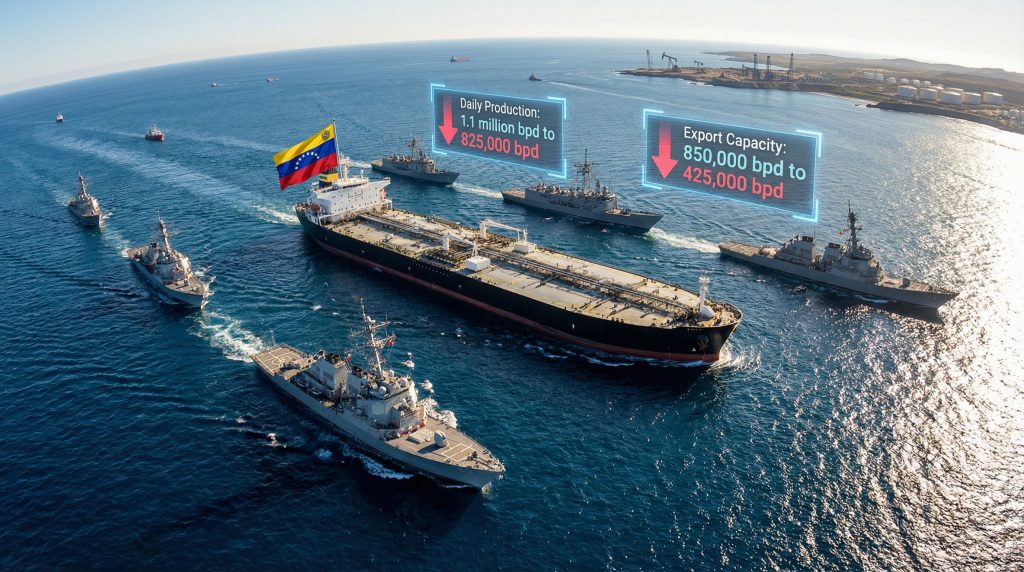
Energy markets face mounting complexity as geopolitical enforcement mechanisms reshape traditional supply flows and pricing structures. The U.S. blockade on Venezuelan oil creates unprecedented challenges for global distribution systems, fundamentally altering how crude reaches international markets and triggering an oil price rally across key benchmarks.
Current market conditions reflect broader tensions between enforcement actions and adaptive trading strategies. Furthermore, WTI and Brent futures have shown remarkable resilience, with prices maintaining relative stability despite significant geopolitical developments affecting Venezuelan supply chains.
When big ASX news breaks, our subscribers know first
How Enforcement Actions Reshape Oil Supply Networks
Recent enforcement measures targeting Venezuelan crude exports illustrate the evolution of economic pressure tactics. The December announcements referenced a "total and complete blockade" approach, representing a shift from traditional sanctions toward direct supply chain interdiction targeting approximately 850,000 barrels per day of Venezuelan exports.
The market response to these announcements proved telling. While futures initially jumped more than 2%, the rally proved short-lived as traders remained unconvinced that enforcement would meaningfully disrupt flows. This reaction pattern indicates sophisticated market adaptation to enforcement threats and demonstrates how tariff price adjustments influence broader energy pricing mechanisms.
Shadow Fleet Adaptation Mechanisms
Venezuelan operations have demonstrated remarkable resilience through years of sanctions pressure. Market intelligence suggests the country has maintained export capabilities by implementing several adaptive strategies that effectively counter the U.S. blockade on Venezuelan oil enforcement efforts.
The persistence of alternative trading networks includes:
- Route optimisation through intermediate loading points
- Vessel-to-vessel transfers to circumvent direct monitoring
- Steep discount pricing to compensate for operational risks
- Extended payment terms to attract buyers despite enforcement uncertainty
These adaptations reflect a systematic approach to maintaining market access despite regulatory pressure. Consequently, enforcement effectiveness depends heavily on sustained operational commitment rather than initial announcements.
Regional Production Impact Analysis
Venezuelan production adjustments appear to reflect both enforcement pressure and strategic operational decisions. Recent reports indicate production cuts across primary oil-producing regions, with state-controlled PDVSA implementing strategic well closures to manage operational costs whilst preserving critical infrastructure.
The distinction between enforcement-driven and infrastructure-related production declines remains crucial for market analysis. Moreover, Venezuela's oil sector has faced years of underinvestment and equipment challenges, making it difficult to isolate blockade impacts from pre-existing operational constraints.
Orinoco Belt Operations Under Pressure
The Orinoco Belt represents Venezuela's primary heavy crude production zone, containing some of the world's largest proven oil reserves. Production management in this region reflects broader strategic decisions about resource allocation and infrastructure preservation under mounting pressure from the U.S. blockade on Venezuelan oil.
Industry observers note that operational decisions in the Orinoco Belt often prioritise maintaining core production capabilities rather than maximising short-term output. This approach aims to preserve long-term asset value while navigating immediate market challenges created by enforcement actions.
According to Bloomberg's analysis, Venezuela has begun systematically shutting oil wells as the blockade effectively halts export flows, demonstrating the immediate operational impact of enforcement measures.
Alternative Supply Chain Development
Global oil markets have demonstrated increasing sophistication in developing alternative supply pathways when traditional routes face disruption. The Venezuelan situation illustrates several key trends in this evolution, particularly as markets respond to OPEC price stagnation and seek new supply sources.
Intermediate Port Utilisation reduces direct exposure to enforcement actions whilst maintaining export capabilities through creative logistics solutions.
Pricing Mechanism Adaptation involves market-based solutions through discount pricing and modified contract terms that help offset operational risks associated with enforcement uncertainty.
Geographic Diversification sees Asian markets, particularly China, providing alternative demand centres less susceptible to Western enforcement pressure.
Chinese Strategic Stockpiling Impact
China's strategic petroleum reserve management plays a crucial role in global oil market dynamics. Chinese stockpiling activities at rates of 900,000 to 1,000,000 barrels per day, with storage facilities currently at approximately half capacity, provide significant market stability during supply disruptions.
This stockpiling strategy provides several market functions:
- Demand buffer for displaced crude volumes from sanctioned suppliers
- Price stabilisation through strategic buying during market weakness
- Supply security enhancement for long-term energy planning
- Alternative market creation for producers facing enforcement pressure
Contract Modification Trends
Chinese energy companies have reportedly adapted contract structures to accommodate delivery uncertainties created by the U.S. blockade on Venezuelan oil and similar enforcement actions. These modifications typically include extended payment periods to manage cash flow risks and force majeure provisions accounting for enforcement disruptions.
Additionally, flexible delivery terms accommodate route changes, whilst risk-adjusted pricing mechanisms reflect operational challenges posed by evolving enforcement strategies.
Global Energy Security Implications
The Venezuelan blockade situation establishes important precedents for future resource control strategies. The combination of military assets with economic enforcement creates new frameworks for international pressure campaigns, potentially influencing how resource-rich nations approach energy security planning.
Furthermore, the situation demonstrates how quickly operational environments can change, affecting long-term investment planning and asset valuation in ways that extend beyond traditional market mechanisms.
Market Structure Evolution
Current trends suggest increasing regionalisation of energy markets, where political alignment and geographic proximity play larger roles in determining trade relationships. This evolution may reduce global market integration whilst strengthening regional energy security frameworks.
Regional Supply Preferences show increased focus on politically stable suppliers within geographic regions, reducing dependence on potentially vulnerable sources.
Infrastructure Adaptation involves development of alternative transportation networks less vulnerable to enforcement actions like the U.S. blockade on Venezuelan oil.
Contract Innovation includes new agreement structures accounting for geopolitical risks and enforcement uncertainties that traditional frameworks cannot address.
The next major ASX story will hit our subscribers first
Investment Climate Considerations
International energy companies operating in politically sensitive regions face heightened operational risks and potential asset exposure. This environment may drive capital toward jurisdictions with stronger political stability and regulatory predictability, particularly given escalating tensions in the US‑China trade war.
Companies must increasingly factor geopolitical stability into project economics and portfolio management decisions. The Venezuelan situation demonstrates how enforcement actions can rapidly alter operational environments and affect long-term investment viability.
For instance, energy companies must now evaluate potential exposure to secondary sanctions when considering partnerships or investments in regions subject to enforcement actions.
Market Psychology and Price Discovery
The muted price response to Venezuelan enforcement announcements reveals important insights about current market psychology. Analysis shows that traders are using geopolitical rallies to sell into strength rather than reprice the broader fundamental picture.
This behaviour pattern suggests several market dynamics:
- Oversupply expectations remain dominant despite enforcement actions
- Alternative supply confidence reduces fear-based price premiums
- Enforcement scepticism based on historical enforcement gaps
- Demand weakness particularly from Chinese consumption patterns
However, PBS reports indicate that military strikes inside Venezuela represent an escalation that could fundamentally alter market perceptions of enforcement effectiveness.
Long-term Energy Market Projections
The International Energy Agency projects Brent crude prices near $55 per barrel in Q1 2026, with global supply growth of 3 million barrels per day in the current year. These projections dwarf expected demand increases below 1 million barrels per day annually, suggesting continued market oversupply despite disruptions.
Floating storage near 180 million barrels further illustrates the challenge producers face in placing crude volumes, even with significant geopolitical disruptions affecting traditional suppliers like Venezuela.
Technology and Adaptation
Maritime tracking technology and financial innovation continue to enable alternative trading networks. Satellite monitoring, vessel identification systems, and sophisticated routing software allow traders to navigate complex regulatory environments whilst maintaining commercial operations.
These technological capabilities suggest that traditional enforcement mechanisms may require continuous evolution to maintain effectiveness against adaptive trading networks that circumvent blockade efforts.
Conclusion: Balancing Enforcement and Market Reality
The U.S. blockade on Venezuelan oil represents a significant escalation in economic enforcement methodology, combining naval assets with financial pressure to achieve strategic objectives. However, market responses suggest that complete supply elimination remains challenging in an interconnected global energy system.
The effectiveness of such enforcement actions depends largely on sustained operational commitment and the ability to prevent comprehensive alternative network development. Market adaptation through shadow fleet operations, Chinese strategic stockpiling, and pricing mechanism adjustments demonstrates the resilience of global energy trading systems.
Long-term implications extend beyond immediate supply disruptions to encompass broader questions about energy security frameworks, international trade relationships, and the evolving role of military assets in economic policy implementation. The Venezuelan case provides important insights into how modern energy markets respond to geopolitical pressure whilst maintaining essential supply functions.
Disclaimer: This analysis is based on publicly available information and market data. Energy market conditions and geopolitical situations can change rapidly, affecting the accuracy of projections and assessments. Readers should consult current market data and professional advisors for investment decisions.
Ready to Discover the Next Energy Investment Opportunity?
Discovery Alert's proprietary Discovery IQ model delivers real-time alerts on significant ASX mineral discoveries, including energy sector opportunities that could benefit from global supply chain disruptions like the Venezuelan oil blockade. Begin your 30-day free trial today and secure your market-leading advantage in identifying actionable investment opportunities ahead of the broader market.