June 11, 2026
Global Overcapacity Pressures Transform Regional Steel Market Dynamics
The worldwide steel industry faces unprecedented structural challenges that extend far beyond traditional supply-demand cycles. With global excess capacity reaching 620 million tonnes annually and projections indicating growth to 721 million tonnes by 2027, regional markets across South America find themselves at the epicenter of profound industrial transformation. These capacity imbalances create cascading effects through international trade flows, forcing emerging economies to navigate complex scenarios involving import surges, domestic production pressures, and employment considerations that will reshape their industrial landscapes through the remainder of this decade.
Brazil's steel market presents a compelling case study of how global overcapacity translates into regional market disruption. The convergence of declining domestic production capabilities, robust consumption growth, and redirected international trade flows positions Latin America's largest economy as a critical destination for surplus global steel production. Understanding these dynamics requires analysis of multiple interconnected factors, from currency movements and infrastructure demand to trade protection mechanisms and employment sustainability.
When big ASX news breaks, our subscribers know first
Economic Fundamentals Driving Import Pressure Scenarios
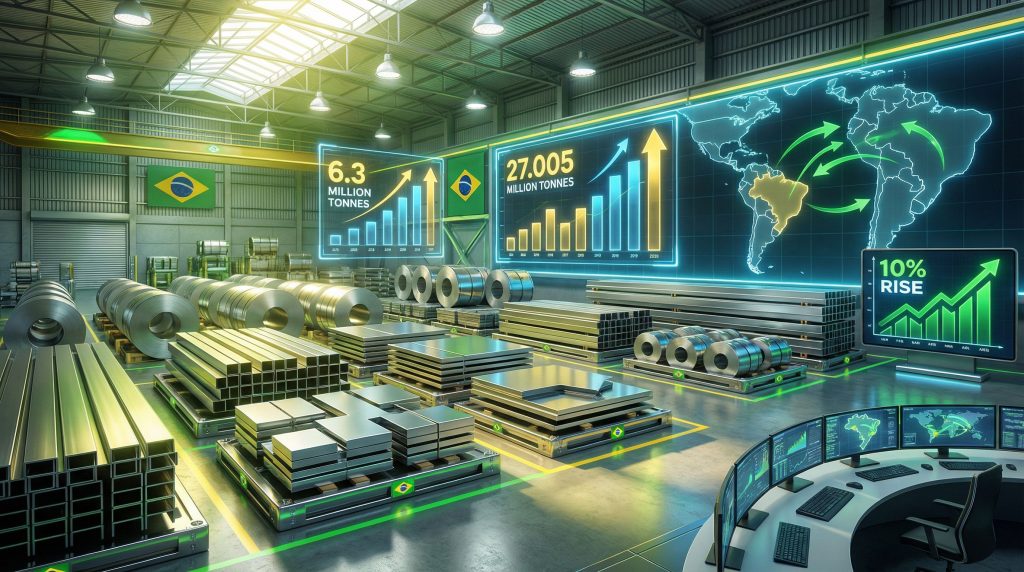
Multiple economic forces create a perfect storm for Brazilian steel imports forecast 2026 projections. Domestic crude steel production faces a projected decline of 2.2% in both 2025 and 2026, creating supply gaps that must be filled through alternative sources. This production weakness stems from cost competitiveness challenges rather than demand shortfalls, as apparent steel consumption is expected to grow 1% to reach 27.005 million tonnes in 2026.
The mathematical relationship between production, consumption, and imports reveals the underlying pressure. With domestic steel sales projected to decline 1.7% in 2026 while apparent consumption increases, the gap widens substantially. This creates an inevitable scenario where import penetration reaches approximately 23% of total consumption, representing a structural shift in market dynamics.
Currency exchange rate volatility amplifies these pressures by affecting the relative competitiveness of imported versus domestically-produced steel. When the Brazilian real weakens against major currencies, import costs in local currency terms may still remain attractive compared to domestic production costs that include expensive raw materials, energy, and labor components. Furthermore, these iron ore trends significantly influence the cost structure of domestic steel production.
Infrastructure Demand Versus Supply Capacity Analysis
Brazil's infrastructure development requirements continue generating robust steel demand across multiple sectors:
• Construction sector expansion driving hot-rolled and cold-rolled product demand
• Manufacturing industry growth requiring specialized steel grades and specifications
• Energy infrastructure projects consuming large volumes of structural steel products
• Transportation network development creating demand for rail, pipeline, and bridge materials
The disconnect between this demand strength and domestic supply capacity reflects deeper structural issues within Brazil's steel production base. Domestic mills face challenges in cost structure, technological efficiency, and product specification capabilities that make them less competitive even in their home market.
Industry Forecasting Models Predict Record Import Levels
Brazilian steel industry projections point toward rolled steel imports rising 10% in 2026, reaching a record 6.324 million tonnes. This forecast represents a significant upward revision from earlier projections, reflecting deteriorating domestic production conditions and strengthening import competitiveness.
The 2025 baseline of 5.748 million tonnes already represents substantial import penetration, making the projected 2026 increase particularly significant for market structure. Previous forecasting models underestimated the pace of import growth, requiring downward revisions of 11.7 percentage points from earlier estimates, indicating the dynamic nature of market conditions.
The combination of global overcapacity and domestic production constraints creates an environment where import growth becomes inevitable, despite existing trade protection measures.
Trade Diversion Effects From Global Protection Measures
International trade protection mechanisms create redirection patterns that concentrate surplus steel in markets with relatively open trade policies. As major economies implement defensive measures, displaced export volumes seek alternative destinations, with Brazil becoming an attractive target due to:
• Large domestic market size capable of absorbing substantial import volumes
• Established logistics infrastructure for handling steel imports through major ports
• Diverse end-user industries creating demand for various steel product categories
• Limited trade barriers compared to developed economy protection levels
Mexico's recent implementation of enhanced tariffs, justified by employment protection concerns affecting 320,000 potential jobs, exemplifies how regional trade protection creates displacement effects. Moreover, how tariffs impact markets demonstrates the interconnected nature of these protective measures across global trading systems.
Import Threshold Implications for Industrial Structure
The projected 6.324 million tonne import threshold represents more than a statistical milestone; it signals a fundamental transformation in Brazil's steel market structure. This volume, representing approximately 23.4% of apparent consumption, approaches levels that typically trigger significant industrial adjustment pressures.
Historical analysis of import penetration rates across global steel markets suggests that sustained import shares exceeding 20% of consumption often lead to permanent changes in domestic industry structure. Mills operating below optimal capacity utilization face profitability pressures that can trigger consolidation, capacity reduction, or strategic repositioning toward higher-value product segments.
Employment and Regional Economic Impact Assessment
The employment implications of reaching this import threshold extend beyond direct steel production jobs. Regional economies dependent on steel manufacturing face multiplier effects through:
Direct Employment Effects:
• Steel mill workforce reductions due to capacity underutilization
• Maintenance and support service job losses
• Transportation and logistics employment changes
Indirect Economic Impacts:
• Reduced demand for local raw materials and energy
• Lower tax revenues for steel-producing municipalities
• Decreased economic activity in steel-dependent communities
Supply Chain Ripple Effects:
• Reduced domestic steel availability affecting downstream industries
• Potential supply security concerns for strategic sectors
• Changed competitive dynamics for steel-intensive manufacturers
| Import Volume Scenario | Market Share | Domestic Production Impact | Employment Risk Level |
|---|---|---|---|
| 5.0 million tonnes | 19% | Moderate pressure | Low |
| 6.3 million tonnes | 23% | Significant pressure | Moderate-High |
| 7.0 million tonnes | 26% | Severe pressure | High |
Consumption Growth Paradox Creates Market Tensions
Brazil's steel consumption growth of 1% annually creates a paradoxical situation where positive demand fundamentals benefit foreign producers rather than domestic manufacturers. This 27.005 million tonne consumption level represents historically strong demand, yet domestic producers cannot capitalise on this favourable environment.
The segmentation of this consumption across end-user industries reveals varying degrees of import penetration:
• Automotive sector increasingly relying on imported specialised grades
• Construction industry mixing domestic and imported products based on price sensitivity
• Manufacturing applications requiring specific quality standards often met through imports
• Infrastructure projects utilising both domestic and imported materials depending on specifications
Regional Consumption Distribution Patterns
Geographic concentration of steel consumption affects import penetration rates across different regions:
São Paulo Industrial Corridor: High consumption density with strong port access facilitates import penetration, particularly for specialised products requiring consistent quality standards.
Southeastern Manufacturing Belt: Mixed consumption patterns where domestic and imported products compete across various applications, with imports gaining share in higher-specification segments.
Northern Mining and Energy Regions: Infrastructure-heavy consumption patterns where project-specific requirements may favour either domestic or imported products depending on timing, specifications, and logistics considerations.
Strategic Response Mechanisms From Domestic Producers
Brazilian steelmakers implement multiple strategic adjustments to navigate the challenging competitive environment. Trade defence mechanisms already include quota-tariff systems and anti-dumping measures, yet the continued forecast growth in imports suggests these measures provide insufficient protection against underlying market forces.
Production optimisation strategies focus on operational efficiency improvements rather than capacity expansion. With crude steel production declining 2.2% in both forecast years, domestic producers prioritise cost reduction, yield improvements, and product mix optimisation toward higher-value segments where imports face greater competitive disadvantages. However, the broader trade war impacts continue to reshape global steel flows.
Market Positioning and Product Strategy Evolution
Domestic steel producers pursue strategic repositioning across several dimensions:
Product Differentiation Initiatives:
• Specialty steel grades with technical support services
• Custom rolling and processing capabilities for specific applications
• Just-in-time delivery advantages for local customers
• Technical collaboration with end-user industries
Operational Excellence Programmes:
• Energy efficiency improvements to reduce production costs
• Raw material procurement optimisation and supply chain management
• Maintenance and reliability programmes to maximise asset utilisation
• Workforce productivity enhancement initiatives
Customer Relationship Strategies:
• Long-term supply agreements with key industrial customers
• Value-added services including inventory management and technical support
• Regional distribution network optimisation for delivery cost advantages
• Quality consistency programmes to differentiate from commodity imports
The next major ASX story will hit our subscribers first
Global Overcapacity Trends Reshape Competition Dynamics
The 620 million tonnes of current global excess capacity represents approximately 30% of total world steel consumption, creating persistent downward pressure on international steel prices. This overcapacity, projected to expand to 721 million tonnes by 2027, fundamentally alters competitive dynamics in regional markets worldwide.
Chinese steel production capacity, while not explicitly quantified in available forecasts, drives much of this global surplus. China's domestic demand fluctuations directly impact export availability, creating volatile supply conditions in international markets. When Chinese domestic consumption softens, export volumes increase significantly, affecting pricing and availability in destination markets including Brazil.
Capacity Utilisation Rate Implications
Global capacity utilisation rates hovering around 70-75% indicate structural oversupply that cannot be resolved through typical demand recovery cycles. This sustained underutilisation creates several market effects:
• Aggressive export pricing as producers seek to maintain cash flow and minimise fixed cost absorption
• Quality competition as exporters offer higher specifications to penetrate new markets
• Financing advantages for exporters with government backing or subsidised capital costs
• Market share battles in growth regions like South America and Southeast Asia
According to Brazil's steel sector analysis, the domestic industry faces mounting pressures from these global dynamics.
| Global Overcapacity Scenario | 2025 Estimate | 2027 Projection | Brazil Import Impact |
|---|---|---|---|
| Excess Capacity (Million Tonnes) | 620 | 721 | High pressure |
| Utilisation Rate | 73% | 69% | Increased competition |
| Export Intensity | High | Very High | Record import levels |
Investment Strategy Considerations Under Import Pressure
Brazilian steel sector investment decisions face complex trade-offs between capacity expansion, modernisation, and operational optimisation. With declining domestic production projected through 2026, traditional capacity expansion investments appear unattractive, shifting focus toward efficiency improvements and product differentiation capabilities.
Capital Allocation Priorities reflect the challenging competitive environment:
• Technology upgrades to reduce production costs and improve product quality
• Environmental compliance investments required for regulatory adherence
• Automation and digitalisation projects to enhance operational efficiency
• Product development capabilities for specialised and high-value applications
Companies like BHP are implementing their own strategic adjustments, with the BHP pivot strategy demonstrating how major players respond to evolving market conditions.
Market Valuation and Financial Performance Impact
Import penetration reaching 23% of consumption creates significant financial pressure on domestic steel producers through multiple channels:
Revenue Impact:
• Reduced domestic market share limiting volume growth opportunities
• Pricing pressure from import competition affecting realised prices
• Product mix shifts toward lower-margin commodity grades
Cost Structure Challenges:
• Fixed cost absorption difficulties due to capacity underutilisation
• Raw material cost disadvantages compared to integrated global producers
• Energy and labour cost competitiveness issues relative to export origins
Investment Returns:
• Reduced returns on existing asset base due to market share erosion
• Uncertain payback periods for new investments given competitive pressures
• Potential asset write-downs if market conditions continue deteriorating
Export Performance Balancing Import Growth Dynamics
Brazilian steel exports provide partial offset to import pressure, with 2025 projections showing 6.4% growth to reach 10.234 million tonnes. However, 2026 forecasts indicate a 0.6% decline to 10.175 million tonnes, suggesting export market challenges that limit this offset mechanism.
Export destination diversification becomes critical as traditional markets implement their own protection measures. Regional markets in South America offer growth potential, while competition intensifies in North American and European markets due to trade restrictions and domestic capacity protection.
Competitive Positioning in International Markets
Brazilian steel exports face several competitive challenges and advantages:
Competitive Advantages:
• Integrated raw material supply chain including iron ore and coal access
• Geographic proximity to key South American markets
• Established logistics infrastructure for bulk commodity exports
• Currency devaluation periods enhancing export competitiveness
Competitive Challenges:
• Chinese overcapacity creating aggressive pricing in export markets
• Transportation costs to distant markets affecting price competitiveness
• Trade protection measures limiting access to developed economy markets
• Product specification requirements in premium export segments
Policy Intervention Options and Market Impact Assessment
Brazilian policymakers possess several tools to address the projected import surge, though each mechanism involves trade-offs between protection and economic efficiency. Existing quota-tariff mechanisms and anti-dumping measures provide some protection but appear insufficient given continued import growth projections.
Enhanced Trade Protection Options:
• Expanded quota-tariff system coverage across additional product categories
• Increased tariff rates within World Trade Organisation compliance parameters
• Accelerated anti-dumping investigations for specific steel product segments
• Regional trade agreement provisions favouring domestic content
Industrial Policy Support Mechanisms
Beyond trade protection, industrial policy measures could address underlying competitiveness issues:
Infrastructure and Logistics Support:
• Port efficiency improvements reducing import cost advantages
• Transportation infrastructure investment lowering domestic distribution costs
• Energy cost reduction programmes for industrial users
• Raw material supply chain optimisation initiatives
Technology and Innovation Programmes:
• Research and development tax incentives for steel technology advancement
• Government-industry collaboration on productivity improvement projects
• Skills training programmes for advanced manufacturing techniques
• Environmental technology adoption support reducing compliance costs
Domestic Demand Support:
• Infrastructure project domestic content requirements
• Government procurement preferences for locally-produced steel
• Construction industry incentives linked to domestic steel utilisation
• Manufacturing sector support programmes encouraging local sourcing
Stakeholder Preparation Strategies for Market Transformation
The projected market environment through 2026 requires differentiated preparation strategies across industry stakeholders. Steel producers, end-users, investors, and policymakers face distinct challenges requiring tailored approaches to navigate the evolving competitive landscape.
Steel Producer Strategic Planning Framework
Operational Excellence Initiatives:
• Cost reduction programmes targeting 5-10% production cost savings
• Yield improvement projects maximising raw material utilisation
• Energy efficiency investments reducing variable cost structures
• Maintenance optimisation extending asset life and reliability
Market Positioning Strategies:
• Customer relationship management programmes building switching costs
• Product differentiation through quality consistency and technical services
• Geographic market optimisation focusing on logistically advantaged regions
• Value-added services development including processing and inventory management
Financial Risk Management:
• Currency hedging strategies addressing exchange rate volatility
• Raw material price risk mitigation through supply agreements
• Working capital optimisation reducing financial burden
• Capital expenditure prioritisation focusing on high-return projects
For investors seeking broader market perspectives, investment strategy insights provide comprehensive guidance on navigating these challenging market conditions.
| Stakeholder Type | Primary Risk | Recommended Strategy | Success Metrics |
|---|---|---|---|
| Steel Producers | Market share loss | Operational excellence | Cost reduction, yield improvement |
| End-Users | Supply disruption | Diversified sourcing | Supply security, cost optimisation |
| Investors | Asset devaluation | Risk assessment | Portfolio optimisation, sector rotation |
| Policymakers | Employment impact | Balanced protection | Economic growth, trade balance |
End-User Industry Risk Mitigation
Supply Chain Diversification:
• Multiple supplier qualification reducing dependence risks
• Import source diversification managing geopolitical exposure
• Inventory management balancing carrying costs with supply security
• Long-term contract strategies providing price and volume stability
Cost Management Approaches:
• Raw material cost forecasting improving budget accuracy
• Product design optimisation reducing steel content requirements
• Alternative material evaluation where technically feasible
• Purchasing collaboration with other end-users improving negotiating leverage
Risk Assessment and Opportunity Identification Framework
The Brazilian steel imports forecast 2026 scenario creates both significant risks and potential opportunities across the value chain. Systematic risk assessment enables stakeholders to develop appropriate mitigation strategies while identifying areas where market disruption creates competitive advantages.
Primary Risk Categories:
Market Structure Risks:
• Domestic industry consolidation reducing supplier options
• Import dependency creating supply security vulnerabilities
• Price volatility from global overcapacity cycles
• Quality consistency concerns with diversified supply sources
Economic and Financial Risks:
• Currency fluctuation affecting import cost competitiveness
• Interest rate changes impacting investment and inventory financing
• Credit availability constraints for industry participants
• Asset valuation declines in steel production facilities
Regulatory and Policy Risks:
• Trade policy changes affecting import conditions and costs
• Environmental regulation compliance costs increasing production expenses
• Regional trade agreement modifications altering competitive dynamics
• Government infrastructure spending affecting steel demand patterns
Strategic Opportunity Assessment
Market Development Opportunities:
• Niche product segments requiring specialised capabilities or services
• Geographic expansion into underserved regional markets
• Vertical integration creating value-added processing capabilities
• Technology leadership in sustainable production methods
Industry Transformation Benefits:
• Consolidation creating scale advantages for surviving participants
• Import competition forcing efficiency improvements and innovation
• Market discipline reducing excess capacity through competitive pressure
• International exposure through export development and global partnerships
What Does This Mean for Industry Participants?
The convergence of global overcapacity, domestic production challenges, and robust consumption growth creates a complex environment requiring sophisticated strategic responses. Brazilian steel imports forecast 2026 projections indicate a market transformation that will permanently alter competitive dynamics across the value chain.
Furthermore, analysis from Brazilian steel sector pressures confirms that Chinese competition remains the dominant force reshaping regional markets. This external pressure combines with domestic structural challenges to create unprecedented strategic complexities for industry participants.
Success in this transformed market structure demands operational excellence, strategic positioning, and adaptive capabilities that enable participants to thrive despite intensified competitive pressures. Stakeholders who develop comprehensive preparation strategies addressing both defensive risk mitigation and offensive opportunity capture will be best positioned to navigate the evolving Brazilian steel market landscape through 2026 and beyond.
Are You Positioned to Capitalise on Steel Market Disruptions?
The transformation of Brazil's steel market represents just one facet of broader commodity sector dynamics that create significant investment opportunities. Discovery Alert's proprietary Discovery IQ model provides real-time alerts on major ASX mineral discoveries, helping investors identify actionable opportunities across multiple commodities including iron ore and steel-related mining ventures before broader market recognition occurs. Explore how historic discoveries have generated substantial returns by examining documented examples of exceptional market outcomes, then begin your 30-day free trial to secure your market-leading advantage in commodity investing.