May 10, 2026
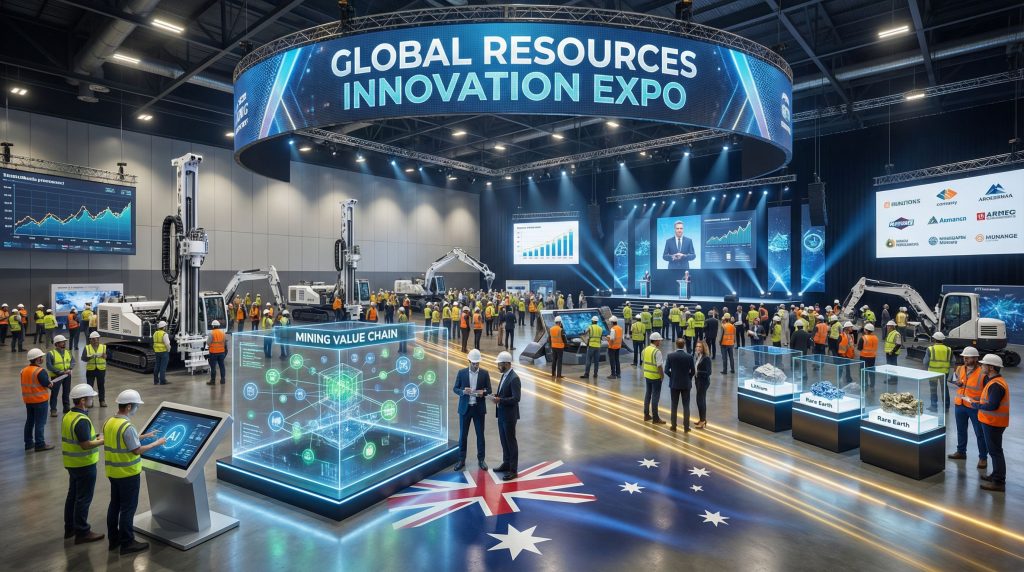
The mining sector is undergoing unprecedented transformation, driven by the convergence of artificial intelligence, environmental pressures, and supply chain disruptions. This evolution is creating unique opportunities for breakthrough innovations across the entire extraction value chain, particularly showcased through events like the global resources innovation expo that bring together industry leaders and technology pioneers.
Understanding Innovation Platforms in Modern Mining Technology
Defining Next-Generation Mining Innovation Frameworks
The mining sector's approach to technology adoption has fundamentally shifted from incremental improvements to systemic transformation. Modern innovation platforms represent complex ecosystems where mining equipment and technology services (METS) providers collaborate with operators through structured methodologies designed to accelerate commercial deployment. These developments align closely with current industry evolution trends shaping the sector.
These frameworks typically operate through three-day intensive formats that combine live demonstrations, mentoring programs, and direct investor engagement. The architecture enables cross-sector collaboration by bringing together diverse stakeholders from exploration companies to processing specialists, creating what industry experts describe as innovation acceleration environments.
Technical specifications for these platforms often include:
- Digital integration capabilities spanning exploration to processing
- Real-time evaluation systems for technology assessment
- International partnership networks connecting multiple mining markets
- Mentoring frameworks supporting early-stage technology development
Strategic Positioning Within Australia's Mining Technology Ecosystem
Perth's emergence as a global mining innovation hub reflects deeper structural advantages within Australia's technology ecosystem. The city's concentration of mining research institutions, coupled with proximity to major operational sites, creates unique conditions for rapid prototype testing and validation.
Key ecosystem advantages include:
| Component | Strategic Value |
|---|---|
| Research Integration | Direct university-industry collaboration pathways |
| Operational Access | Proximity to live mining operations for testing |
| Regulatory Environment | Streamlined approval processes for innovation trials |
| Capital Networks | Established mining investment infrastructure |
The positioning strategy leverages Australia's historical mining expertise while addressing modern challenges around critical mineral development and environmental compliance. Furthermore, this creates what researchers term "innovation clustering effects" where concentrated expertise accelerates breakthrough development.
When big ASX news breaks, our subscribers know first
Technology Integration Pathways Across Mining Operations
Critical Minerals Discovery and Extraction Technologies
The focus on critical minerals discovery represents one of the mining sector's most pressing technological challenges. Current industry estimates suggest that traditional exploration timelines of 10-15 years must be compressed to 3-5 years to meet global supply demands for battery metals and rare earth elements. Understanding mineral exploration importance becomes crucial in this accelerated environment.
Advanced exploration technologies now include:
- AI-driven geological modelling systems that process satellite imagery and geological surveys
- Remote sensing applications utilising hyperspectral imaging for mineral identification
- Low-impact drilling methodologies reducing environmental footprint by up to 60%
- Integrated digital platforms connecting exploration data with processing optimisation
These technological approaches target what industry analysts identify as the sector's core challenge: accelerating the discovery, development and extraction of critical minerals while reducing costs, timelines and environmental impact. Additionally, the integration of critical minerals and energy considerations drives innovation priorities.
The integration of artificial intelligence into geological modelling has proven particularly transformative. Machine learning algorithms can now identify mineral signatures in geological data with accuracy rates exceeding 85%, compared to traditional methods achieving 65-70% accuracy rates.
Operational Excellence Through Digital Transformation
Mining operations are experiencing unprecedented automation integration, driven by both safety requirements and efficiency demands. Autonomous systems now handle approximately 40% of extraction activities at leading operations, with this figure projected to reach 70% by 2030. Consequently, AI-driven drilling & blasting technologies are revolutionising operational processes.
Processing technology advancements focus on:
- Energy efficiency optimisation reducing power consumption by 25-35%
- Water recycling systems achieving 90%+ water reuse rates
- Waste reduction technologies minimising tailings volume through enhanced recovery
- Predictive maintenance platforms reducing equipment downtime by 40%
Safety technology implementations have evolved beyond traditional monitoring systems to include predictive risk assessment tools that analyse multiple data streams to forecast potential hazards before they occur.
Global Innovation Challenge Mechanisms
Challenge Structure and Evaluation Methodology
The Global Open Innovation Colab Challenge represents a new model for mining technology development, focusing specifically on solutions that address critical mineral supply constraints. The initiative targets breakthrough technologies rather than incremental improvements, with the global resources innovation expo serving as a primary platform for showcasing these innovations.
Technical submission requirements encompass:
- Advanced exploration and extraction technologies
- AI-driven geological modelling solutions
- Remote sensing applications for mineral identification
- Low-impact drilling systems with reduced environmental impact
- Integrated digital platforms for accelerated mineral development
The evaluation process utilises a global judging panel that shortlists six finalists from international submissions. Selected participants receive comprehensive mentoring and pitch development support, creating what Dr. Robert Trzebski from Austmine describes as direct pathways between global innovators and industry leaders, accelerating pathways to commercialisation and real-world deployment.
The initiative reflects a broader shift in the sector toward practical, scalable innovation, moving beyond theoretical research toward commercially viable solutions.
Commercial Pathways and Market Access Opportunities
The challenge structure provides multiple commercialisation pathways for successful technologies. First prize recipients receive $10,000 in funding plus access to international business development opportunities, particularly in Latin American markets through established partnerships. For instance, participants can engage with industry leaders through events hosted by organisations such as Austmine.
Commercial deployment support includes:
- Colab Connect Workshops providing dedicated business development sessions
- Direct investor engagement with mining executives and innovation leaders
- International market access through partnerships with Peru Mining Innovation Hub
- Post-event commercialisation support including ongoing industry connections
The Latin American market connection represents particularly significant value, as these regions contain some of the world's largest critical mineral deposits yet lack advanced extraction technologies. However, accessing these markets requires sophisticated understanding of local regulations and partnerships with established operators.
Strategic Participation and Value Maximisation
Investment and Partnership Opportunity Identification
Mining companies and technology providers can maximise value through strategic participation planning that extends beyond single-event engagement. Due diligence frameworks for evaluating innovation opportunities should assess both technological merit and commercial scalability. Moreover, the benefits of 3D geological modelling are becoming increasingly apparent in investment decisions.
Key evaluation criteria include:
- Technology readiness levels (TRL 4-7 optimal for mining applications)
- Regulatory compliance pathways for new technologies
- Capital requirements for scaling from prototype to commercial deployment
- Market timing relative to commodity cycles and infrastructure development
Risk assessment methodologies must account for mining's unique operational constraints, including remote locations, extreme environments, and stringent safety requirements. Technologies that demonstrate operational resilience under these conditions command premium valuations.
Long-term Strategic Partnership Development
The most successful innovation partnerships in mining typically evolve through multi-stage development frameworks:
- Initial pilot testing at single operational sites
- Scaled trials across multiple locations and geological conditions
- Commercial deployment with performance guarantees
- Technology licencing or joint venture arrangements
Partnership structures that include risk-sharing mechanisms between technology providers and mining operators have shown 60% higher success rates in achieving commercial deployment compared to traditional vendor relationships. Additionally, events showcased by organisations like Global Mining Review provide essential networking opportunities for partnership development.
The next major ASX story will hit our subscribers first
Industry Transformation Signals and Future Trajectories
Technology Adoption Acceleration Trends
Current industry indicators suggest mining is experiencing its most significant technological transformation since mechanisation in the early 20th century. Digital adoption rates have accelerated from 15% in 2020 to over 45% in 2026, driven by operational efficiency demands and environmental compliance requirements.
Key transformation indicators include:
- Autonomous equipment penetration reaching 35% across major operations
- AI integration in exploration activities increasing 200% annually
- Environmental monitoring systems becoming mandatory for new projects
- Predictive analytics adoption reducing operational costs by 20-30%
Regulatory environment evolution is creating additional innovation drivers. Environmental compliance frameworks now require real-time monitoring and reporting, necessitating integrated technology solutions that weren't economically viable five years ago.
Future Innovation Ecosystem Development
Emerging technology categories poised for significant mining impact include quantum sensing applications for mineral detection, biotechnology solutions for metal extraction, and space-based sensing systems for remote exploration. Furthermore, the global resources innovation expo continues to evolve as a platform for showcasing these breakthrough technologies.
Skills development requirements are shifting dramatically. The mining workforce increasingly requires data analysis capabilities, automation system management skills, and environmental compliance expertise. Industry projections suggest 40% of current mining roles will require significant retraining by 2030.
Global supply chain resilience strategies are driving technology localisation initiatives. Countries with significant mining activities are investing in domestic innovation capabilities to reduce dependence on imported technologies, creating new market opportunities for innovative solutions.
Critical success factors for future innovation include:
- Operational integration capabilities that work with existing infrastructure
- Environmental impact reduction demonstrating measurable improvements
- Economic viability across commodity price cycles
- Scalability potential for deployment across multiple operations
The convergence of environmental pressures, technological capabilities, and market demands is creating unprecedented opportunities for transformational innovation in mining. Consequently, organisations that can navigate this complex landscape while delivering practical, scalable solutions are positioned to capture significant value in the evolving mining technology ecosystem.
This analysis is based on publicly available industry information and should not be considered investment advice. Mining technology investments carry inherent risks related to technical feasibility, market acceptance, and regulatory compliance. Potential investors should conduct thorough due diligence and consult qualified professionals before making investment decisions.
Interested in Emerging Mining Technology Opportunities?
Discovery Alert's proprietary Discovery IQ model delivers real-time alerts on significant ASX mineral discoveries, instantly empowering subscribers to identify actionable opportunities ahead of the broader market as mining innovation accelerates. Begin your 14-day free trial today and secure your market-leading advantage in this rapidly transforming sector.