May 10, 2026
When Restarts Fail: The Hidden Engineering Risk Behind Brazil's Fertilizer Revival
The industrial reactivation of long-dormant nitrogen fertilizer plants is one of the most technically demanding undertakings in the chemicals sector. Unlike a simple production ramp-up, recommissioning a facility that has sat idle for years involves confronting a cascade of degradation processes that accumulate invisibly across mechanical systems, electrical infrastructure, and process control networks. Corrosion advances through pipework. Seal integrity deteriorates. Compressor components develop stress fractures from thermal cycling and inactivity. The longer a plant remains dormant, the more complex and costly its return to service becomes.
This engineering reality sits at the heart of a significant development in Brazil's domestic nitrogen supply chain. Petrobras halts operations at 2 fertilizer units, specifically the Araucaria Nitrogenados facility in Paraná state and the Fafen unit in Sergipe, have drawn fresh attention to the structural challenges of rebuilding domestic production capacity from a degraded industrial base. Understanding what happened, why it matters, and what it signals about Brazil's broader fertilizer ambitions requires a closer look at the intersection of industrial engineering, agricultural economics, and national supply chain strategy.
When big ASX news breaks, our subscribers know first
Brazil's Structural Fertilizer Vulnerability: A Nation Built on Imported Nutrients
The Scale of Import Dependency and Its Economic Consequences
Brazil occupies a paradoxical position in global agriculture. As the world's dominant exporter of soybeans and corn, the country feeds hundreds of millions of people across Asia, Europe, and beyond. Yet its ability to sustain this agricultural powerhouse is overwhelmingly dependent on fertilizer inputs sourced from abroad.
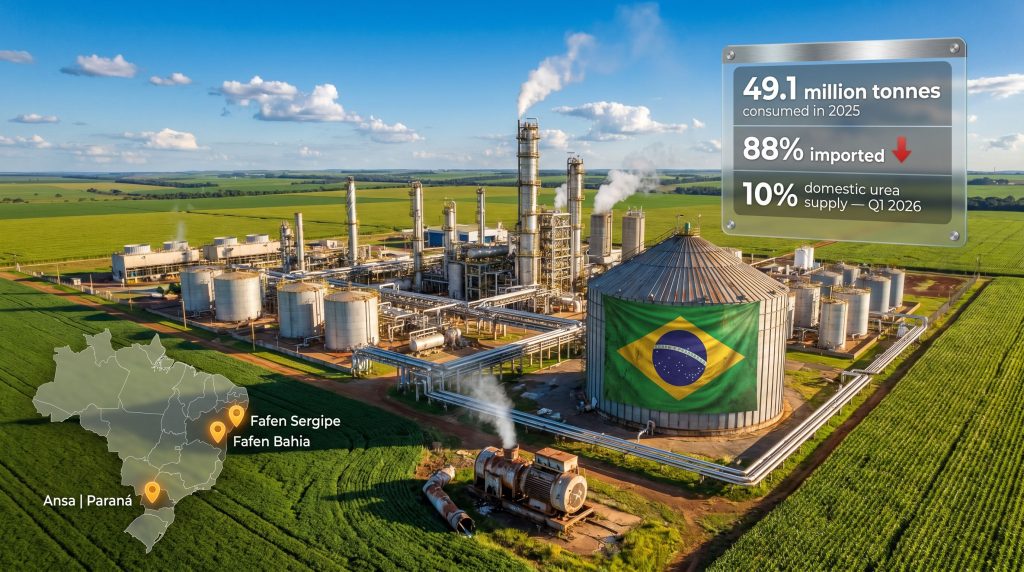
According to data from Anda, the national fertilizer distributor's association, Brazil consumed more than 49.1 million tonnes of fertilizer in 2025, with a striking 88% of that volume imported. This concentration of import dependency exposes the country's farming sector to a dual vulnerability: price volatility driven by global commodity cycles and supply disruption risk triggered by geopolitical events affecting key production or transit regions.
The strategic implications are substantial. When fertilizer prices spike due to conflict, export restrictions, or shipping disruptions, Brazilian farmers face higher input costs that compress margins and can influence planting decisions. Given that Brazil is a price-setter in global soy and corn markets, these cost pressures can ripple outward into global food prices, adding further urgency to questions of resource and energy exports and supply chain security across commodity-dependent economies.
Brazil's national fertilizer plan directly targets this vulnerability, with a stated objective of reducing import dependency from its current level of above 80% to approximately 45% by 2050. Petrobras' re-engagement with domestic nitrogen production is a central pillar of that ambition, making the reliability of its restarted facilities a matter of genuine national economic interest.
Why Nitrogen Is the Critical Bottleneck
Among the major fertilizer nutrient categories, nitrogen holds particular strategic importance. Unlike phosphate and potash, which are mined and cannot be synthesised, nitrogen fertilizers are manufactured through the Haber-Bosch process using natural gas as a feedstock. Brazil possesses substantial natural gas reserves, making domestic nitrogen production theoretically achievable at scale.
Urea and ammonia are the primary nitrogen products relevant to Brazilian agriculture. Urea is the most widely traded solid nitrogen fertilizer globally, applied directly to soils to promote plant growth. Ammonia serves both as a direct fertilizer and as the fundamental feedstock for virtually all other nitrogen fertilizer products, including ammonium sulphate and ammonium nitrate. Furthermore, the natural gas feedstock economics underpinning domestic production can significantly influence the viability of local nitrogen manufacturing compared to relying on international supply chains.
The Petrobras Fertilizer Saga: From Strategic Exit to Attempted Revival
A Decade of Withdrawal and the Consequences of Hibernation
Petrobras' relationship with fertilizer manufacturing has been defined by a strategic reversal that stretched across nearly a decade. In 2017, the company announced its intention to exit what it classified as non-core business sectors, directing capital toward its upstream oil and gas operations. Fertilizer manufacturing was among the first casualties of this pivot.
The Ansa plant in Paraná was shut down in 2020, while the two Fafen units in Sergipe and Bahia were leased to Brazilian chemical company Unigel in 2019. Unigel's subsequent financial difficulties and contractual disputes eventually led to both Fafen facilities being idled by 2023 to 2024. The result was that all three of Petrobras' nitrogen production assets entered extended periods of dormancy, with all the technical consequences that entails.
Petrobras has openly acknowledged that these periods of inactivity led to asset degradation and significantly elevated maintenance requirements. This is not a minor disclosure. In industrial nitrogen production, the consequences of extended hibernation manifest across three primary domains:
-
Mechanical degradation: Compressors, pumps, and rotating equipment develop wear patterns and component fatigue that require intensive inspection and replacement before safe recommissioning.
-
Electrical and control system deterioration: Power distribution systems, instrumentation, and process control electronics degrade through moisture ingress, thermal cycling, and component aging, creating reliability vulnerabilities that are difficult to fully identify before operations begin.
-
Process system integrity: Piping, vessels, heat exchangers, and reaction systems require comprehensive inspection and often partial replacement after multi-year dormancy periods.
Industry experience with post-hibernation nitrogen plant restarts consistently indicates that achieving stable, rated-capacity operations typically requires 12 to 24 months of operational normalisation following recommissioning. Early-stage operations are inherently fragile, with a higher statistical probability of unplanned outages compared to facilities operating within established maintenance cycles.
The Dual Halt Explained: What Happened at Ansa and Fafen Sergipe
Ansa's Compressor Failure: A Restart That Lasted Hours
The Araucaria Nitrogenados facility represents Petrobras' most significant nitrogen production asset in terms of urea capacity. After five years of inactivity, the plant was brought back online at the end of April 2026. The restart lasted, in operational terms, a matter of hours.
A mechanical incident in the compressor room forced the facility back offline on 30 April 2026, the same day it had resumed production. Petrobras confirmed the halt and indicated that the timeline for resumption would be communicated in due course, without committing to a specific date.
Ansa Nitrogenados Production Capacity:
| Product | Annual Capacity |
|---|---|
| Urea | 720,000 metric tonnes/yr |
| Ammonia | 475,000 metric tonnes/yr |
| Arla 32 / AdBlue / DEF | 450,000 m³/yr |
The compressor room incident is technically significant. In nitrogen fertilizer production, synthesis gas compressors are among the most mechanically demanding components in the entire plant, operating at extremely high pressures and temperatures. Compressor failures in recently recommissioned facilities are particularly common because internal clearances, seal conditions, and lubrication system behaviour often differ from design specifications following dormancy. Ammonia sales have continued using pre-existing inventory buffers, limiting the immediate commercial impact.
Arla 32: The Less-Discussed Product With Growing Relevance
One aspect of Ansa's production portfolio that receives limited public attention is its 450,000 m³ per year capacity for Arla 32, the urea-based aqueous solution used in selective catalytic reduction systems on heavy vehicles. Marketed as AdBlue in Europe and as Diesel Exhaust Fluid (DEF) in the United States, this product controls nitrogen oxide emissions from trucks, buses, and agricultural machinery.
As Brazil's heavy vehicle fleet grows and emissions regulations progressively tighten, domestic Arla 32 production has increasing strategic value. Dependence on imported AdBlue creates an additional logistics and pricing vulnerability for Brazil's trucking sector, which underpins the country's agricultural supply chain. Consequently, Ansa's capacity in this product is strategically relevant beyond the conventional fertilizer market.
Fafen Sergipe's Power Failure: Infrastructure Fragility in Practice
The Sergipe Fafen unit experienced a different failure mode but with similarly disruptive consequences. A power supply failure caused damage to core operational systems, requiring maintenance before production could resume. Petrobras indicated it expected operations to restart within the month following the outage.
The timing amplifies the significance of the failure. Fafen Sergipe had been operating at approximately 90% of its maximum capacity in early March 2026, delivering around 1,800 tonnes of urea per day. Ammonia production had restarted on 31 December 2025, with urea production following on 3 January 2026. The unit's capacity profile is substantial:
Fafen Sergipe Production Capacity:
| Product | Annual Capacity |
|---|---|
| Urea | 650,000 metric tonnes/yr |
| Ammonia | 450,000 metric tonnes/yr |
| Ammonium Sulphate | 320,000 metric tonnes/yr |
Power supply vulnerabilities are a well-documented risk factor in post-hibernation industrial restarts. Extended dormancy periods frequently reveal weaknesses in electrical infrastructure that are difficult to detect through pre-restart inspection alone, as failure modes often only manifest under the thermal and electrical loads of actual production conditions. The fact that Fafen Sergipe was operating efficiently at near-peak capacity immediately before the outage underscores how abrupt and unpredictable such infrastructure failures can be.
Assessing the Near-Term Market Impact: Buffers, Seasonality, and Demand Behaviour
Why the Immediate Supply Risk Is Contained
Despite the simultaneous idling of two significant production assets, the near-term impact on Brazilian urea supply is constrained by several converging factors.
First, Petrobras confirmed that existing factory inventories are sufficient to maintain ammonia sales continuity, preventing immediate shortfalls from reaching agricultural buyers. Second, and critically, Brazil is currently in its agricultural off-season for urea procurement, a period during which farmer purchasing activity is structurally lower than during pre-planting windows.
Third, domestic buying behaviour has been additionally dampened by uncertainty in global fertilizer markets. Brazilian farmers are reportedly adopting a cautious, wait-and-see posture in response to geopolitical developments in the Middle East, which are influencing global price expectations. The closure of the Strait of Hormuz since late February 2026 has already pushed Indian DAP assessments from approximately $668 per tonne cfr in January to $932.50 per tonne cfr by early May 2026, according to Argus Media pricing data.
However, commodity market volatility of this nature tends to dampen overall fertilizer purchasing activity as buyers reassess their forward procurement strategies. While urea and DAP operate as distinct markets, price anxiety in the phosphate complex has measurable downstream effects on buyer confidence.
The convergence of seasonal low demand and inventory buffers limits immediate market disruption, but a prolonged outage extending into peak procurement periods would present a materially different supply challenge for Brazilian agricultural buyers.
Fafen Bahia: Partial Recovery Adds Context
The third unit in Petrobras' nitrogen portfolio, Fafen Bahia, recently reduced output to facilitate maintenance on its pumping systems but has since partially recovered production. Petrobras has not disclosed the current operating rate at this facility.
Collectively, the return of Fafen Bahia and Fafen Sergipe to production enabled Petrobras to supply an estimated 10% of Brazil's urea market in the first quarter of 2026. While meaningful, this market share figure also illustrates the scale of the challenge: even with two Fafen units running, domestic production satisfies only a fraction of national demand, while Ansa was still in the process of recommissioning.
Petrobras Nitrogen Facility Status Summary:
| Facility | Location | Restart Date | Current Issue | Status |
|---|---|---|---|---|
| Ansa | Paraná | 30 April 2026 | Compressor room incident | Halted, timeline TBC |
| Fafen Sergipe | Sergipe | Dec 31, 2025 / Jan 3, 2026 | Power supply failure | Halted, resumption expected |
| Fafen Bahia | Bahia | Late 2025 / Jan 2026 | Pumping system maintenance | Partially restored |
The Road Ahead: UFN-III and the Limits of Current Capacity
What the Combined Petrobras Portfolio Actually Delivers
Even with all three facilities operating at full capacity simultaneously, the combined output would represent a structurally limited share of Brazil's national fertilizer requirements. Ansa and both Fafen units together have a combined urea capacity of approximately 1.37 million tonnes per year, set against a country that consumed over 49.1 million tonnes of total fertilizer in 2025.
This arithmetic makes clear that Petrobras' existing nitrogen assets, however important symbolically and strategically, cannot on their own meaningfully reduce Brazil's 88% import dependency. A transformational step-change in domestic capacity requires an entirely different order of magnitude.
The UFN-III Question: Brazil's Stalled Game-Changer
The most significant potential expansion of Brazil's domestic nitrogen capacity lies in the UFN-III plant in Mato Grosso do Sul, a facility that remains approximately 81% complete but has been suspended since 2014 following complications tied to the Lava Jato corruption investigations. At full operational capacity, UFN-III would add roughly 3,600 tonnes per day of urea and 2,200 tonnes per day of ammonia to Brazil's domestic supply.
These figures would represent a genuinely transformational addition to the domestic nitrogen market, dwarfing the combined output of Ansa and the two Fafen units. A final investment decision on UFN-III remains outstanding, with feasibility and financing assessments still ongoing.
The reliability incidents at the recently restarted Fafen and Ansa facilities could influence Petrobras' calculus around UFN-III in two distinct ways. Repeated early-stage outages may prompt a more cautious, infrastructure-first approach before committing to further capital expenditure. Alternatively, they may reinforce the case for investing in a purpose-built, modern facility that does not carry the accumulated degradation burden of the existing asset base.
Operational Resilience as the Missing Strategic Variable
The incidents at Ansa and Fafen Sergipe highlight a dimension of Brazil's fertilizer strategy that receives insufficient analytical attention: operational reliability is as strategically important as installed capacity. A plant that is nominally operational but subject to frequent unplanned outages provides less supply security than a smaller facility running at consistent high utilisation.
Investment in predictive maintenance systems, redundant power infrastructure, and structured maintenance contracting frameworks is widely regarded within the industry as essential for facilities returning from multi-year dormancy periods. This approach mirrors broader trends in industrial sustainability transformation, where resilience and long-term operational integrity are increasingly prioritised over short-term capacity metrics.
The engagement of Engeman as the primary restart contractor represents one model for managing post-hibernation complexity, but the incidents at Ansa and Fafen Sergipe suggest that pre-restart investment requirements may have been underestimated. Market participants and agricultural sector observers will be closely watching Petrobras' Q2 2026 production disclosures to determine whether the dual halt has materially impacted the company's ability to sustain its estimated 10% domestic urea market share, or whether rapid recommissioning will allow the facilities to recover before peak procurement season demand begins to build.
The next major ASX story will hit our subscribers first
Frequently Asked Questions
Why did Petrobras halt operations at its Ansa fertilizer plant?
The Ansa plant in Paraná was suspended on 30 April 2026 following a mechanical incident in the compressor room. The facility had only just resumed operations that same day after five years of inactivity. No specific restart timeline has been disclosed, though ammonia sales have continued using existing inventory.
What caused Fafen Sergipe to stop production?
A power supply failure caused damage to the unit's operational systems. Fafen Sergipe had been producing at approximately 90% of maximum capacity, around 1,800 tonnes of urea per day, prior to the outage. Petrobras expects production to resume within the month following the incident.
How much of Brazil's urea market does Petrobras currently supply?
With both Fafen Bahia and Fafen Sergipe operational through the first quarter of 2026, Petrobras estimated it supplied approximately 10% of Brazil's urea market during that period. This is against a backdrop of total national fertilizer consumption exceeding 49.1 million tonnes in 2025, of which 88% was sourced from imports.
Will the production halts cause fertilizer shortages in Brazil?
In the near term, supply continuity is being maintained through factory inventories and is aided by Brazil's current agricultural off-season, which reduces immediate demand pressure. However, outages extending into peak pre-planting procurement windows would represent a meaningfully different supply risk.
What is Arla 32 and why does Ansa produce it?
Arla 32 is a urea-based aqueous solution used in selective catalytic reduction systems installed on heavy vehicles to reduce nitrogen oxide emissions. It is sold under the AdBlue brand in Europe and as Diesel Exhaust Fluid in the United States. Ansa has a production capacity of 450,000 m³ per year of this product, making it a relevant supplier not only to agricultural markets but to Brazil's heavy transport sector.
What is Brazil's long-term fertilizer import reduction goal?
Brazil's national fertilizer plan targets a reduction in import dependency from its current level above 80% to approximately 45% by 2050. Petrobras' nitrogen production operations, and the potential completion of UFN-III in Mato Grosso do Sul, are viewed as central to progressing toward this objective.
This article contains forward-looking assessments and operational status information based on publicly available sources as of the time of writing. Facility status, production rates, and market conditions are subject to change. Readers with commercial exposure to Brazil's fertilizer markets should seek independent market intelligence from specialist providers. Commodity pricing data referenced in this article is sourced from Argus Media.
Want to Track the Next Major Mineral Discovery Before the Market Does?
Brazil's fertilizer vulnerabilities underscore how critical commodity supply chains are to global agricultural and industrial sectors — and how rapidly market conditions can shift. Discovery Alert's proprietary Discovery IQ model scans ASX announcements in real time, delivering instant alerts on significant mineral discoveries across more than 30 commodities, turning complex data into actionable investment opportunities the moment they emerge. Explore historic examples of extraordinary discovery returns and begin your 14-day free trial today to position yourself ahead of the broader market.