
August 7, 2026
Global semiconductor supply chain vulnerabilities have exposed critical dependencies that threaten technological sovereignty across emerging economies. As nations grapple with the strategic implications of concentrated chip production in Asia, alternative manufacturing models are emerging that could reshape the industry's geographic distribution. These developments suggest a fundamental shift toward distributed production networks that prioritise resilience over pure efficiency, with critical minerals and energy security becoming increasingly important considerations.
Understanding the Strategic Imperative for Domestic Semiconductor Production
Brazil's position within the global electronics ecosystem reveals the profound risks of external dependency in critical technology sectors. The country's manufacturing base spans automotive, industrial automation, and consumer electronics, yet relies almost entirely on imported semiconductors from Asian suppliers, particularly China and Taiwan.
This dependency became starkly apparent during global supply chain disruptions, when semiconductor shortages cascaded through multiple sectors of the Brazilian economy. Industries from automotive manufacturing to home appliances experienced production delays and increased costs as chip availability fluctuated with international market conditions.
The vulnerability extends beyond immediate supply risks to encompass broader questions of technological autonomy. Nations dependent on semiconductor imports face potential leverage in trade negotiations, technology access restrictions, and limited participation in high-value segments of the electronics value chain. Furthermore, the US–China trade war impact has highlighted the geopolitical risks associated with concentrated production.
Current Market Dependencies and Import Statistics
Brazil's semiconductor import profile demonstrates the scope of external reliance:
- Primary suppliers: China and Taiwan dominate semiconductor imports
- Affected sectors: Automotive, consumer electronics, industrial systems, telecommunications equipment
- Supply chain exposure: Limited domestic alternatives during international disruptions
- Economic impact: Increased manufacturing costs and production uncertainties
According to industry reports from Portal da Mineração and G1, this dependency affects critical economic sectors including home appliances (eletrodomésticos), automobiles (automóveis), electronic equipment (equipamentos eletrônicos), and industrial systems (sistemas industriais).
When big ASX news breaks, our subscribers know first
Revolutionary Pocket-Fabs Technology: Redefining Semiconductor Manufacturing
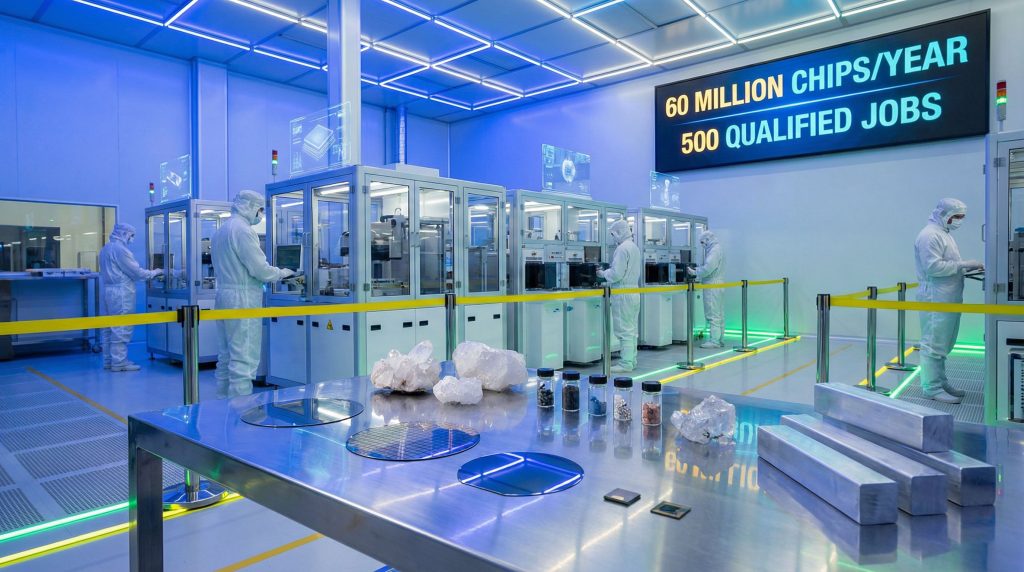
Pocket-Fabs in Brazil represent a paradigmatic departure from traditional semiconductor fabrication approaches. These compact manufacturing units compress entire chip production capabilities into approximately 150 square metres of space, roughly equivalent to a small retail establishment.
The technology demonstrates several fundamental innovations compared to conventional semiconductor facilities. In addition, the development aligns with global trends toward establishing critical raw materials facility networks for strategic autonomy.
Scale and Investment Comparison
| Manufacturing Model | Facility Size | Investment Requirement | Production Capacity |
|---|---|---|---|
| Traditional Semiconductor Fab | Multiple hectares | $10-20 billion | High-volume commodity chips |
| Pocket-Fab Units | 150 square metres | R$ 89 million | 20,000 chips/day |
| Annual Output Comparison | – | – | 60 million chips/year |
Technical Architecture and Capabilities
Modular Production Systems:
- Integrated cleanroom environments with semiconductor-grade specifications
- Compact lithography and metallisation equipment
- Real-time quality control and metrology systems
- Flexible packaging capabilities for diverse chip architectures
Operational Flexibility:
- Rapid deployment to proximity with industrial demand centres
- Modular expansion capabilities for scaling production
- Reduced infrastructure requirements compared to traditional fabs
- Adaptability to specialised chip designs and applications
The USP initiative, coordinated by Professor Marcelo Zuffo from Escola Politécnica, demonstrates how distributed manufacturing can achieve competitive production metrics while maintaining technological sophistication. This development comes as the pocket laboratory technology gains recognition for its innovative approach to compact manufacturing.
Economic Framework and Investment Analysis
The financial architecture of Pocket-Fabs in Brazil reveals a compelling economic model that balances capital requirements with production capabilities. The R$ 89 million initial investment demonstrates significantly improved capital efficiency compared to traditional semiconductor manufacturing.
Capital Allocation Structure
| Investment Component | Amount (R$ Million) | Percentage of Total | Strategic Function |
|---|---|---|---|
| Facility Setup and Infrastructure | 89 | 50% | Core manufacturing capability |
| Equipment and Technology Systems | 65 | 37% | Production line integration |
| Training and Workforce Development | 15 | 8.4% | Human capital formation |
| Support Infrastructure | 9 | 5% | Operational enablement |
| Total Initial Investment | 178 | 100% | Complete facility deployment |
Production Metrics and Employment Impact
Each Pocket-Fab facility generates substantial employment across multiple skill levels:
- 500 total qualified positions per facility
- 200 engineer-level personnel for technical operations
- 300 technician-level positions for production support
- Additional research and development roles
Production Capacity Specifications:
- Daily output: 20,000 semiconductors
- Annual production: 60 million chips per facility
- Revenue targets: R$ 60 million annually per facility
Scaling Economics and National Network Projections
| Network Scale | Facilities | Annual Revenue (R$ Million) | Employment Created | Break-even Timeline |
|---|---|---|---|---|
| Single Facility | 1 | 60 | 500 direct jobs | 3 months |
| Regional Network | 5 | 300 | 2,500 positions | 18 months |
| National Scale | 10 | 600 | 5,000 direct jobs | 24 months |
The economic projections suggest rapid return on investment, with individual facilities targeting 3-month break-even periods under optimal market conditions.
Brazil's Natural Advantages for Semiconductor Production
Brazil possesses unique competitive advantages that position the country favourably for semiconductor manufacturing development. These advantages span natural resource availability, energy infrastructure, and technical expertise accumulated through decades of mining and industrial development.
Critical Mineral Resources for Semiconductor Manufacturing
| Mineral Resource | Semiconductor Application | Brazilian Reserves | Strategic Value |
|---|---|---|---|
| Silicon-grade quartz | Substrate material for chips | Minas Gerais, Bahia | Reduces import dependency |
| Rare earth elements | Specialised electronic components | Confirmed domestic reserves | Supply chain security |
| High-purity aluminium | Interconnect layer production | Established mining capacity | Cost advantages |
| Tantalum | Capacitor manufacturing | Brazilian deposits | Critical component access |
| Niobium | Advanced semiconductor applications | World's largest reserves | Technological differentiation |
Infrastructure and Capability Advantages
Energy Resources:
- Abundant renewable energy generation capacity
- Hydroelectric infrastructure suitable for continuous manufacturing
- Lower energy costs compared to many international competitors
- Sustainability advantages for environmental compliance
Technical Expertise:
- Established mining and mineral processing industries
- University research networks with materials science capabilities
- Growing technology sector providing skilled workforce
- International collaboration experience in technical industries
Geographic and Logistical Benefits:
- Strategic location for Latin American market access
- Existing industrial infrastructure in key regions
- Transportation networks connecting production centres
- Port facilities for international trade
Portal da Mineração identifies these as relevant competitive advantages (vantagens competitivas relevantes) that support the viability of domestic semiconductor production initiatives.
Strategic Partnership Framework: Integrating Academia, Industry, and Technical Education
The Pocket-Fabs in Brazil initiative demonstrates an innovative collaboration model that integrates three complementary institutional frameworks to create a comprehensive semiconductor ecosystem.
Institutional Partnership Structure
| Partner Institution | Primary Role | Specific Contributions | Strategic Value |
|---|---|---|---|
| University of São Paulo (USP) | Research and Development Leadership | Technology validation, international collaboration, student training | Innovation and technical rigour |
| Federation of Industries of São Paulo (FIESP) | Market Integration | Supply chain coordination, quality standards, commercial scaling | Industry alignment |
| National Service for Industrial Learning (SENAI) | Workforce Development | Technician training, equipment certification, regional distribution | Human capital formation |
Academic Component: Technology Development and Validation
USP's Role in Project Leadership:
- Research coordination through Escola Politécnica
- Technology validation and testing protocols
- International collaboration facilitation
- Student training programmes aligned with industry needs
Professor Marcelo Zuffo's coordination role demonstrates centralised technical leadership ensuring project coherence and technological standards.
Industrial Integration: Market-Driven Development
FIESP Partnership Functions:
- Market demand analysis for semiconductor applications
- Quality assurance and certification processes
- Commercial scaling strategies
- Integration with existing manufacturing supply chains
This partnership ensures that production capabilities align with actual market demand rather than purely technological possibilities.
Technical Education: Sustainable Workforce Development
SENAI's Educational Framework:
- Specialised technician training programmes
- Equipment maintenance and operations certification
- Continuous skills development initiatives
- Regional workforce distribution planning
The integration of technical education ensures sustainable human capital development to support long-term sector growth. The comprehensive approach, highlighted by Brazil's university partnership initiatives, creates a foundation for sustained technological development.
Portal da Mineração describes this collaboration as essential for consolidating a national semiconductor ecosystem (essencial para consolidar um ecossistema nacional de semicondutores).
Regional Distribution Strategy and Market Applications
The strategic deployment of Pocket-Fabs in Brazil follows a distributed network approach that matches regional industrial strengths with specialised semiconductor applications. This geographic distribution strategy maximises both economic efficiency and supply chain resilience.
Regional Specialisation Framework
| Region | Industrial Focus | Semiconductor Applications | Local Advantages | Target Markets |
|---|---|---|---|---|
| São Paulo | Automotive manufacturing | Engine control units, battery management systems | Established automotive cluster | Auto manufacturers, suppliers |
| Minas Gerais | Mining and resources | Process control sensors, monitoring systems | Mineral expertise, research facilities | Resource extraction industry |
| Rio Grande do Sul | Agricultural technology | Precision farming IoT, livestock monitoring | Technology infrastructure | Agribusiness sector |
| Ceará | Export-oriented production | Consumer electronics, international markets | Port access, logistics | Export markets, international trade |
| Amazonas | Environmental monitoring | Sustainability sensors, research applications | Research institutions | Environmental sector |
Application-Specific Market Targeting
Automotive Sector Integration:
- Engine control units for internal combustion and hybrid vehicles
- Electric vehicle battery management and charging systems
- Autonomous driving sensor support components
- Fleet management and telematics devices
Industrial Automation Applications:
- Process control and monitoring semiconductors
- Robotics and machinery control systems
- Quality assurance and testing equipment
- Supply chain optimisation and tracking sensors
Agricultural Technology Focus:
- Precision farming sensors for soil and crop monitoring
- Livestock health and location tracking systems
- Environmental condition monitoring devices
- Automated irrigation and fertilisation control systems
National Network Scaling Strategy
The initiative targets 10 facilities at national scale, creating redundancy and regional capability distribution. This approach provides several strategic advantages:
- Supply chain resilience: Multiple production locations reduce single-point-of-failure risks
- Proximity to demand: Regional facilities minimise logistics costs and delivery times
- Specialised production: Each facility can develop expertise in specific applications
- Economic distribution: Employment and economic benefits spread across regions
The next major ASX story will hit our subscribers first
Technology Transfer and Intellectual Property Development
The Pocket-Fabs in Brazil initiative incorporates strategic technology transfer mechanisms designed to build domestic technological capabilities while fostering international collaboration. This approach balances knowledge acquisition with intellectual property development, particularly as governments implement policies like the executive order on critical minerals.
Domestic Innovation Framework
Patent Development Strategy:
- Filing protocols for Brazilian-developed semiconductor processes
- Technology licensing agreements with international partners
- Open-source hardware initiatives for educational institutions
- Collaborative research protocols with global semiconductor companies
Knowledge Retention Mechanisms:
- Mandatory technology transfer requirements for foreign partnerships
- Local content specifications for government procurement
- Research and development tax incentives for domestic innovation
- Intellectual property protection for Brazilian-developed technologies
International Collaboration Protocols
Partnership Development:
- Technology sharing agreements with friendly nations
- Joint research initiatives with international universities
- Participation in global semiconductor standards development
- Trade partnerships for market access and technology exchange
The USP leadership in international collaboration ensures access to global best practices while maintaining Brazilian technological sovereignty.
Supply Chain Resilience and Economic Impact Analysis
The distributed manufacturing model of Pocket-Fabs in Brazil creates multiple layers of supply chain resilience while generating significant economic multiplier effects throughout the Brazilian economy. However, this development must also consider the broader context of mineral production executive order initiatives worldwide.
Value Chain Development Strategy
Domestic Integration Capabilities:
- Raw material processing from Brazilian mineral resources
- Component standardisation across Pocket-Fab facilities
- Quality assurance protocols meeting international standards
- Logistics and distribution networks for domestic and export markets
Strategic Buffer Management:
- Critical material reserves for production continuity
- Backup production capacity across multiple facilities
- Emergency response protocols for supply disruptions
- Alternative sourcing strategies for imported components
Economic Multiplier Analysis
| Economic Impact Category | Direct Effects | Indirect Effects | Induced Effects |
|---|---|---|---|
| Employment Creation | 5,000 direct jobs (10 facilities) | 7,500 supporting industry jobs | 12,500 service sector positions |
| Revenue Generation | R$ 600 million (national scale) | R$ 300 million (suppliers) | R$ 450 million (consumer spending) |
| Technology Spillover | Semiconductor expertise | Related electronics industries | Innovation ecosystem development |
| Import Substitution | Reduced semiconductor imports | Lower trade deficits | Improved balance of payments |
Export Development Potential
International Market Positioning:
- Specialised applications rather than commodity chip production
- Regional supply chain integration with Latin American countries
- Technology partnerships with established semiconductor companies
- Export development targeting emerging markets
Competitive Advantages for Global Markets:
- Lower labour costs compared to developed semiconductor regions
- Abundant raw materials reducing input costs
- Growing domestic market providing demand foundation
- Strategic geographic position for Latin American access
Regulatory Framework and Policy Implementation
The successful deployment of Pocket-Fabs in Brazil requires comprehensive regulatory frameworks that balance technological development with security considerations, environmental compliance, and international trade requirements.
Policy Development Requirements
Technology Transfer Regulations:
- Guidelines for foreign partnership agreements
- Intellectual property protection mechanisms
- Technology security and export control measures
- Domestic content requirements for strategic applications
Environmental and Safety Compliance:
- Manufacturing emissions and waste management standards
- Worker safety protocols for semiconductor production
- Water usage and treatment requirements
- Chemical handling and disposal regulations
Government Support Mechanisms
Financial Incentive Structures:
- Tax benefits for domestic semiconductor production
- Research grants for university-industry collaboration
- Infrastructure development support for facility construction
- Workforce training subsidies for skills development
Strategic Industry Support:
- Procurement preferences for domestically produced semiconductors
- Export promotion assistance for international market development
- Technology transfer facilitation for foreign partnerships
- Regional development incentives for facility distribution
Future Expansion Opportunities and Technology Roadmap
The Pocket-Fabs in Brazil initiative positions the country for participation in next-generation semiconductor technologies while building foundation capabilities for advanced manufacturing.
Technology Evolution Pathways
Advanced Manufacturing Capabilities:
- Next-generation packaging techniques for higher-performance chips
- Artificial intelligence integration in production processes
- Quantum computing research and development initiatives
- Advanced materials exploration for specialised applications
Scale Development Strategies:
- Technology partnerships with global semiconductor leaders
- Joint research initiatives with international universities
- Standards development participation in global organisations
- Trade partnerships for expanded market access
Long-term Strategic Positioning
Regional Leadership Development:
- Brazil as Latin American semiconductor hub
- Technology transfer to neighbouring countries
- Regional supply chain integration initiatives
- Export market development across emerging economies
Innovation Ecosystem Building:
- Startup incubation for semiconductor applications
- Venture capital development for technology companies
- Research park development around Pocket-Fab facilities
- International innovation partnerships
Risk Assessment and Mitigation Strategies
The implementation of Pocket-Fabs in Brazil faces several categories of risks that require comprehensive mitigation strategies to ensure project success and sustainable development.
Technical and Operational Risks
Equipment and Technology Challenges:
- Specialised equipment sourcing and maintenance requirements
- Technology obsolescence and upgrade cycle management
- Quality control systems meeting international standards
- Technical expertise development and retention
Mitigation Strategies:
- Multiple supplier relationships for critical equipment
- Continuous technology monitoring and upgrade planning
- International quality certification programmes
- Comprehensive workforce development initiatives
Market and Economic Risks
Competitive and Demand Factors:
- Global competition from established semiconductor manufacturers
- Market demand fluctuations in target industries
- Currency exchange impacts on costs and revenues
- Trade policy changes affecting international market access
Risk Management Approaches:
- Diversified market targeting across multiple sectors
- Flexible production capabilities for demand adaptation
- Financial hedging strategies for currency exposure
- Multiple geographic market development
Long-term Strategic Implications for Brazil
The Pocket-Fabs in Brazil initiative represents more than manufacturing capacity development; it embodies a comprehensive strategy for technological sovereignty and economic resilience in the digital economy.
Technological Sovereignty Development
Strategic Independence Benefits:
- Reduced dependency on volatile global supply chains
- Domestic control over critical technology production
- Enhanced negotiating position in international technology trade
- Foundation for advanced technology development
Economic Transformation Potential:
- High-value employment creation in technology sectors
- Innovation ecosystem development around semiconductor production
- Entrepreneurship opportunities in related technology applications
- Enhanced competitiveness in manufacturing industries
Regional and Global Positioning
Latin American Leadership:
- Technology transfer opportunities to neighbouring countries
- Regional supply chain integration development
- Export market development across emerging economies
- Strategic positioning in global semiconductor networks
The modular, distributed approach offers resilience advantages over centralised manufacturing while enabling rapid adaptation to market demands. As global semiconductor supply chains face increasing geopolitical pressures, Brazil's domestic production capability could become a significant strategic asset.
Innovation and Competitiveness Impact:
- University-industry collaboration strengthening research capabilities
- Technology spillover effects to related industries
- Startup ecosystem development around semiconductor applications
- International partnership opportunities in technology development
The success of this distributed semiconductor production model could serve as a template for other developing nations seeking technological independence while participating in global technology networks.
Investment Disclaimer: This analysis contains forward-looking statements and projections based on current available information. Investment in semiconductor manufacturing involves significant risks including technology obsolescence, market demand fluctuations, and competitive pressures. Potential investors should conduct comprehensive due diligence and consider all risk factors before making investment decisions. Economic projections and break-even timelines are subject to market conditions and successful project execution.
Ready to Invest in the Next Major Mineral Discovery?
Brazil's semiconductor revolution demonstrates how critical minerals drive technological sovereignty, and smart investors are positioning themselves ahead of major mineral discoveries. Discovery Alert instantly alerts investors to significant ASX mineral discoveries using its proprietary Discovery IQ model, turning complex mineral data into actionable insights. Begin your 14-day free trial today to position yourself ahead of the market in this rapidly evolving sector.