June 25, 2026
The Race to Attract Multilateral Capital Is Reshaping Latin American Mining
Across Latin America, a quiet but consequential shift is underway in how mining jurisdictions compete for global capital. The traditional model, where federal governments negotiated loan terms with multilateral institutions while states waited passively for trickle-down investment, is giving way to something more dynamic. Subnational governments with strong geological credentials are beginning to engage development banks directly. In this environment, Goiás World Bank backing for mining projects has emerged as one of the most closely watched developments in Brazilian resource finance in 2026.
Understanding why requires looking at both the geological foundations of the state and the rapidly evolving machinery of multilateral mining finance.
When big ASX news breaks, our subscribers know first
Goiás as a Critical Minerals Jurisdiction: What the Geology Actually Shows
Situated in Brazil's central-western interior, Goiás occupies a mineralogically privileged position within the country's resource landscape. The state hosts a diverse portfolio of economically significant deposits, including nickel laterites, copper occurrences, rare earth elements (REE), gold, niobium, and phosphate. This breadth matters because multilateral development banks increasingly evaluate mining jurisdictions not just on individual project economics but on their capacity to supply multiple inputs across the critical minerals energy transition simultaneously.
Nickel laterite deposits are particularly relevant in this context. Unlike the sulphide nickel deposits historically preferred by smelters, laterites — formed through deep weathering of ultramafic rocks in tropical climates — have become increasingly viable as hydrometallurgical processing technology has advanced. Brazil's Cerrado region, where much of Goiás's mineralisation is concentrated, provides the geological conditions favourable for deep lateritisation. This detail often goes underappreciated in coverage focused purely on commodity prices rather than deposit genesis.
Rare earth element occurrences in Goiás are similarly significant. Brazil holds the world's second-largest REE reserves by some estimates, yet extraction and processing capacity remains underdeveloped relative to the scale of the resource base. The gap between geological endowment and productive capacity is precisely the kind of institutional failure that multilateral development banks are structured to address.
"Geological endowment creates investment potential, but institutional readiness converts that potential into financeable projects. For jurisdictions like Goiás, the two must advance in parallel."
What Multilateral Mining Finance Actually Involves
There is a common misconception that World Bank engagement with a mining jurisdiction means direct project-level funding flowing immediately to individual mines. In practice, the support architecture is considerably more layered and sequential.
The World Bank Group operates through several instruments when engaging extractive sector jurisdictions:
- Policy reform lending provides budget support tied to specific regulatory improvements, such as permitting simplification or environmental governance upgrades.
- Technical assistance grants fund knowledge transfers, geological data modernisation, and institutional capacity building without requiring sovereign debt.
- IFC equity and debt participation comes into play at the project development stage, where the International Finance Corporation takes direct positions in commercially viable mining operations.
- Blended finance platforms combine public development capital with private co-investment to de-risk exploration and early-stage development in frontier jurisdictions.
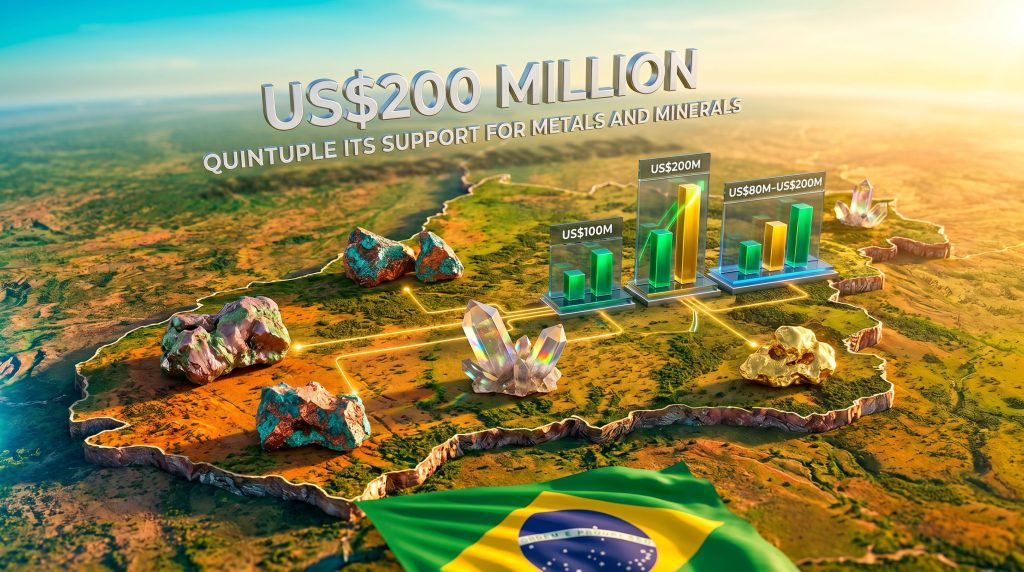
The World Bank's metals and mining strategy has signalled an intention to dramatically scale its support for metals and minerals, with targets suggesting a fivefold increase in commitment over the next several years. For emerging mining jurisdictions in Latin America, this creates a structural window of opportunity that will not remain open indefinitely.
Comparative Multilateral Mining Commitments: A Global Benchmark
| Jurisdiction | Institution | Commitment | Focus Area |
|---|---|---|---|
| Peru | World Bank | US$200 million (approved March 2026) | Geoscience modernisation, digital permitting |
| DRC | World Bank | US$100 million | Project readiness, feasibility studies |
| Mongolia (Oyu Tolgoi) | IFC / World Bank Group | ~US$12 billion (project value) | Large-scale copper-gold mine financing |
| Papua New Guinea | World Bank | US$10 million (technical assistance) | Mining policy and regulatory strengthening |
| Latin America (regional) | World Bank co-investment platform | US$100 million | Smaller project access to finance |
Peru's March 2026 approval is the most instructive recent precedent. The package included funding for a National Drill Core Library and a Digital One-Stop permitting platform — two infrastructure investments that directly address the information asymmetries and administrative friction that historically deter institutional capital. For Goiás policymakers, Peru's trajectory represents the most applicable roadmap currently available.
The Five-Stage Due Diligence Framework Multilateral Lenders Apply
Before any financing commitment is made, multilateral development banks apply a rigorous evaluation process to subnational mining proposals. Understanding this framework is essential for assessing how prepared Goiás actually is relative to the bar that needs to be cleared.
- Pre-feasibility alignment — The jurisdiction's regulatory environment must satisfy IFC Performance Standards and the World Bank's Environmental and Social Framework (ESF). This is non-negotiable and often the stage where proposals stall.
- Geological data quality — Sufficient subsurface data must exist to reduce exploration risk to a level where co-investors can model returns with reasonable confidence. Airborne geophysical surveys and digitised drill core records are the minimum expectation.
- Permitting pathway clarity — A transparent, time-bound, and ideally digital licensing process is required. Jurisdictions with opaque or unpredictable mining permitting timelines represent unacceptable institutional risk.
- Community and indigenous rights compliance — Free, Prior and Informed Consent (FPIC) protocols must be embedded in state mining law, not merely aspirational policy. Strong indigenous rights frameworks have become a hard filter following multilateral controversies in the DRC and parts of Colombia.
- Fiscal and governance stability — A predictable royalty and taxation framework is required for long-term capital deployment. Retroactive fiscal changes are treated as disqualifying red flags.
Key insight for investors: A jurisdiction that satisfies criteria one through three but fails on community rights compliance will not progress to financing approval, regardless of geological quality. The World Bank's post-2016 Environmental and Social Framework significantly raised this bar compared to earlier standards.
Why the Energy Transition Is Amplifying Goiás's Strategic Relevance
The US Inflation Reduction Act and the EU Critical Raw Materials Act have fundamentally altered the geopolitics of mining finance. Both frameworks create incentive structures that reward supply chain diversification away from China-dominant processing corridors, and both explicitly elevate the strategic importance of jurisdictions capable of supplying battery metals, REEs, and copper at scale.
Goiás sits at the intersection of several of these priorities simultaneously. Its nickel laterite resources are directly relevant to EV battery cathode chemistry, particularly for nickel-manganese-cobalt (NMC) and nickel-cobalt-aluminium (NCA) formulations. Its REE occurrences have applications across permanent magnets used in wind turbines and electric motors. Furthermore, its copper and phosphate resources speak to grid infrastructure and agricultural productivity respectively.
This multi-commodity relevance is not accidental. It reflects the geological character of the Cerrado's mineralised belts, which formed through distinct tectonic and weathering processes that concentrated different elements in spatially overlapping zones. From an investment perspective, this geological diversity reduces single-commodity price risk for any financing structure built around the region. Consequently, critical minerals demand trajectories make Goiás an increasingly attractive proposition for multilateral lenders.
Private vs. Public Capital: Complementary Structures, Not Competing Sources
| Capital Source | Risk Appetite | Typical Stage | Key Conditions |
|---|---|---|---|
| World Bank / IDA | Low-medium | Policy reform, early infrastructure | Strong ESG compliance, sovereign or state guarantee |
| IFC | Medium | Project development, expansion | Commercial viability, IFC Performance Standards |
| Private equity / mining majors | High | Exploration, development | Resource certainty, favourable fiscal terms |
| Export credit agencies | Medium | Construction, offtake | National interest alignment, creditworthy counterparties |
The table above reflects a key structural reality: multilateral and private capital are sequentially dependent rather than interchangeable. World Bank and IFC engagement typically precedes and enables private investment by reducing perceived institutional risk. A state that secures even technical assistance from the World Bank sends a credibility signal that dramatically lowers the due diligence burden for junior and mid-tier mining companies evaluating entry.
What a Goiás Critical Minerals Programme Could Plausibly Look Like
Based on comparable multilateral programmes in Peru and the DRC, a structured financing engagement for Goiás would likely be organised around four functional components:
- Geoscience data infrastructure: Airborne geophysical survey coverage, drill core digitisation, and a publicly accessible geological data platform. Peru's National Drill Core Library provides the direct architectural model.
- Permitting modernisation: Technical assistance to develop a digital, time-bound licensing system aligned with World Bank ESF requirements, addressing the administrative friction that currently deters early-stage investment.
- Community benefit frameworks: Support for FPIC protocol development and community development fund structures for municipalities located within or adjacent to mineralised zones.
- Private sector co-investment facilitation: A blended finance vehicle drawing on the World Bank's existing US$100 million regional co-investment platform to catalyse junior and mid-tier mining company engagement.
Based on the Peru and DRC programme benchmarks, a comparable initiative for Goiás could plausibly be valued between US$80 million and US$200 million, depending on scope, the depth of institutional reform required, and whether a sovereign guarantee from the Brazilian federal government is incorporated. These figures are analytical estimates based on comparable programmes and should not be treated as confirmed or proposed financing amounts.
In addition, Brazil's Goiás state is one of several subnational jurisdictions in Latin America actively seeking to position itself ahead of the multilateral capital deployment curve, a trend that reflects a maturing understanding of how development bank engagement actually functions.
Disclaimer: All programme value estimates presented here are speculative projections based on publicly documented comparable programmes. No formal World Bank financing proposal for Goiás has been publicly confirmed as of mid-2026. Investors should not treat these figures as indicative of any committed or pending financing arrangement.
The next major ASX story will hit our subscribers first
Structural Risks That Could Delay or Derail Progress
Ambition and geological endowment do not automatically translate into approved financing. Several structural constraints create meaningful execution risk for Goiás's multilateral engagement:
- Timeline realities: From initial exploratory engagement to board-level approval, multilateral processes typically require between 18 and 36 months. This timeline can extend further when regulatory reform conditions are attached.
- Conditionality obligations: World Bank financing frequently requires binding policy reform commitments that constrain state legislative autonomy. For a Brazilian state navigating federal-state jurisdictional tensions over mining regulation, this creates political complexity.
- Environmental litigation exposure: Goiás's Cerrado biome carries its own environmental sensitivity and is subject to increasing civil society scrutiny. Mining projects adjacent to protected Cerrado areas face litigation risks that lenders must underwrite.
- Currency and sovereign risk: US dollar-denominated multilateral lending at the subnational level in Brazil introduces currency mismatch risk requiring careful structuring, particularly given Brazil's history of exchange rate volatility.
However, none of these risks are insurmountable. Definitive feasibility studies and robust institutional preparation can substantially mitigate lender concerns at the project level, provided the underlying regulatory environment is sufficiently stable.
Key Takeaways for Investors and Industry Observers
The developing story around Goiás World Bank backing for mining projects reflects a broader structural shift in how resource-rich subnational jurisdictions are engaging global capital markets. Several principles emerge from the analysis:
- Multilateral engagement functions primarily as a credibility amplifier rather than a direct capital source. Its most powerful effect is on private sector risk perception.
- Geological endowment is a necessary but insufficient condition for financing success. Institutional readiness, ESG compliance, and permitting transparency are the variables that ultimately determine outcomes.
- Peru's 2026 World Bank approval provides actionable benchmarks for both the institutional reforms required and the capital scale achievable for a comparable South American jurisdiction.
- The World Bank's development framework for turning minerals into sustainable development outcomes creates a time-sensitive opportunity for well-prepared subnational jurisdictions.
- For junior mining companies evaluating Latin American entry, World Bank technical assistance engagement at the jurisdictional level is a meaningful positive signal worth incorporating into country-risk assessment frameworks.
No formal World Bank financing approval for Goiás World Bank backing for mining projects has been publicly documented as of mid-2026. The state's engagement appears to remain at an exploratory or pre-negotiation stage. Any progression toward formal approval would require the institutional preparation, regulatory reforms, and community rights frameworks outlined above, alongside the extended timelines that characterise multilateral financing processes. Investors and industry participants should monitor developments through established Latin American mining intelligence channels for confirmed updates as negotiations evolve.
Want to Track the Next Major Mineral Discovery Before the Market Does?
Discovery Alert's proprietary Discovery IQ model delivers real-time alerts on significant ASX mineral discoveries, transforming complex geological data into actionable investment insights for both short-term traders and long-term investors — explore historic discoveries and their exceptional returns, then begin your 14-day free trial at Discovery Alert to position yourself ahead of the broader market.