June 12, 2026
The Sterile Asset Argument Has a 50-Year Problem
Few assumptions in financial markets are as persistent as the idea that rising interest rates are bad for gold. The logic seems airtight on its surface: gold pays no dividend, generates no coupon, and yields nothing. When bond markets offer 4%, 5%, or higher returns, why would any rational investor tolerate a metal that just sits there? The opportunity cost argument is clean, intuitive, and taught in finance courses worldwide.
It also happens to be empirically fragile.
When you move past the theory and examine more than five decades of actual Federal Reserve tightening cycles, the picture that emerges is startlingly different from the conventional wisdom. Understanding the mechanics of why gold and Fed rate hike fears have become so intertwined, and why that fear is so frequently misplaced, is one of the most valuable analytical exercises available to investors navigating the current environment.
When big ASX news breaks, our subscribers know first
What 50+ Years of Rate-Hike History Actually Reveals
The Data Behind Gold's Rate-Hike Track Record
Since 1971, when the US dollar was formally severed from its gold peg, gold has traded freely in a world shaped by Federal Reserve monetary policy. Over that span, the Fed has executed 13 identifiable rate-hike cycles, each defined as three or more consecutive increases to the federal funds rate target without an intervening cut.
The results of studying gold's performance across those 13 cycles are striking:
| Rate-Hike Cycle Outcome | Number of Cycles | Average Gold Performance |
|---|---|---|
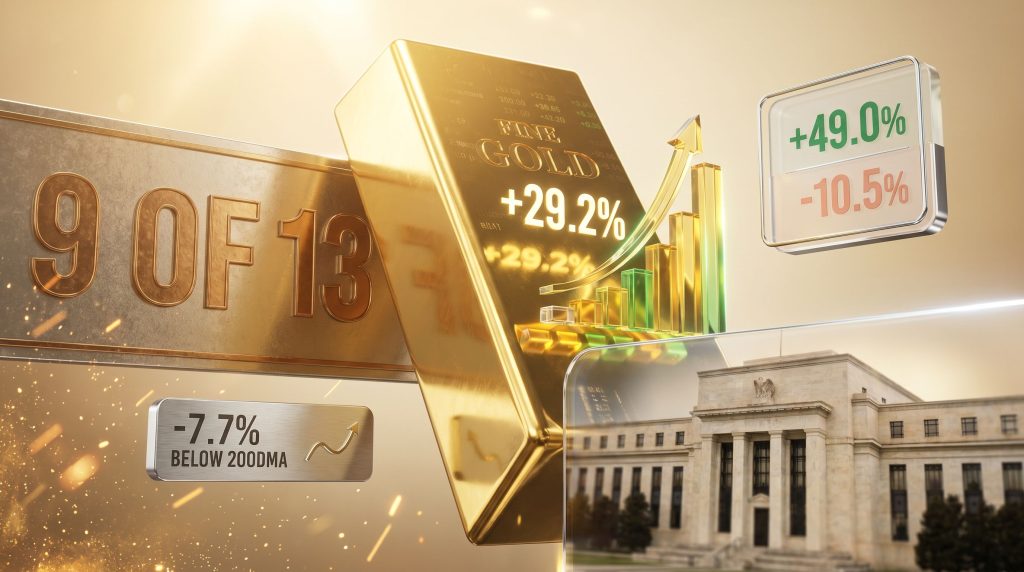
| Gold rallied during the cycle | 9 of 13 | +49.0% average gain |
| Gold declined during the cycle | 4 of 13 | -10.5% average loss |
| Blended average across all 13 cycles | 13 | +29.2% |
Gold rallied through nearly 70% of all Fed tightening cycles. When it did rally, the gains were substantial. When it fell, the losses were comparatively modest. Across all 13 cycles combined, gold averaged a +29.2% gain — a figure that directly contradicts the reflexive market assumption that tightening monetary policy crushes precious metals. Furthermore, this gold-stock market relationship becomes particularly instructive when examining how divergent asset classes behave under similar monetary pressures.
The Two Factors That Actually Determine Gold's Fate
Historical analysis identifies two variables that consistently govern gold's behaviour during rate-hike cycles:
- Entry valuation — whether gold is overbought or oversold at the moment the first hike arrives
- Hiking velocity — the pace and magnitude of individual rate increases, whether modest 25 basis point steps or shock-and-awe 75 basis point moves
Gold tends to perform best when entering a tightening cycle from a technically neutral or oversold position, and when the Fed tightens gradually. It faces the most pressure when it is overextended on the upside and the Fed moves with unusual aggression.
The 2022 Exception That Became Everyone's Rule
Anatomy of the Most Extreme Tightening Cycle in Modern History
The 2022–2023 tightening campaign is responsible for cementing the modern fear that rate hikes destroy gold. However, understanding why that episode was so damaging to gold reveals precisely why the current environment is so different.
Between mid-March 2022 and late July 2023, the Federal Reserve raised its federal funds rate by a staggering 525 basis points off a near-zero starting point of just 0.13%. The campaign included four consecutive 75 basis point hikes, a cadence that had no meaningful precedent in modern Fed history. The driver was consumer price inflation reaching a 9.1% annual rate in June 2022, the highest in 40.6 years.
The consequences for dollar-denominated assets were severe. The US Dollar Index surged 16.7% in just 6.0 months, reaching a 20.4-year secular high. Gold, priced in those dollars, fell 20.9% over 6.6 months in direct response. According to recent analysis of gold price drivers, similar dynamics are being closely watched in 2026 as rate-hike speculation resurfaces.
The 2022 tightening cycle was not a typical episode of Fed rate increases. It was a historic emergency response to the worst inflation in four decades, executed from zero rates with an unprecedented pace. Using it as the template for all future rate-hike scenarios is a fundamental analytical error.
And yet, viewed across the entire duration of that 13th cycle, gold still managed to post a modest +3.0% gain. Even the most hostile Fed environment in living memory could not ultimately defeat gold over the full cycle horizon.
Why the Current Environment Bears No Resemblance to 2022
| Metric | 2022 Cycle Start | Current Environment (June 2026) |
|---|---|---|
| Federal Funds Rate at cycle start | ~0.13% (ZIRP) | ~3.63% |
| Peak CPI inflation driving hikes | 9.1% (40.6-year high) | 4.2% (highest since April 2023) |
| Hiking velocity implied by futures | 525bp over 16 months | 25bp (single hike priced) |
| Dollar surge potential | Extreme (from ZIRP baseline) | Limited (rates already elevated) |
The starting conditions are categorically different. A Fed considering a single 25 basis point hike from a 3.63% baseline, with inflation running at 4.2%, bears almost no structural resemblance to a central bank panic-hiking from zero amid 9% inflation. Treating them as equivalent is one of the most significant analytical mistakes a gold investor can make today.
How One Jobs Report Broke Gold's Technical Structure
The May Nonfarm Payrolls Shock: A Four-Standard-Deviation Beat
On the first Friday of June 2026, a single economic data release triggered a chain of events that shattered gold's multi-month consolidation. The May nonfarm payrolls report printed a headline figure of +172,000 jobs added, more than doubling the consensus estimate of +80,000 — a beat of approximately four standard deviations above expectations.
The surprise did not stop at the headline. Prior two-month revisions added a further +93,000 jobs, creating a net upside shock of roughly +185,000 against expectations. The household survey confirmed the strength with +149,000 jobs. Wage inflation printed in line with forecasts, adding no additional inflationary signal.
What the Headline Concealed
The breakdown of where those jobs came from tells a more nuanced story:
- Leisure and hospitality contributed +70,000 jobs in May alone
- That sector's prior 12-month average contribution was just +14,000 per month
- The calendar featured the earliest possible Memorial Day weekend, historically associated with front-loaded seasonal hiring
- World Cup soccer activity generated significant temporary and event-related employment
- These factors likely distorted the headline significantly, yet algorithms traded on the number, not the composition
The Cascade: From Data Print to Gold Breakdown
The sequence of events that followed the jobs print illustrates how algorithmic trading can transform a data surprise into a structural market breakdown:
- Strong payrolls release hits markets; algorithms instantly reprice Fed rate-hike probability
- Federal-funds futures shift: December rate-hike odds jump from approximately 45% to above 70%
- US Dollar Index surges 0.7%, its largest single-session move since mid-March
- Gold-futures speculators begin dumping positions, triggering momentum-driven cascade selling
- Gold falls 3.7% on the day, shattering multi-month consolidation support near $4,390
- Selling extends: -1.6% Tuesday, -4.3% Wednesday
- Total drawdown from the January peak reaches approximately 24.5% over 4.3 months
Why the Magnitude Was Disproportionate
The scale of gold's reaction deserves careful scrutiny. A 0.7% rally in the US Dollar Index would historically justify a proportional gold decline of somewhere between 0.7% and 1.4%. The actual decline of 3.7% was two to five times larger than any straightforward dollar-gold relationship would predict.
Several structural factors amplified the selling:
- Gold had been consolidating in a well-defined trading range for approximately 2.3 months, with the $4,390 level representing well-established support
- Speculator short positions were at a 16.8-year secular low heading into the jobs print
- Speculator long positions were only 0.8% above a prior 3.5-year secular low
- The extreme cleanliness of the support level meant its breach triggered mechanical stop-loss selling across the speculative community
- June represents the heart of gold's seasonally weakest period, with low trading volumes that amplify price moves in both directions
The breakdown, in other words, was a technically-driven momentum flush rather than a genuine fundamental repricing of gold's investment case. In addition, gold in volatile markets has historically demonstrated a pattern where short-term algorithmic selling creates conditions for subsequent recovery.
The Dollar-Gold Transmission Mechanism Explained
How Currency Movements Dominate Short-Term Gold Pricing
Gold trades in US dollars globally, which creates a mechanical inverse relationship between dollar strength and gold prices. When the dollar rises, gold becomes more expensive in every other currency simultaneously, dampening foreign demand and triggering futures-market selling by hyper-leveraged speculators who use the dollar as their primary directional trading cue.
Analysis of 13 significant US Dollar Index swings since 2024 shows gold moved inversely to the dollar in 11 of those 13 instances, confirming that currency dynamics remain gold's dominant short-term pricing lever.
When Gold Breaks Free From Dollar Dominance
The dollar-gold relationship is powerful but not absolute. Gold can and does decouple from dollar movements under specific conditions:
- During sustained bull markets with widespread bullish sentiment and momentum-chasing behaviour, when speculative buying overwhelms currency-driven selling pressure
- During geopolitical crises where safe-haven demand from global investors overrides yield and currency calculus entirely
- When speculative positioning is heavily underweight, creating conditions for a sharp mean-reversion rally that doesn't wait for dollar weakness
The important implication for the current environment is that gold's summer 2026 breakdown was a dollar-driven, futures-driven event — not a signal of structurally deteriorating gold fundamentals.
Gold's Technical Condition: From Extreme Overbought to Oversold
The January 2026 Peak and What Preceded It
To understand the current correction properly, the starting point matters enormously. Gold's bull run that peaked in late January 2026 represented +196.4% over 27.8 months, the largest cyclical advance in US-dollar terms on record. Throughout that entire advance, gold never once suffered a 10% or greater correction — an almost unprecedented characteristic for a move of that magnitude.
At the peak, gold had stretched 43.4% above its 200-day moving average, the most overbought condition gold had reached since March 1980, nearly 46 years earlier. Historical precedent following comparable peaks suggested an average drawdown of -20.8% over approximately 2.1 months.
Drawdown Progression and Current Technical Position
| Historical Metric | Data Point |
|---|---|
| Average drawdown following comparable gold bull peaks | -20.8% |
| Average duration of post-peak correction | 2.1 months |
| Actual drawdown by late March 2026 | -18.6% in 1.8 months |
| Extended drawdown after jobs-report breakdown | ~-24.5% over 4.3 months |
| Gold's position relative to 200-day MA (mid-week post-jobs) | -7.7% below |
The technical journey from +43.4% above the 200-day moving average to -7.7% below it represents a near-complete reversal of the overbought extreme. Historically, oversold readings of this magnitude have aligned with major bottoming zones rather than the beginning of sustained downtrends.
Gold entered the jobs-report week with speculator longs near a 3.5-year low and speculator shorts at a 16.8-year low. The subsequent selling was a momentum flush in seasonally thin markets, not a structural bear signal.
The next major ASX story will hit our subscribers first
Is a New Rate-Hike Cycle Actually Coming?
What Federal-Funds Futures Are Actually Pricing
Even following the significant repricing triggered by the May jobs report, federal-funds futures were pricing in just a single 25 basis point rate hike by year-end 2026. A formal rate-hike cycle, by definition, requires three or more consecutive increases with no interrupting cuts. The gap between current market pricing and the conditions required to constitute a cycle is substantial.
The New Fed Chair Factor
A new Federal Reserve chair selected with a clearly communicated orientation toward lower rather than higher rates is assuming leadership immediately following these events. Institutional momentum toward meaningful tightening faces significant structural headwinds in this context. Even if dissenting voices within the FOMC advocate for increases, the most likely increment in any scenario remains the standard 25 basis point move.
Scenario Analysis: What a 14th Rate-Hike Cycle Would Mean for Gold
| Scenario | Conditions | Historical Implication for Gold |
|---|---|---|
| No new cycle (base case) | 0–2 isolated hikes, no consecutive series | Neutral to bullish |
| Mild 14th cycle (3 hikes at 25bp) | Mildest possible tightening; gold oversold | Historically gold's best-performing cycle type |
| Aggressive cycle (very unlikely) | Would require CPI to re-accelerate sharply | Potentially bearish, but structurally improbable |
If even a mild three-hike cycle were to materialise, it would represent the least aggressive tightening campaign in Federal Reserve history. Combined with gold entering any such cycle from oversold rather than overbought conditions, historical precedent strongly favours a positive gold outcome. For context, gold and bonds dynamics across prior cycles further support this interpretation.
Structural Tailwinds That the Fear Narrative Is Obscuring
Speculator Positioning: An Asymmetric Setup
The positioning landscape heading into the current period creates a structurally asymmetric environment for gold:
- Speculator long positions were hovering near a 3.5-year secular low before the jobs-report breakdown
- Speculator short positions were at a 16.8-year secular low before the event
- Hyper-leveraged futures traders have substantial room to add long positions and comparatively little room to add shorts from these starting levels
- When gold re-establishes convincing upside momentum, speculator long accumulation tends to amplify price gains meaningfully
Seasonal Dynamics: The Summer Trough and Autumn Recovery
Gold's seasonal weakness during the summer months, particularly June, is a well-documented historical pattern. Low trading volumes during this period allow disproportionately large price swings in either direction from relatively modest order flows. The important corollary is that gold's seasonal autumn rally historically begins gaining momentum from mid-July, providing a potential near-term catalyst for recovery from the current oversold levels.
The Near-Zero Gold Allocation Problem for US Investors
One of the least discussed but most compelling structural tailwinds for gold involves the almost negligible allocation that American equity investors currently maintain in the metal. The combined bullion holdings of the three largest US gold ETFs — comprising GLD, IAU, and GLDM — represent approximately one-third of one percent of total S&P 500 market capitalisation.
This near-zero allocation reflects years of capital flowing toward AI-driven technology equities. As equity market valuations face correction pressure in an environment of stretched multiples and bubble-era euphoria, the historical pattern of portfolio diversification flows into gold tends to accelerate. Furthermore, central bank gold demand has added a sustained structural layer of buying pressure that further underpins the metal's long-term investment case. Even a doubling or tripling of current gold ETF allocations from this minimal starting base would represent a meaningful demand catalyst.
FAQ: Gold and Fed Rate Hike Fears
Does a Fed rate hike always cause gold prices to fall?
No. Historical data covering 13 rate-hike cycles since 1971 shows gold rallied during 9 of those cycles, averaging a gain of +49% across the positive cycles and a blended average of +29.2% across all 13.
What conditions make gold most vulnerable during rate-hike cycles?
Gold tends to underperform when it enters a tightening cycle in an overbought condition and when the Fed tightens aggressively with large, rapid-fire increments. Neither condition describes the current environment.
Why did gold fall so sharply after the May jobs report?
The decline was driven by algorithmic futures selling triggered by a dollar surge, amplified by seasonal illiquidity in June and the mechanical breach of well-established technical support. The fundamental repricing of Fed expectations was far too modest to justify the scale of the move. Consequently, understanding the gold price drivers that operate beneath headline volatility is essential for longer-term investors. Data from Reuters similarly highlights how rate-cut expectations can swing gold sentiment dramatically in either direction within short timeframes.
How many rate hikes is the market currently pricing in?
As of the latest federal-funds futures data following the May jobs report, markets were pricing in a single 25 basis point hike by year-end 2026.
What would need to happen for gold to face a genuine rate-driven headwind?
Gold would need to return to significantly overbought territory, and the Fed would need to embark on a rapid, multi-hike campaign driven by resurgent inflation well above current levels. Neither condition is currently in evidence.
Is the current gold selloff a buying opportunity?
From a technical standpoint, gold has moved from extreme overbought territory (+43.4% above its 200-day moving average in January) to oversold conditions (-7.7% below that average). Combined with near-record-low speculator long positioning and historically negligible US investor gold allocations, the structural setup has become increasingly asymmetric to the upside. This does not constitute financial advice; investors should conduct their own due diligence and consult qualified financial professionals before making investment decisions.
Key Takeaways: What Gold and Fed Rate Hike Fears Get Wrong
The dominant fear narrative circulating through markets following the May 2026 jobs report rests on a shaky historical foundation. A more rigorous examination of the data produces a different conclusion entirely:
- The historical record is decisive: Gold has averaged a +29.2% gain across all 13 Fed rate-hike cycles since 1971, rallying in 9 of those 13 episodes
- Context separates analysis from noise: The 2022 episode was a once-in-a-generation extreme, driven by zero-rate starting conditions and 40-year-high inflation — neither of which is present today
- The jobs-report selloff was technically anomalous: A 0.7% dollar move does not historically justify a 3.7% gold decline; the breakdown was momentum-driven, not fundamentals-driven
- Positioning creates asymmetric opportunity: Near-record-low speculator longs and negligible US investor gold allocations establish the conditions for meaningful upside once momentum shifts
- Seasonality supports patience: The summer doldrums represent a known and historically temporary weak period; the seasonal autumn rally window typically opens from mid-July onward
- Policy risk is limited by starting conditions: A single 25 basis point hike, or even a three-hike mild cycle, represents the most benign possible tightening environment for gold based on 50+ years of historical precedent
This article is intended for informational and educational purposes only. It does not constitute financial advice, investment recommendations, or an offer to buy or sell any security or financial instrument. Readers should conduct independent research and consult a qualified financial adviser before making any investment decisions. Past performance of gold or any asset class during specific market cycles does not guarantee future results.
Want To Know When The Next Major ASX Mineral Discovery Hits The Market?
Discovery Alert's proprietary Discovery IQ model delivers real-time alerts the moment significant mineral discoveries are announced on the ASX, transforming complex data across 30+ commodities into clear, actionable insights for investors at every level — explore historic discovery returns to understand what's possible, then start your 14-day free trial at Discovery Alert to position yourself ahead of the broader market.