June 4, 2026
What Does the Transition from Gold to Green Steel Mean for Global Manufacturing?
The global steel industry stands at the precipice of its most significant transformation since the Industrial Revolution. Traditional steelmaking processes, which have dominated manufacturing for over a century, are facing unprecedented pressure to evolve as environmental regulations tighten and carbon pricing mechanisms reshape economic fundamentals across major economies. This shift from gold to green steel represents a fundamental reimagining of industrial production methods.
Defining the Carbon-Intensive Legacy of Traditional Steel Production
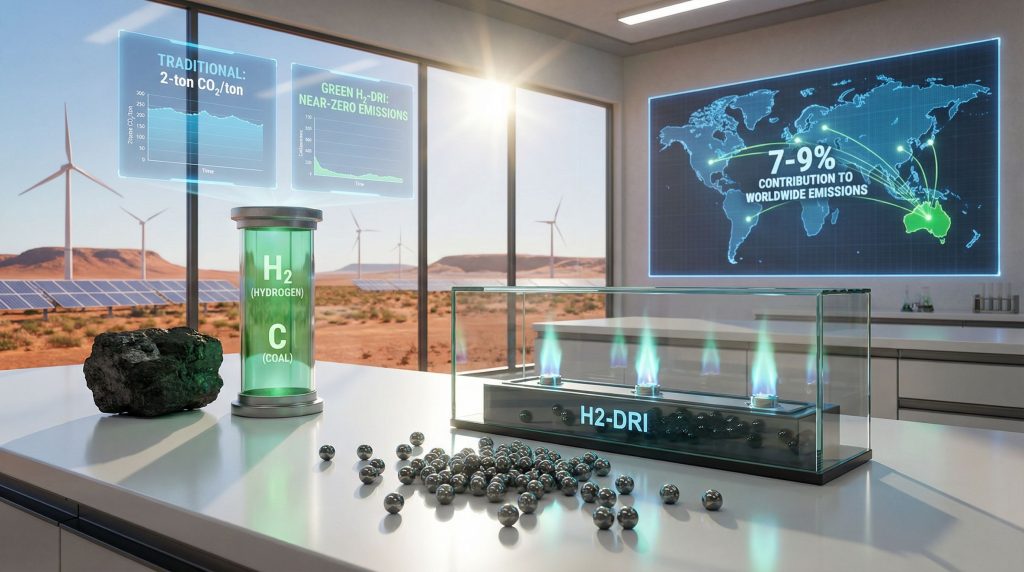
Conventional blast furnace methodology represents one of the most carbon-intensive industrial processes on the planet. The International Energy Agency confirms that blast furnace-basic oxygen furnace (BF-BOF) routes produce approximately 1.85-2.0 tonnes of CO₂ per tonne of crude steel, making steel production responsible for roughly 7-9% of global CO₂ emissions according to the World Steel Association's 2024 Statistical Yearbook.
This massive carbon footprint stems from the fundamental chemistry of traditional steelmaking, where metallurgical coal (coke) serves dual roles as both a reducing agent and thermal energy source. The process requires temperatures exceeding 1,500°C, with coke providing the carbon necessary to extract oxygen from iron ore while simultaneously generating the heat required for melting.
This established methodology has earned the designation as the industrial "standard" against which all emerging technologies are evaluated. The mining industry evolution has accelerated the need for cleaner alternatives to traditional extraction and processing methods.
The scale of this challenge becomes apparent when considering global production volumes. With approximately 1.95 billion tonnes of crude steel produced globally in 2023, the associated emissions reached approximately 2.5 billion tonnes of CO₂, highlighting the urgency behind decarbonisation initiatives across major steel-producing regions.
Revolutionary Hydrogen-Based Direct Reduction Technologies
The emergence of hydrogen as a primary reducing agent represents a fundamental reimagining of steel chemistry. Unlike conventional processes, H2-DRI (Hydrogen Direct Reduced Iron) systems eliminate the carbon component entirely, using hydrogen to extract oxygen from iron ore while producing only water vapour as a byproduct.
The International Energy Agency's Technology Roadmap on Hydrogen and Fuel Cells indicates that green hydrogen production via electrolysis requires 50-60 kWh per kilogram of H₂. For H2-DRI processes, hydrogen consumption typically ranges 55-65 kg H₂ per tonne of DRI, translating to approximately 2,750-3,900 kWh per tonne of DRI depending on renewable energy efficiency and process configuration.
Two dominant technology pathways are emerging in this transformation:
- MIDREX® technology (licensed by Tenova SpA, Italy) operates approximately 90 facilities globally producing roughly 60 million tonnes annually of direct reduced iron
- HYFOR™ technology (developed by Voestalpine and OMV, Austria) integrates hydrogen-based DRI with Electric Arc Furnace melting, with demonstration operations commenced in 2021-2022
The path to achieving near-zero emission targets requires renewable electricity sourcing at greater than 95% renewable energy mix, according to the Carbon Trust's Steel Decarbonisation Report. This necessitates hydrogen production via electrolysis from renewable sources, coupled with optimised process efficiency to reduce parasitic energy losses.
When big ASX news breaks, our subscribers know first
How Are Supply Chain Dynamics Reshaping the Steel Value Chain?
Critical Raw Material Requirements for Green Steel Production
The transition from traditional to green steel production has created a bifurcated raw materials market, where quality specifications directly impact technological viability and economic outcomes. This shift represents one of the most significant supply chain transformations in heavy industry and influences the broader critical minerals energy transition.
Conventional iron ore pellets typically contain 63-67% Fe with silica (SiO₂) content of 2-4%. However, green steel-grade magnetite pellets require dramatically higher specifications:
| Specification | Standard Pellets | Green Steel Grade |
|---|---|---|
| Iron Content (Fe) | 63-67% | 68-72% |
| Silica (SiO₂) | 2-4% | <1.5% |
| Alumina (Al₂O₃) | Variable | <0.15% |
| Phosphorus (P) | Variable | <0.05% |
These ultra-high specifications command premium pricing of 15-25% above standard pellets in current spot markets, according to the USGS Mineral Commodity Summaries 2024. The premium reflects both the scarcity of suitable ore bodies and the additional processing required to achieve these purity levels.
The geographic concentration of suitable magnetite deposits creates strategic supply considerations. Global magnetite reserves total approximately 50-60 billion tonnes, with key producers including Sweden (10 Mtpa), Chile (8 Mtpa), China (6 Mtpa), and Australia (2-3 Mtpa current production). Australia's magnetite reserves of approximately 5-6 billion tonnes are primarily located in Western Australia's Yilgarn Craton and South Australia's Gawler Craton.
Infrastructure Investment Patterns Across Key Producing Regions
The infrastructure requirements for green steel production extend far beyond traditional mining and steelmaking facilities. A 1 million tonne per annum (Mtpa) DRI facility requires approximately 2,700-3,000 GWh of renewable electricity annually, equivalent to the generation capacity of a 700-900 MW renewable energy facility operating at 40% capacity factor.
Australia's renewable potential offers significant advantages in this transition. The Australian Renewable Energy Agency reports that Australia possesses greater than 3,000 GW of developable renewable energy capacity, with Western Australia and South Australia representing optimal locations for hydrogen production supporting steelmaking operations.
Hot Briquetted Iron (HBI) transport presents unique logistical challenges that are reshaping port infrastructure globally. HBI's pyrophoric (self-igniting) properties require:
- Specialised vessels with oxygen-inert holds and continuous monitoring systems
- Covered storage facilities with inert gas capability at port facilities
- Rapid discharge equipment to minimise exposure time
- Segregated cargo zones to prevent contamination
These specialised requirements increase transport costs by approximately $100-150/tonne total versus $30-50/tonne for conventional pellets. Global HBI seaborne trade reached approximately 16-18 million tonnes in 2023, growing at 3-4% annually according to the International Iron Metallics Association.
The limitation of suitable port facilities to approximately 60-80 facilities globally creates bottlenecks that favour integrated production hubs over distributed manufacturing models. Australian ports, including Port Hedland and Port of Geraldton in Western Australia, and Port of Port Adelaide in South Australia, would require capital investment of $150-300 million per facility to enable efficient HBI handling capabilities.
Which Market Segments Are Driving Green Steel Adoption?
Automotive Industry Decarbonisation Mandates
The automotive sector represents the most aggressive early adopter of green steel, driven by both regulatory compliance and brand positioning strategies. The European Union's Carbon Border Adjustment Mechanism (CBAM) serves as the primary catalyst, creating direct financial incentives for low-carbon steel procurement.
CBAM Regulation (EU) 2023/956 operates in two phases:
- 2024-2026 (transitional phase): Exporters must report embedded carbon content without financial penalties
- 2026 onwards: Importers must purchase CBAM certificates equivalent to EU ETS carbon prices
For Australian steel exporters to Europe, CBAM creates a €30-100 per tonne cost disadvantage for high-carbon steel versus green steel alternatives. This price differential provides material incentives for automotive manufacturers to secure green steel supply chains, particularly for electric vehicle production where sustainability messaging directly impacts consumer purchasing decisions.
The supply chain transparency requirements extend beyond carbon accounting to encompass full lifecycle documentation. Companies like Scania have announced complete traceability from SSAB's HYBRIT facilities, establishing the template for automotive industry procurement standards that prioritise verified low-carbon inputs over cost minimisation alone.
Construction and Infrastructure Sector Transformation
Government policy frameworks across major economies are systematically incentivising green building materials through procurement standards, tax incentives, and regulatory requirements. This represents a fundamental shift from voluntary sustainability initiatives to mandatory compliance frameworks, reflecting the big pivot in critical minerals supply chains.
Long-term contracts for certified low-carbon steel products are emerging as the preferred procurement model. Unlike spot market transactions, these agreements provide price certainty for buyers while offering revenue visibility for producers during the capital-intensive transition period. The Carbon Trust's analysis indicates that cost parity between traditional and green steel is projected by 2030, assuming carbon pricing continues to strengthen and technology learning curves reduce production costs.
The construction sector's adoption patterns differ significantly from automotive applications. While automotive manufacturers can absorb premium pricing for brand differentiation, construction projects operate under stringent cost constraints that require government support mechanisms. Policy frameworks across Australia, Europe, and North America are implementing:
- Public procurement requirements favouring low-carbon materials
- Tax credits and depreciation benefits for green building components
- Building code modifications incorporating carbon intensity metrics
- Infrastructure spending programmes with sustainability requirements
What Investment Themes Are Emerging in the Green Steel Ecosystem?
Technology Provider Consolidation and Scaling Opportunities
The concentration of viable hydrogen-based steel technologies among a limited number of providers creates significant intellectual property value and licensing opportunities. MIDREX® technology demonstrates this dynamic, with licensing agreements supporting approximately 90 facilities globally while maintaining technology control within Tenova SpA's portfolio.
The capital equipment manufacturing sector is experiencing strategic repositioning as companies pivot from traditional blast furnace systems to hydrogen-based infrastructure. This transition requires substantial R&D investment but offers first-mover advantages in what McKinsey Global Institute identifies as a multi-trillion-dollar global transformation.
Technology readiness levels across hydrogen-based steelmaking remain at TRL 7-8 (pilot/demonstration scale), not yet achieving full commercial deployment (TRL 9). This creates both risk and opportunity for investors, as successful technology scaling could generate substantial returns while technological failures could result in complete capital loss. For guidance on navigating these complex decisions, comprehensive investment strategy insights become essential.
Resource Company Strategic Repositioning
The bifurcation of iron ore markets based on green steel specifications is creating distinct investment categories with different risk-return profiles:
Table: Green Steel Value Chain Investment Categories
| Investment Category | Key Characteristics | Risk-Return Profile |
|---|---|---|
| High-Grade Magnetite Producers | Premium pricing for low-impurity pellets, limited supply base | Medium risk, stable returns |
| Hydrogen Production Infrastructure | Capital-intensive, policy-dependent, renewable energy integration | High risk, high returns |
| Integrated Steel Transformation | Retrofit costs, operational complexity, stranded asset risks | Medium risk, defensive positioning |
| Technology & Equipment Providers | Scalable IP, global market access, licensing revenues | Low-medium risk, growth-oriented |
The strategic value of magnetite resources is becoming increasingly apparent as steelmakers compete for secured supply. Premium specifications command increasing price premiums, with several major steel producers (thyssenkrupp, SSAB, ArcelorMittal) securing long-term contracts with magnetite producers to ensure feedstock availability for their decarbonisation initiatives.
How Is Australia Positioned in the Global Green Steel Transition?
Competitive Advantages in Raw Materials Supply
Australia's geological endowment provides multiple competitive advantages in the green steel value chain. The country possesses world-class magnetite deposits with the purity specifications required for hydrogen-based steelmaking, particularly in Western Australia's Yilgarn Craton and South Australia's Gawler Craton regions. This positions Australia at the forefront of Australia's green metals leadership in the global transition.
The proximity to Asian steel-consuming markets provides significant logistical advantages over competing suppliers. While Sweden and Chile possess high-quality magnetite resources, Australia's location enables shorter shipping routes to the world's largest steel consumption region, reducing transportation costs and carbon intensity.
Australia's renewable energy potential fundamentally differentiates its green steel development prospects. The Australian Renewable Energy Agency's Clean Energy Investment Report 2023 identifies greater than 3,000 GW of developable renewable energy capacity, with Western Australia and South Australia offering optimal solar and wind resources for hydrogen production.
Policy Framework Development and Industry Support
The Federal government's hydrogen strategy encompasses specific provisions for industrial decarbonisation, including steel production applications. Funding commitments through ARENA and other agencies provide financial support for demonstration projects and commercial-scale deployment.
State-level renewable energy zones in Western Australia and South Australia are specifically designed to support energy-intensive industrial applications. These zones provide grid connection, planning approvals, and coordinated infrastructure development that reduces the complexity and cost of establishing integrated green steel facilities.
Research and development partnerships between Australian universities and industry participants are advancing both process technology and workforce development. These collaborations focus on adapting global hydrogen-based steel technologies to Australian conditions while developing the technical expertise required for commercial operations.
What Are the Key Technical and Economic Challenges?
Hydrogen Supply Chain Scalability Issues
The fundamental challenge facing hydrogen-based steel production lies in scaling green hydrogen supply to industrial requirements. Current electrolyser capital costs of $300-500 per kW are projected to decline to $150-250/kW by 2030 according to IEA estimates, but even these reduced costs represent substantial capital requirements for industrial-scale deployment.
Green hydrogen production costs currently range $1-1.5 per kg H₂ for steam methane reformation with carbon capture (blue hydrogen) versus $3-5 per kg H₂ for renewable electricity-based electrolysis. This cost differential creates economic pressure to utilise blue hydrogen during the transition period, though environmental benefits are reduced compared to green hydrogen pathways.
Seasonal renewable energy variability presents operational challenges that require sophisticated energy storage or backup systems. Wind and solar resources experience daily and seasonal fluctuations that may not align with continuous steel production requirements, necessitating either hydrogen storage infrastructure or grid-connected backup power systems.
Capital Investment and Transition Timing
Retrofit costs for existing blast furnace facilities present complex economic decisions for integrated steel producers. The MIT Energy Initiative's 2023 analysis indicates that hybrid hydrogen-natural gas routes will likely dominate 2025-2035, with full hydrogen adoption post-2035 as technology costs decline and carbon pricing increases.
Greenfield versus brownfield development economics favour different approaches depending on regional circumstances. Brownfield retrofits can leverage existing port, rail, and workforce infrastructure but face technical limitations in adapting older facilities to hydrogen-based processes.
Greenfield projects offer optimal process design but require complete infrastructure development. Stranded asset risks in traditional steel infrastructure create urgency around transition timing decisions. Companies that delay decarbonisation face potential asset impairment as carbon pricing increases and market access becomes restricted, while companies that transition too early may incur unnecessary costs if technology development accelerates beyond current projections.
The next major ASX story will hit our subscribers first
Which Companies Are Leading the Green Steel Revolution?
Global Technology Pioneers and Early Adopters
thyssenkrupp has committed to reducing CO₂ emissions in steel production by 50% by 2030 and achieving carbon-neutral steel by 2050 through hydrogen-based plants planned for Duisburg and other German sites. The company's approach focuses on retrofitting existing facilities with hydrogen-based direct reduction systems while maintaining production capacity during the transition period.
SSAB's HYBRIT (Hydrogen Breakthrough Ironmaking Technology) project achieved the world's first hydrogen-based steel production in December 2020 at the Luleå plant. By 2023-2024, SSAB has maintained pilot-scale production with approximately 1,000 tonnes of green steel delivered to customers including Volvo, demonstrating commercial viability at demonstration scale. This milestone represents a significant achievement in the transition from gold to green steel production methods.
ArcelorMittal announced comprehensive decarbonisation plans for its European operations, with retrofits planned for Dunkirk, France, and Hamburg, Germany facilities using hydrogen-based DRI by 2030. The company targets 35% CO₂ reduction across Europe by 2030, representing one of the most aggressive decarbonisation timelines among major integrated steel producers.
Australian Resource Sector Strategic Positioning
Major Australian iron ore producers are implementing strategic positioning initiatives to capture value in the green steel transition. These companies recognise that traditional iron ore demand may plateau as steel production shifts toward scrap-based electric arc furnace routes, while high-grade magnetite demand increases dramatically.
From gold to green steel, we dive into TBR, GRR, JMS and more, showcasing how Australian companies are strategically positioning themselves in this transformation. Emerging magnetite specialists are capturing quality premiums through focused development of ultra-high-grade deposits specifically targeting green steel applications.
These companies benefit from both premium pricing and strategic value as steelmakers seek to secure long-term feedstock supply agreements. Integrated mining-to-steel value chain opportunities are emerging as companies evaluate vertical integration strategies. The combination of renewable energy resources, high-grade magnetite deposits, and proximity to Asian markets creates potential for Australian companies to develop complete green steel production capabilities rather than remaining solely raw material suppliers.
What Does the Future Hold for Green Steel Markets?
Production Capacity Scaling Projections
The World Economic Forum's Steel Decarbonisation Initiative projects approximately 30-35 million tonnes of green steel capacity operational globally by 2030, representing roughly 1.5-2% of global crude steel production. However, announced production capacity significantly exceeds operational capacity realisations, suggesting that actual deployment may lag ambitious targets.
Regional production hub development favours geographic clustering in renewable-rich jurisdictions rather than distributed manufacturing models. The McKinsey Global Institute identifies Western Australia, northern Sweden, and Norway as optimal "green steel hubs" globally, based on renewable energy resources, infrastructure potential, and market access considerations.
Market share evolution from traditional to hydrogen-based processes will likely follow an S-curve adoption pattern, with slow initial uptake followed by rapid acceleration as cost parity is achieved and regulatory pressure intensifies. The transition timeline depends critically on carbon pricing trajectories and technology cost reduction rates.
Furthermore, Australia forges a future made from green steel, demonstrating the country's commitment to becoming a global leader in sustainable steel production technologies.
Investment Return Scenarios and Risk Factors
Carbon pricing impact on traditional steel competitiveness represents the primary economic driver for green steel adoption. Current carbon prices in the EU ETS range €30-100 per tonne CO₂, creating material cost advantages for low-carbon steel that justify premium pricing and capital investment in new technologies.
Technology learning curves and cost reduction pathways show promising trajectories for both hydrogen production and direct reduction processes. However, achieving projected cost reductions requires sustained investment and technological development that may face delays or setbacks.
Geopolitical considerations in critical mineral supply chains add complexity to investment decisions. While magnetite resources are geographically distributed, specialised equipment manufacturing remains concentrated in Germany, Italy, and China, creating supply chain vulnerabilities that could impact project development timelines and costs.
How Should Investors Approach Green Steel Opportunities?
Portfolio Construction Strategies
Diversification across the green steel value chain reduces technology and execution risks while providing exposure to multiple value creation opportunities. A balanced approach includes positions in high-grade magnetite producers, hydrogen infrastructure developers, technology providers, and integrated steel manufacturers pursuing decarbonisation strategies.
Geographic exposure balancing recognises that green steel development will occur primarily in renewable-rich regions with supportive policy frameworks. Investors should consider exposure to Australian resource companies, European technology leaders, and emerging market manufacturers adopting green steel technologies.
Technology risk mitigation requires exposure to multiple pathway solutions rather than concentration in single technological approaches. The steel industry's conservative adoption patterns suggest that multiple technologies will coexist during the transition period, making diversified technology exposure prudent.
Due Diligence Frameworks for Green Steel Investments
Technical feasibility assessment requires evaluation of resource quality, renewable energy access, infrastructure requirements, and technology readiness levels. Companies with demonstrated pilot operations and secured feedstock supply present lower technical risks than those with conceptual projects or unproven resources.
Regulatory and policy risk evaluation must consider carbon pricing trajectories, trade policies, environmental approvals, and government support mechanisms. Companies operating in jurisdictions with strong climate policies and industrial support face lower regulatory risks than those in uncertain policy environments.
Long-term demand sustainability analysis should evaluate automotive industry adoption rates, construction sector policy support, and competitive positioning versus traditional steel production. The transition from gold to green steel represents a structural shift rather than a cyclical opportunity, requiring fundamental analysis of long-term supply-demand dynamics.
The transformation from traditional to hydrogen-based steel production represents one of the most significant industrial transitions of the 21st century. Australia's combination of world-class magnetite resources, exceptional renewable energy potential, and proximity to Asian markets positions the country as a potential leader in the global green steel revolution.
However, realising this potential requires coordinated investment in infrastructure, technology development, and policy support to capture the full value of this historic opportunity. As the industry continues its evolution from gold to green steel, strategic positioning and careful risk assessment will determine which companies and jurisdictions emerge as leaders in this transformative era.
Investment in emerging technologies and resource development carries inherent risks including technological failure, regulatory changes, market volatility, and execution challenges. This analysis is for informational purposes only and should not be considered as investment advice. Prospective investors should conduct their own due diligence and consult with qualified financial advisors before making investment decisions.
Looking to Capitalise on Green Steel Investment Opportunities?
Discovery Alert's proprietary Discovery IQ model provides real-time notifications on significant ASX mineral discoveries, including magnetite deposits essential for green steel production and critical minerals driving the energy transition. Stay ahead of the market with instant alerts on actionable opportunities across Australia's resource sector, positioning yourself to benefit from the structural shift towards sustainable manufacturing. Start your 30-day free trial today and gain the market-leading edge needed to navigate this transformative investment landscape.