
August 14, 2026
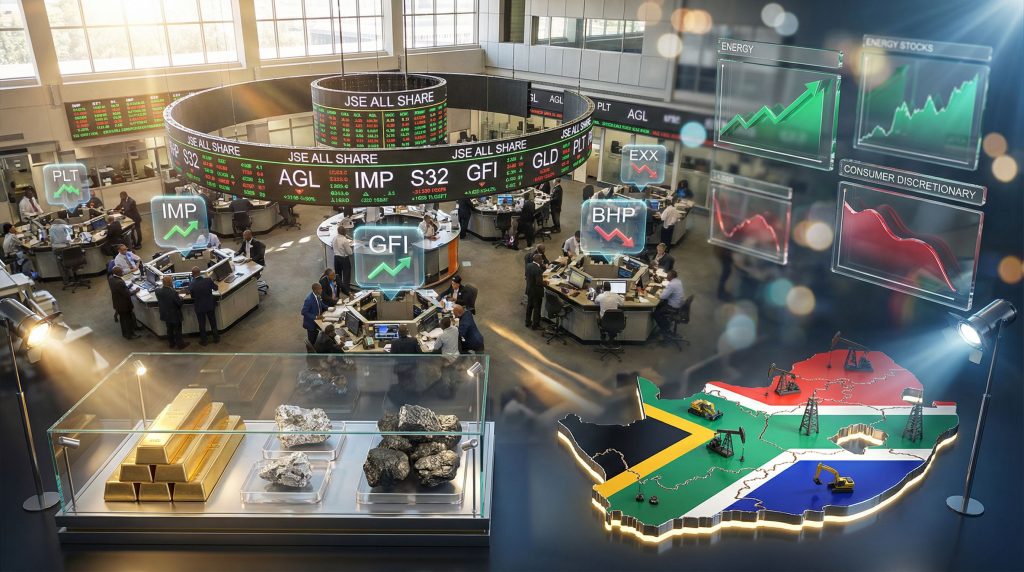
The recent gold market trends have been significantly influenced by mounting geopolitical tensions across the Middle East, as commodity-dependent emerging economies face unprecedented transmission of geopolitical shocks through interconnected trading channels. The South Africa stock index Middle East conflict exemplifies how regional conflicts translate into widespread economic disruption, revealing the underlying fragility of markets heavily weighted toward resource extraction and export-driven growth models.
South Africa's financial ecosystem demonstrates this vulnerability, where structural dependencies create amplified responses to external disruptions. The relationship between commodity prices, currency stability, and equity market performance demonstrates how quickly investor sentiment can shift during periods of international uncertainty.
What Makes South Africa's Stock Market Vulnerable to Global Conflicts?
Resource-Heavy Index Structure Creates Amplified Volatility
The composition of the FTSE/JSE All Share Index reveals why South Africa experiences disproportionate market turbulence during geopolitical crises. With approximately 25% exposure to precious metals and mining operations, the index carries significantly higher commodity sensitivity compared to more diversified emerging market benchmarks.
This concentration effect became starkly apparent in March 2026, when the South Africa stock index recorded a 13% monthly decline, marking its steepest fall since September 2008 during the global financial crisis. The Middle East conflict triggered a cascading selloff that exposed the structural weaknesses inherent in resource-dependent market compositions.
| Market Segment | JSE Weighting | March 2026 Performance |
|---|---|---|
| Precious Metals & Mining | 25% | -27% |
| Construction & Materials | 8% | -10%+ |
| Banking Sector | 15% | -10%+ |
| Retail & Consumer | 12% | -10%+ |
The mining sector's 27% slump during the conflict period demonstrates how concentrated index weightings amplify volatility during risk-off periods. Moreover, the current mining industry evolution patterns suggest that structural changes may continue affecting market dynamics when global investors retreat from emerging markets.
The Currency-Commodity Correlation That Drives Market Sentiment
Currency transmission mechanisms play a crucial role in how external shocks propagate through South African financial markets. When oil prices surge above critical thresholds like $100 per barrel, as occurred during the March 2026 crisis, emerging market currencies typically face immediate selling pressure through multiple channels.
The relationship between energy price inflation and central bank policy expectations creates a feedback loop that particularly impacts commodity currencies. As developed market central banks signal tightening cycles in response to inflationary pressures, interest rate differentials widen against emerging markets, reducing the relative attractiveness of rand-denominated assets.
This transmission occurs through several interconnected pathways:
- Import cost inflation from higher energy prices reduces real purchasing power
- Current account pressure from increased import costs weakens currency fundamentals
- Capital flow reversal as investors seek higher yields in developed markets
- Risk premium expansion as uncertainty increases required returns for emerging market exposure
The South African Reserve Bank's recent inflation forecast revisions during this period highlighted institutional recognition of these transmission channels, signaling potential monetary policy responses that could further pressure economic growth. Furthermore, heavy losses hit Johannesburg Stock Exchange due to Middle East conflict-fuelled uncertainty.
When big ASX news breaks, our subscribers know first
Which Sectors Are Winning and Losing in the Current Crisis?
Mining Giants Face the Precious Metals Paradox
The March 2026 market disruption revealed an unusual departure from traditional safe-haven investment patterns. Despite escalating geopolitical tensions that historically drive gold demand, precious metal prices declined during the Middle East conflict, contradicting conventional wisdom about crisis-period asset allocation.
This precious metals paradox reflects several competing forces that overwhelmed traditional safe-haven buying:
- Rising real interest rates reduced gold's relative attractiveness as a non-yielding asset
- US dollar strengthening made precious metals more expensive for international investors
- Portfolio liquidation pressure forced institutional investors to sell liquid assets to meet redemptions
- Growth expectations deterioration reduced industrial demand for platinum and palladium
The 27% decline in the precious metals and mining sector eliminated the substantial gains accumulated during the prior rally period. Companies with significant gold and platinum exposure faced margin compression from both falling commodity prices and rising operational costs driven by higher energy prices. Current gold price forecast models indicate continued volatility ahead.
Energy Stocks Emerge as Defensive Plays
While most sectors experienced significant declines, energy-related companies provided some portfolio protection during the crisis period. The persistence of oil prices above $100 per barrel created relative value opportunities within the JSE structure, particularly for companies with direct energy exposure or cost-pass-through capabilities.
Companies like Sasol, with integrated energy operations, offered natural hedging characteristics as their revenue streams benefited from the same oil price increases that pressured other sectors. Similarly, coal exporters found unexpected demand from European energy security concerns, creating divergent performance patterns within the broader resources complex.
Consumer Discretionary Sectors Under Maximum Pressure
The combination of rising energy costs, inflation expectations, and tightening monetary policy created particularly challenging conditions for consumer-facing businesses. Construction, materials, retail, and banking sectors all declined more than 10% during March 2026, reflecting vulnerability to both economic slowdown and margin compression.
Banking sector exposure extends beyond direct energy cost impacts to encompass credit quality deterioration as consumers face higher fuel costs and potential interest rate increases. Mortgage portfolios and consumer credit facilities face increased default risk as household budgets adjust to higher inflation and slower economic growth.
The broad-based nature of sectoral declines reflected investor concerns about both immediate inflationary impacts and longer-term growth trajectory implications for the South African economy.
How Do Geopolitical Shocks Transmit Through Emerging Market Channels?
The Risk-Off Trade Mechanics Explained
Emerging market shock transmission follows predictable patterns that accelerate during periods of global uncertainty. The South Africa stock index decline exemplified how Middle East conflict impacts propagate through interconnected financial channels, creating amplified effects beyond direct economic exposure.
The transmission sequence typically unfolds through these stages:
- Initial shock recognition as geopolitical events raise uncertainty about global growth
- Commodity price adjustment reflecting supply disruption concerns and demand forecasts
- Currency market reaction as investors reassess emerging market risk premiums
- Equity market repricing through multiple compression and earnings expectation revisions
- Credit market widening as sovereign and corporate spreads adjust to higher perceived risk
During March 2026, this cascade effect intensified as oil prices remained persistently above $100 per barrel, forcing investors to recalibrate their assumptions about inflation trajectories and central bank responses globally. Consequently, comprehensive precious metals analysis becomes essential for understanding these market dynamics.
Capital Flow Reversal Amplification
The retreat from emerging market stocks reflects institutional portfolio rebalancing decisions driven by both risk management protocols and changing relative value assessments. When developed market yields rise in response to inflation concerns, emerging market assets must offer higher risk premiums to maintain investor interest.
This rebalancing creates self-reinforcing downward pressure through several mechanisms:
- Forced selling by funds facing redemption pressures or risk limit breaches
- Currency hedging adjustments as institutions reduce emerging market exposure
- Liquidity preference shifts toward developed market assets during uncertainty periods
- Momentum-based selling as technical indicators trigger systematic selling programs
The magnitude of South African outflows during this period reflected both the country's significant mining sector exposure and its integration within global emerging market investment portfolios. Additionally, South Africa's stock index on track for worst month since 2008 amid Middle East tensions.
What Does Historical Context Reveal About Recovery Patterns?
Lessons from the 2008 Financial Crisis Comparison
The March 2026 decline's comparison to September 2008 provides crucial context for understanding both the severity of the current selloff and potential recovery pathways. The 13% monthly fall matched the steepest monthly decline since the global financial crisis, suggesting similar magnitude systemic stress.
However, the underlying drivers differ significantly between these crisis periods. While 2008 represented a fundamental breakdown in global financial system functioning, the 2026 crisis reflects geopolitical uncertainty combined with commodity price volatility. These different root causes suggest potentially different recovery trajectories and sector rotation patterns.
The 2008-2009 recovery period in South African markets demonstrated several important characteristics:
- Mining sector leadership during the initial recovery phase as commodity prices stabilised
- Currency stabilisation preceding broader equity market recovery
- Sectoral rotation from defensive positions back toward growth-oriented sectors
- Valuation-driven buying as price-to-book ratios reached historically attractive levels
South Africa's Previous Commodity Super-Cycle Experience
The context surrounding the recent selloff becomes more significant when viewed against the prior 44% rally in the FTSE/JSE All Share Index, which represented the longest streak of monthly gains since records began in 1995. This extraordinary performance was driven by rising metal prices, rand strength, and declining inflation expectations.
February 2026 alone posted a 7% gain, the largest monthly advance in over two years, led by metals and mining stocks. This dramatic reversal from peak optimism to crisis-level declines illustrates the volatility inherent in commodity-dependent market structures.
The speed of sentiment reversal reflects several structural factors:
- Momentum-driven investment flows that amplify both upward and downward movements
- Commodity price volatility creating rapid shifts in earnings expectations
- Currency correlation effects that compound directional moves in either direction
- International investment sensitivity to emerging market risk perception changes
Furthermore, iron ore demand insights reveal how mineral sector dynamics contribute to these volatile cycles.
Which Investment Strategies Make Sense During Prolonged Uncertainty?
Portfolio Rebalancing Considerations for Volatile Periods
The current market environment requires careful consideration of sector allocation adjustments and risk management protocols. Traditional buy-and-hold strategies may prove insufficient during periods of heightened geopolitical uncertainty and commodity price volatility.
Key rebalancing considerations include:
- Reducing mining sector overweight positions to more neutral allocations
- Increasing defensive sector exposure in utilities, healthcare, and telecommunications
- Currency hedging evaluation for international investors with rand exposure
- Liquidity management ensuring adequate cash positions for opportunistic investments
Value-oriented investors may find opportunities emerging in oversold mining stocks, particularly those with strong balance sheets and low-cost operations. However, position sizing becomes critical given the potential for continued volatility during extended geopolitical uncertainty periods.
Contrarian Investment Opportunities in the Selloff
The magnitude of sectoral declines has created potential value opportunities for investors with longer investment horizons and appropriate risk tolerance. Companies trading below historical valuation multiples may offer attractive risk-adjusted returns if operational fundamentals remain intact.
Quality screening criteria become particularly important during volatile periods:
- Balance sheet strength with low debt-to-equity ratios and adequate liquidity
- Operational flexibility including cost structure adaptability and geographic diversification
- Management quality with demonstrated crisis management capabilities
- Strategic positioning within secular growth trends despite cyclical headwinds
Long-term infrastructure investments may benefit from rand weakness, particularly companies with export capabilities or international revenue streams that provide natural currency hedging characteristics.
How Might Monetary Policy Responses Shape Market Direction?
South African Reserve Bank's Policy Dilemma
The central bank faces a challenging balance between controlling inflation expectations and supporting economic growth during external shock periods. Rising energy prices create direct inflationary pressure whilst simultaneously reducing economic growth prospects through higher input costs.
Policy tool effectiveness becomes constrained during external shock periods, as interest rate adjustments may have limited impact on imported inflation whilst potentially exacerbating growth slowdowns. The Reserve Bank's recent inflation forecast revisions signal recognition of this policy constraint.
Potential policy responses include:
- Gradual rate increases to anchor inflation expectations without choking growth
- Communication strategies to manage market expectations about policy trajectory
- Foreign exchange intervention to smooth excessive rand volatility
- Coordination with fiscal authorities on counter-cyclical spending measures
Global Central Bank Policy Spillover Effects
Developed market central bank responses to inflation concerns create significant spillover effects for emerging market monetary policy effectiveness. When the Federal Reserve and European Central Bank tighten policy in response to energy-driven inflation, emerging market central banks face reduced policy flexibility.
These spillover effects operate through multiple channels:
- Interest rate differential impacts on capital flow directions
- Currency pressure transmission requiring defensive policy responses
- Import cost effects from stronger developed market currencies
- Credit availability changes as global lending conditions tighten
The coordination of global monetary policy responses becomes crucial for emerging market stability during prolonged geopolitical uncertainty periods.
The next major ASX story will hit our subscribers first
What Are the Longer-Term Structural Implications?
Energy Security Reshaping Investment Priorities
The current crisis may accelerate structural changes in global energy and commodity supply chains, potentially creating opportunities for South African companies positioned within critical mineral value chains. The drive toward supply chain diversification away from geopolitically unstable regions could benefit countries with stable political systems and abundant natural resources.
South Africa's positioning in platinum group metals, rare earth elements, and other strategic minerals may become increasingly valuable as developed economies prioritise supply security alongside cost considerations. This shift could support longer-term investment in mining sector capabilities despite current cyclical headwinds.
Technology Sector Development as Diversification Strategy
The volatility of commodity-dependent economic structures highlights the importance of economic diversification strategies. Technology sector development, financial services expansion, and manufacturing capability building represent potential pathways to reduce dependence on mining sector performance.
However, such diversification requires sustained investment in education, infrastructure, and institutional capacity building. The current crisis may provide policy motivation for accelerating these longer-term structural transformation initiatives.
Key Takeaways for Investors and Policymakers
Risk Management Framework for Volatile Periods
Successful navigation of geopolitical uncertainty requires robust risk management frameworks that account for both direct and indirect transmission channels. Position sizing becomes particularly critical when dealing with concentrated sector exposures and correlated risk factors.
Essential monitoring indicators include:
- Brent crude oil price sustainability above $100 per barrel thresholds
- USD/ZAR exchange rate technical support levels and intervention thresholds
- JSE mining index relative strength compared to global peer indices
- Government bond yield spreads to US Treasuries as risk premium measures
Investment decision frameworks must incorporate scenario analysis that considers multiple potential outcomes for both geopolitical resolution and economic transmission effects.
Policy Response Effectiveness Measures
Policymaker effectiveness during external shock periods depends on both immediate crisis response capabilities and longer-term structural adjustment facilitation. Fiscal space analysis becomes crucial for determining counter-cyclical spending capacity without undermining currency stability or debt sustainability.
Regional economic integration initiatives may provide additional shock absorption mechanisms, reducing dependence on individual country policy responses. The current crisis may accelerate discussions about African monetary policy coordination and trade relationship diversification.
Critical Investment Metrics During Uncertainty:
- Oil price levels and volatility patterns affecting inflation expectations
- Currency stability measures and central bank intervention capacity
- Sector rotation indicators showing defensive vs. growth preference shifts
- International capital flow direction changes and policy response effectiveness
The intersection of geopolitical uncertainty with commodity-dependent economic structures creates complex investment challenges that require sophisticated analysis and adaptive strategies. Understanding these transmission mechanisms provides the foundation for navigating volatile periods whilst identifying potential opportunities within the disruption.
Disclaimer: This analysis is for educational purposes and does not constitute investment advice. Geopolitical events create inherent unpredictability in financial markets, and past performance does not guarantee future results. Investors should conduct thorough due diligence and consider consulting qualified financial professionals before making investment decisions.
Are You Positioned to Capitalise on the Next Major ASX Discovery?
Whilst South African markets demonstrate the risks of commodity dependence during geopolitical uncertainty, savvy investors can still identify opportunities in the Australian mining sector through early discovery alerts. Discovery Alert's proprietary Discovery IQ model provides instant notifications on significant ASX mineral discoveries, helping subscribers identify actionable opportunities before broader market recognition drives substantial price movements. Begin your 14-day free trial today and secure your market-leading advantage in Australia's dynamic mining sector.