June 16, 2026
The Hidden Mechanics Behind Gold's Explosive Response to Diplomatic Shifts
Few financial phenomena reveal the complexity of modern markets quite like watching gold surge in response to peace. At first glance, the logic seems counterintuitive. Shouldn't the prospect of reduced global conflict send investors toward riskier assets, away from the traditional bunker of bullion? The reality is far more layered, and understanding why gold prices US-Iran peace deal dynamics unfolded the way they did in mid-June 2026 requires peeling back several interconnected market forces simultaneously.
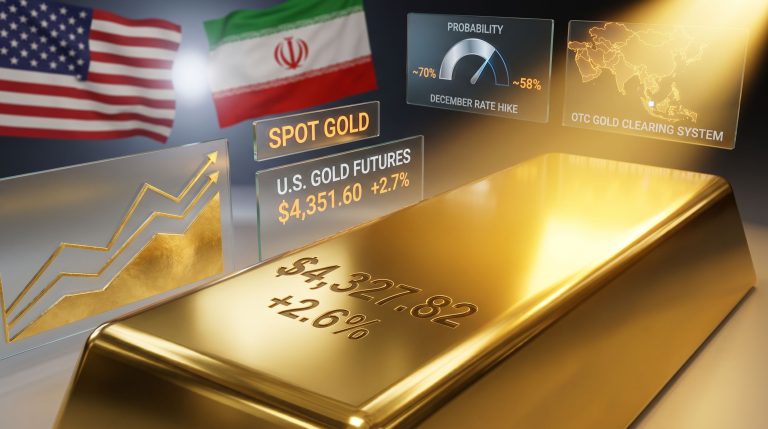
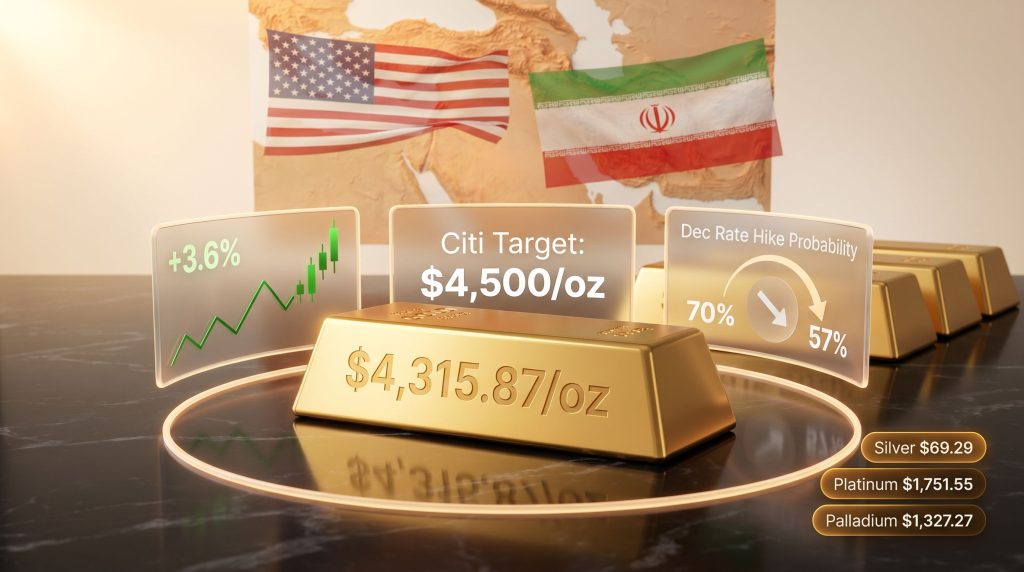
Gold does not respond to headlines in isolation. It responds to the cascade of second and third-order effects those headlines trigger across currencies, interest rate expectations, inflation trajectories, and investor psychology. When the preliminary US-Iran agreement was announced, the market did not simply reprice geopolitical risk. It repriced the dollar, repriced rate hike probability, and repriced energy inflation all at once. The result was a 3.6% intraday surge that pushed spot gold to its highest point since early June 2026.
When big ASX news breaks, our subscribers know first
Three Forces That Converged to Ignite the Gold Rally
Understanding the price action requires examining the three structural drivers that operated simultaneously rather than treating any single factor as the sole explanation.
Dollar Weakness as the Primary Transmission Channel
The most direct and powerful mechanism connecting the Iran deal to gold's rally was the movement of the US dollar. During the surge, the USD held near 10-day lows, a positioning influenced partly by the Bank of Japan's upcoming interest rate decision and its implications for the USD/JPY currency pair. When the dollar weakens, gold becomes cheaper to purchase for buyers holding other currencies, which mechanically stimulates demand and lifts the dollar-denominated price.
Furthermore, this dynamic is not merely textbook theory. Emerging market economies, particularly large physical gold consumers like India, experience this amplification effect in real time. Indian gold prices rose approximately 1.66% to ₹153,140 per 10 grams in response to the same geopolitical developments. This illustrates how a single macro event translates into local commodity pricing across multiple geographies simultaneously, with the dollar acting as the transmission belt.
Oil Price Decline and Its Ripple Effect on Rate Expectations
The Iran deal's second-order effect was a meaningful decline in crude oil prices. Iran sits atop some of the world's most substantial petroleum reserves, and any diplomatic framework that reduces the risk of conflict in the Gulf region immediately alters global oil supply risk premiums. Lower oil prices carry a direct disinflationary implication: reduced energy costs feed into headline consumer price indices, softening near-term inflation expectations.
For gold markets, this matters enormously. Aggressive central bank rate hikes are typically justified by persistent inflation. When inflation expectations fall, the rationale for further monetary tightening weakens. This created a more accommodating environment for a non-yielding asset like gold, which struggles to compete with interest-bearing instruments when rates are rising but thrives when the rate outlook softens. The relationship between gold and bond dynamics becomes particularly evident during these periods of shifting rate expectations.
The Paradox of Partial Geopolitical De-escalation
This is perhaps the most nuanced force at play. Markets did not price in a full resolution of Middle Eastern instability. US President Donald Trump confirmed a preliminary agreement had been signed, but both parties acknowledged that a permanent truce remained subject to ongoing negotiation. This ambiguity created a paradoxical situation where geopolitical risk premiums partially unwound without fully disappearing.
In practical terms, enough uncertainty remained to sustain safe-haven interest in gold, while the diplomatic progress was sufficient to weaken the dollar and reduce energy price risk. It is a combination rarely available to gold bulls simultaneously, which explains the magnitude of the move. Indeed, gold's safe-haven role proved resilient even as diplomacy appeared to advance.
Current Market Snapshot: Where Gold Prices Stand
As of mid-June 2026, the precious metals market presented a clear divergence between gold and its peers.
| Metal | Price (mid-June 2026) | Session Change |
|---|---|---|
| Gold (Spot) | $4,315.87/oz | +0.2% |
| Gold (August Futures) | $4,337.10/oz | -0.3% |
| Silver (Spot) | $69.29/oz | -1.0% |
| Platinum | $1,751.55/oz | -0.9% |
| Palladium | $1,327.27/oz | -1.6% |
Gold's modest positive session on Tuesday followed Monday's extraordinary 3.6% intraday move, which marked the metal's strongest single-session performance in over a week. The slight premium carried by August futures over spot pricing reflects market participants building in a modest risk buffer around deal confirmation rather than expressing outright bearish sentiment.
Why Silver, Platinum, and Palladium Fell While Gold Climbed
The divergence between gold and the industrial precious metals complex tells its own story about market psychology during geopolitical transitions. Understanding these gold-silver market dynamics helps clarify why the two metals so often diverge during politically driven rallies.
Silver, platinum, and palladium each carry substantial industrial demand profiles. Silver is consumed heavily in solar panel manufacturing and electronics. Platinum and palladium are critical in automotive catalytic converters. When geopolitical risk recedes, the risk premiums that have supported these metals partially unwind, and their industrial demand outlook becomes the dominant pricing variable.
A de-escalating geopolitical environment does not necessarily accelerate industrial production in the short term, but it does remove the fear-driven buying that had partially supported these prices. Gold, by contrast, functions primarily as a monetary and reserve asset. Central banks accumulate it as a store of value, and central bank gold demand has been a consistent structural pillar beneath prices for several years. This structural distinction explains why gold outperformed its precious metal peers so decisively when the Iran news broke.
Silver's underperformance during a gold rally is often a reliable indicator that the driving force behind the move is monetary and safe-haven in nature rather than broad industrial risk appetite. When both metals rise together, the signal typically reflects inflationary rather than purely geopolitical dynamics.
The Federal Reserve Dimension: Kevin Warsh's First Test
Layered on top of the geopolitical catalyst is the Federal Reserve's policy decision, scheduled for Wednesday under new Chair Kevin Warsh. Markets were already pricing in no rate changes for 2026, but the Iran deal introduced a meaningful shift in rate trajectory expectations.
According to CME FedWatch data, the probability of a US rate hike in December fell from approximately 70% to 57% following the peace deal announcement. This shift reflects markets recalibrating the inflation outlook in light of lower oil prices and reduced geopolitical risk premiums. Consequently, the implications for gold are direct: every percentage point reduction in rate hike probability removes a headwind from the non-yielding metal's price trajectory.
The three scenarios worth monitoring are laid out clearly in terms of their gold implications:
| Fed Scenario | Expected Dollar Response | Gold Price Implication |
|---|---|---|
| Warsh signals openness to a cut | Dollar weakens further | Gold targets $4,500/oz range |
| Rates held, neutral guidance | Dollar stabilises | Gold consolidates near current levels |
| Hawkish surprise, no cuts signalled | Dollar strengthens | Gold faces downside pressure |
Market commentary from Marex analyst Edward Meir suggested that if Warsh signals even one potential rate reduction later in the year, the dollar would likely extend its decline, providing an additional tailwind for gold. Conversely, a more hawkish posture could create short-term pressure on bullion even in the context of positive geopolitical developments.
Institutional Forecasts: What Analysts Are Projecting
Citi's revision of its 0-3 month gold price target from $4,000/oz to $4,500/oz represents a $500 upward adjustment and is among the most significant institutional forecast revisions of the current cycle. This target is not presented as speculative optimism. It reflects a considered view that the convergence of dollar weakness, softer rate expectations, and sustained but incomplete geopolitical uncertainty creates structural support for prices at current levels and above.
The key catalysts that analysts identify as capable of extending or reversing the current rally include:
- Formal signing of the peace agreement at the expected Switzerland ceremony
- Federal Reserve Chair Warsh's tone on the future rate trajectory
- Directional movement of the US dollar against major currency pairs
- Bank of Japan interest rate decision and its knock-on effect on USD/JPY dynamics
- Whether oil markets sustain their post-deal decline or rebound on supply concerns
Market commentary from Marex characterised the current move as partially sentiment-driven, meaning its durability depends heavily on deal confirmation rather than being fully anchored in fundamental repricing. Sentiment rallies in gold are not unusual following major diplomatic announcements, but they carry greater reversal risk than fundamentally-driven moves.
The next major ASX story will hit our subscribers first
Scenario Analysis: Three Pathways Forward for Gold
Investors navigating current conditions should consider the distinct scenarios that could unfold over the coming weeks. The gold price outlook across these pathways varies considerably depending on how diplomatic and monetary factors interact.
Scenario 1: Deal Confirmed and Formally Signed
- Dollar weakness extends as geopolitical risk premium fully unwinds
- Gold consolidates in the $4,400-$4,500/oz range
- Rate cut expectations firm up, providing additional structural support for bullion
Scenario 2: Negotiations Stall or Agreement Collapses
- Geopolitical risk premium re-enters gold pricing with force
- Safe-haven demand surges, potentially pushing gold above recent highs
- Dollar may recover, creating a mixed signal environment
Scenario 3: Deal Holds but Fed Delivers a Hawkish Surprise
- Geopolitical tailwind is partially offset by rate-related headwinds
- Gold faces consolidation pressure but retains a structural floor above $4,000/oz
- Institutional investors likely treat dips as accumulation opportunities given the longer-term supply and demand outlook for physical gold
The Longer Arc: Why Gold Remains Structurally Relevant
Beyond the immediate catalysts, it is worth placing the current price environment in broader context. Gold has been trading at historically elevated levels, reflecting years of accumulated structural demand from central banks, particularly among emerging market economies seeking to reduce their US dollar exposure. This sovereign accumulation trend did not begin with the Iran deal and will not end with it.
The preliminary US-Iran peace framework is a catalyst, not a cause. The underlying forces that pushed gold prices US-Iran peace deal dynamics into focus were already in place: persistent fiscal deficits in major economies, elevated global debt levels, and ongoing central bank diversification away from dollar-denominated reserves. The diplomatic development accelerated and amplified an existing trend rather than creating a new one.
However, gold steadying as traders weigh these prospects also signals that markets remain cautious about fully committing to any single narrative before deal confirmation arrives.
Treating the current gold rally purely as a geopolitical trade risks missing the deeper structural story. The Iran deal is the trigger, but the fuel was already loaded into the system long before the announcement.
This distinction matters for investors assessing whether current price levels represent fair value or temporary euphoria. If the structural underpinnings remain intact and the Iran deal holds, the case for $4,500/oz gold within the Citi forecast window has credible fundamental backing. If negotiations unravel, the safe-haven bid that returns could push prices even higher, albeit for different reasons. Either way, gold prices US-Iran peace deal developments will remain a central reference point for market participants throughout the remainder of 2026.
Disclaimer: This article is intended for informational purposes only and does not constitute financial advice. Gold price forecasts, including those attributed to Citi and CME FedWatch data, reflect market conditions as of mid-June 2026 and are subject to change. All investing involves risk, and past price behaviour is not indicative of future results. Readers should conduct their own due diligence before making investment decisions.
Want to Stay Ahead of the Next Major Market-Moving Discovery?
While gold's response to geopolitical shifts captures headlines, the real opportunity often lies in identifying significant mineral discoveries the moment they hit the ASX — Discovery Alert's proprietary Discovery IQ model delivers real-time alerts on exactly these opportunities, turning complex data across 30+ commodities into clear, actionable insights. Explore historic discovery returns that demonstrate just how transformative early positioning can be, and begin your 14-day free trial at Discovery Alert to secure your market-leading edge.