
May 13, 2026
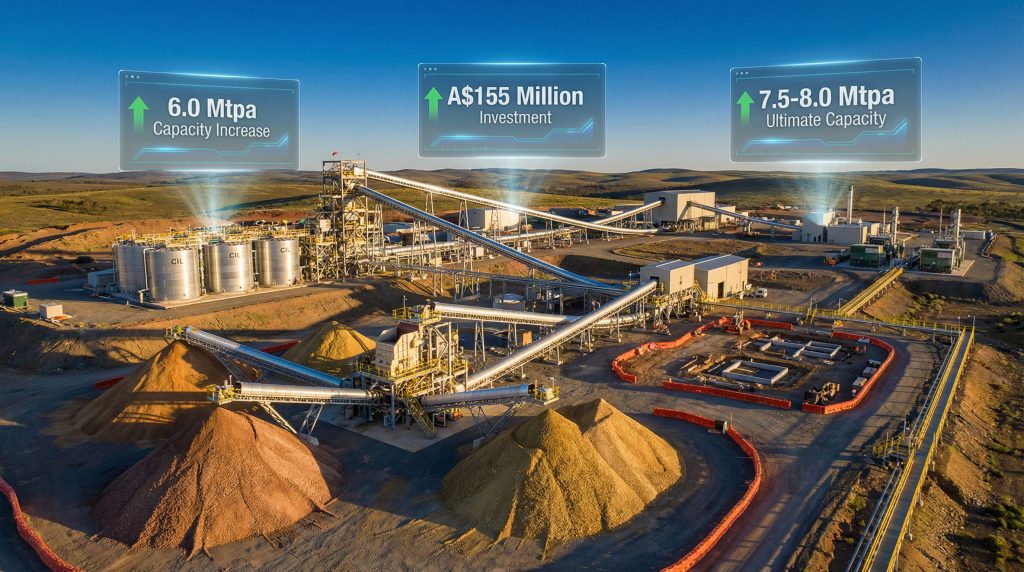
Gold processing plant expansions represent critical inflection points where engineering precision intersects with operational economics. Modern brownfield modifications require sophisticated approaches to capacity enhancement while maintaining continuous production streams. The Australian mining sector has witnessed increasing emphasis on throughput optimization strategies that maximize existing infrastructure investments, particularly as grade king permitting becomes more complex. Furthermore, mining innovation trends continue to shape how operators approach facility upgrades.
Engineering Fundamentals Behind Modern Gold Processing Plant Expansions
The King of the Hills plant upgrade exemplifies contemporary approaches to processing facility enhancement. The project demonstrates how strategic infrastructure modifications can deliver substantial capacity increases through targeted equipment replacement and systematic workflow optimization.
Vault Minerals has committed approximately A$155 million across two development phases, achieving a capital intensity metric of $57 per tonne of additional annual processing capacity. This efficiency benchmark reflects careful engineering design that leverages existing infrastructure while introducing enhanced processing capabilities.
Critical Capacity Planning Metrics in Brownfield Operations
Processing plant upgrades require precise coordination between multiple engineering disciplines. The transition from existing throughput levels to enhanced capacity involves complex calculations regarding crusher specifications, conveyor system modifications, and power generation requirements.
| Capacity Enhancement Metrics | Stage 1 | Stage 2 | Total Impact |
|---|---|---|---|
| Annual Throughput (Mtpa) | 6.0 | 7.5-8.0 | 50% increase |
| Capital Investment | A$75.1M | A$79M | A$155M total |
| Timeline | March 2026 | Q2 FY27 | 15-month program |
The crushing circuit represents the fundamental bottleneck in most processing operations. Primary crusher replacement during active operations requires sophisticated logistical coordination to minimize production interruptions. The King of the Hills plant upgrade involved complete crusher offline periods lasting approximately one week, with crushed stock buffers providing continuity during the transition.
Infrastructure Integration Challenges in Live Operations
Conveyor belt extensions and crusher tie-ins present significant technical challenges when implemented during active production periods. Engineering teams must design temporary material handling solutions while permanent modifications progress through construction phases.
Power supply scaling becomes critical as processing throughput increases. The installation of dual gas-fired generator sets provides both increased capacity and operational redundancy for enhanced processing loads. Gas supply agreements structured with Consumer Price Index linkage offer inflation protection while maintaining cost predictability over three-year periods.
When big ASX news breaks, our subscribers know first
How Do Two-Stage Plant Upgrades Maximise Operational Continuity?
Sequential upgrade methodologies allow processing facilities to maintain production while implementing capacity enhancements. This phased approach reduces operational risk compared to comprehensive facility shutdowns for simultaneous modifications across all processing circuits.
Stage One Technical Specifications and Performance Targets
The initial upgrade phase focuses on primary processing circuit enhancements. New crusher installation and conveyor system modifications established the foundation for increased material throughput capacity.
Key Engineering Achievements:
- 6.0 Mtpa initial capacity target representing 20% throughput enhancement
- 90,000 tonne crushed stock buffer management during crusher transition
- Four additional CIL tanks integrated into existing wet plant infrastructure
Carbon-in-leach processing modifications require careful integration with existing metallurgical circuits. The addition of four CIL tanks, expanded regeneration kiln capacity, and enhanced tailings management systems represents sophisticated process engineering that maintains gold recovery efficiency while handling increased ore volumes.
The March 31, 2026 commissioning timeline demonstrates precise project coordination. The existing crusher offline period commenced March 24, with first ore feed to replacement equipment scheduled seven days later.
Stage Two Advanced Processing Capabilities
The second development phase targets ultimate processing capacity between 7.5 to 8.0 Mtpa throughout the second half of fiscal year 2027. This represents comprehensive processing optimisation beyond basic throughput increases.
Wet plant enhancements include metallurgical circuit modifications designed to maintain gold recovery rates despite increased ore processing volumes. Advanced tailings management systems accommodate higher waste material generation while meeting environmental compliance standards. Additionally, mining sustainability insights play a crucial role in these environmental considerations.
What Role Do Stockpile Management Systems Play in Processing Efficiency?
Strategic inventory management provides operational flexibility that extends beyond basic material storage. Sophisticated stockpile positioning and composition optimisation enables sustained processing operations during supply chain disruptions or equipment maintenance periods.
Strategic Inventory Buffer Analysis
The King of the Hills facility maintains approximately 15 million tonnes of total stockpiled material containing 180,000 ounces of contained gold. This substantial inventory represents significant operational insurance against various production disruption scenarios.
| Stockpile Management Metrics | Specification | Strategic Value |
|---|---|---|
| Total Inventory | 15M tonnes | Base load mill feed continuity |
| Contained Gold | 180K ounces | Production flexibility buffer |
| Crushed Stock | 90K tonnes | Immediate processing capability |
| Location | Adjacent to facility | Minimal handling requirements |
Management specifically references Middle Eastern geopolitical tensions as justification for maintaining substantial material stockpiles. This strategic positioning provides supply chain resilience during periods when key operational inputs face potential disruption.
Adjacent Facility Positioning for Operational Flexibility
Stockpile location adjacent to processing facilities minimises material handling costs while maximising operational responsiveness. This positioning enables rapid adjustment of mill feed composition based on metallurgical requirements or processing optimisation needs.
The strategic approach to inventory management reflects sophisticated risk assessment regarding global supply chain vulnerabilities. Maintaining 180,000 ounces of contained gold in stockpiled form provides significant operational optionality during volatile market conditions.
How Does Gas-Fired Power Infrastructure Support Processing Scale-Up?
Independent power generation capabilities provide operational advantages beyond simple grid connection alternatives. Gas-fired generator systems offer enhanced power quality control, supply reliability, and cost management compared to external electrical grid dependency.
Energy Supply Chain Optimisation
The three-year gas supply agreement commenced January 2026 with Consumer Price Index-linked pricing mechanisms. This contractual structure balances long-term cost certainty with inflation protection during the processing capacity expansion period. Furthermore, the natural gas forecast indicates favourable pricing conditions for gas-fired operations.
Dual generator commissioning provides operational redundancy that supports continuous processing operations during equipment maintenance or supply disruptions. Gas-fired systems typically offer rapid startup capabilities and precise load management compared to alternative power generation technologies.
Power Demand Scaling for Increased Throughput
Processing plant power requirements scale non-linearly with throughput increases. Enhanced crushing circuits, additional CIL tanks, expanded conveyor systems, and upgraded tailings management all contribute to increased electrical demand profiles.
The decision to expand on-site generation capacity rather than increase grid connectivity reflects engineering assessments of power quality requirements, supply reliability considerations, and long-term cost optimisation strategies.
What Economic Models Drive Processing Plant Investment Decisions?
Capital allocation decisions for processing plant expansions require comprehensive evaluation of throughput enhancement benefits against investment costs and alternative deployment opportunities. The A$155 million total investment represents substantial corporate capital commitment requiring rigorous economic justification.
Capital Efficiency Benchmarking
The $57 per tonne capital intensity metric provides the primary economic efficiency indicator for the expansion project. This calculation divides total capital investment by additional annual processing capacity to establish comparative benchmarks against alternative expansion strategies.
Featured Economic Insight: The $57 per tonne capital intensity represents significant efficiency in brownfield expansion projects, though independent industry benchmarking data remains limited for comprehensive comparative analysis.
Owner-Operator Model Transition Benefits
The scheduled transition from contract mining to owner-operator model commencing January 1, 2027 represents additional operational optimisation beyond processing plant enhancements. This strategic shift affects cost structures, operational control, and long-term mine development flexibility. Moreover, different capital raising methods may be evaluated to fund this transition.
• Cost Control Enhancement: Direct operational management provides increased control over mining cost components
• Equipment Fleet Optimisation: Owner-operator model enables customised equipment selection and maintenance protocols
• Operational Flexibility: Internal mining operations support responsive production scheduling and grade control strategies
• Long-term Planning Integration: Combined processing and mining optimisation enables comprehensive mine life planning
Which Technical Innovations Enable Minimal Disruption Upgrades?
Brownfield construction methodologies require sophisticated engineering approaches to implement major equipment modifications during active production periods. The King of the Hills plant upgrade demonstrates advanced project coordination techniques that minimise operational disruptions.
Brownfield Construction Methodologies
Live operation maintenance protocols involve comprehensive pre-planning of equipment installation sequences, temporary material handling solutions, and production continuity strategies. The seven-day crusher transition period exemplifies precision scheduling that balances construction requirements with operational needs.
Phased commissioning approaches enable systematic validation of individual system components before full integration. This methodology reduces commissioning risks while maintaining production capabilities throughout the upgrade process.
Equipment Installation Best Practices
Primary crusher replacement represents one of the most complex brownfield modifications due to the critical role these systems play in overall processing workflows. The successful offline transition demonstrates advanced project management capabilities.
Wet plant tie-in procedures for CIL tank integration require sophisticated metallurgical engineering to maintain gold recovery efficiency while expanding processing capabilities. The completion of four additional tank installations reflects comprehensive process engineering expertise.
The next major ASX story will hit our subscribers first
How Do Processing Upgrades Support Long-Term Mine Development?
Processing capacity enhancements enable more efficient utilisation of existing mineral resources while supporting expanded exploration and development activities. The increased throughput capabilities provide operational flexibility for varying ore grades and mining sequences.
Resource Base Optimisation Strategies
Enhanced processing capacity supports extended mine life planning through more efficient resource utilisation. The ability to process lower-grade material economically expands the effective ore reserve base while maintaining production levels.
Resource Development Pipeline:
• Current Reserves: 2.24 million ounces providing extended production timeline
• Total Resources: 6.02 million ounces supporting long-term development planning
• Processing Flexibility: Enhanced capacity accommodates varying ore characteristics
Exploration Integration with Processing Capacity
Increased processing throughput provides operational foundation for regional exploration programmes and potential acquisition opportunities. Enhanced facility capacity supports evaluation of additional resource development projects within economic hauling distances.
The strategic positioning near other gold projects creates opportunities for processing consolidation and regional hub development. This approach maximises infrastructure investment returns while supporting broader regional mining activity.
What Operational Risk Management Strategies Apply to Plant Commissioning?
Processing plant upgrades involve multiple operational risk categories requiring comprehensive mitigation strategies. Timeline management, performance validation, and supply chain continuity represent critical success factors for complex brownfield modifications.
Timeline Risk Mitigation
The Q2 FY27 completion target for Stage 2 provides specific milestone benchmarks for project tracking and performance evaluation. Sequential staging reduces overall project risk by enabling course corrections between development phases.
Weather-related construction delays present ongoing risks for outdoor installation activities. The Western Australian climate provides generally favourable construction conditions, though seasonal variations require contingency planning for critical path activities.
Performance Validation Protocols
Commissioning milestone tracking involves systematic verification of equipment performance against design specifications. The successful tie-in of wet plant upgrades demonstrates effective validation procedures for complex metallurgical systems.
Throughput ramp-up procedures require gradual capacity increases to validate processing efficiency at enhanced production levels. This approach enables optimisation of operational parameters while maintaining gold recovery performance.
Industry Context and Future Development Trends
The King of the Hills plant upgrade reflects broader industry trends toward brownfield optimisation rather than greenfield development. Economic pressures and permitting complexities favour expansion of existing facilities over new processing plant construction. For instance, recent analysis of the processing infrastructure advantages demonstrates the benefits of upgrading existing facilities.
Brownfield Expansion vs. Greenfield Development
| Development Approach | Capital Efficiency | Timeline Advantage | Operational Continuity |
|---|---|---|---|
| Brownfield Expansion | Higher per-tonne value | Reduced construction time | Maintained production |
| Greenfield Development | Higher absolute costs | Extended permitting | Complete facility shutdown |
Australian Gold Processing Infrastructure Landscape
Regional processing hub development represents an emerging trend as mining companies seek to maximise infrastructure investments. The strategic positioning of enhanced processing facilities supports evaluation of additional resource development opportunities within economic transportation ranges. Additionally, companies are exploring various opportunities at Leonora operations to optimise regional processing capabilities.
Technology adoption trends favour modular expansion approaches that enable incremental capacity increases rather than comprehensive facility replacements. This methodology reduces capital requirements while providing operational flexibility for changing market conditions.
Investment Considerations: Processing plant upgrades require careful evaluation of long-term operational benefits against substantial capital commitments. The success of phased expansion approaches depends on precise engineering execution and favourable commodity price environments.
Disclaimer: This analysis contains forward-looking projections based on announced company plans and industry trends. Actual operational performance, construction timelines, and economic outcomes may vary significantly from projected scenarios. Mining investments involve substantial risks including commodity price volatility, operational challenges, and regulatory changes. Readers should conduct independent research and consult qualified professionals before making investment decisions.
Ready to Invest in the Next Major Mineral Discovery?
Discovery Alert instantly alerts investors to significant ASX mineral discoveries using its proprietary Discovery IQ model, turning complex mineral data into actionable insights. Understand why historic discoveries can generate substantial returns by visiting Discovery Alert's dedicated discoveries page, showcasing historic examples of exceptional outcomes, and begin your 14-day free trial today to position yourself ahead of the market.