July 8, 2026

Central banks worldwide have fundamentally altered their approach to monetary reserves during the past decade, with precious metals emerging as a critical component of modern portfolio strategy. This transformation reflects broader shifts in global financial architecture, where traditional currency-based reserves face mounting pressures from inflation, geopolitical tension, and systematic monetary expansion across developed economies.
The strategic pivot toward physical asset accumulation represents more than tactical adjustment; it signals recognition that fiat currency systems carry inherent counterparty risks during periods of global financial stress. For emerging market economies, this realisation has accelerated diversification efforts, with gold reserves in Africa becoming a focal point of continental monetary policy evolution. Moreover, gold prices as inflation hedge continue to attract significant attention from policymakers seeking stability.
Understanding Africa's Strategic Reserve Transformation
African monetary authorities achieved a significant milestone in 2025, with total central bank reserves reaching $530 billion, marking a substantial $50 billion increase from the previous year's $480 billion. This 10.4% annual growth trajectory demonstrates the continent's commitment to strengthening financial buffers amid persistent global economic uncertainty.
The composition of these reserves reveals an equally remarkable transformation. Gold allocation has surged to 17% of total reserves as of 2025, representing a dramatic increase from less than 10% during the 2022-2023 period. This shift translates to approximately $90 billion in gold holdings across African central banks, establishing the precious metal as a cornerstone of continental reserve strategy.
Physical gold holdings have expanded correspondingly, rising from 663 tonnes in 2022 to an estimated 738 tonnes in 2025. This 75-tonne accumulation over three years represents an 11.3% growth rate that significantly exceeds global central bank average acquisition patterns during the same period. Furthermore, gold market performance has validated these strategic decisions through substantial value appreciation.
The strategic rationale behind this transformation encompasses multiple economic pressures:
• Currency volatility protection – Gold provides hedge against individual currency depreciation without exposure to alternative fiat systems
• Import financing security – Physical reserves enhance capacity to maintain essential imports during external payment stress
• Debt servicing capability – Diversified reserves reduce reliance on single-currency exposure for international obligations
• Inflation protection mechanisms – Gold historically preserves purchasing power during periods of monetary expansion
These accumulated holdings position African economies with enhanced financial flexibility compared to traditional currency-heavy reserve compositions. The continent's gold reserves in Africa now represent approximately 2% of global central bank holdings, with growth trajectories suggesting potential expansion toward 3-4% of worldwide official sector gold by 2030.
When big ASX news breaks, our subscribers know first
What Drives Central Bank Gold Acquisition Strategies Across African Economies?
Monetary Policy Diversification Framework
The fundamental drivers of African gold accumulation reflect broader concerns about global monetary system stability following unprecedented expansion of major currency money supplies during 2020-2021. Central banks across the continent have identified three primary risk factors requiring hedging through non-currency assets.
Currency debasement concerns represent the most immediate driver of diversification strategies. Major reserve currencies experienced significant expansion during pandemic response periods, with money supply growth rates reaching multi-decade highs across developed economies. African monetary authorities recognised that maintaining 80-90% reserve exposure to these currencies created systematic vulnerability to purchasing power erosion.
Geopolitical risk mitigation has emerged as an equally compelling factor, particularly following increased use of financial sanctions as diplomatic tools. Gold holdings eliminate counterparty risk associated with foreign currency reserves held in international banking systems, providing protection against potential asset freezes or access restrictions during geopolitical tensions.
Interest rate environment considerations have also influenced allocation decisions. Despite rising rates in developed economies during 2022-2024, real interest rates on major currencies remained negative or barely positive when adjusted for inflation. Gold's lack of yield became less disadvantageous when competing assets offered minimal real returns while carrying currency and credit risks.
The technical implementation of these strategies varies across African central banks, but common approaches include:
• Gradual rebalancing – Systematic reduction of single-currency exposure over 2-3 year periods
• Production integration – Direct accumulation from domestic mining output where applicable
• Regional cooperation – Shared storage and security infrastructure development
• Market timing strategies – Coordinated purchases during gold price weakness to minimise acquisition costs
Regional Financial Architecture Evolution
Africa's gold accumulation strategy intersects with broader regional integration initiatives, particularly the African Continental Free Trade Area (AfCFTA) framework launched in 2021. While AfCFTA primarily focuses on trade facilitation, its success requires enhanced monetary cooperation and alternative payment systems that reduce dependency on external currencies for intra-African commerce.
Payment system development represents a critical component of this evolution. African trade settlements currently rely heavily on US dollar intermediation, even for transactions between neighbouring countries with established trade relationships. Gold-backed or gold-referenced settlement mechanisms could provide alternatives that reduce transaction costs and currency conversion risks.
Regional monetary union discussions have gained momentum across multiple economic communities, including the West African Monetary Zone (WAMZ) and East African Community (EAC). Gold accumulation by member states creates potential foundations for common reserve pools, similar to arrangements used by existing monetary unions but with enhanced precious metals components.
The strategic transformation of African reserve management reflects recognition that traditional currency-based systems may not provide adequate stability during periods of global financial stress or geopolitical fragmentation.
Cross-border infrastructure development supports these objectives through enhanced vault facilities, assay capabilities, and transport security systems. Several African central banks have invested in domestic gold storage infrastructure, reducing reliance on international depositories and enhancing sovereignty over reserve assets.
Which African Countries Lead Continental Gold Reserve Holdings?
North African Dominance Analysis
North African economies maintain the largest individual gold reserves in Africa, reflecting both historical accumulation patterns and strategic positioning within global trade networks. These holdings demonstrate sophisticated understanding of gold's role as portfolio diversification tool and geopolitical hedge.
Algeria's Strategic Positioning
Algeria represents the continent's largest gold holder with an estimated 174 tonnes as of 2025, comprising approximately 8.2% of total reserves. This substantial allocation reflects deliberate diversification away from oil revenue dependency, recognising that hydrocarbon price volatility requires counter-cyclical reserve management.
Algeria's approach demonstrates how commodity-exporting nations can use gold to hedge against price cycles in their primary export sectors. When oil prices decline, gold often appreciates due to safe-haven demand, providing partial offset to export revenue reductions.
Libya's Post-Conflict Reconstruction Strategy
Libya maintains approximately 147 tonnes of gold reserves, representing 12.5% of total reserves and reflecting the highest percentage allocation among major African holders. This substantial weighting demonstrates how politically unstable regions prioritise assets immune from sanctions risk and banking system disruptions.
Libya's gold strategy emerged from recognition that traditional foreign currency reserves held in international banks became vulnerable during the 2011-2019 conflict period, when various political authorities competed for access to overseas assets.
Egypt's Tourism and Trade Route Hedge
Egypt holds an estimated 129 tonnes of gold reserves, comprising 6.1% of total reserves. This allocation reflects hedging against tourism sector volatility and Suez Canal revenue concentration, both highly cyclical income sources requiring stabilisation mechanisms.
The strategic logic recognises that tourism revenues can decline rapidly during regional conflicts or global economic downturns, while Suez Canal income fluctuates with international trade volumes and shipping route alternatives.
Sub-Saharan Strategic Positioning
South Africa's Mining Integration Model
South Africa maintains approximately 125 tonnes of gold reserves, representing 4.3% of total reserves despite being the continent's second-largest economy. This relatively modest percentage reflects the country's sophisticated financial markets and diverse currency options, but also represents significant opportunity for increased allocation.
South Africa's unique position as both major gold producer and financial center creates opportunities for innovative reserve management strategies, including direct accumulation from domestic mining output and regional hub development for other African central banks.
Ghana's Producer-Nation Accumulation
Ghana holds approximately 37 tonnes of gold reserves, comprising 2.8% of total reserves. As Africa's second-largest gold producer, Ghana exemplifies the producer-to-holder transition strategy, where mining nations retain increasing portions of output for reserve purposes rather than immediate export.
This approach provides multiple benefits:
• Cost advantages – Direct accumulation from domestic production eliminates market premiums and transportation costs
• Supply security – Guaranteed access to physical gold regardless of international market conditions
• Economic integration – Links monetary policy directly with primary industry output
• Value retention – Captures full value chain benefits rather than exporting raw materials
Emerging East African Participation
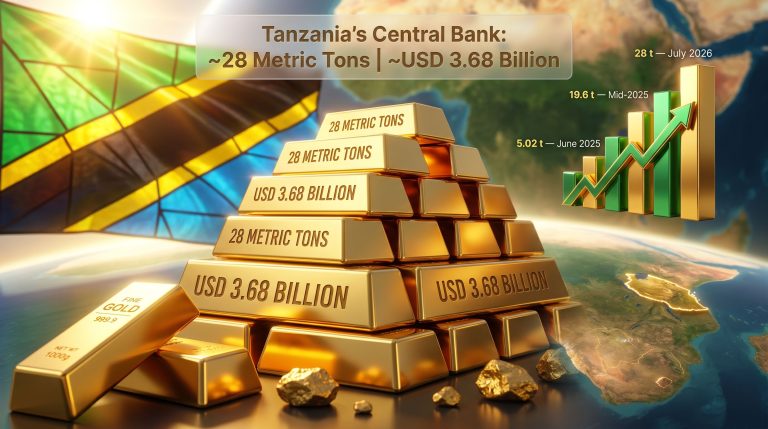
Tanzania and Kenya represent emerging participants in continental gold accumulation strategies, though specific holdings data remains limited. Both countries have increased central bank gold purchases during 2024-2025, reflecting regional recognition of diversification benefits.
Tanzania's strategy connects with its emerging mining sector development, while Kenya's approach reflects broader financial sector sophistication and regional hub aspirations within East African Community monetary cooperation initiatives.
How Do Global Gold Price Dynamics Impact African Reserve Valuations?
Gold price appreciation during 2024-2025 significantly enhanced the value of existing African holdings, creating substantial paper gains for central banks that accumulated positions during earlier periods when prices remained below current levels. These valuation effects demonstrate both opportunities and risks associated with precious metals allocation strategies.
Price Performance Impact Analysis
Gold prices reached record highs during 2025 and remained elevated through early 2026, increasing the dollar value of African holdings by an estimated 25-30% beyond accumulation costs. For central banks that purchased gold at average prices below $1,900 per ounce during 2022-2023, subsequent appreciation to levels exceeding $2,100 per ounce generated substantial reserve value enhancement.
This price appreciation effect amplified the impact of physical accumulation on total reserve values. The $50 billion increase in African reserves during 2025 reflects both new accumulation and valuation gains from existing holdings, with price effects potentially contributing $15-20 billion of the total increase.
Market Integration Benefits and Challenges
African central banks benefit from gold's deep global liquidity, enabling relatively large transactions without significant market impact. The London-Zurich-Dubai trading corridor provides multiple venues for accumulation and potential liquidation, offering flexibility unavailable for many alternative reserve assets.
However, this market integration also creates exposure to global sentiment shifts and speculative trading patterns that can generate significant short-term volatility. Central banks must balance the long-term strategic benefits of gold holdings against potential near-term value fluctuations during market stress periods.
Purchasing Strategy Optimisation
Successful African accumulation strategies have employed various timing and execution approaches:
• Dollar-cost averaging – Systematic purchases over extended periods to reduce average acquisition costs
• Market weakness accumulation – Increased buying during temporary price declines to enhance cost efficiency
• Production-linked acquisition – Direct purchases from domestic mines at or near production costs
• Regional coordination – Shared purchasing arrangements to improve negotiating power and reduce transaction costs
What Macroeconomic Pressures Drive African Gold Accumulation?
External Vulnerability Mitigation
African economies face multiple external pressures that traditional currency-based reserves inadequately address. Debt servicing obligations, import financing requirements, and currency defence capabilities all benefit from enhanced reserve diversification through gold strategic investment.
Import financing security represents a critical concern for resource-dependent economies that require consistent access to essential imports including food, fuel, and manufacturing inputs. Gold reserves provide alternative liquidity sources during periods when traditional currency reserves face pressure from debt servicing or currency defence operations.
Exchange rate stability mechanisms become more effective when central banks maintain diversified reserve portfolios. Gold holdings provide intervention capacity that doesn't require drawing down scarce foreign currency reserves, enabling more aggressive defence of domestic currency values during speculative attacks.
Debt servicing capability enhancement benefits from portfolio diversification effects. When gold prices appreciate during periods of global financial stress, they often offset pressures on currency reserves caused by capital flight or reduced foreign investment flows.
Nigeria's Mixed Reserve Performance Case Study
Nigeria's reserve trajectory illustrates both opportunities and challenges facing African monetary authorities. The country's reserves rose from approximately $40.8 billion at the start of 2025 to roughly $45.5 billion by year-end, representing an 11.5% annual increase driven by improved foreign exchange reforms, enhanced oil receipts, and stronger capital inflows.
The Central Bank of Nigeria projected continued growth to around $51 billion during 2026, reflecting confidence in ongoing economic reforms and external sector improvements. However, reserves subsequently declined to approximately $48.6 billion by April 2026, demonstrating the persistent impact of debt servicing obligations and foreign exchange market interventions.
This mixed performance highlights the challenges facing large African economies:
• Structural pressures – Ongoing debt servicing and import financing requirements create consistent reserve drains
• Volatility management – Currency market interventions require substantial reserve utilisation during stress periods
• Growth trajectory sustainability – Reserve accumulation must exceed structural outflows to achieve sustainable growth
Nigeria's experience demonstrates why diversification into gold becomes attractive for major African economies, providing reserve components that appreciate during stress periods rather than depleting through intervention activities.
How Does Nigeria's Reserve Management Exemplify Continental Trends?
Nigeria's reserve management approach provides insights into broader continental strategies and challenges. As Africa's largest economy by GDP, Nigeria's policy decisions influence regional approaches and demonstrate both successful strategies and persistent vulnerabilities.
Reserve Growth and Volatility Patterns
The trajectory from $40.8 billion to $45.5 billion during 2025, followed by decline to $48.6 billion by April 2026, illustrates common challenges facing African central banks. External pressures including debt servicing, import financing, and currency market interventions create consistent downward pressure on reserves, requiring continuous accumulation efforts to maintain growth trajectories.
Structural Reform Integration
Nigeria's foreign exchange market reforms during 2023-2025 contributed to reserve accumulation through improved market efficiency and enhanced capital inflows. These reforms demonstrate how domestic policy improvements can create conditions supporting reserve growth, providing lessons for other African economies seeking similar outcomes.
Oil Revenue Management Lessons
Nigeria's experience demonstrates both opportunities and risks associated with commodity revenue dependency. While oil price increases during 2024-2025 supported reserve accumulation, subsequent volatility illustrated the benefits of diversification strategies that reduce exposure to single commodity cycles.
Gold allocation could provide Nigeria with enhanced stability during oil price downturns, offering counter-cyclical support when hydrocarbon revenues decline. This approach mirrors strategies successfully employed by other major oil exporters, including several Middle Eastern economies that maintain substantial gold reserves.
The next major ASX story will hit our subscribers first
What Are the Long-Term Implications for African Financial Independence?
Structural Economic Transformation
Enhanced reserve positions through gold accumulation create foundation for reduced dependency on external financing and improved negotiating power in international financial arrangements. African economies with stronger reserves can access international capital markets on more favourable terms and maintain greater autonomy during external shock periods.
Regional monetary integration benefits emerge when multiple African economies maintain substantial gold reserves in Africa, creating possibilities for shared reserve management and coordinated monetary policies. This coordination could support intra-African trade settlement systems that reduce transaction costs and currency conversion risks.
Infrastructure development financing becomes more feasible when governments maintain enhanced reserve positions that improve creditworthiness and provide collateral for development financing arrangements. Gold reserves can support infrastructure bond issuances and provide confidence for international development finance institutions.
Investment and Development Financing
Foreign direct investment attraction benefits from improved sovereign risk profiles associated with stronger reserve positions. International investors view substantial reserves as indication of economic stability and government capacity to maintain exchange rate stability during adverse conditions.
Sovereign bond market access improves when African governments demonstrate enhanced financial strength through diversified reserve portfolios. Gold holdings signal sophisticated risk management and provide additional security for international bondholders during stress periods.
Regional development finance capacity expands when multiple African economies maintain substantial reserves, enabling coordinated infrastructure projects and trade finance arrangements that support continental integration objectives.
Frequently Asked Questions About African Gold Reserves
Why are African central banks increasing gold holdings now?
Multiple factors drive current accumulation strategies, including global monetary policy uncertainty following pandemic-era currency expansion, concerns about currency debasement risks, and recognition of geopolitical tensions requiring sanctions-resistant asset allocation. African central banks also benefit from current gold price appreciation that enhances existing holdings' value.
How do African gold reserves compare globally?
Combined African holdings represent approximately 2% of global central bank gold reserves, with growth trajectories significantly outpacing developed economy accumulation rates. This positioning provides substantial expansion opportunities, as African reserve growth could reach 3-4% of global holdings by 2030 based on current accumulation trends.
What risks accompany increased gold allocation strategies?
Primary risks include storage and security infrastructure requirements, opportunity costs versus yield-bearing foreign currency assets, and potential market liquidity constraints during crisis periods requiring rapid reserve mobilisation. African central banks must balance these risks against diversification benefits and geopolitical hedge characteristics.
Which African countries show the strongest gold accumulation trends?
North African economies including Algeria, Libya, and Egypt maintain the largest holdings, while Sub-Saharan nations including Ghana, Tanzania, and Zimbabwe demonstrate active accumulation strategies. Producer nations benefit from cost advantages through direct mining output integration, while non-producers focus on market-based accumulation strategies.
Future Outlook: Africa's Role in Global Monetary Evolution
2026-2030 Projection Framework
Current accumulation trends suggest potential doubling of continental gold reserves during the next four years, with total holdings potentially reaching 1,400-1,500 tonnes by 2030. This expansion would establish Africa as a significant factor in global central bank demand, potentially influencing international gold market dynamics.
Regional monetary union implications become more significant as multiple African economies develop substantial gold reserves, creating foundations for shared reserve management and coordinated monetary policies. Gold standardisation across African central banks could support future monetary integration initiatives.
Alternative payment system development gains momentum when African economies maintain substantial gold reserves, providing foundations for settlement mechanisms that reduce dependency on traditional currency systems. Integration with emerging BRICS+ payment initiatives could accelerate this development.
Strategic Recommendations for Policymakers
Balanced portfolio approaches should maintain adequate liquidity alongside gold accumulation, ensuring central banks can meet immediate obligations while building long-term strategic positions. Optimal allocation ranges appear to be 15-25% for most African economies, based on current implementation patterns.
Gold investment strategies require regional cooperation frameworks for shared storage and security infrastructure that could reduce costs and enhance security for smaller African central banks. Coordinated facilities in major financial centres could provide cost-effective solutions for multiple institutions.
Gradual transition strategies minimise market disruption during reserve rebalancing while achieving strategic objectives over reasonable timeframes. Systematic approaches over 3-5 year periods allow for market timing optimisation and reduced acquisition costs.
Additionally, comprehensive analysis of gold price forecast 2025 indicates continued upward momentum that supports African accumulation strategies.
The strategic transformation of African gold reserves represents more than portfolio adjustment; it signals the continent's recognition that financial independence requires sophisticated risk management and reduced dependency on traditional monetary systems.
Disclaimer: This analysis is based on available data and projections that may change due to market conditions, policy changes, or unforeseen economic developments. Investment and policy decisions should consider comprehensive risk assessments and professional consultation.
Looking to Capitalise on Africa's Gold Reserve Revolution?
Discovery Alert's proprietary Discovery IQ model delivers real-time alerts on significant ASX mineral discoveries, instantly empowering subscribers to identify actionable opportunities ahead of the broader market. Understand why historic discoveries can generate substantial returns by exploring exceptional outcomes from major mineral finds, then begin your 14-day free trial today to position yourself ahead of the market.