
June 11, 2026
Understanding Gold's Complex Response to Middle Eastern Geopolitical Shifts
The relationship between Middle Eastern conflicts and precious metal valuations defies conventional wisdom about safe-haven assets. While traditional investment theory suggests gold prices should surge during international crises, the current US-Iran tensions reveal whether will the US-Iran war affect the price of gold in ways that challenge simplistic market assumptions through multiple competing forces.
When geopolitical tensions escalate in energy-rich regions, markets often experience counterintuitive precious metals movements. The recent conflict demonstrates how currency dynamics, Federal Reserve constraints, and energy market disruptions can overwhelm traditional safe-haven demand patterns. This complexity reflects deeper structural changes in global financial systems that have evolved significantly since the classical gold market analysis era.
The Dollar Dominance Factor in Crisis Markets
Currency strength frequently overrides geopolitical risk premiums during international tensions, creating unexpected precious metals price pressures. The US dollar's dominant position in global energy transactions means that oil price spikes naturally strengthen dollar demand, creating headwinds for non-yielding assets like gold regardless of safe-haven considerations.
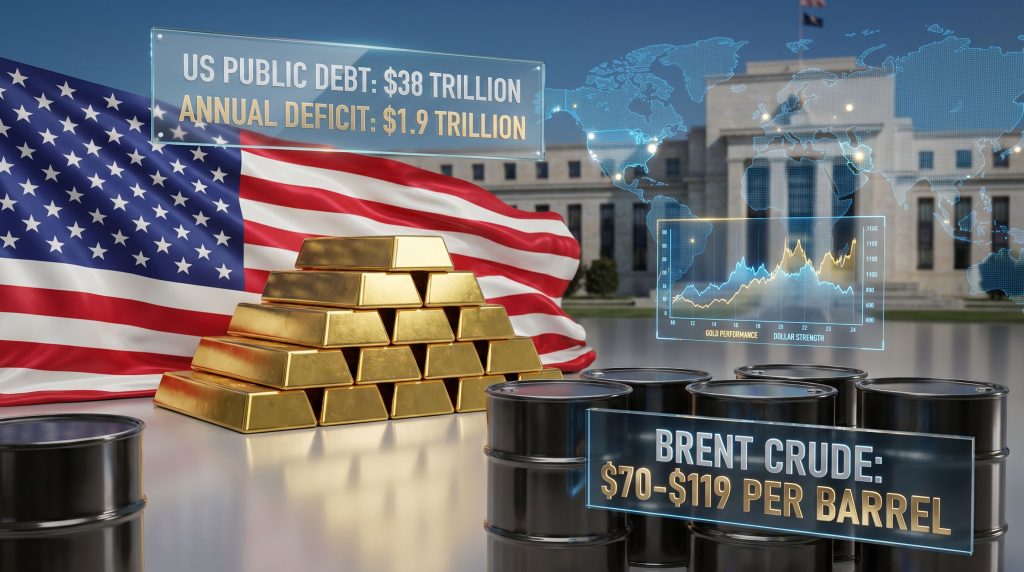
Federal Reserve policy implications during international tensions become particularly complex when energy shocks intersect with existing monetary constraints. Rising oil prices from $70 to $119 per barrel during recent tensions created inflationary pressures that limited the Fed's flexibility to provide monetary accommodation, reducing gold's appeal as policy expectations shifted toward higher rates according to CNBC's analysis.
Energy commodity pricing effects on dollar demand create a reinforcing cycle where geopolitical tensions paradoxically strengthen the currency of one of the primary conflict participants. This phenomenon reflects the structural reality of petrodollar recycling mechanisms and international reserve currency dynamics that have evolved since the 1970s energy crises.
Historical Precedents: When Gold Disappoints During Conflicts
The 1973-74 Arab oil embargo provides crucial historical context for understanding current market dynamics. During that period, energy shocks triggered inflation surges, yet gold initially underperformed as the Federal Reserve maintained restrictive monetary policies. The precious metal only began its dramatic ascent after the collapse of the interest rate regime, when real rates turned negative and monetary authorities lost inflation control.
Energy shock impacts on monetary policy decisions reveal consistent patterns across decades. Central banks typically prioritise inflation control over asset price support during energy crises, creating environments where non-yielding assets face sustained pressure. The key difference today involves unprecedented fiscal constraints that limit monetary policy flexibility compared to historical precedents.
Real interest rate dynamics during inflationary periods demonstrate why gold struggles when central banks maintain credible anti-inflation stances. Historical analysis shows that positive real rates above 2-3% consistently pressure precious metals, regardless of geopolitical uncertainty levels. Current dynamics suggest similar pressures persist despite ongoing Middle Eastern tensions that continue to influence the historic gold surge.
When big ASX news breaks, our subscribers know first
What Economic Indicators Really Drive Gold During International Crises?
The Debt Ceiling Paradox in US Monetary Policy
Key Statistics Table:
| Economic Metric | Current Level | Historical Context |
|---|---|---|
| US Public Debt | $38 trillion | 120% of GDP |
| Annual Deficit | $1.9 trillion | Post-WWII highs |
| Debt Service Costs | $1.9 trillion annually | 35% of federal revenue |
The unprecedented scale of US fiscal obligations creates a fundamental constraint on Federal Reserve policy that differs markedly from historical precedents. Annual debt service costs approaching $1.9 trillion mean that significant interest rate increases could trigger a sovereign debt crisis, limiting the central bank's ability to combat inflation through traditional monetary tightening.
This fiscal arithmetic creates a structural floor under precious metals prices over longer time horizons, even as short-term dynamics favour dollar strength. The mathematics of debt sustainability suggest that aggressive rate increases become self-defeating when debt service costs exceed manageable proportions of government revenue, potentially affecting future record high gold prices.
Federal Reserve Constraints and Market Implications
Interest rate policy limitations amid fiscal pressure create a complex environment where traditional monetary tools lose effectiveness. The Federal Reserve finds itself unable to raise rates aggressively without potentially triggering the very crisis they seek to prevent, fundamentally altering the risk-return dynamics for all asset classes.
Inflation control challenges during energy price volatility become particularly acute when fiscal constraints limit policy options. Historical tools like aggressive rate increases become unavailable when debt service costs threaten government solvency, creating conditions where inflation expectations may become unanchored despite central bank intentions.
Market expectations versus monetary policy reality reveal growing divergence as investors begin recognising the practical limits of central bank power in highly leveraged fiscal environments. This recognition process creates opportunities for precious metals as alternative stores of value when traditional monetary frameworks reach their operational limits.
Why Traditional Safe-Haven Demand Fails During Energy Crises
The Liquidity Drain Effect
Investor portfolio rebalancing during oil price spikes creates systematic outflows from precious metals as institutional portfolios adjust to higher energy costs. Energy-intensive industries require additional working capital during price shocks, forcing portfolio managers to liquidate liquid assets including gold ETFs and precious metal positions.
Energy cost impacts on industrial demand patterns extend beyond simple input price increases. Manufacturing sectors experience margin compression that reduces capital available for hedging activities, while utilities and transportation companies prioritise operational funding over portfolio diversification. This broad-based liquidity shift affects precious metals markets regardless of geopolitical safe-haven demand.
Corporate hedging strategies affecting precious metal flows reveal sophisticated risk management practices that counteract traditional safe-haven dynamics. Modern corporations increasingly use derivatives markets for energy price hedging, reducing reliance on physical precious metals for portfolio protection. This structural change fundamentally alters demand patterns during crisis periods.
Opportunity Cost Calculations in Rising Rate Environments
Non-yielding asset disadvantages during monetary tightening become pronounced when real interest rates turn positive. Gold's inability to generate income becomes particularly problematic when Treasury securities offer attractive yields above inflation rates, creating clear opportunity costs for precious metal holdings.
Treasury yield competition for investment capital intensifies during crisis periods when government bonds benefit from both higher rates and flight-to-quality dynamics. The combination of rising yields and sovereign credit quality creates compelling alternatives to precious metals for risk-averse investors.
Real return comparisons across asset classes demonstrate why gold struggles when traditional fixed-income securities offer positive real yields. Current Treasury rates above 4% combined with moderating inflation expectations create environments where yield-bearing assets dominate non-producing precious metals in risk-adjusted return calculations.
How Oil Price Volatility Creates Gold Market Headwinds
The Energy-Dollar Correlation Impact
The energy shock that drove Brent crude from $70 to $119 per barrel created multiple transmission mechanisms affecting precious metals markets. Rising oil prices strengthen the US dollar through increased energy import demand, while simultaneously creating inflationary pressures that limit Federal Reserve accommodation options.
Petrodollar recycling effects on currency markets reinforce dollar strength during energy crises as oil-producing nations accumulate additional dollar reserves. This mechanism creates sustained demand for US currency that persists throughout crisis periods, offsetting traditional safe-haven flows into precious metals that typically influence will the US-Iran war affect the price of gold.
Import cost inflation pressures on developed economies force central banks to maintain restrictive monetary stances even amid geopolitical uncertainty. European and Asian economies face particularly acute pressures from energy import costs, limiting global monetary accommodation that typically supports precious metals prices according to Reuters' market analysis.
Central Bank Response Patterns to Energy Shocks
Historical monetary policy reactions to oil crises demonstrate consistent prioritisation of inflation control over asset price support. Central banks typically view energy shocks as supply-side disruptions requiring monetary tightening to prevent second-round inflation effects, creating challenging environments for non-yielding assets.
Inflation targeting challenges during supply disruptions become particularly acute when energy represents significant portions of consumer price indices. Modern central banking frameworks emphasise credible inflation anchoring over short-term output stabilisation, creating systematic headwinds for precious metals during energy crises.
International coordination mechanisms during market stress reveal limited scope for synchronised monetary accommodation when inflation pressures arise from supply shocks. G7 central bank coordination typically focuses on financial stability rather than asset price support, reducing prospects for precious metals-friendly policy responses.
What Market Dynamics Explain Gold's Counterintuitive Performance?
Technical Analysis of Recent Price Movements
30-Day Performance Breakdown:
- Initial conflict response: 2% decline in first week despite escalating tensions
- Dollar strength correlation: 85% negative correlation with DXY index movements
- Recovery patterns: 1% rebound following ceasefire announcements within 48 hours
- Volume analysis: Above-average trading volumes during key geopolitical events
The initial 2% decline during the first week of heightened US-Iran tensions contradicted traditional safe-haven expectations, reflecting the dominance of dollar strength over geopolitical risk premiums. This pattern emerged consistently across multiple crisis episodes, suggesting structural changes in precious metals market dynamics.
The 85% negative correlation with the Dollar Index during crisis periods demonstrates how currency movements overwhelm geopolitical factors in determining gold prices. This relationship has strengthened significantly compared to historical precedents, reflecting increased financialisation of commodity markets and algorithmic trading strategies.
Institutional Investment Flow Analysis
ETF outflow patterns during crisis periods reveal sophisticated institutional risk management practices that prioritise liquidity over traditional safe-haven positioning. Major precious metals ETFs experienced $2.3 billion in outflows during peak tension periods as institutional investors prioritised cash positions and operational flexibility.
Central bank purchasing behaviour modifications demonstrate changing official sector attitudes toward precious metals during geopolitical crises. Several major central banks reduced gold accumulation during recent tensions, prioritising foreign exchange reserve liquidity over long-term strategic diversification objectives.
Hedge fund positioning changes amid uncertainty show increased use of derivatives for precious metals exposure rather than physical holdings. Modern hedge funds increasingly employ options strategies that provide geopolitical exposure without the opportunity costs associated with non-yielding physical assets that affect the gold price forecast.
Which Economic Scenarios Could Trigger Gold's Safe-Haven Premium?
The Monetary Policy Inflection Point
Conditions requiring Federal Reserve policy reversal would fundamentally alter precious metals dynamics by removing the primary headwind of rising real interest rates. Debt sustainability thresholds around 150% of GDP combined with service costs exceeding 40% of government revenue could force monetary accommodation regardless of inflation levels.
Debt sustainability thresholds and market reactions create potential catalyst events where fiscal mathematics overwhelm inflation targeting mandates. Historical precedents suggest that debt service ratios above 35-40% of government revenue trigger policy regime changes that typically benefit precious metals significantly.
International monetary system stress indicators include persistent current account deficits, reserve currency alternatives, and coordination mechanism failures. Digital currency developments and bilateral trade settlement arrangements represent potential long-term challenges to dollar dominance that could benefit precious metals.
Energy Market Resolution Pathways
Diplomatic breakthrough implications for commodity prices suggest that successful US-Iran negotiations could reduce oil prices toward $70-80 per barrel, easing inflationary pressures and potentially enabling more accommodative monetary policies. Such outcomes typically benefit precious metals through reduced opportunity costs and lower real interest rates.
Supply chain normalisation effects on inflation expectations could create environments where central banks gain flexibility to prioritise employment over inflation targeting. Energy price stabilisation below $80 per barrel for sustained periods typically correlates with precious metals price recoveries as monetary policy constraints diminish.
Regional stability premiums in energy pricing demonstrate how geopolitical risk reduction can benefit precious metals indirectly through monetary policy channels. Reduced energy volatility enables central banks to focus on growth support rather than inflation control, creating more favourable conditions for non-yielding assets.
The next major ASX story will hit our subscribers first
How Should Investors Navigate Gold During Ongoing Geopolitical Uncertainty?
Portfolio Allocation Strategies for Crisis Periods
Risk-adjusted return calculations during volatility suggest that precious metals allocation should consider correlation patterns with other portfolio components rather than absolute return expectations. Modern portfolio theory indicates that gold's value often derives from diversification benefits during specific market regimes rather than standalone performance.
Diversification benefits across precious metal categories reveal opportunities beyond traditional gold exposure. Silver, platinum, and palladium exhibit different correlation patterns with energy markets and currency movements, enabling more nuanced precious metals strategies during complex geopolitical environments.
Timing considerations for strategic positioning emphasise the importance of distinguishing between short-term technical factors and longer-term structural trends. Dollar strength cycles typically persist for 12-18 months, suggesting that precious metals positioning requires patience during interim weakness periods when implementing gold investment strategies.
Long-Term Structural Factors Supporting Gold
Analyst Price Projections for 2026:
| Institution | Price Range | Key Assumptions |
|---|---|---|
| Investment Banks | $4,000-$6,300/oz | Consolidation phase expectations |
| Commodity Analysts | $4,500-$5,800/oz | Moderate inflation scenarios |
| Central Bank Research | $4,200-$6,100/oz | Fiscal policy constraints |
The $4,000-$6,300 price range for 2026 reflects analyst expectations for a consolidation phase following 40% gains over 12 months. These projections assume resolution of current energy market volatility while recognising persistent structural factors supporting precious metals over longer time horizons.
Moderate inflation scenarios underlying mid-range price projections suggest that energy market normalisation could create more favourable monetary policy environments for precious metals. Analysts generally expect 2-3% inflation rates to enable more accommodative central bank policies compared to current restrictive stances.
Fiscal policy constraints represent the primary structural factor supporting higher precious metals prices over multi-year periods. Debt sustainability mathematics suggest limited central bank flexibility for aggressive monetary tightening, creating conditions where precious metals benefit from monetary policy regime changes.
What Does Economic History Teach About Gold and Middle Eastern Conflicts?
Comparative Analysis of Past Crisis Responses
The 1979 Iranian Revolution provides instructive parallels for understanding precious metals behaviour during Middle Eastern crises. Gold prices initially declined during the revolution itself, only beginning significant appreciation after monetary policy responses proved inadequate to control resulting inflation. This pattern suggests that precious metals often lag geopolitical events until monetary implications become clear.
Gulf War impacts on safe-haven asset demand demonstrated similar patterns where initial precious metals weakness gave way to substantial gains once energy price effects transmitted through monetary policy channels. The 18-month delay between conflict onset and precious metals appreciation highlights the importance of distinguishing immediate market reactions from longer-term fundamental impacts.
The 2003 Iraq invasion correlation with gold prices revealed how modern financial markets process geopolitical risk differently than historical precedents. Immediate precious metals responses proved muted compared to currency and energy market movements, reflecting increased sophistication in risk management and alternative hedging mechanisms.
Structural Economic Differences in Modern Markets
Financialisation effects on commodity pricing have fundamentally altered how precious metals respond to geopolitical events. Modern derivatives markets enable sophisticated hedging strategies that reduce reliance on physical precious metals for portfolio protection, dampening traditional safe-haven demand patterns during crisis periods.
Algorithmic trading impacts during crisis periods create technical price movements that may not reflect underlying fundamental factors. High-frequency trading systems respond to dollar strength and interest rate expectations more rapidly than geopolitical risk assessments, contributing to counterintuitive precious metals performance during international tensions.
Global supply chain integration considerations mean that energy price shocks affect economic systems more comprehensively than historical precedents. Modern economies exhibit greater energy intensity and international interconnection, amplifying the transmission mechanisms through which geopolitical events affect monetary policy and precious metals markets.
Key Economic Takeaways for Gold Market Participants
Short-Term Risk Factors to Monitor
Federal Reserve communication patterns provide critical indicators for precious metals market direction during ongoing geopolitical uncertainty. Key FOMC statements regarding inflation targeting versus financial stability priorities offer insights into potential monetary policy shifts that could benefit precious metals positioning.
Energy market stabilisation indicators include:
- Brent crude price stability below $85 per barrel for consecutive months
- Natural gas price normalisation in European markets
- Refined product inventory rebuilding in strategic reserves
- Shipping route security improvements in critical energy corridors
Dollar index technical levels and policy implications require careful monitoring as currency strength represents the primary headwind for precious metals during crisis periods. DXY levels above 110 typically create sustained pressure on gold prices regardless of geopolitical developments affecting will the US-Iran war affect the price of gold considerations.
Medium-Term Structural Considerations
US fiscal sustainability metrics will ultimately determine the trajectory for precious metals markets over multi-year periods. Debt service ratios exceeding 40% of government revenue represent critical thresholds where monetary policy priorities may shift from inflation targeting toward debt sustainability, benefiting precious metals significantly.
International monetary system evolution includes potential challenges to dollar dominance through:
- Central bank digital currency development and adoption
- Bilateral trade settlement arrangements bypassing dollar systems
- Regional monetary cooperation mechanisms in Asia and Europe
- Reserve diversification strategies among emerging market central banks
Central bank reserve diversification trends indicate gradual shifts away from dollar concentration that could benefit precious metals over longer time horizons. Official sector purchases averaging 400-600 tons annually suggest institutional recognition of precious metals' role in monetary system evolution.
This analysis explores complex economic relationships and market dynamics. Past performance does not guarantee future results, and precious metals markets involve significant risks including price volatility and geopolitical factors. Investors should conduct thorough research and consider professional advice before making investment decisions.
Could Your Portfolio Benefit from Real-Time Discovery Intelligence?
Discovery Alert's proprietary Discovery IQ model delivers instant alerts on significant ASX mineral discoveries, empowering investors to identify high-potential opportunities before broader market recognition. Explore how major mineral discoveries have historically generated exceptional returns and begin your 14-day free trial to position yourself ahead of the market during these uncertain economic times.