
June 16, 2026
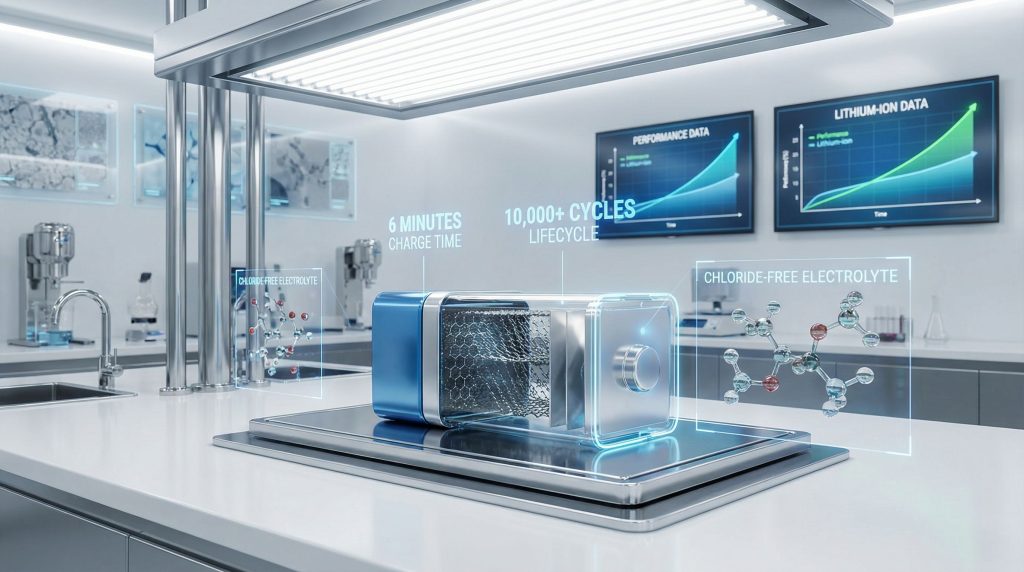
The graphene aluminum ion battery technology emerges at a pivotal moment when traditional lithium-ion systems face mounting pressure from resource scarcity, charging limitations, and supply chain vulnerabilities. As global energy demands surge across electric vehicles, grid storage, and consumer electronics, the fundamental constraints of current electrochemical architectures become increasingly apparent. The search for alternative battery chemistries has intensified, with aluminum-based systems emerging as a particularly promising avenue due to abundant raw materials and unique electrochemical properties.
The convergence of graphene nanomaterials with aluminum-ion electrochemistry represents a potential paradigm shift in energy storage technology. Unlike incremental improvements to existing lithium-ion designs, this approach fundamentally reimagines the electron transfer mechanisms, material compositions, and charging protocols that define modern batteries. Furthermore, this battery recycling breakthrough could transform manufacturing economics and the feasibility of rapid electrification across multiple industries.
What Are Graphene Aluminum Ion Batteries and Why Do They Matter?
The graphene aluminum ion battery represents a departure from conventional lithium-ion electrochemistry by utilising aluminum's unique capacity for multi-electron transfer processes. This fundamental shift enables the battery to leverage aluminum's theoretical ability to donate three electrons per atom, compared to lithium's single electron contribution. The integration of graphene cathode structures creates a high-surface-area framework that facilitates rapid ion movement and electron conduction.
The core architecture eliminates traditional copper current collectors in favour of aluminum foil substrates, reducing both material costs and manufacturing complexity. The electrolyte system employs chloride-free hybrid formulations designed to prevent the corrosive effects that have historically plagued aluminum-ion battery development. This combination of materials creates a system that operates without lithium, cobalt, or nickel, addressing critical supply chain vulnerabilities in current battery technologies.
Core Technology Components and Materials Science
The cathode structure utilises graphene's exceptional electrical conductivity and surface area properties, with typical graphene materials achieving 100-500 square metres per gram of surface area. This extensive surface area enables rapid ion adsorption and desorption processes critical for fast charging applications. The aluminum anode takes advantage of aluminum's abundance and lower material cost compared to lithium, while the multi-electron transfer mechanism provides theoretical advantages in charge storage capacity.
The electrolyte formulation represents a significant advancement over earlier aluminum-ion systems that relied on corrosive chloride-based solutions. The hybrid electrolyte design aims to maintain high ionic conductivity whilst preventing the electrode degradation that limited earlier aluminum battery development. Independent testing protocols have evaluated the system's performance under controlled laboratory conditions, though commercial validation remains in progress.
However, these developments occur alongside broader challenges facing lithium industry challenges that make alternative battery chemistries increasingly attractive to researchers and investors alike.
Fundamental Performance Metrics vs Traditional Lithium-Ion
Current performance data indicates significant differences between graphene aluminum-ion and established lithium-ion systems across multiple metrics:
| Metric | Graphene Al-Ion | Premium Li-Ion | Performance Gap |
|---|---|---|---|
| Charge Time | 6 minutes (claimed) | 30-60 minutes | 5-10x faster |
| Energy Density | 58-100+ Wh/kg | 250-300 Wh/kg | 60-80% lower |
| Cycle Life | 10,000+ cycles (projected) | 1,000-3,000 cycles | 3-10x longer |
| Material Cost | Lower (no lithium) | Higher | Potentially significant |
The energy density gap represents the most significant challenge facing aluminum-ion technology adoption. While rapid charging capabilities show promise, the lower energy storage per unit weight creates limitations for applications requiring maximum energy density. This trade-off between charging speed and energy storage capacity reflects fundamental electrochemical constraints that ongoing research aims to address.
Testing data from University of Queensland collaborations indicates that the system achieves 58 Wh/kg when charged over one-hour protocols, dropping to 26 Wh/kg under six-minute rapid charging conditions. These figures represent current performance levels requiring further optimisation for commercial viability across multiple application sectors.
When big ASX news breaks, our subscribers know first
How Do Graphene Aluminum Batteries Achieve Ultra-Fast Charging?
The rapid charging capability stems from aluminum's electrochemical behaviour and graphene's structural properties working in concert to minimise charging bottlenecks. Traditional lithium-ion batteries face charging limitations due to lithium plating risks at high current rates and thermal management challenges. The aluminum-ion system operates through different mechanisms that potentially avoid these constraints.
The three-electron transfer process enables higher theoretical charge storage per aluminum atom, though practical implementation faces efficiency challenges. The non-corrosive electrolyte formulation permits higher current densities without the electrode degradation that limits other battery chemistries. Consequently, this combination allows for sustained high-rate charging without the thermal runaway risks associated with lithium-ion systems under similar conditions.
Electrochemical Mechanisms Behind Rapid Energy Transfer
Graphene cathodes provide exceptional electrical conductivity, measuring over 1,000 Siemens per metre in high-quality samples. This conductivity enables rapid electron transport throughout the electrode structure during charging and discharging cycles. The high surface area facilitates ion intercalation processes across multiple reaction sites simultaneously, distributing the electrochemical activity to prevent localised heating or degradation.
The aluminum anode operates through intercalation mechanisms distinct from lithium-ion dendrite formation processes. This difference potentially eliminates the dendrite growth that creates safety hazards and capacity fade in lithium systems. The stable electrochemical interface between aluminum and the hybrid electrolyte maintains consistent performance across thousands of charge cycles without the capacity degradation typical in conventional batteries.
Internal resistance measurements show reduced impedance compared to equivalent lithium-ion cells, enabling higher current flows during charging operations. The absence of copper current collectors eliminates potential corrosion pathways whilst maintaining excellent electrical conductivity through aluminum substrates.
Real-World Charging Performance Data
Laboratory testing indicates that 62% of full capacity can be achieved within 3.2 minutes under controlled conditions, with complete charging accomplished in approximately six minutes. These performance metrics require validation under real-world conditions including temperature variations, aging effects, and manufacturing tolerances that affect commercial deployment.
The cycling stability shows promise with minimal capacity degradation across extended test periods. However, long-term durability studies spanning years of operation remain incomplete, limiting assessment of commercial lifespan expectations. Temperature sensitivity analysis indicates stable operation across moderate temperature ranges, though extreme condition performance requires additional validation.
Current testing protocols focus on single-cell performance rather than full battery pack behaviour, leaving questions about scaling effects and thermal management requirements in larger systems. The transition from laboratory conditions to commercial applications will require extensive validation of safety protocols and performance consistency.
What Are the Manufacturing and Cost Advantages?
Aluminum's position as the third most abundant element in Earth's crust provides significant supply chain advantages over lithium-based systems. Global aluminum production exceeds 65 million metric tons annually, distributed across multiple geographic regions and established infrastructure networks. This abundance contrasts sharply with lithium mining concentration in limited locations including Chile's Atacama Desert, Australia's hard rock deposits, and emerging brine operations.
The elimination of copper current collectors removes a component typically representing 5-7% of lithium-ion battery costs whilst reducing exposure to copper price volatility. Aluminum foil substrates offer comparable electrical conductivity at lower material costs and reduced supply chain complexity. This substitution aligns with existing aluminum processing infrastructure without requiring specialised mining operations or refining capabilities.
Moreover, addressing critical raw materials supply concerns becomes crucial as the industry scales up production capabilities.
Material Supply Chain Benefits
Aluminum production infrastructure spans established facilities across Australia, China, Russia, and North America, providing geographic diversification compared to lithium mining concentration. This distribution reduces geopolitical risks associated with single-source dependencies whilst leveraging mature extraction and processing technologies.
The absence of cobalt, nickel, and lithium eliminates exposure to critical mineral supply constraints that have created price volatility in battery markets. Cobalt mining concentration in the Democratic Republic of Congo creates ethical and supply security concerns that aluminum-based systems avoid entirely. Similarly, nickel price spikes during supply disruptions impact lithium-ion battery costs but leave aluminum-ion systems unaffected.
Graphene production can utilise graphite feedstocks or synthetic production methods including chemical vapour deposition, providing multiple sourcing options. While graphene manufacturing currently operates at relatively small scales, the technology exists for expansion without fundamental resource constraints limiting production growth.
Production Scalability Factors
Manufacturing compatibility with existing battery production equipment could accelerate adoption by leveraging established facilities rather than requiring entirely new infrastructure. Electrode coating processes developed for lithium-ion systems may adapt to graphene-aluminum formulations with modifications rather than complete replacement.
Cell assembly procedures require validation at commercial scales to confirm manufacturing feasibility and quality control protocols. The transition from laboratory-scale production to multi-gigawatt-hour manufacturing facilities presents scaling challenges common to all battery technologies but potentially reduced for systems using abundant materials.
Environmental impact assessments indicate lower mining footprint requirements due to aluminum's abundance and established recycling infrastructure. Aluminum recycling rates exceed 90% in developed markets, providing end-of-life material recovery pathways that reduce primary material requirements for scaled production.
Which Industries Could Benefit Most from This Technology?
The automotive sector represents the largest potential market for rapid-charging battery technology, with global electric vehicle sales reaching 13.6 million units in 2023. Current charging infrastructure limitations create consumer adoption barriers that ultra-fast charging capabilities could address. The average EV charging session requires 20-40 minutes at Level 2 chargers or 20-30 minutes at DC fast charging stations, representing significant time commitments that six-minute charging could eliminate.
However, the energy density gap creates challenges for EV applications where driving range remains a primary consumer concern. Current graphene aluminum ion battery energy density levels would require larger battery packs or accept reduced range compared to lithium-ion systems, creating trade-offs between charging speed and vehicle performance specifications.
Electric Vehicle Applications
Vehicle integration faces technical challenges beyond battery performance, including thermal management systems designed for aluminum-ion operating characteristics and charging infrastructure modifications to support ultra-rapid charging protocols. Battery management systems require reconfiguration to monitor aluminum-ion specific parameters and safety conditions distinct from lithium-ion systems.
The safety profile improvements from non-flammable electrolytes could address thermal runaway concerns that have affected lithium-ion EV adoption. Vehicle fire risks, whilst statistically low, create consumer perception challenges that safer battery chemistries might mitigate. Insurance implications and regulatory approvals for new battery technologies will influence adoption timelines across automotive applications.
Charging infrastructure investments exceeding $100 billion globally for EV support could benefit from ultra-fast charging capabilities that increase utilisation rates and reduce required charging station density. However, electrical grid capacity upgrades may be necessary to support widespread six-minute charging across multiple vehicles simultaneously.
Grid-Scale Energy Storage Solutions
Battery energy storage system deployments reached 14 gigawatt-hours in 2023, with projections exceeding 500 gigawatt-hours annually by 2030 according to industry analysis. Grid storage applications typically require 250-365 charge cycles annually for daily energy arbitrage services, making extended cycle life a significant economic advantage for aluminum-ion systems.
The rapid charging capability enables enhanced grid services including frequency regulation and emergency response that require sub-second to minute-scale response times. Current lithium-ion systems provide these services effectively, but aluminum-ion improvements in cycling durability could reduce replacement costs over 10-15 year project lifespans.
Grid storage economics focus heavily on total system costs including power electronics, control systems, and installation rather than battery costs alone. Whilst aluminum-ion material cost advantages matter, overall system cost reductions require validation across complete installations rather than cell-level comparisons.
Consumer Electronics and Mobile Devices
Smartphone and laptop applications could benefit significantly from ultra-fast charging, with typical device batteries ranging from 15-20 watt-hours requiring minimal charging time under six-minute protocols. Current consumer devices charge daily with 1-1.5 cycles typical usage patterns, making extended cycle life less critical than in automotive or grid applications.
The energy density limitations pose fewer constraints in consumer electronics where device thickness and weight considerations can accommodate slightly larger batteries for equivalent runtime. The safety advantages from non-flammable electrolytes address thermal concerns in compact device form factors where heat dissipation capabilities are limited.
Consumer adoption patterns indicate strong preference for rapid charging capabilities, with fast charging features heavily marketed across smartphone manufacturers. However, consumer electronics manufacturing requires extremely high volume production capabilities and rigorous quality control standards that new battery technologies must demonstrate before widespread adoption.
What Are the Current Technical Limitations and Challenges?
Energy density represents the primary limitation constraining commercial adoption across most applications. Current performance levels achieve 20-40% of premium lithium-ion energy density depending on charging protocols, creating significant disadvantages for applications prioritising energy storage over charging speed. The trade-off between rapid charging and energy density reflects fundamental electrochemical constraints requiring ongoing research to optimise both parameters simultaneously.
The technology currently operates at Technology Readiness Level 4, indicating laboratory validation but requiring progression through prototype development, pilot testing, and commercial scale demonstration before market deployment. This development pathway typically requires 3-5 years for battery technologies, aligning with projected customer testing in 2026 and commercial production by 2027.
Energy Density Gap Analysis
Aluminum's theoretical specific capacity reaches 2,980 milliampere-hours per gram compared to lithium's 3,860 mAh/g, indicating fundamental chemistry limitations that research must address through electrolyte optimisation and electrode design improvements. The three-electron transfer advantage could potentially overcome this gap, but practical implementation faces efficiency challenges in real-world operating conditions.
Graphene cathode optimisation focuses on maximising surface area utilisation whilst maintaining structural stability during charge cycles. Higher graphene loadings increase energy storage potential but may compromise mechanical properties or electrical conductivity throughout the electrode structure. Research priorities include cathode formulation optimisation and manufacturing processes that maintain performance consistency.
Current energy density achievements of 58 Wh/kg under one-hour charging and 26 Wh/kg during six-minute charging demonstrate the performance trade-offs inherent in rapid charging applications. Reaching competitive energy density levels above 150 Wh/kg whilst maintaining fast charging capabilities represents the critical technical milestone for broader market acceptance.
Technology Readiness Level Assessment
Laboratory testing provides controlled validation of basic performance parameters but requires expansion to real-world conditions including temperature variations, humidity exposure, mechanical stress, and aging effects over extended periods. The progression from TRL 4 to TRL 6 involves prototype development and demonstration under relevant operating conditions.
Independent third-party validation becomes critical for technology credibility and commercial acceptance. Battery testing standards developed for lithium-ion systems may require modification for aluminum-ion chemistries, creating regulatory and certification challenges during market introduction phases.
Manufacturing scale-up from laboratory-produced cells to commercial production volumes introduces quality control challenges and performance consistency requirements. Batch-to-batch variability in graphene synthesis and electrolyte preparation must achieve acceptable tolerances for commercial viability across different application requirements.
Who Are the Leading Developers and Research Partners?
Research partnerships between established institutions provide validation pathways and development resources critical for technology advancement. University collaborations offer fundamental research capabilities and independent assessment, whilst industry partnerships provide manufacturing expertise and market access channels necessary for commercial deployment.
The combination of academic research institutions with major materials companies creates development ecosystems that address both technical challenges and commercial scaling requirements. These partnerships leverage complementary capabilities whilst distributing development risks across multiple organisations with aligned interests in successful technology deployment.
Furthermore, understanding the broader context of mining industry innovation helps illuminate how traditional mineral extraction companies are positioning themselves for the battery technology revolution.
Academic Research Collaborations
University research programmes provide fundamental electrochemistry expertise and materials science capabilities essential for optimising aluminum-ion performance parameters. Academic partnerships enable access to specialised testing equipment, graduate student researchers, and peer review processes that validate technical claims through independent assessment.
Research collaborations often involve intellectual property sharing agreements that define commercialisation pathways whilst protecting institutional interests. These partnerships can provide crucial validation for technology claims whilst building scientific credibility necessary for industry acceptance and investment attraction.
The peer review process through academic publication requirements creates independent verification of research results and technical achievements. This validation becomes particularly important for breakthrough technology claims that require third-party confirmation before commercial development proceeds.
Commercial Development Timelines
Customer testing phases scheduled for 2026 represent critical milestones for commercial validation and market feedback collection. These testing programmes involve potential customers evaluating technology performance under real-world conditions and providing requirements refinement for commercial product development.
Commercial production targeting 2027 requires successful completion of multiple development phases including prototype optimisation, manufacturing process development, supply chain establishment, and regulatory approvals. This timeline assumes successful resolution of current technical limitations and market validation through customer testing programmes.
Manufacturing partnerships become essential for scaling production capabilities from laboratory levels to commercial volumes measured in gigawatt-hours annually. These partnerships typically involve established battery manufacturers with existing production infrastructure and market distribution channels.
The next major ASX story will hit our subscribers first
How Do Safety Profiles Compare to Lithium-Ion Technology?
The non-flammable electrolyte composition potentially eliminates thermal runaway risks that affect lithium-ion safety profiles under extreme conditions. Thermal runaway occurs when lithium-ion cells experience uncontrolled temperature increases leading to fire or explosion hazards, creating safety concerns across automotive, grid storage, and consumer electronics applications.
Aluminum-ion systems operate without the volatile organic compounds and lithium metal plating risks that contribute to lithium-ion thermal instability. The absence of these mechanisms could significantly improve safety profiles, though comprehensive safety testing under various failure modes remains necessary for commercial deployment.
Thermal Stability and Fire Risk Assessment
Operating temperature ranges for aluminum-ion systems require validation across automotive and grid storage applications where temperatures may exceed laboratory testing conditions. Thermal management system requirements may differ significantly from lithium-ion systems, requiring new cooling strategies and safety protocols for different applications.
Fire suppression systems currently designed for lithium-ion battery installations may require modification for aluminum-ion systems with different combustion characteristics and extinguishing requirements. Emergency response protocols for first responders need development specific to aluminum-ion failure modes and hazard profiles.
The electrolyte formulation's non-flammable properties provide advantages in applications where fire risk creates significant concerns, including residential energy storage systems and confined space installations where fire suppression capabilities are limited.
Regulatory and Standards Compliance
Battery safety certification standards developed for lithium-ion systems may require adaptation for aluminum-ion chemistries with different failure modes and safety characteristics. Regulatory agencies including UL, IEC, and regional authorities must evaluate aluminum-ion systems against existing safety standards and develop new testing protocols as necessary.
Transportation regulations for aluminum-ion batteries require clarification as shipping and handling procedures may differ from lithium-ion requirements. International shipping regulations through IATA and DOT classification systems need evaluation for aluminum-ion systems to enable global distribution.
Environmental regulations for battery disposal and recycling may require updates to address aluminum-ion systems with different material compositions and recycling pathways compared to established lithium-ion protocols.
What Investment and Market Implications Should Investors Consider?
Market disruption potential depends heavily on successful resolution of energy density limitations whilst maintaining rapid charging advantages. Investment scenarios range from gradual market penetration in niche applications to broader displacement of lithium-ion systems if technical limitations are overcome through continued development.
The technology represents early-stage investment opportunities with corresponding risk profiles including technical failure, competitive response from established battery manufacturers, and market adoption challenges. Investment timelines align with development phases extending through customer testing in 2026 and commercial production by 2027.
For context, investors should also consider how battery metals investment trends might shift as aluminum-based systems gain traction in the marketplace.
Market Disruption Potential Analysis
Competitive positioning against established lithium-ion manufacturers requires consideration of their response capabilities including alternative fast-charging technologies, cost reduction initiatives, and existing customer relationships. Major battery manufacturers possess significant resources for competing technology development and market defence strategies.
Market share capture scenarios depend on application-specific adoption rates where rapid charging provides significant advantages over energy density limitations. Early adoption may focus on applications including consumer electronics and grid storage where charging speed creates substantial value propositions.
Technology adoption curves for battery systems typically require 5-10 years from initial commercial introduction to significant market share capture, influenced by infrastructure requirements, regulatory approvals, and customer validation periods. These timelines affect investment return expectations and risk assessment calculations.
Supply Chain and Strategic Partnerships
Raw material sourcing advantages provide cost stability compared to lithium-ion supply chain volatility, though graphene production scaling requirements need validation at commercial volumes. Manufacturing partnerships with established battery producers could accelerate market entry whilst leveraging existing production capabilities.
Strategic alliances with automotive manufacturers, utility companies, or consumer electronics firms could provide market access and validation opportunities essential for technology commercialisation. These partnerships typically involve joint development agreements and potential equity investments that influence ownership structures.
Intellectual property landscapes require evaluation for potential patent conflicts and licensing requirements that could affect commercialisation strategies and profit margins. Patent protection for core technology developments becomes critical for maintaining competitive advantages and investment returns.
Future Outlook: Commercial Viability and Market Adoption Timeline
Technical milestone achievement over the next 24 months will determine commercial viability pathways and market adoption potential. Energy density improvements represent the critical success factor for broad market acceptance, whilst manufacturing scale-up capabilities will determine production cost competitiveness against established technologies.
Customer testing results during 2026 provide crucial market validation and performance verification under real-world conditions. These testing programmes will refine technical requirements and identify application-specific optimisation needs for successful commercial deployment.
Technical Milestones Required for Commercialisation
Energy density targets exceeding 150 Wh/kg whilst maintaining rapid charging capabilities represent the minimum performance requirements for automotive applications. Grid storage applications may accept lower energy densities if cost advantages and cycling durability provide favourable economics over project lifespans.
Independent third-party validation through accredited testing facilities becomes essential for technology credibility and customer acceptance. Certification requirements for safety, performance, and reliability must achieve standards equivalent to or exceeding lithium-ion systems across target applications.
Manufacturing quality control systems require development to ensure consistent performance across production volumes measured in gigawatt-hours annually. Batch-to-batch variability must achieve acceptable tolerances for commercial applications with stringent performance requirements.
Market Adoption Scenarios and Projections
Early adopter segments likely include applications where rapid charging provides significant operational advantages despite energy density limitations. Consumer electronics and certain grid storage applications may provide initial market entry opportunities before automotive adoption becomes feasible.
Mainstream market penetration requires competitive energy density achievement and demonstrated cost advantages over established lithium-ion systems. This transition typically requires 3-5 years following initial commercial introduction, assuming successful technical development and market validation.
Competitive responses from lithium-ion manufacturers may accelerate fast-charging development for existing technologies or prompt strategic acquisitions of aluminum-ion technology companies. These competitive dynamics will influence market adoption timelines and technology coexistence scenarios. For additional insights, explore aluminium-ion battery technology and graphene battery developments from leading researchers.
Investment Disclaimer: The analysis of graphene aluminum ion battery technology involves significant technical and commercial uncertainties. Performance claims require independent validation, and commercial success depends on resolving current technical limitations whilst achieving cost-competitive manufacturing at scale. Investors should conduct thorough due diligence and consider the early-stage development risks associated with emerging battery technologies.
Key Takeaway: Graphene aluminum ion batteries represent a potentially transformative energy storage technology offering unprecedented charging speeds and material cost advantages, though significant technical validation and commercial scale-up challenges remain before widespread market adoption becomes feasible.
Ready to Invest in the Next Battery Revolution?
Discovery Alert's proprietary Discovery IQ model delivers real-time notifications on significant ASX mineral discoveries, including breakthrough technologies like graphene aluminum ion batteries that could transform the energy storage sector. Explore how major discoveries in battery metals and advanced materials can generate substantial returns by visiting Discovery Alert's dedicated discoveries page, then begin your 30-day free trial to position yourself ahead of the market as these technologies evolve.