June 16, 2026
The Energy Paradox at the Heart of Industrial Decarbonisation
Most conversations about the clean energy transition focus on installed capacity figures as a proxy for progress. Solar photovoltaic technology now dominates global renewable capacity rankings, and wind energy continues its rapid expansion across continents. Yet within one of the world's most energy-intensive industries, a technology developed more than a century ago continues to hold structural dominance over far newer alternatives. Understanding why hydropower in green aluminium production remains irreplaceable reveals a fundamental tension between the capacity to generate electricity and the reliability required to actually use it in industrial-scale manufacturing.
When big ASX news breaks, our subscribers know first
What "Green Aluminium" Actually Means in Practice
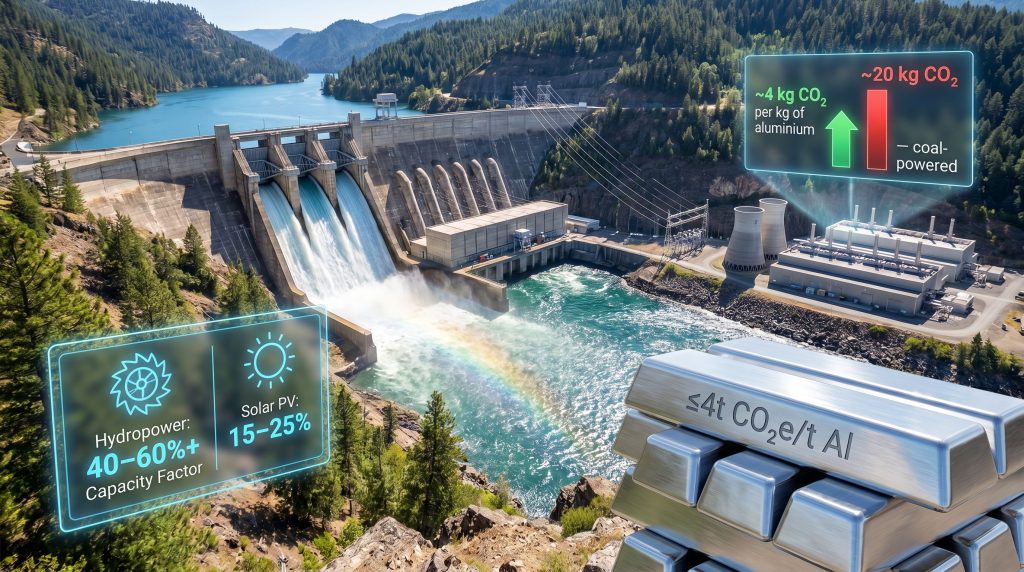
The term green aluminium has gained significant traction in procurement discussions, sustainability reports, and regulatory frameworks, but its definition is less standardised than many buyers and investors assume. The most widely adopted industry reference threshold is ≤4 tonnes of CO₂ equivalent per tonne of aluminium produced, measured on a cradle-to-gate basis. This boundary encompasses:
- Scope 1 emissions: Direct emissions from smelting operations and combustion on-site
- Scope 2 emissions: Indirect emissions from purchased electricity and heat
- Upstream Scope 3 emissions: Emissions embedded in bauxite mining, alumina refining, and other feedstock preparation processes
Because no binding global certification standard currently governs these claims, transparency around energy sourcing becomes the most important variable a buyer can independently assess. A product certified under the Aluminium Stewardship Initiative (ASI) framework offers one of the more credible third-party verification pathways available, though green premium pricing structures remain fragmented across different regional markets.
The Multiple Levers Behind Low-Carbon Aluminium
Decarbonising aluminium is not a single-intervention problem. It requires several strategies working simultaneously:
| Decarbonisation Pathway | Core Mechanism | Emissions Impact |
|---|---|---|
| Post-consumer scrap recycling | Replaces primary smelting entirely | Saves approximately 95% of energy vs. primary production |
| Renewable electricity sourcing | Powers electrolytic cells with clean energy | Can reduce smelting footprint by roughly 5x vs. coal |
| Inert anode technology | Eliminates CO₂ from the reduction process itself | Removes process carbon emissions at the cell level |
| Green hydrogen in remelting | Replaces natural gas in recycling furnaces | Addresses fossil fuel use in secondary production |
| Carbon capture and storage | Applied to alumina refining and upstream processes | Addresses emissions where fuel switching is technically constrained |
Critical distinction: Renewable electricity addresses smelting emissions, which are the largest single source. But without also tackling upstream refining, mining practices, and recycled content ratios, a full green aluminium claim remains incomplete regardless of the energy source used.
The Energy Intensity Problem That Makes Aluminium Uniquely Challenging
To understand why the energy source powering an aluminium smelter matters so profoundly, the scale of the industry's power consumption demands context. Primary aluminium production requires approximately 70 gigajoules of energy per tonne, a figure that places it significantly above both steel and cement in terms of energy consumed per unit of output. This reflects the fundamental electrochemical process at the heart of smelting — the Hall-Héroult process — which requires continuous and enormous flows of direct current electricity to reduce aluminium oxide into metal.
The practical consequence is stark. The carbon intensity of the electricity grid powering a smelter is the single largest determinant of the finished metal's emissions profile, effectively making electricity sourcing a more impactful variable than almost any operational efficiency improvement a smelter operator can make. This creates a direct numerical relationship. Furthermore, the mining decarbonisation benefits associated with cleaner energy sourcing extend well beyond operational savings alone:
- Coal-powered aluminium smelting produces approximately 20 kg of CO₂ per kg of aluminium
- Hydropower-based smelting, such as operations in Norway, produces approximately 4 kg of CO₂ per kg of aluminium
- This represents a 75 to 80% reduction in cradle-to-gate emissions driven primarily by electricity decarbonisation
Switching from coal to renewables can reduce the carbon footprint of the smelting process alone by roughly five times, making the electricity sourcing decision more consequential than almost any other operational variable (AL Circle, "Solar may be growing, but hydropower remains the backbone of 'Green Aluminium'", edited by Debanjali Sengupta, 16 June 2026).
A Century of Hydro-Aluminium Integration: Why the Relationship Runs So Deep
The aluminium industry's relationship with hydropower is not a product of modern sustainability strategy. It is an industrial arrangement that dates back to the late 19th and early 20th centuries, when the electrochemical demands of smelting aligned naturally with the large-scale baseload power that hydroelectric infrastructure could reliably deliver.
Russia's early development of hydroelectric generation established a foundational model for co-locating smelting capacity alongside major river systems. Perhaps the most historically significant example is the Bratsk Hydroelectric Power Station, which operated as the world's largest hydroelectric facility by installed capacity from 1963 to 1971, with a generating capacity of 4.5 GW. The station was not developed independently of industrial strategy: its construction was directly linked to the creation of the Bratsk-Ust-Ilimsk territorial-industrial complex, of which the Bratsk Aluminium Smelter (BrAZ) formed a central component (AL Circle, 2026). This co-location model, integrating large hydroelectric stations with smelting complexes, became a structural template replicated across Norway, Canada, Iceland, Brazil, and parts of China.
Why Hydropower's Physical Characteristics Are Uniquely Compatible with Smelting
The longevity of this relationship is not merely historical inertia. It reflects genuine technical compatibility between what hydropower delivers and what aluminium smelting demands:
- Continuous baseload power: Electrolytic smelting cells cannot be switched off without causing costly and sometimes irreversible damage to the process. They require uninterrupted electricity, 24 hours a day, 365 days a year.
- Dispatchability: Unlike solar or wind, hydropower can be increased or decreased in output on demand, matching fluctuations in operational requirements without grid instability.
- Low marginal cost at scale: Once the dam and generation infrastructure are constructed, the marginal cost of each additional megawatt-hour is extremely low, which supports the economics of an industry whose operating costs are dominated by energy expenditure.
- Capacity factor advantage: Large hydroelectric facilities operate at capacity factors of 40 to 60% or higher, compared to solar photovoltaic systems that typically achieve only 15 to 25% under real-world conditions.
In addition, renewable energy in mining more broadly is gaining momentum, yet the specific requirements of aluminium smelting mean hydropower retains a distinct operational edge over newer technologies.
The Capacity Factor Gap: Why Solar's Scale Advantage Doesn't Transfer to Aluminium
The contrast between global renewable energy capacity rankings and the actual energy mix used by aluminium producers illustrates one of the most important and underappreciated distinctions in the clean energy debate.
Global Renewable Energy Capacity by Source (2025)
| Renewable Energy Source | Global Installed Capacity (GW) |
|---|---|
| Solar (PV) | ~2,900 GW |
| Hydropower | ~1,290 GW |
| Wind | ~1,100 GW+ |
Source: IRENA Renewable Energy Capacity Statistics 2025, via MobilityNotes
Solar holds more than twice the installed capacity of hydropower globally. Yet as of 2025, hydropower accounts for 34 to 39% of the total energy mix used in global aluminium production, making it the dominant renewable electricity source for the industry by a considerable margin (AL Circle, 2026). Solar's far larger installed base translates into a far smaller share of actual aluminium production energy.
The core reason is simple but frequently overlooked: installed capacity measures theoretical maximum output under ideal conditions. For an industrial process that cannot tolerate interruptions, what matters is reliable, dispatchable energy available at all hours. Solar generation is fundamentally intermittent, tied to daylight availability and weather conditions. Without grid-scale battery storage systems of a size and cost that do not yet exist commercially at the scale needed, solar cannot independently sustain aluminium smelting operations.
This is not an argument against solar's broader role in the energy transition. It is a recognition that different industrial applications impose different energy quality requirements, and that aluminium smelting sits at the extreme end of the reliability spectrum.
Where Hydropower-Powered Green Aluminium Is Being Produced Today
The global geography of low-carbon aluminium production maps closely onto the geography of large-scale hydroelectric resources. Several regions stand out as current production leaders:
- Norway: Widely regarded as the most advanced environment for hydropower in green aluminium production globally, with major producers operating more than 20 hydroelectric facilities that supply approximately 10 TWh of clean electricity annually for aluminium smelting. The resulting product carries a carbon footprint roughly 75% below the global average. Norsk Hydro, for instance, has been central to establishing this model internationally.
- Russia: Home to some of the world's largest hydro-powered smelting complexes, leveraging the vast river systems of Siberia to power facilities that include the legacy BrAZ complex and comparable industrial-scale operations.
- Brazil: Significant hydroelectric capacity supports aluminium production in regions adjacent to the Amazon river basin, with the country's extensive river network forming a natural foundation for low-carbon smelting ambitions.
- China: As the world's largest aluminium producer overall, China's national energy mix remains heavily coal-dependent. However, southwestern provinces with strong hydroelectric resources are increasingly targeted for the development of lower-carbon production capacity.
The Norwegian Model as a Benchmark
Norway's aluminium industry functions as something close to a proof of concept for what integrated hydro-smelting infrastructure can achieve at the product emissions level. The approximately 4 kg CO₂ per kg of aluminium produced under Norwegian conditions contrasts sharply with the approximately 20 kg CO₂ per kg associated with coal-powered smelting. This differential is now being actively leveraged in green premium pricing strategies, with downstream manufacturers in automotive, aerospace, packaging, and construction sectors increasingly willing to pay above spot prices for certified low-carbon metal. Consequently, bauxite production trends are also shifting as upstream suppliers align with the green premium expectations of their smelter customers.
The next major ASX story will hit our subscribers first
Hydropower Is Necessary but Not Sufficient: The Remaining Emissions Gap
A technically important and commercially consequential point is that hydropower, despite its transformative impact on smelting emissions, does not resolve the full carbon footprint of aluminium production. Several upstream and downstream emissions sources remain significant even when smelting electricity is fully decarbonised:
- Bauxite mining: Land disturbance, diesel-powered heavy equipment, and logistics chains all generate emissions independent of smelting electricity choices.
- Alumina refining: The calcination process used to convert bauxite into alumina requires high-temperature heat, which is almost universally sourced from fossil fuels at present. This represents a major gap in the green aluminium story that hydropower cannot address.
- Smelting technology choices: Conventional Hall-Héroult electrolysis using carbon anodes produces CO₂ as a direct process output in addition to electricity-related emissions. Inert anode technology eliminates this process carbon, producing oxygen rather than CO₂ as the reaction byproduct. Several major producers are actively developing commercial-scale inert anode smelting, though widespread deployment remains in early stages.
- Secondary production energy sources: Even in recycling operations, remelting furnaces have traditionally relied on natural gas. Pilots using green hydrogen as a furnace fuel are underway in Norway, targeting this remaining fossil fuel dependency. Hydro's green hydrogen aluminium trials represent a significant step forward for the secondary production segment.
Recycled Content: The Other Major Decarbonisation Lever
Post-consumer scrap recycling saves approximately 95% of the energy required for primary aluminium production. This figure alone explains why recycled content ratios are increasingly scrutinised as part of green aluminium assessments. Across different product categories, recycled content varies substantially:
- Primary foundry alloy products: Approximately 30% post-consumer scrap content
- High-recycled-content products: Up to 75% post-consumer scrap content
The strongest low-carbon outcome is achieved when high post-consumer recycled content is combined with renewable-powered remelting, creating a compounded decarbonisation effect that neither lever achieves alone. Leading aluminium mining companies are increasingly recognising this dual-lever approach as the most credible pathway to meeting buyer requirements.
Who Is Driving Demand for Green Aluminium?
The commercial case for green aluminium investment is increasingly driven by end-market procurement requirements rather than voluntary sustainability commitments alone. Key demand sectors include:
- Automotive manufacturers pursuing Scope 3 emissions reductions as vehicle lifecycle carbon accounting becomes a regulatory and consumer expectation
- Aerospace companies responding to growing scrutiny of embodied carbon in aircraft manufacturing
- Packaging producers facing extended producer responsibility legislation that incentivises lower-carbon input materials
- Construction and infrastructure projects requiring Environmental Product Declarations with verified, third-party-assessed carbon content
Buyers across these sectors are increasingly requiring independently verified carbon footprint data rather than producer self-reporting, making certification frameworks such as the Aluminium Stewardship Initiative progressively more important as a commercial prerequisite. Furthermore, advances in green metals technology across adjacent industries are setting new benchmarks that aluminium producers are under increasing pressure to match.
Frequently Asked Questions: Hydropower and Green Aluminium
What percentage of global aluminium production uses hydropower?
Hydropower accounts for approximately 34 to 39% of the total energy mix used in global aluminium production as of 2025, making it the most significant renewable energy source in the industry despite solar holding far greater total installed capacity globally (AL Circle, 2026).
Why can't solar power replace hydropower in aluminium smelting?
Aluminium smelting requires continuous, uninterrupted baseload electricity around the clock. Solar generation is intermittent and dependent on daylight and weather. Without commercial-scale energy storage systems, solar cannot independently sustain the 24/7 power demands of electrolytic smelting cells.
How much lower is the carbon footprint of hydro-powered aluminium compared to coal-powered aluminium?
Hydro-powered aluminium produced in facilities such as those in Norway carries a carbon footprint of approximately 4 kg CO₂ per kg of metal, versus approximately 20 kg CO₂ per kg for coal-powered production, representing a reduction of roughly 75 to 80%.
Does hydropower automatically qualify aluminium as green?
Not on its own. Hydropower addresses smelting electricity emissions, which are the largest single source, but upstream emissions from bauxite mining and alumina refining, smelting technology choices, and recycled content ratios all contribute to the total lifecycle footprint and must also be addressed for a credible green aluminium claim.
What is the industry's standard carbon threshold for green aluminium?
The widely used reference point is ≤4 tonnes of CO₂e per tonne of aluminium, measured on a cradle-to-gate basis covering Scope 1, Scope 2, and relevant upstream Scope 3 emissions.
The Road Ahead: Hydropower's Role in the Next Decade of Aluminium Decarbonisation
The structural case for hydropower's continued dominance in hydropower in green aluminium production rests on several reinforcing factors. New large-scale hydroelectric capacity continues to be developed in regions with suitable river geography. The co-location economics of hydro infrastructure and smelting operations remain compelling for greenfield projects. And the decades of embedded infrastructure in Norway, Russia, and Brazil represent capital investments that will not be displaced by solar or wind alternatives in the near term.
As battery storage costs continue declining, hybrid renewable energy configurations combining hydropower with solar generation and storage may emerge as the next generation of green aluminium energy supply models, potentially unlocking lower-carbon production in regions that lack sufficient hydro resources alone.
Strategic takeaway: The most credible green aluminium producers of the coming decade will be those integrating hydropower-sourced electricity with high post-consumer recycled content and next-generation process technologies such as inert anodes and green hydrogen. No single lever delivers the full emissions reduction that the market's evolving standards will eventually demand.
The gap between solar's capacity dominance and hydropower's operational indispensability in aluminium production is not a failure of the clean energy transition. It is a reminder that different industrial systems require different solutions, and that the reliability characteristics of energy supply matter as much as its carbon intensity for industries where uninterrupted process continuity is non-negotiable.
Readers seeking broader sustainability coverage across the global aluminium value chain can explore further industry perspectives at AL Circle.
This article contains forward-looking statements and industry projections based on available data as of mid-2025. Emissions figures, capacity statistics, and technology development timelines are subject to change and should not be relied upon as investment advice or financial guidance. Readers are encouraged to consult primary sources and qualified advisors before making decisions based on this content.
Want to Capitalise on the Next Major ASX Mineral Discovery Before the Market Moves?
Discovery Alert's proprietary Discovery IQ model delivers real-time alerts on significant ASX mineral discoveries — including those shaping the future of green metals and decarbonisation — instantly converting complex data into actionable insights for investors at every level. Explore historic discoveries and their exceptional returns, then begin your 14-day free trial at Discovery Alert to position yourself ahead of the broader market.