July 20, 2026
Mining companies worldwide are recognising that energy independence provides competitive advantages that extend far beyond environmental compliance. The green energy initiative in Australia represents a strategic pivot toward complete energy self-sufficiency through on-site renewable infrastructure, fundamentally altering how industrial operations approach long-term planning and risk management.
Fortescue's Blueprint for Industrial Energy Independence
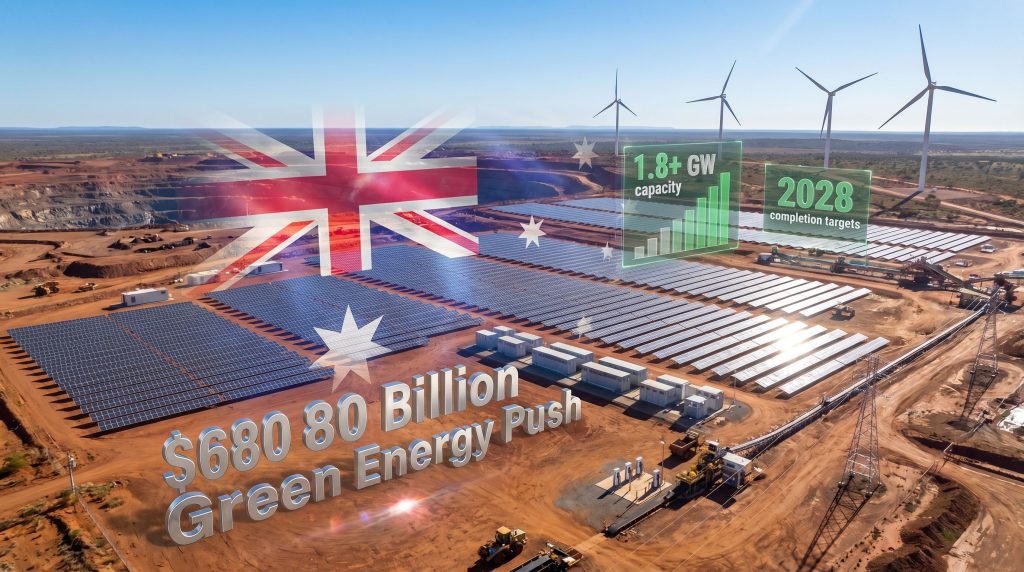
The Australian mining sector has produced a significant case study in industrial renewable energy integration through Fortescue's comprehensive approach to energy self-sufficiency. The company's board has approved $680 million in additional capital investment specifically for expanded green energy capacity in the Pilbara region, building upon a previously approved $6.2 billion decarbonisation initiative.
This green iron project investment strategy targets completion of renewable infrastructure by 2028, with technical specifications including 1.2 gigawatts of solar capacity, 600 megawatts of wind generation, and approximately 5 gigawatt-hours of battery storage. The system design incorporates 620 kilometres of transmission lines to create what the company describes as a fully integrated, off-grid renewable energy system.
Furthermore, the economic rationale centres on achieving total control over energy costs and supply reliability. Executive chairperson Dr. Andrew Forrest positioned this model as demonstrating that heavy industry can operate on fully integrated renewable grids whilst eliminating fossil fuels and improving cost control and operational reliability simultaneously.
Key Technical Components:
- Solar generation: 1.2 GW capacity providing daytime base load
- Wind generation: 600 MW capacity for evening and overnight power
- Battery storage: ~5 GWh capacity managing intermittency and firming capability
- Transmission network: 620 km of dedicated infrastructure
- System architecture: Off-grid design eliminating external energy dependencies
During the same reporting period, Fortescue achieved record quarterly iron-ore shipments totalling 48.4 million tonnes in Q3 (quarter ended March 31), representing a 5% year-on-year increase despite weather impacts from cyclones.
When big ASX news breaks, our subscribers know first
Comparative Analysis of Australia's Green Energy Investment Landscape
Australia's renewable energy sector has experienced unprecedented investment flows across multiple categories, creating a comprehensive transformation of the country's energy infrastructure. However, this energy transition challenges approach requires careful management to ensure successful implementation.
Investment Categories by Scale:
| Investment Type | Estimated Scale | Primary Focus | Target Timeline |
|---|---|---|---|
| Federal Grid Programs | $20+ billion | Transmission infrastructure | 2030 |
| National Renewable Programs | $20+ billion | Solar and wind farms | 2030 |
| Private Mining Initiatives | $6.8+ billion | Industrial energy independence | 2028-2030 |
| State Regulatory Programs | Hundreds of millions | Approval streamlining | 2025-2027 |
2024 Installation Performance Metrics:
- Large-scale renewable generation: Record $9 billion investment
- Rooftop solar adoption: 3.2 GW installed capacity
- Wind energy development: 836 MW onshore additions
- Battery storage integration: 5 GWh planned capacity
The mining sector's contribution represents a significant portion of private renewable energy investment, with companies pursuing strategies that reduce exposure to energy price volatility whilst improving operational control.
Economic Drivers Behind Mining Companies' Renewable Energy Adoption
The transition toward renewable energy in the mining sector is driven by multiple converging economic factors that extend beyond environmental compliance. Traditional energy procurement exposes mining operations to commodity price volatility, supply chain disruptions, and regulatory uncertainty that on-site generation eliminates.
In addition, mining companies face increasing energy exports challenges that require innovative solutions to maintain competitiveness in global markets.
Cost Control and Supply Security Benefits:
- Energy price stability: Fixed capital costs replace variable fuel expenses
- Supply chain resilience: On-site generation eliminates external energy dependencies
- Operational control: Direct management of power quality and availability
- Regulatory compliance: Alignment with emissions reduction requirements
The capital efficiency of renewable energy projects has improved significantly due to technology cost reductions and the mining sector's existing project management capabilities.
Investment Return Mechanisms:
- Avoided energy procurement costs: Elimination of ongoing electricity purchases
- Price volatility hedging: Protection against energy commodity price increases
- Revenue diversification: Surplus energy sales to industrial customers
- Asset value creation: Owned generation infrastructure as balance sheet assets
Data centre operations represent a particularly attractive customer segment for surplus renewable energy capacity. For instance, these facilities require high-density, continuous power supply and are increasingly sensitive to energy costs and sustainability credentials.
### What Industries Benefit Most from Renewable Energy Infrastructure?
The expansion of renewable energy infrastructure creates opportunities across multiple industrial sectors that require reliable, cost-effective power supply. Each sector presents distinct technical requirements and economic drivers that renewable energy systems can address effectively.
Data Centre Operations:
- Power requirements: Continuous, high-density energy demand (typically 10-50 MW per facility)
- Cost sensitivity: Energy represents 20-30% of operating expenses
- Location flexibility: Can locate near renewable generation sources
- Growth trajectory: Exponential demand growth driven by cloud computing and artificial intelligence
Heavy Industrial Manufacturing:
- Process applications: Electrification of industrial heating and chemical processes
- Load characteristics: Consistent base-load demand suitable for renewable generation
- Cost advantages: Energy-intensive operations benefit significantly from fixed-cost power
- Technological compatibility: Many processes can operate effectively with renewable electricity
However, these developments must consider broader industry evolution trends to ensure long-term viability and competitiveness.
### How Do Critical Minerals Support Green Energy Infrastructure?
The development of renewable energy systems requires substantial quantities of critical minerals transition materials, creating additional economic opportunities for mining companies investing in green energy infrastructure.
Aluminum Smelting:
- Energy intensity: 13-15 MWh per tonne of aluminium produced
- Load factor: Continuous 24/7 operation ideal for base-load renewable generation
- Cost impact: Energy represents 30-40% of production costs
Steel Production:
- Emerging technology: Hydrogen-based steelmaking using renewable electricity
- Energy requirements: 2-4 MWh per tonne for electric arc furnace operations
- Decarbonisation pressure: Industry facing increasing carbon pricing and regulations
Impact on Australia's Export Competitiveness and Global Market Position
The development of large-scale renewable energy infrastructure positions Australia to capture premium pricing for low-carbon commodities in global markets. International buyers increasingly specify sustainability requirements that create competitive advantages for producers using renewable energy.
Green Commodity Premium Opportunities:
- Carbon-neutral certification: Premium pricing for verified low-emission production
- Supply chain transparency: Documentation of renewable energy usage throughout production
- International compliance: Meeting EU Carbon Border Adjustment Mechanism requirements
- Brand differentiation: Marketing advantages in ESG-conscious commodity markets
Australia's renewable energy development also creates opportunities for new export industries that leverage abundant solar and wind resources. Consequently, green hydrogen production using renewable electricity represents a significant emerging market opportunity.
Export Revenue Diversification Potential:
- Green hydrogen: Projected global market demand of 100+ million tonnes annually by 2030
- Green ammonia: Renewable energy-based fertiliser production for export
- Clean technology manufacturing: Value-added processing using renewable energy
- Carbon credit generation: Additional revenue from verified emission reductions
The next major ASX story will hit our subscribers first
Implementation Challenges and Risk Assessment
Large-scale renewable energy projects face multiple technical and financial challenges that require careful risk management and contingency planning. The complexity of integrating intermittent renewable generation with continuous industrial operations presents engineering challenges that traditional grid-connected systems do not face.
Technical Integration Challenges:
Intermittency Management:
- Battery storage requirements: Sufficient capacity to maintain power during low renewable generation periods
- System reliability standards: Industrial operations require 99.9%+ uptime
- Power quality control: Voltage stability and frequency regulation for sensitive equipment
- Backup systems: Redundancy planning for equipment failures or extreme weather events
Furthermore, the Clean Energy Council provides industry guidelines and standards that support the successful implementation of renewable energy projects across Australia's industrial sector.
Grid Infrastructure Requirements:
- Transmission capacity: Adequate infrastructure to transport power from generation sites to load centres
- System balancing: Managing supply and demand variations across distributed generation sources
- Maintenance access: Service capabilities for remote generation and transmission equipment
Financial and Market Risk Factors:
Capital Investment Risks:
- Technology evolution: Potential obsolescence as renewable and storage technologies advance
- Construction execution: Weather delays, supply chain disruptions, and cost overruns
- Regulatory changes: Policy modifications affecting project economics
- Market competition: Increasing competition for suitable renewable energy sites
Timeline and Phased Implementation Strategy
The transition to renewable energy independence in the mining sector follows a structured timeline that balances technical complexity with operational requirements. The implementation strategy requires careful coordination of site development, equipment procurement, construction activities, and system commissioning.
Near-term Development Phase (2025-2027):
- Site selection and permitting: Environmental approvals and regulatory compliance
- Infrastructure development: Access roads, transmission lines, and staging areas
- Equipment procurement: Solar panels, wind turbines, battery systems, and control equipment
- Construction commencement: Foundation work, equipment installation, and initial testing
Moreover, the Australian Renewable Energy Agency provides funding and support for innovative renewable energy projects that advance the sector's technological capabilities.
System Integration Phase (2028-2030):
- Renewable generation deployment: 1.2 GW solar and 600 MW wind capacity installation
- Battery storage integration: 5 GWh storage system commissioning and testing
- Grid connection and testing: Transmission infrastructure completion and reliability verification
- Customer integration: Data centre and industrial customer connection and load testing
Optimisation and Expansion Phase (2030+):
- Performance optimisation: System efficiency improvements and cost reductions
- Capacity expansion: Additional generation and storage deployment based on demand
- Technology upgrades: Next-generation equipment integration as technology advances
- Replication planning: Template development for additional site deployment
Australia's Strategic Position in Global Energy Markets
Australia's renewable energy development leverages exceptional natural resource endowments that provide sustainable competitive advantages in global energy markets. The combination of solar irradiation, wind resources, available land, and critical mineral reserves creates unique opportunities for energy export and technology leadership.
Natural Resource Advantages:
- Solar irradiation: World-class solar energy potential across vast geographic areas
- Wind resources: Consistent coastal and inland wind patterns suitable for large-scale generation
- Land availability: Extensive areas available for renewable energy development with minimal competing uses
- Critical minerals: Domestic sources of lithium, rare earth elements, and other materials required for renewable energy technology
The green energy initiative in Australia demonstrates that heavy industry can achieve energy independence whilst maintaining competitive cost structures and operational reliability. This model provides a pathway for other countries with significant mineral resources to develop similar energy independence strategies.
Technology Collaboration:
- Knowledge transfer: Partnerships with global renewable energy technology leaders
- Research and development: Collaborative innovation in renewable energy and storage technologies
- Best practices sharing: Export of project development and operational expertise to other countries
Investment Attraction:
- Foreign direct investment: International capital deployment in Australian renewable energy projects
- Joint ventures: Partnerships with multinational energy companies and industrial users
- Infrastructure financing: Access to global green finance and development funding
The integration of renewable energy with mining operations demonstrates that the green energy initiative in Australia can serve as a template for industrial decarbonisation that can be replicated across multiple countries and sectors. The technical expertise, project management capabilities, and operational experience developed through these initiatives create exportable knowledge assets that enhance Australia's position in the global energy transition.
Finally, this comprehensive approach to renewable energy development represents a fundamental shift in how industrial operations approach energy security and cost management. The success of these initiatives will determine Australia's competitive position in an increasingly carbon-conscious global economy.
Disclaimer: This analysis is based on publicly available information and industry trends as of April 2026. Investment decisions should be evaluated against current market conditions, regulatory requirements, and specific project parameters. Future performance and market developments may differ from projections and assumptions presented in this analysis.
Ready to Capitalise on Australia's Green Energy Mining Revolution?
Discovery Alert's proprietary Discovery IQ model delivers real-time alerts on significant mineral discoveries across the renewable energy supply chain, instantly empowering subscribers to identify actionable opportunities ahead of the broader market. Understand why major mineral discoveries can lead to substantial market returns by exploring Discovery Alert's dedicated discoveries page, showcasing historic examples of exceptional outcomes, and begin your 14-day free trial today to position yourself ahead of Australia's energy transition.