May 22, 2026
China's metallurgical sector undergoes unprecedented transformation as environmental regulations converge with operational efficiency demands across global industrial systems. Traditional smelting processes face mounting pressure from regulatory frameworks, cost structures, and competitive dynamics. Green ferro-alloys in China represent the forefront of this technological evolution, where green iron sustainability principles merge with advanced manufacturing capabilities to create sustainable competitive advantages.
The shift toward sustainable production encompasses multiple interconnected systems: renewable energy integration, advanced furnace technologies, optimized raw material processing, and comprehensive supply chain coordination. These elements combine to create operational advantages that extend beyond environmental compliance to encompass fundamental competitive positioning in global commodity markets.
Understanding Green Ferro-Alloys and China's Market Transformation
Green ferro-alloys in China represent comprehensive restructuring of metallurgical production systems that prioritise carbon intensity reduction whilst maintaining operational efficiency and product quality standards. This transformation encompasses ferro-chrome, ferro-manganese, and silico-manganese production through renewable energy integration, advanced smelting technologies, and sustainable feedstock processing methodologies.
Technical definition of green ferro-alloy production requires quantifiable performance improvements across multiple dimensions. Carbon footprint reduction targets must demonstrate measurable decreases in emissions per tonne of output, typically ranging from 15-25% reductions compared to conventional production methods. Energy efficiency benchmarks establish performance standards that integrate electricity consumption, coke usage, and thermal efficiency optimisation.
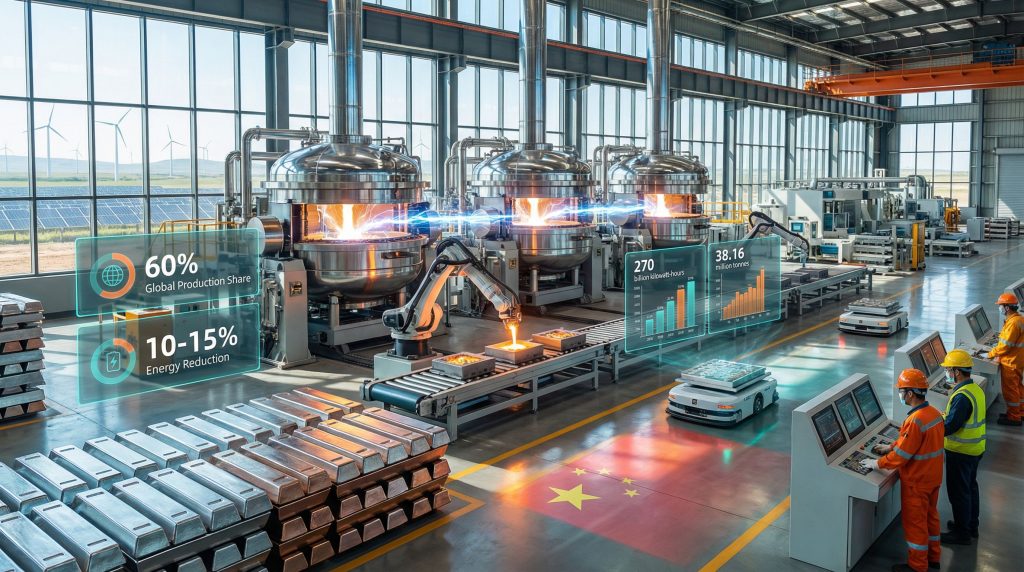
China's strategic position in global ferro-alloy markets creates significant leverage for sustainable production adoption. The country controls approximately 60% of worldwide ferro-alloy production capacity, generating substantial influence over international steel supply chains and downstream manufacturing sectors. In 2025, China's ferro-alloy production reached a record 38.16 million tonnes, representing a 5.6% year-on-year increase despite contracting steel output.
Furthermore, this supply-demand imbalance illustrates the complex market dynamics surrounding green ferro-alloys in China. While production capacity continues expanding, particularly in sustainable technologies, downstream demand signals remain inconsistent due to pricing structures, certification challenges, and competitive pressures from conventional production methods.
Certification Framework Development
The absence of standardised certification methodologies represents a critical challenge for green ferro-alloy market development. Current frameworks lack consistency across provinces, creating uncertainty for producers investing in sustainable technologies. Carbon footprint calculation methodologies vary significantly between certification bodies, preventing clear differentiation between conventional and green products.
Industry participants report that verification processes remain unclear, with limited guidance on documentation requirements, third-party auditing standards, and performance validation criteria. These gaps prevent premium pricing structures from developing, despite substantial investments in cleaner production technologies.
Integration with National Development Strategies
China's Belt and Road Initiative infrastructure projects create strategic opportunities for ferro-alloy producers to establish supply chain advantages through proximity to major construction and manufacturing developments. The positioning of production facilities near these projects generates logistics efficiencies and market access benefits that extend beyond traditional commodity trading relationships.
Export competitiveness implications become increasingly significant as international markets implement carbon border adjustment mechanisms. Chinese producers with verified low-carbon credentials gain preferential access to European and North American steel markets, creating differentiated value propositions that justify technology investments.
When big ASX news breaks, our subscribers know first
Direct Current Technology Revolution in Chinese Ferro-Alloy Smelting
Direct current furnace technology represents the most significant operational advancement in Chinese ferro-alloy production, delivering quantifiable efficiency improvements whilst reducing environmental impact across major production hubs. This technology fundamentally alters the relationship between smelting operations and electrical power systems, enabling enhanced integration with renewable energy sources.
Technical performance data from operational facilities demonstrates consistent advantages over traditional alternating current systems. Inner Mongolia Jinglei Industry Co., operating the world's first 36,000 kilovolt-ampere DC-powered furnace commissioned in late 2024, reported 10-15% electricity consumption reduction and 10% coke usage decrease per tonne of silico-manganese produced throughout 2025.
DC Technology Performance Comparison
| Parameter | Traditional AC | Modern DC | Performance Improvement |
|---|---|---|---|
| Electricity Consumption | Baseline | 10-15% reduction | Enhanced efficiency |
| Coke Usage | Standard | 10% reduction | Lower carbon input |
| Grid Flexibility | Limited response | Dynamic adjustment | Operational advantage |
| Ore Fines Processing | Moderate efficiency | Enhanced capability | Resource optimisation |
The technological advantages extend beyond simple efficiency metrics to encompass operational characteristics that create competitive advantages. DC furnaces provide enhanced precision in temperature control, reducing thermal losses and improving product quality consistency. Additionally, the ability to process ore fines more effectively addresses longstanding challenges in feedstock utilisation.
Regional Technology Deployment Patterns
Inner Mongolia emerged as the primary hub for DC technology adoption, with the region producing 17.628 million tonnes of ferro-alloys in 2025, representing the highest regional production volume in China. This concentration reflects the convergence of renewable energy availability, feedstock proximity, and industrial policy support that creates favourable conditions for technology deployment.
New investments in silico-manganese, ferro-chrome, and ferro-silicon capacity across China have predominantly adopted DC smelting technology in recent years. However, adoption patterns remain uneven, with some producers maintaining confidence in AC technology despite documented efficiency advantages. A manganese alloy smelter in southern China explained their decision: We will keep a close eye on DC development but selected proven technology for current expansion.
Grid Integration and Renewable Energy Synergies
DC technology enables dynamic response to variable renewable energy inputs, allowing smelters to optimise production timing around peak clean energy availability. This capability becomes increasingly valuable as renewable energy penetration rises across Chinese power systems, creating symbiotic relationships between clean energy development and ferro-alloy production optimisation.
The flexibility advantages of DC systems extend to grid stability contributions, where furnaces can adjust power consumption rapidly in response to electrical system requirements. This responsiveness creates operational value beyond direct production benefits, potentially generating revenue through grid services and peak demand management.
Regional Production Hub Development and Competitive Advantages
Geographic concentration patterns in green ferro-alloys in China reveal how natural resource access, infrastructure development, and policy coordination create sustainable competitive advantages for specific regions. These factors combine to establish production clusters that achieve economies of scale whilst optimising environmental performance and operational efficiency.
Inner Mongolia's dominance in sustainable ferro-alloy production reflects multiple converging advantages. The region generated 270 billion kilowatt-hours of clean energy in 2025, the highest among all Chinese provinces, providing a competitive foundation that other regions cannot easily replicate. This renewable energy capacity, combined with strategic positioning near manganese and chromium ore supply routes, creates integrated advantages.
Ulanqab Production Zone Development
The Ulanqab region functions as a specialised ferro-alloy cluster with coordinated industrial development that generates agglomeration economies. The concentration of facilities creates shared infrastructure benefits, technology spillovers, and specialised labour force development that enhance collective competitiveness. The establishment of the Ulanqab Ferroalloys Industry Alliance (UFIA) provides institutional coordination mechanisms for technology sharing, market intelligence, and policy advocacy.
Industry alliance coordination extends beyond simple networking to encompass practical collaboration on technology deployment and market development. The UFIA facilitates DC furnace implementation through shared technical expertise, clean energy procurement coordination among member companies, and collective negotiation with suppliers and customers.
Southern China's Technology Adoption Challenges
Traditional ferro-alloy production regions in southern China face structural constraints that limit green technology adoption despite established industrial capabilities. Conservative investment approaches reflect capital constraints for comprehensive technology upgrades, where existing facilities require substantial reinvestment to achieve competitive performance levels.
Infrastructure limitations create additional barriers to renewable energy integration. Mountainous terrain, higher population density, and established coal-based power infrastructure generate path dependency effects where replacement with sustainable systems requires coordinated regional planning and substantial capital deployment.
These constraints do not eliminate competitive opportunities but shift strategic priorities toward incremental improvement rather than comprehensive transformation. Southern producers focus on operational optimisation within existing systems whilst monitoring technology development for future deployment opportunities.
Sustainable Feedstock Development Through Strategic Partnerships
Upstream-downstream collaboration between international mining companies and Chinese smelters focuses on optimising raw material processing to enhance energy efficiency and reduce environmental impact throughout supply chains. These partnerships represent recognition that carbon intensity reduction requires coordination across multiple production stages rather than isolated smelting improvements.
South32's memorandum of cooperation with Taiyuan Guohong Ferroalloy Co., announced in December 2025, establishes a framework for low-carbon manganese ore pellet development. This partnership demonstrates formal commitment to integrating raw material innovation with downstream smelting operations, creating value chain optimisation that benefits both participants.
Pelletisation Technology Advantages
Pelletisation converts manganese ore fines into consistent spherical shapes that improve furnace permeability and processing efficiency. Enhanced permeability enables better gas flow through furnace charges, reducing reaction time and energy requirements compared to traditional sintering approaches.
The technical distinction between pelletisation and sintering creates specific advantages for sustainable production. Traditional sintering involves heating ore fines to agglomerate them into larger pieces, requiring significant energy consumption in dedicated sintering facilities. Pelletisation achieves similar agglomeration through mechanical compression and binding agents with lower energy inputs.
A Chinese manganese ore industry contact explained the technical benefits: Lump manganese ore can be directly used in submerged arc furnaces, whilst ore fines require preprocessing. Pelletisation offers efficiency advantages over sintering through improved furnace permeability and faster reduction reactions.
Environmental Performance Improvements
Pelletised feedstock reduces dust emissions in production facilities, addressing environmental concerns beyond carbon footprint reduction. Improved furnace efficiency translates directly to reduced coke consumption and electricity usage, creating operational cost benefits alongside environmental improvements.
The conversion of ore fines through pelletisation addresses resource utilisation challenges where fine-grained ores historically required energy-intensive preprocessing or generated higher waste volumes. Enhanced resource utilisation contributes to overall supply chain sustainability whilst reducing production costs.
Steel Industry Decarbonisation Creating Green Ferro-Alloy Demand
Chinese steelmakers' decarbonisation investments generate differentiated demand patterns for lower-emission ferro-alloys, particularly as export markets implement carbon border adjustment mechanisms. These demand signals create market opportunities for sustainable ferro-alloy producers despite broader market challenges.
Zhenshi Oriental Special Steel Co.'s 100% green electricity-powered stainless steel project represents concrete commitment to sustainable production at commercial scale. The facility's designed annual capacity of 2.51 million tonnes utilises high-grade nickel and chromium materials, creating specific demand for premium ferro-alloys that meet environmental standards.
Carbon Border Adjustment Mechanism Impact
The implementation of CBAM creates specific incentives for Chinese steel producers to source lower-emission ferro-alloys. A purchasing manager from a major Chinese steel group explained the calculation framework: From the carbon emission perspective, ferro-alloys account for a small share in total carbon per tonne of steel. However, our special steel plant cares about ferro-alloy carbon footprint, as their share can represent around 20% of total emissions calculated under CBAM standards.
This calculation methodology creates differentiated demand where speciality steel producers prioritise low-carbon ferro-alloys whilst commodity steel producers remain price-sensitive. The distinction generates market segmentation opportunities for producers with verified environmental credentials.
Project-Specific Green Steel Initiatives
Beyond Zhenshi Oriental's facility, multiple Chinese steelmakers are developing renewable energy-powered production capacity that requires compatible ferro-alloy suppliers. These projects create specific procurement requirements that prioritise environmental performance alongside traditional quality and delivery criteria.
The integration of renewable electricity throughout steel production systems creates technical requirements for ferro-alloy suppliers to demonstrate compatible environmental performance. Supply chain coordination becomes essential for maintaining consistent environmental credentials across all raw material inputs.
Premium Pricing Challenges Despite Technology Advances
Market fundamentals prevent sustainable ferro-alloy producers from capturing price premiums despite significant investments in cleaner production technologies. The absence of standardised certification frameworks, combined with supply-demand imbalances, creates conditions where green products compete primarily on conventional pricing structures.
No premium pricing has been reported since Fastmarkets launched green ferro-chrome and green ferro-manganese differential assessments in the fourth quarter of 2024. Industry participants attribute this pricing failure to multiple structural challenges that prevent differentiated market development.
Certification and Verification Framework Gaps
The UFIA's General Secretary explained the fundamental challenge: The pricing structure for premiums has not been formed. Carbon footprint calculations remain unclear, and verification instructions are absent. It's not appropriate to discuss premiums under these conditions.
This absence of standardised methodologies prevents buyers from verifying green production claims, creating uncertainty that discourages premium pricing. Without clear verification processes, procurement managers cannot justify higher costs for products with unverified environmental benefits.
Supply-Demand Market Imbalance
China's Ferro-Alloy Market Dynamics (2025)
| Market Metric | Volume/Performance | Year-over-Year Change |
|---|---|---|
| Total Ferro-Alloy Production | 38.16 million tonnes | +5.6% |
| Crude Steel Output | 960.81 million tonnes | -4.4% |
| Market Condition | Oversupply | Weakening fundamentals |
The production growth-demand contraction imbalance eliminates pricing power for ferro-alloy producers regardless of environmental performance. A ferro-chrome smelter expressed the market reality: We don't know how much to charge for green ferro-manganese, and we lack confidence that users will accept higher prices.
Economic Reality for Steel Buyers
A steel mill purchasing manager summarised the economic constraints: Buying green ferro-alloys means higher prices for mills. Can mills pass extra costs to end-users? Unless users pay premiums for low-emission steel, which is not realistic currently.
This economic dynamic illustrates the challenge where environmental benefits remain theoretical rather than commercially valuable without end-user demand for sustainable products. Steel producers require clear market signals from downstream customers to justify higher input costs.
The next major ASX story will hit our subscribers first
Regional Industry Alliance Coordination and Technology Sharing
Industry associations and regional clusters coordinate technology deployment, policy advocacy, and market development initiatives to accelerate sustainable ferro-alloy production across Chinese manufacturing hubs. These coordination mechanisms create collective advantages that individual companies cannot achieve independently.
The Ulanqab Ferroalloys Industry Alliance serves multiple coordination functions beyond traditional industry representation. Technology sharing platforms facilitate DC furnace implementation through documented best practices, technical expertise exchange, and supplier coordination. Member companies achieve cost efficiencies through collective procurement of equipment and services.
Cross-Regional Technology Transfer
Best practice documentation enables technology transfer between regions with different operational conditions and resource endowments. Investment coordination reduces duplication of research and development efforts whilst accelerating deployment across multiple facilities.
Policy advocacy through regional alliances creates stronger negotiating positions with government agencies on regulatory frameworks, environmental standards, and industrial development priorities. Collective advocacy achieves policy outcomes that individual companies cannot influence effectively.
Market Intelligence and Pricing Strategy
Industry alliances coordinate market intelligence gathering and pricing strategy development, creating information advantages for member companies. Shared market analysis reduces individual research costs whilst improving strategic decision-making across participating facilities.
The coordination extends to customer relationship management, where alliances can represent collective capabilities to large steel producers seeking reliable supplier networks with consistent quality and environmental standards.
Investment Opportunities in Green Ferro-Alloy Technology
Capital deployment patterns reveal strategic priorities for technology upgrading, capacity expansion, and market positioning as the ferro-alloy industry transitions toward sustainable production methods. Investment opportunities encompass both technology conversion and new facility development across different market segments.
Technology Upgrade Investment Priorities
DC furnace conversion projects represent the highest-impact investment opportunities for existing facilities seeking competitive advantages. Retrofit investments typically generate 10-15% electricity savings and 10% coke usage reduction, creating operational cost benefits that justify capital expenditure even without premium pricing for green products.
Renewable energy integration infrastructure development creates complementary investment opportunities, particularly in regions with abundant wind and solar resources. Advanced process control and automation systems enhance the efficiency advantages of DC technology whilst reducing operational complexity.
Market Positioning Through Strategic Partnerships
Premium product development for export markets creates differentiated positioning opportunities where CBAM implementation generates specific demand for verified low-carbon ferro-alloys. Certification and quality assurance system implementation enables access to these premium market segments.
Strategic partnerships with downstream steel producers establish long-term supply relationships that justify technology investments through volume commitments and collaborative development programmes. These alliances reflect broader industry evolution trends that prioritise sustainable production methods.
Future Policy Development Impact on Market Evolution
Regulatory evolution, international trade mechanisms, and domestic industrial policy create framework conditions that determine competitive dynamics in sustainable ferro-alloy production. Policy development trajectories indicate accelerating emphasis on environmental performance across industrial sectors.
Domestic Policy Implementation Timeline
Energy efficiency standards enforcement across production capacity creates compliance requirements that favour advanced technologies over conventional systems. Carbon footprint reporting requirements for industrial producers establish documentation standards that support green product differentiation.
Green finance mechanisms supporting technology upgrades provide capital access advantages for sustainable production investments, reducing the financial barriers to DC furnace conversion and renewable energy integration.
International Trade Framework Evolution
CBAM compliance requirements for steel export markets create specific advantages for Chinese producers with verified low-carbon ferro-alloy sources. Technology transfer restrictions and supply chain security considerations influence equipment sourcing and technical cooperation opportunities.
Bilateral trade agreements incorporating environmental standards establish preferential market access for products meeting sustainability criteria, creating long-term competitive advantages for green ferro-alloy producers. These developments align with broader energy transition strategies and green transition insights that emphasise sustainable industrial development.
The convergence of domestic policy support, international trade incentives, and technology maturation suggests accelerating adoption of sustainable production methods across China's ferro-alloy industry. However, current challenges in premium pricing development remain significant barriers to widespread implementation.
Furthermore, the industry faces Europe supply chain challenges that create both opportunities and constraints for Chinese producers seeking export market access. In addition, Chinese ferroalloy producers are exploring green initiatives despite market uncertainties and investment risks.
Investment Disclaimer: This analysis contains forward-looking statements and projections that involve uncertainties and risks. Market conditions, regulatory frameworks, and technology development timelines may differ from current expectations. Investment decisions should consider multiple factors and professional advice.
Looking to Capitalise on Green Technology Opportunities in Chinese Industrial Markets?
Discovery Alert's proprietary Discovery IQ model delivers real-time alerts on significant mineral discoveries that drive technological transformation across industrial sectors. Stay ahead of emerging opportunities in sustainable metallurgy, green technology adoption, and resource development by accessing comprehensive insights on historic discovery returns and begin your 14-day free trial today to position yourself ahead of market developments.