
June 20, 2026
Industrial decarbonisation represents one of the most capital-intensive transformations facing global economies, with mining operations serving as critical test cases for renewable energy integration at massive scale. The convergence of environmental pressures, investor mandates, and technological advancement has created unprecedented opportunities for financial innovation in resource sector energy transitions. State-owned mining enterprises, in particular, face unique challenges balancing operational efficiency with national climate commitments while maintaining competitive positioning in global commodity markets.
Understanding Green Loan Mechanisms in Resource Sector Decarbonisation
The emergence of sustainability-linked financing structures represents a fundamental shift in how capital markets evaluate industrial energy transitions. These specialised lending instruments incorporate environmental performance metrics directly into loan covenant frameworks, creating financial incentives for measurable decarbonisation progress. Unlike conventional commercial lending arrangements, green loan facilities require third-party verification of environmental outcomes and transparent reporting against established sustainability targets.
Green loan for Codelco's renewable energy projects demonstrates the sophisticated financial architecture required for large-scale mining sector decarbonisation. The Chilean state-owned copper producer recently secured a US$600 million green loan facility through syndicated lending involving HSBC Holdings PLC and Banco Santander S.A., with multilateral guarantee backing from the World Bank Group's Multilateral Investment Guarantee Agency (MIGA). This transaction builds upon a previous US$532 million facility from Crédit Agricole S.A., establishing a cumulative US$1.132 billion dedicated green financing portfolio for renewable energy procurement and grid integration infrastructure.
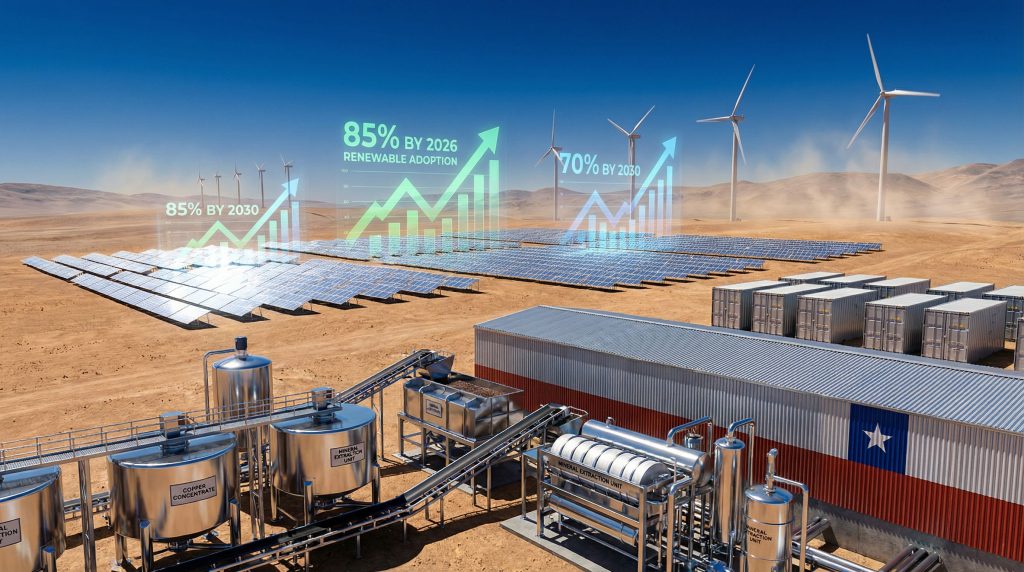
The financial structure incorporates performance-based covenant mechanisms that differentiate from traditional commercial lending. Codelco's commitment to achieve 85% renewable energy composition by 2026 serves as a measurable interim target, progressing toward 100% renewable energy matrix completion by 2030. These targets translate into specific quarterly reporting requirements, with potential interest rate adjustments based on achievement of predetermined environmental milestones.
Multilateral Guarantee Frameworks and Risk Mitigation
MIGA guarantee instruments provide political risk insurance and credit enhancement mechanisms addressing regulatory and currency exposures inherent in emerging market infrastructure financing. These guarantees effectively transfer sovereign credit risk to the World Bank Group, enabling commercial banks to extend favourable terms despite state-owned enterprise classification. Historical precedent indicates 15-25% interest rate savings through guarantee-backed structures compared to unguaranteed sovereign borrowing in similar market conditions.
The guarantee framework addresses multiple risk categories, including political risk coverage protecting against regulatory changes affecting renewable energy development and currency hedging providing foreign exchange stability for multi-year procurement contracts. Furthermore, performance guarantees ensure project completion and operational targets whilst technology risk mitigation supports advanced grid integration and energy storage deployment.
Sustainability-Linked Loan Architecture
Green loan certification requires compliance with International Capital Market Association (ICMA) Green Bond Principles and Loan Market Association (LMA) Green Loan Principles. Certification mandates include transparent use-of-proceeds documentation, independent sustainability verification, and periodic reporting against established environmental performance metrics. The certification framework reduces information asymmetries between borrowers and lenders whilst expanding access to ESG-focused investment capital.
Codelco accounts for approximately 9% of Chile's national electricity consumption, establishing the company as a critical anchor tenant for renewable energy infrastructure development. This substantial consumption share translates to approximately 24-26 terawatt-hours annually, making procurement decisions significantly influential for renewable energy project economics and national grid decarbonisation acceleration.
The company has executed public tenders for 1.8 TWh/year of renewable energy procurement, representing one of the largest corporate renewable energy commitments in Latin America. However, the transition involves implementing a comprehensive critical minerals strategy that balances operational needs with sustainability objectives. Power purchase agreements (PPAs) with Chilean renewable energy developers including Engie Energía Chile S.A., Colbún S.A., and AES Generación S.A. incorporate 15-20 year contract terms providing revenue certainty for utility-scale solar and wind infrastructure investments.
When big ASX news breaks, our subscribers know first
Strategic Financial Architecture for Mining Sector Decarbonisation
Mining sector energy transitions require sophisticated financial structures addressing operational continuity, technological integration, and long-term cost optimisation objectives. The capital-intensive nature of renewable energy infrastructure, combined with grid integration complexity, necessitates innovative financing approaches beyond conventional project finance methodologies.
Operational Cost Optimisation Through Renewable Energy Procurement
Long-term renewable energy contracts enable mining operations to hedge electricity cost volatility whilst achieving predictable operational expense profiles. Unlike fossil fuel-based electricity subject to commodity price fluctuations, renewable energy PPAs establish fixed or inflation-indexed pricing for extended horizons, generating stability for capital budgeting and expansion planning.
Cost optimisation extends beyond direct electricity expense reduction to incorporate avoided carbon pricing exposure and eliminated fuel supply chain risk. Future implementation of carbon pricing mechanisms would impose direct cost burdens on energy-intensive mining operations dependent upon fossil fuel electricity. Current global carbon prices range from US$5-80 per metric ton of CO2 equivalent depending on jurisdiction, establishing substantial cost mitigation value for operations eliminating fossil fuel dependency.
ESG Compliance and Investor Pressure Integration
International institutional investors increasingly apply ESG screening criteria to mining sector investments, with renewable energy procurement serving as a material selection criterion. Major asset managers have articulated climate-related investment policies requiring portfolio companies to advance measurable decarbonisation objectives. Green loan for Codelco's renewable energy projects addresses investor expectations regarding climate risk management and positions the company favourably in ESG-screened investment universes.
Supply chain sustainability mandates from downstream copper consumers create commercial incentives for mining sector decarbonisation independent of regulatory requirements. Major consumer companies including Tesla, Apple, and Siemens have incorporated supplier decarbonisation requirements into procurement policies, effectively transmitting climate commitments upstream through commercial relationships. In addition, this development aligns with broader critical minerals energy transition initiatives across the industry.
24/7 Renewable Energy Matching and Grid Integration
Achieving reliable electricity supply from inherently variable renewable sources requires advanced integration of battery energy storage systems (BESS) with hybrid renewable generation portfolios. Technical solutions incorporate solar photovoltaic generation providing daytime peak capacity aligned with mining operations, wind generation delivering variable but continuous output complementing solar profiles, battery energy storage systems enabling 4-8 hour discharge capability during low generation periods, and advanced inverter technologies providing grid voltage and frequency support services.
Mining operations require stable electricity supply to prevent production interruptions and equipment damage. Integration of variable renewable generation necessitates grid connection upgrades, reactive power support systems, and fault-ride-through capability verification. Codelco's renewable energy deployment requires coordination with Chilean grid operator (COSEN) to ensure system stability and compliance with grid code requirements.
Macro-Economic Implications of Mining Sector Energy Transitions
Large-scale mining sector decarbonisation generates macro-economic effects extending beyond individual corporate environmental performance. State-owned enterprises serve unique roles as development catalysts, with procurement decisions influencing national energy infrastructure investment and grid modernisation acceleration.
National Energy Security and Grid Decarbonisation
Codelco's 9% share of national electricity consumption establishes the company as a critical influence on Chile's energy transition trajectory. Long-term renewable energy procurement by major industrial consumers provides anchor tenant demand supporting utility-scale renewable energy project financing. This procurement certainty enables renewable energy developers to secure favourable project finance terms, reducing overall system costs and accelerating grid decarbonisation.
Chile's renewable energy development has accelerated through large-scale corporate procurement commitments. The country's renewable energy capacity has expanded from approximately 10% of total generation in 2010 to over 60% by 2024, driven partially by major industrial consumer commitments including Codelco's renewable energy procurement initiatives.
Economic Development and Technology Transfer
International financing structures involving multilateral development banks facilitate technology transfer and local content development. MIGA-backed financing often incorporates requirements for local supplier engagement and technology transfer provisions, supporting developing country industrial capacity advancement. The Codelco loan deal exemplifies how international partnerships can support sustainable development objectives whilst advancing national economic interests.
State-owned mining enterprises serve as anchor tenants for renewable energy development, providing long-term revenue certainty that enables project financing for utility-scale clean energy infrastructure whilst supporting national climate commitments and energy security objectives.
The green loan for Codelco's renewable energy projects establishes methodological precedents for replication across other state-owned enterprises in emerging markets. Standardised guarantee structures and sustainability covenant frameworks reduce transaction costs for subsequent applicants, creating institutional learning curve benefits that accelerate market development.
Regional Development Bank Participation
Multilateral development bank participation expands financing capacity beyond commercial bank balance sheet constraints. Development bank involvement signals creditworthiness to private investors whilst providing technical assistance for project implementation and monitoring. Regional institutions including the Inter-American Development Bank and Development Bank of Latin America participate in similar financing structures, creating regional expertise and standardised practices.
Investment Risk Assessment and Portfolio Diversification
Green financing mechanisms address multiple risk categories affecting mining sector operations whilst creating value through cost reduction and competitive positioning enhancement. Comprehensive risk assessment encompasses regulatory compliance, technology transition, and market positioning considerations.
Risk Mitigation Categories and Financial Impact
Regulatory compliance risk represents a primary concern for energy-intensive mining operations facing evolving environmental standards. Proactive renewable energy procurement eliminates future compliance costs whilst positioning companies favourably for regulatory tightening. Carbon pricing exposure mitigation protects against future carbon tax implementation, with potential cost savings ranging from US$50-400 per metric ton CO2 equivalent based on projected carbon price trajectories.
Stranded asset risk affects fossil fuel infrastructure facing accelerated obsolescence as renewable energy costs decline. Mining operations with significant coal or natural gas infrastructure face potential write-downs as renewable alternatives become economically superior. Early renewable energy transition eliminates stranded asset exposure whilst capturing cost advantages from declining renewable technology costs.
Technology Transition and Operational Continuity
Mining operations require uninterrupted electricity supply to maintain production and prevent equipment damage. Renewable energy integration necessitates careful transition planning incorporating backup generation systems, energy storage deployment, and grid connection upgrades. Codelco's phased implementation approach includes pilot project validation, contract renegotiation, and sequential infrastructure scaling to manage transition risks.
Battery energy storage systems provide critical backup capability during renewable generation variability. Typical mining sector BESS projects range from 10-500 megawatt capacity with 40-2,000 megawatt-hour energy storage, enabling 4-8 hour discharge capability during extended low generation periods. Lithium-ion battery technology offers 85-92% round-trip efficiency with declining costs supporting economic viability.
Performance-Based Financing Benefits
Sustainability-linked financing terms create measurable value through interest rate reductions tied to environmental performance achievement. Codelco's 85% renewable energy target by 2026 triggers covenant compliance benefits including potential rate reductions and additional facility access. Performance monitoring through quarterly reporting ensures continuous progress tracking and covenant compliance verification.
What Are the Key Operational Implementation Strategies?
Successful mining sector energy transitions require systematic implementation approaches addressing technical complexity, operational continuity, and financial management. Phased development strategies enable risk management whilst maintaining production stability during infrastructure transitions.
Infrastructure Investment and Grid Integration
Renewable energy integration necessitates substantial infrastructure investment beyond generation assets. Grid connection upgrades ensure adequate transmission capacity for variable renewable generation whilst maintaining system stability. Smart grid technology incorporating advanced metering infrastructure (AMI) and supervisory control and data acquisition (SCADA) systems enables real-time consumption monitoring and demand response optimisation.
Energy storage deployment addresses renewable generation intermittency through strategically located battery systems. Installation requires coordination with grid operators to ensure proper integration and compliance with interconnection standards. Furthermore, advanced energy management systems incorporate machine learning algorithms for consumption forecasting and automated demand response. Internet-of-things (IoT) sensors throughout mining operations provide granular consumption data, identifying efficiency improvement opportunities and enabling load shifting during peak renewable generation periods.
Sequential Development and Risk Management
Phased implementation approaches manage technology transition risks whilst maintaining operational continuity. Pilot project validation enables small-scale renewable integration testing before large-scale deployment. Contract renegotiation with existing power suppliers facilitates gradual transition without supply interruption.
Implementation sequence typically includes pilot project deployment for small-scale renewable integration testing and validation, contract renegotiation for existing power supply agreement modification and transition planning, infrastructure scaling through utility-scale renewable energy procurement and grid integration, system optimisation via advanced energy management deployment and performance monitoring, and continuous improvement including expansion planning and technology upgrade assessment.
How Do Technical Challenges Drive Financial Solutions?
Mining operations face unique technical challenges requiring specialised financial solutions. Backup generation systems ensure operational continuity during extended renewable generation shortfalls. Diesel generators or natural gas turbines provide emergency backup capability whilst renewable energy and storage systems undergo maintenance or experience extended low generation periods. These technical considerations align with broader mining innovation trends that are reshaping the industry's approach to operational efficiency and sustainability.
Smart metering and demand response systems enable consumption optimisation aligned with renewable generation profiles. Advanced metering infrastructure provides real-time consumption data enabling automated load management and demand shifting. Financial incentives through time-of-use pricing or demand response payments create economic incentives for consumption optimisation.
Future Market Development and Scaling Opportunities
The methodological precedents established through green loan for Codelco's renewable energy projects create replication opportunities across resource sectors and emerging market contexts. Standardised financing structures and proven technical solutions reduce transaction costs and development timelines for subsequent projects.
Replication Framework and Market Expansion
Standardised guarantee structures applicable to other state-owned enterprises reduce due diligence requirements and transaction costs. MIGA and other multilateral development banks have established institutional frameworks enabling scaled deployment across multiple jurisdictions and sectors. Sector-specific sustainability metrics can be adapted for different resource industries including steel production, aluminium smelting, and chemical manufacturing.
Regional development bank participation expands financing capacity beyond World Bank Group resources. The Inter-American Development Bank, Development Bank of Latin America, and Asian Development Bank have established similar guarantee mechanisms and green financing facilities. Technology transfer opportunities through international partnership frameworks support developing country industrial decarbonisation whilst creating commercial opportunities for renewable energy developers. For instance, the emergence of green iron production initiatives demonstrates how sectoral innovations can be replicated across different markets.
Market Development Trends and Innovation
Blended finance structures combining public and private capital enable scaled deployment whilst managing risk allocation between different investor types. Concessional financing from development banks reduces overall cost of capital whilst attracting commercial investment through risk mitigation. Performance-based financing linking loan terms to environmental outcomes creates accountability mechanisms ensuring measurable results.
Technology-specific funding targeting energy storage and grid integration addresses remaining technical challenges limiting renewable energy deployment in industrial applications. Innovation financing for advanced battery technologies, hydrogen production, and smart grid systems supports continued cost reduction and performance improvement.
International Climate Finance and Carbon Markets
Article 6 mechanisms under the Paris Agreement enable international carbon credit trading, creating additional revenue streams for renewable energy projects in developing countries. Carbon credit revenues can improve project economics whilst supporting international climate finance mobilisation through results-based payments. This approach has gained significant traction across Latin America, where governments and multilateral institutions are increasingly supporting green financing initiatives.
Nationally Determined Contributions (NDCs) require sectoral decarbonisation including mining sector transitions. International cooperation agreements facilitate technology transfer and climate finance mobilisation supporting developing country industrial decarbonisation objectives.
The next major ASX story will hit our subscribers first
Regulatory Framework and Policy Alignment
Government policy mechanisms and international climate commitments create enabling environments for large-scale mining sector decarbonisation. Regulatory frameworks providing investment certainty and financial incentives accelerate private sector renewable energy deployment whilst supporting national climate objectives.
National Policy Incentives and Market Mechanisms
Renewable energy auction systems ensure competitive pricing whilst providing long-term contract certainty for developers. Chile's renewable energy auctions have achieved among the lowest electricity prices globally, creating favourable economics for large industrial consumers. Carbon credit mechanisms provide additional revenue streams through verified emission reductions, improving project economics and investor returns.
Environmental compliance frameworks establish clear transition pathways whilst providing regulatory certainty for long-term investment planning. Performance standards for industrial emissions create compliance requirements driving renewable energy adoption whilst avoiding prescriptive technology mandates.
International Climate Commitments and Implementation
Paris Agreement implementation requires sectoral decarbonisation including mining and heavy industry. Technology transfer provisions support developing country transitions through international cooperation and climate finance mobilisation. Multilateral development banks serve critical roles facilitating technology access and project financing for developing country industrial decarbonisation.
International cooperation agreements enable shared learning and best practice transfer across jurisdictions. Bilateral and multilateral partnerships support technology development, workforce training, and policy framework development accelerating global industrial decarbonisation.
Chile's renewable energy policy framework has supported rapid sector development through competitive auctions, streamlined permitting, and grid access requirements. The country's renewable energy capacity has expanded dramatically, creating favourable market conditions for large industrial consumers pursuing renewable energy procurement.
Future policy development likely includes enhanced sustainability reporting requirements, carbon pricing mechanisms, and international trade policy integration addressing carbon content. Early adoption of renewable energy procurement positions companies favourably for evolving regulatory requirements whilst capturing competitive advantages from declining renewable technology costs.
This analysis of green financing mechanisms demonstrates the sophisticated financial architecture required for large-scale industrial decarbonisation whilst highlighting replication opportunities across resource sectors and emerging market contexts. The convergence of environmental pressures, technological advancement, and financial innovation continues creating opportunities for sustainable development whilst supporting national climate commitments and energy security objectives.
Looking to Invest in the Next Major Mining Breakthrough?
Discovery Alert's proprietary Discovery IQ model delivers instant notifications on significant ASX mineral discoveries, transforming complex geological data into actionable investment insights for both experienced traders and newcomers alike. Explore how major mineral discoveries have historically generated exceptional returns by visiting Discovery Alert's discoveries page, then begin your 30-day free trial to position yourself ahead of the market.