August 26, 2026
Green steel production represents a revolutionary transformation in one of the world's most carbon-intensive industries. Steel manufacturing stands at the threshold of its most significant technological transformation in over a century. The industry's reliance on carbon-intensive blast furnace technology has created an environmental challenge of unprecedented scale, with metallurgical processes consuming approximately 20% of global industrial energy and generating nearly 2 billion tonnes of CO₂ annually. As regulatory frameworks tighten and corporate sustainability commitments accelerate, manufacturers face mounting pressure to reimagine fundamental production methodologies. Furthermore, the decarbonisation benefits extend beyond environmental compliance into economic necessity.
This transformation extends beyond environmental compliance into economic necessity. Carbon pricing mechanisms across major steel-consuming regions are reshaping cost structures, while downstream customers increasingly demand low-carbon materials for their own sustainability targets. The convergence of renewable energy cost declines, hydrogen technology maturation, and evolving metallurgical processes has created conditions where green steel production becomes not merely environmentally desirable, but economically viable.
Understanding Green Steel Manufacturing and Its Global Decarbonisation Impact
Green steel production represents a fundamental departure from traditional metallurgical chemistry, utilising renewable energy sources and hydrogen-based reduction processes to eliminate carbon emissions from steelmaking operations. Unlike conventional blast furnace technology that relies on metallurgical coal as both fuel and reducing agent, green steel pathways substitute clean energy inputs while maintaining metallurgical performance standards required for structural and manufacturing applications.
The sector's environmental significance extends far beyond its direct emissions footprint. Steel production accounts for 7-9% of global CO₂ emissions, positioning it as one of the most carbon-intensive heavy manufacturing industries worldwide. The International Energy Agency estimates that without technological intervention, steel-related emissions could increase by 20% by 2050 under current production trajectories, making decarbonisation efforts critical for global climate objectives.
Global steel production reached approximately 1.93 billion tonnes in 2022, with China representing over 1.01 billion tonnes or 52% of total output. This concentration creates both challenges and opportunities for green steel adoption, as technological shifts in major producing regions can dramatically influence global emission reduction outcomes.
Defining Clean Steel Manufacturing Standards
Green steel encompasses multiple production methodologies rather than a single standardised process. The most promising pathways include:
• Hydrogen-based direct reduction: Replaces carbon monoxide with hydrogen as the primary reducing agent
• Electric arc furnace operations with renewable electricity: Eliminates fossil fuel combustion during melting phases
• Scrap-based production systems: Utilises recycled steel materials rather than primary ore reduction
• Biomass-integrated processes: Employs renewable carbon sources instead of traditional metallurgical coal
Industry analysts recognise that achieving 85-95% emission reductions by 2050 requires simultaneous deployment across multiple technological pathways rather than reliance on any single approach. This diversity reflects varying regional advantages in renewable energy availability, scrap metal supplies, and existing industrial infrastructure.
The World Steel Association's Carbon Neutrality initiative acknowledges that industry survival depends on embracing low-carbon technologies across multiple pathways simultaneously. This approach is driven by both regulatory requirements and economic competitiveness factors.
When big ASX news breaks, our subscribers know first
Hydrogen-Based Direct Reduction Technology in Modern Steelmaking
Hydrogen-based direct reduction fundamentally decouples steel production from fossil fuel chemistry by substituting clean hydrogen for carbon monoxide as the primary reducing agent. This technological shift represents more than incremental efficiency improvements; it constitutes a complete chemical paradigm change that eliminates CO₂ production at the molecular level.
Traditional blast furnace operations rely on carbon monoxide generated from metallurgical coke to reduce iron ore: 3CO + Fe₂O₃ → 2Fe + 3CO₂. This process inherently produces approximately 2 tonnes of CO₂ per tonne of crude steel, making emission reductions impossible without fundamental chemistry changes.
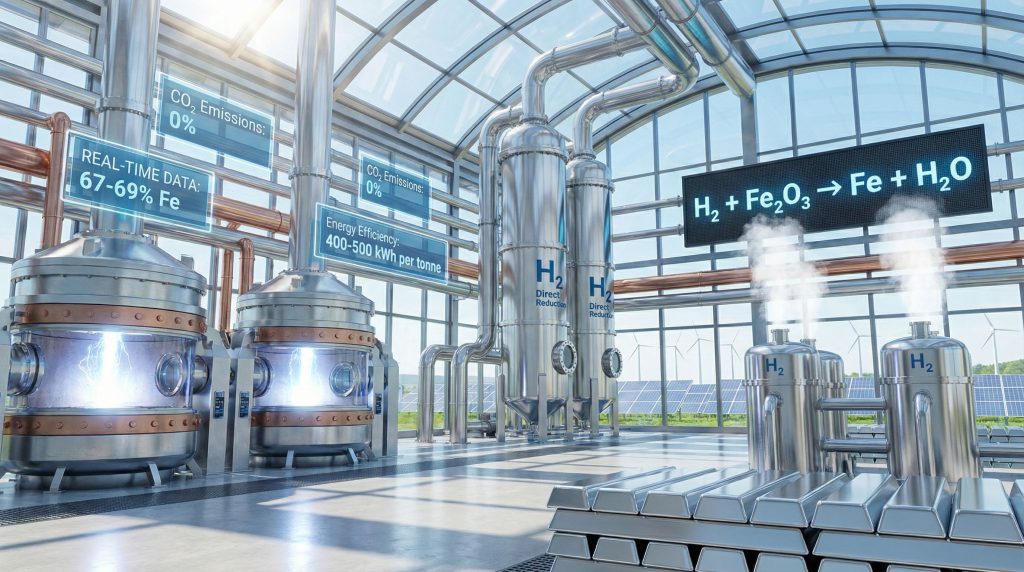
Hydrogen reduction replaces this reaction entirely: 3H₂ + Fe₂O₃ → 2Fe + 3H₂O. The sole byproduct is water vapour, eliminating carbon emissions when hydrogen originates from renewable electricity-powered electrolysis. Consequently, this process demonstrates how green iron project sustainability can be achieved at commercial scale.
Technical Requirements and Process Optimisation
Green hydrogen production via electrolysis requires 50-60 kWh per kilogram of hydrogen produced, with each tonne of direct reduced iron consuming approximately 60-80 kg of hydrogen. Commercial direct reduction facilities operate at 600-800°C to achieve economically viable reduction rates while maintaining equipment durability.
Current global green hydrogen production capacity stands at approximately 0.5-0.6 million tonnes annually, with projections reaching 10-15 million tonnes by 2030. However, achieving 15-25% green steel production globally by 2030 would require 15-25 million tonnes of green hydrogen annually, highlighting capacity constraints as the primary scaling bottleneck.
Commercial Deployment Examples
Several large-scale hydrogen-based steel projects demonstrate commercial viability:
HYBRIT Project (Sweden): A joint venture between SSAB, LKAB, and Vattenfall targeting commercial demonstration by 2026, leveraging abundant hydroelectric power in Norrbotten province.
H2 Green Steel Initiative (Sweden): Partnership targeting 5 million tonnes annual capacity by 2030 in Boden, representing one of the largest planned hydrogen steel facilities globally.
voestalpine Direct Reduction (Austria): Transitioning existing natural gas-based reduction to hydrogen feedstock, with pilot operations at Donawitz and commercial scale-up planned for 2027-2028.
Premium Iron Ore's Critical Role in Green Steel Economics
Direct reduction quality iron ore represents a critical input for hydrogen-based steelmaking due to the process's sensitivity to ore impurities. Higher-grade concentrates reduce energy consumption, improve reduction efficiency, and minimise waste byproduct generation, directly impacting production economics and environmental performance. In addition, these trends align with broader iron ore price trends affecting global markets.
DR-grade iron ore specifications require significantly higher purity levels than standard blast furnace feedstock:
| Parameter | DR-Grade Requirements | Standard Ore |
|---|---|---|
| Iron Content | 67-69% Fe | 58-62% Fe |
| Silica Content | <4% | 5-8% |
| Alumina Content | <2% | 2-4% |
| Phosphorus | <0.05% | <0.1% |
Economic Impact of Ore Quality
Silica and alumina impurities form slag phases that consume hydrogen without producing metallic iron, reducing process efficiency. Each 1% increase in silica content increases hydrogen consumption by approximately 2-3% per tonne of direct reduced iron produced, directly impacting production costs.
DR-grade iron ore commands 15-30% price premiums over standard grades, with recent pricing data showing premiums of $25-35 per tonne above spot iron ore prices. This premium pricing reflects both material scarcity and critical importance for green steel operations.
Supply-Demand Dynamics
Current global DR-grade production capacity reaches 80-120 million tonnes annually, while projected demand could reach 200-300 million tonnes by 2030. This supply-demand imbalance creates substantial opportunities for mining companies capable of producing high-purity concentrates.
Champion Iron's Direct Reduction Pellet Feed project at Bloom Lake exemplifies strategic positioning for this market shift. The facility will upgrade capacity to produce 69% Fe pellets, with first commercial shipments expected mid-2026. This positions the company to capture emerging premiums as steelmakers globally accelerate hydrogen-reduction projects.
The completion of Champion's seven-year investment cycle in 2026 enables transition from capital-intensive operations to cash generation. This transition directly correlates with value creation opportunities for DR-grade producers.
Electric Arc Furnace Technologies Enabling Scalable Production
Electric arc furnace technology represents the most commercially deployable green steel pathway currently available. These systems offer immediate emission reductions when powered by renewable electricity. EAF systems can process both recycled scrap metal and direct reduced iron, providing operational flexibility based on material availability and market conditions.
Modern EAF systems consume 400-500 kWh per tonne of steel, representing approximately 60-65% energy intensity reduction compared to integrated blast furnace operations requiring 20-25 GJ per tonne. When powered by renewable electricity, EAF production achieves 60-95% CO₂ emission reductions compared to traditional steelmaking.
Operational Advantages and Flexibility
Rapid Startup Capability: Unlike blast furnaces requiring continuous operation, EAF systems can start and stop based on renewable energy availability, optimising clean electricity utilisation patterns.
Feedstock Adaptability: EAF operations accommodate varying ratios of scrap steel and direct reduced iron, providing operational flexibility as material markets evolve.
Grid Integration Benefits: EAF facilities can provide demand response services to electrical grids. This capability supports renewable energy hubs in Australia while generating additional revenue streams.
Global Capacity and Expansion Trends
Current global EAF production capacity exceeds 500 million tonnes annually, with Asia-Pacific representing approximately 40% of global EAF steel production. Industry projections suggest EAF capacity could expand to 800-1,000 million tonnes annually by 2030 if renewable electricity availability increases as anticipated.
The World Steel Association characterises EAF expansion as the most rapidly scalable near-term decarbonisation pathway. However, scrap steel availability constraints and grid decarbonisation speed represent limiting factors for total market share potential.
Economic Drivers Supporting Green Steel Commercialisation
Green steel economics depend primarily on electricity costs, carbon pricing mechanisms, and premium pricing from environmentally conscious customers. Current analysis suggests hydrogen-based production becomes competitive at electricity prices of $15-20 per MWh, levels already achieved by leading renewable projects in regions with exceptional wind and solar resources.
Electricity represents 40-50% of green steel production costs, making renewable energy pricing the primary economic determinant for project viability. This cost structure creates geographic advantages for regions with abundant renewable resources and supportive policy frameworks.
Carbon Pricing Integration
Carbon pricing systems increasingly favour green steel producers through multiple mechanisms:
• Direct carbon credits for avoided emissions relative to conventional production
• Regulatory compliance advantages in carbon-constrained markets
• Customer willingness to pay premiums for low-carbon steel products in automotive and construction sectors
• Export competitiveness in markets implementing carbon border adjustments
The European Union's Carbon Border Adjustment Mechanism creates additional economic incentives for clean steel production. This particularly benefits producers serving European markets with low-carbon materials.
Investment Requirements and Returns
Global estimated capital expenditure for green steel infrastructure reaches $200-300 billion through 2030. This represents one of the largest industrial transformation investments in modern history. This capital intensity creates both challenges and opportunities across the steel value chain.
Companies producing high-grade iron ore concentrates benefit from premium pricing and preferential customer relationships with green steel producers. This creates value without requiring direct steel manufacturing investments.
Regional Development Patterns and Market Adaptation
Green steel production development varies significantly by region based on renewable energy availability, regulatory frameworks, existing industrial infrastructure, and local steel demand patterns. European initiatives emphasise hydrogen integration, while Asia-Pacific markets focus on electric arc furnace optimisation and scrap utilisation. Furthermore, this aligns with broader mining industry evolution across global markets.
European Hydrogen-Based Leadership
European green steel projects benefit from abundant renewable electricity generation, supportive regulatory frameworks, and proximity to environmentally conscious end markets. Sweden's industrial transformation exemplifies this approach, with multiple large-scale projects leveraging hydroelectric and wind resources.
The HYBRIT initiative demonstrates integrated hydrogen production and steel manufacturing, targeting 7 million tonnes of annual CO₂ elimination. This scale represents meaningful impact on regional industrial emissions while establishing technological precedents for global adoption.
Asia-Pacific EAF Expansion
Asia-Pacific markets emphasise electric arc furnace capacity expansion, leveraging existing scrap metal availability and growing renewable electricity generation. This approach provides faster deployment timelines compared to greenfield hydrogen projects while achieving substantial emission reductions.
Regional advantages include established steel market infrastructure, abundant scrap availability, and rapidly declining renewable electricity costs in markets like India, Australia, and Southeast Asia. In addition, Australia's green metals leadership position provides competitive advantages in this transformation.
The next major ASX story will hit our subscribers first
Infrastructure Requirements for Manufacturing Scale
Green steel production demands substantial infrastructure investments across renewable electricity generation, hydrogen production facilities, and specialised metallurgical equipment. These capital requirements represent both deployment challenges and industrial development opportunities.
Renewable Energy Integration
Green steel facilities require dedicated renewable energy capacity of 2-3 MW per annual tonne of production capacity. Large-scale facilities targeting 1-5 million tonnes annually necessitate 2,000-15,000 MW of renewable generation or equivalent grid connections.
Energy storage systems ensure consistent power supply during variable renewable generation periods. Battery storage or alternative technologies are becoming essential for operational reliability.
Hydrogen Production Co-location
Electrolysis facilities must be co-located or connected via pipeline to steel production sites. This minimises hydrogen transport costs and infrastructure requirements. Large-scale projects require 50-100 MW electrolysis capacity per million tonnes of annual steel production.
This co-location requirement creates opportunities for integrated energy-steel complexes. These complexes optimise both renewable electricity utilisation and green steel economics through operational synergies.
Investment Opportunities Across the Value Chain
The global green steel transition creates investment opportunities across multiple sectors. These include mining companies producing DR-grade iron ore, renewable energy developers, hydrogen technology providers, and steel manufacturers implementing clean production methods.
Mining Sector Value Creation
Companies capable of consistently delivering 67%+ iron content products experience preferential customer relationships with green steel producers and significant premium pricing opportunities. This trend particularly advantages operations with geological characteristics enabling high-purity concentrate production.
Vale's position as the world's largest producer of high-purity iron ore pellets demonstrates the scale advantages available to well-positioned mining operations. They produce up to 40 million tonnes annually, showcasing the potential for established operators.
Technology Provider Growth Potential
Specialised equipment manufacturers for hydrogen production, electric arc furnaces, and direct reduction systems experience accelerated demand. This occurs as the industry transitions toward clean production methods. This includes electrolysis technology providers, advanced metallurgical equipment manufacturers, and renewable energy developers.
Equipment manufacturing capacity constraints create project development delays and cost pressures. However, they also represent substantial business opportunities for companies capable of scaling production capabilities.
Scaling Challenges and Implementation Barriers
Despite technological viability, green steel production faces scaling challenges including hydrogen availability, equipment manufacturing bottlenecks, and financing requirements for capital-intensive projects. These constraints currently limit deployment speed and geographic distribution of green steel initiatives.
Hydrogen Supply Infrastructure Limitations
Green hydrogen production currently lacks the scale required for widespread steel industry adoption. Global production capacity requires 10-20x expansion to meet projected demand. This bottleneck represents the single largest constraint on green steel scaling timelines.
Infrastructure development for hydrogen storage, transport, and distribution adds complexity and capital requirements. These extend beyond steel manufacturing facilities themselves.
Equipment Manufacturing Capacity
Specialised direct reduction and electrolysis equipment face manufacturing capacity constraints. This creates project development delays and cost pressures across the industry. Equipment lead times of 2-4 years for major components slow project deployment and limit near-term scaling potential.
Financial Structure Requirements
Capital-intensive green steel projects require innovative financing structures. These combine development finance, commercial lending, and carbon market revenues. Project financing complexity increases due to technology risks, commodity price exposure, and long-term power purchase agreements.
Global Market Transformation Projections Through 2030
Industry projections suggest green steel production could represent 15-25% of global production by 2030. This transformation is driven by regulatory requirements, customer demand, and improving economic competitiveness. This transition will reshape steel industry competitive dynamics and supply chain relationships across multiple regions.
Regional adoption patterns reflect varying policy support, renewable energy availability, and market conditions:
| Region | 2025 Green Steel Share | 2030 Projected Share |
|---|---|---|
| Europe | 8-12% | 25-35% |
| North America | 5-8% | 18-25% |
| Asia-Pacific | 3-5% | 12-18% |
| Global Average | 5-7% | 15-25% |
Competitive Landscape Evolution
Early adopters of green steel technology capture market share advantages through regulatory compliance, customer preference, and operational cost benefits. This occurs as carbon pricing mechanisms expand globally. Companies investing in clean production technology gain preferential access to environmentally conscious customers and carbon-constrained markets.
The transformation creates opportunities for new market entrants while challenging traditional integrated steel producers. These companies must adapt existing infrastructure or risk competitive disadvantage.
Supply Chain Restructuring
Green steel adoption drives supply chain restructuring toward high-grade raw materials, renewable energy integration, and specialised equipment suppliers. Mining companies capable of producing DR-grade iron ore experience enhanced customer relationships and premium pricing sustainability.
This restructuring extends beyond materials to include shipping, logistics, and end-market applications. Low-carbon steel commands premium pricing in automotive, construction, and manufacturing sectors.
Risk Assessment and Market Uncertainties
Green steel production involves multiple risk factors including renewable energy price volatility, hydrogen supply chain development, carbon pricing policy changes, and customer adoption rates. These uncertainties require careful evaluation for investment and operational planning purposes.
Technology Risk: While hydrogen reduction chemistry is proven, commercial-scale operations involve equipment reliability, maintenance requirements, and operational optimisation challenges.
Market Risk: Steel demand patterns, commodity pricing cycles, and competitive dynamics could impact green steel economics and adoption timelines.
Regulatory Risk: Changes in carbon pricing, environmental regulations, or trade policies could alter green steel competitive positioning and investment returns.
Financing Risk: Capital-intensive projects face interest rate sensitivity, currency exposure, and long-term revenue visibility challenges.
Disclaimer: This analysis involves forecasts, market projections, and technological assessments that are subject to significant uncertainties. Investment decisions should consider multiple risk factors, regulatory changes, and market volatility. Past performance and current projections do not guarantee future results. Readers should consult qualified professionals before making investment decisions based on this analysis.
Ready to Capitalise on the Green Steel Transformation?
Discovery Alert provides instant notifications on significant ASX mineral discoveries, including premium iron ore opportunities essential for green steel production, powered by its proprietary Discovery IQ model. Understand why major mineral discoveries can lead to substantial returns by exploring historic examples of exceptional outcomes, and begin your 14-day free trial today to position yourself ahead of this transformative market shift.