June 19, 2026
Global supply chains for critical minerals face unprecedented vulnerability as geopolitical tensions intersect with accelerating energy transition demands. While most analysis focuses on immediate market disruptions, the strategic implications of Arctic mineral provinces represent a fundamental shift in resource geography that could reshape international economic relationships over the next two decades. Understanding these emerging dynamics requires examining not just geological endowments, but the complex interplay of infrastructure constraints, regulatory frameworks, and strategic competition that will ultimately determine which Arctic resources reach global markets.
How Significant Are Greenland Mineral Resources for Global Supply Chains?
Arctic Geological Foundation: Earth's Last Mineral Frontier
Greenland mineral resources encompass one of the planet's most geologically diverse and underexplored territories, spanning approximately 2.166 million square kilometers of largely ice-covered terrain. The island's Precambrian shield formations contain documented occurrences of at least 25 different mineral commodities, with systematic exploration covering less than 30% of ice-free areas due to challenging terrain and infrastructure limitations.
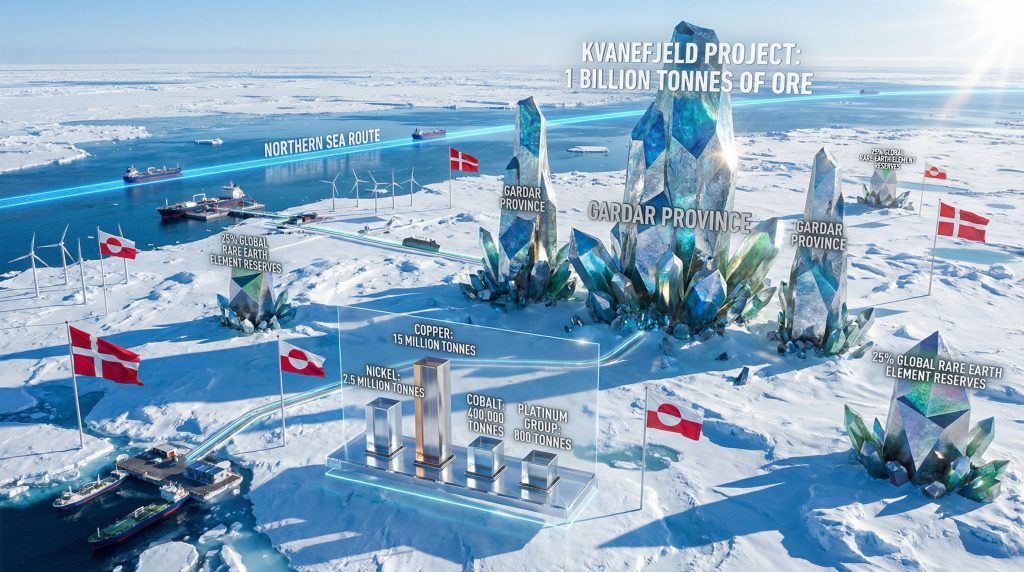
The geological architecture underlying these resources formed through billions of years of complex tectonic processes. The Gardar Province in South Greenland contains rare earth element concentrations within Mesoproterozoic alkaline intrusions dating approximately 1.3 to 1.1 billion years. These formations include the Ilímaussaq complex, which hosts an estimated 11 million tonnes of rare earth oxides within unique agpaitic nepheline syenite formations characterized by exceptionally high sodium content and distinctive mineralogy.
Resource Concentration and Global Context
The strategic significance of Greenland mineral resources becomes apparent when examining global supply chain risks. China currently dominates rare earth element production, controlling approximately 70% of global mine production and 90% of processing capacity as of 2024. This concentration creates systemic risks for industries dependent on these materials, particularly renewable energy technologies, electric vehicles, and defense applications.
Furthermore, Greenland's critical minerals offer distinct advantages over current supply sources:
- Heavy rare earth concentration: Unlike Chinese ion-adsorption deposits that favor light rare earth elements, Greenland's hard rock formations contain significant concentrations of dysprosium, terbium, and yttrium
- Integrated processing potential: Geographic proximity to European and North American markets could reduce supply chain complexity
- Geological diversity: Multiple deposit types across different geological provinces provide potential for diversified production profiles
Critical Mineral Inventory Assessment
The breadth of Greenland mineral resources extends beyond rare earth elements to encompass numerous commodities essential for modern industrial applications:
| Commodity Category | Key Deposits | Strategic Significance |
|---|---|---|
| Rare Earth Elements | Kvanefjeld, Tanbreez, Kringlerne | Essential for permanent magnets, catalysts |
| Battery Metals | Disko-Nuussuaq formations | Nickel, copper, cobalt for energy storage |
| Industrial Minerals | Qaqortorsuaq anorthosite | High-purity applications, ceramics |
| Precious Metals | Nalunaq, Isua formations | Historical production, exploration potential |
The Disko-Nuussuaq region specifically contains mafic and ultramafic intrusions with documented nickel-copper sulfide mineralization. Recent exploration by international mining companies has identified substantial resources within these formations, including an estimated 2.5 billion tonnes at 0.3% nickel equivalent across multiple target areas.
When big ASX news breaks, our subscribers know first
What Makes Greenland's Critical Minerals Strategically Important?
Energy Transition Demand Drivers
Global demand trajectories for critical minerals create compelling strategic imperatives for supply chain diversification. The International Energy Agency projects that rare earth element demand could increase by three to seven times by 2040 under stated climate policy scenarios, with substantially higher growth under net-zero pathways. Specifically, neodymium-praseodymium demand for permanent magnets is projected to grow from approximately 30,000 tonnes in 2020 to potentially 150,000 tonnes by 2040.
This demand acceleration stems from the fundamental role these materials play in energy transition technologies. Direct-drive wind turbines require 200-600 kilograms of rare earth permanent magnets per megawatt of capacity, while electric vehicle traction motors depend on high-performance permanent magnets that maintain efficiency across wide temperature ranges. The European Union's Critical Raw Materials Act, adopted in 2023, identifies 34 critical raw materials essential for economic security, with Greenland's known deposits containing at least 17 of these designated materials.
Supply Chain Vulnerability Mitigation
Recent supply chain disruptions have demonstrated the strategic risks of concentrated production. The 2010 Chinese rare earth export restrictions triggered price increases of 500-1,000% within months for certain elements, highlighting the economic and security implications of supply concentration. Similarly, vulnerabilities exist across multiple critical mineral categories, with China controlling 65% of global natural graphite production and 100% of spherical graphite processing capacity essential for lithium-ion battery anodes.
In addition, exploring critical minerals energy security reveals how Greenland mineral resources offer potential mitigation for these concentration risks through:
Geographic Diversification:
- Western hemisphere production capabilities
- Reduced geopolitical transit risks
- Allied nation supply chain integration
Technical Advantages:
- Heavy rare earth element concentrations commanding premium pricing
- Co-product opportunities reducing extraction costs
- Processing technology development potential
Defense and Security Applications
Critical mineral dependencies extend deeply into defense and security applications, creating national security implications beyond commercial considerations. The US Government Accountability Office identifies rare earth permanent magnets among the most critical materials for defense applications, including precision-guided munitions, jet engines, satellite systems, and electronic warfare equipment.
The strategic importance of secure critical mineral supplies has prompted policy responses across Western nations. The US Defense Production Act has been invoked to support critical mineral projects, while the CHIPS and Science Act includes provisions supporting domestic and allied nation critical mineral development. These policy frameworks create institutional support structures that could accelerate Greenland mineral resources development under appropriate economic conditions.
Why Haven't These Resources Been Developed at Scale?
Infrastructure Deficit Analysis
The fundamental constraint limiting Greenland mineral resources development remains the territory's severe infrastructure deficit. Greenland has no road connections between communities, with all inter-town transport relying on air travel, marine services, or helicopter operations. The territory's longest road extends only 60 kilometers, creating logistical challenges that significantly exceed those faced by mining operations in other remote locations.
Port infrastructure capabilities present equally significant constraints. While Nuuk maintains port facilities, these require channel dredging for large vessels. The Narsaq port in South Greenland, strategically positioned near several major rare earth deposits, requires substantial upgrades to support mining-related cargo operations. Only three deep-water ports across Greenland's extensive coastline possess the capability to handle bulk mineral exports without major infrastructure investment.
Economic Viability Thresholds
Development costs for mining projects in Greenland typically exceed comparable operations by 150-300% due to infrastructure requirements, climate challenges, and logistical complexities. These cost multipliers affect every aspect of project development:
Labor Cost Premiums:
- Average wages comparable to Scandinavian levels
- 200-300% higher than major mining jurisdictions
- Limited local skilled workforce requiring expatriate specialists
Infrastructure Investment Requirements:
- Power generation: 50-200 megawatts required for processing facilities
- Current capacity: 380 megawatts total across entire territory
- Transportation: Complete absence of connecting infrastructure between deposit areas
Climate-Related Challenges:
- Mean annual temperatures: -1°C to -20°C across regions
- Permafrost affects 85% of ice-free land areas
- Operational seasons limited to 4-6 months in many regions
Regulatory Complexity Framework
Greenland's regulatory environment for mining reflects the territory's unique political status and environmental priorities. The Bureau of Minerals and Petroleum requires extensive baseline environmental studies and multi-year monitoring programs prior to mining approval. These requirements, while ensuring environmental protection, extend project development timelines and increase capital requirements.
The 2021 implementation of Greenland's zero-tolerance uranium policy creates additional constraints for certain deposits. This policy effectively prohibits development of deposits containing uranium above specific threshold concentrations, impacting several large rare earth projects that contain uranium as a byproduct element. The Kvanefjeld deposit, despite containing substantial rare earth resources, faces regulatory challenges due to its uranium content.
Historical Development Precedents
Previous mining operations in Greenland provide instructive examples of both possibilities and constraints. The Black Angel lead-zinc mine operated successfully from 1973 to 1990, producing approximately 10.6 million tonnes of ore despite extreme Arctic conditions. However, this operation required parent company technical expertise and financial resources substantially exceeding typical mining project parameters.
The Nalunaq gold mine operated from 2004 to 2013, processing approximately 325,000 tonnes of ore and producing about 25,000 ounces of gold. While demonstrating operational feasibility, the project ultimately faced economic challenges related to infrastructure costs and operational complexity in the Arctic environment.
How Do Geopolitical Factors Influence Resource Development?
Sovereignty and Strategic Competition Dynamics
Greenland's political status creates unique dynamics affecting mineral resource development. The territory maintains Home Rule Authority over mineral licensing decisions while Denmark retains control over foreign policy and defense matters. This arrangement creates potential for policy conflicts when mineral development intersects with broader geopolitical considerations.
Strategic competition among global powers has intensified focus on Arctic resources. The United States maintains missile defense installations in Greenland and views Arctic security as a priority concern. China has historically attempted to acquire Arctic mining assets as part of broader Belt and Road Initiative objectives, while the European Union prioritises critical mineral supply security through its Strategic Autonomy framework.
Revenue Sharing and Independence Pathways
Greenland's revenue-sharing arrangements with Denmark create economic incentives that could accelerate resource development. Under current agreements, 50% of mineral revenues above DKK 75 million annually remain with Greenland's government. This arrangement positions mineral wealth as a potential foundation for enhanced autonomy or eventual independence, creating political motivations beyond commercial considerations.
The intersection of economic and political objectives has generated support for mineral development across Greenland's political spectrum. However, this support must balance against environmental concerns and traditional subsistence practices that remain central to Greenlandic cultural identity.
International Investment Framework Considerations
Foreign direct investment in Greenland mineral projects operates within complex regulatory frameworks involving both Greenlandic and Danish approval processes. Large-scale investments may trigger additional scrutiny under European Union foreign direct investment screening mechanisms, particularly for investments from non-allied countries.
Recent policy developments have created additional frameworks supporting allied nation investments in critical mineral projects. These include:
- European Investment Bank green financing initiatives
- US Development Finance Corporation Arctic investment capabilities
- Canadian pension fund Arctic expertise and capital availability
- Nordic Investment Bank regional development priorities
What Are the Environmental and Social Constraints?
Climate Change Paradox Effects
Climate change creates paradoxical effects on Greenland mineral resource development. Rising temperatures and ice retreat expose previously inaccessible deposit areas while simultaneously creating new environmental challenges. Ice-free shipping seasons have extended in southern Greenland waters, potentially reducing transportation costs and operational constraints.
However, permafrost degradation complicates infrastructure development by reducing foundation stability and increasing landslide risks in coastal areas. Climate change also disrupts traditional hunting and fishing patterns that remain economically and culturally important for Greenlandic communities, creating additional consultation requirements for mining projects.
Community Consultation Frameworks
Greenlandic law mandates extensive community engagement for mining projects, reflecting the territory's emphasis on social licence and traditional knowledge integration. Requirements include:
Impact Benefit Agreements:
- Mandatory for all major projects
- Local employment quotas requiring minimum 50% Greenlandic workforce
- Traditional knowledge integration for environmental assessments
Indigenous Rights Protection:
- Hunting and fishing rights preservation
- Traditional territory access maintenance
- Cultural site protection requirements
Environmental Management Challenges
Arctic mining operations face unique environmental management challenges related to cold climate conditions and sensitive ecosystems. Tailings storage facility design must address freeze-thaw cycles that could compromise containment systems. Processing operations using hydrometallurgical methods require modified designs to prevent environmental releases in permafrost environments.
Rare earth element processing typically involves multi-stage acid leaching and solvent extraction processes that generate substantial volumes of process water and tailings. Cold climate conditions complicate water treatment and tailings management, requiring specialised technical approaches that increase operational costs while ensuring environmental protection.
Which Projects Are Most Likely to Advance?
Near-Term Development Candidates
Several Greenland mineral projects have advanced through exploration phases and obtained necessary regulatory approvals, positioning them for potential development within the current decade. These projects typically focus on specialty materials or high-value commodities that can justify Arctic operational costs.
Hudson Resources Anorthosite Operation
Currently producing approximately 30,000 tonnes annually of high-purity calcium feldspar from the Qaqortorsuaq quarry. The operation demonstrates successful small-scale mineral extraction in Greenland conditions by targeting specialty industrial applications. Expansion potential exists to increase production to 100,000+ tonnes annually for ceramic and glass industry applications.
Tanbreez Rare Earth Project
Advanced through feasibility studies with development timeline targeting 2027-2029 production startup. The project focuses on heavy rare earth elements with estimated annual production of 8,000 tonnes rare earth oxides. Required development investment approximates $400 million, supported by offtake agreements with European industrial consumers.
Medium-Term Development Prospects
KoBold Metals Disko-Nuussuaq Partnership
International partnership involving advanced artificial intelligence-based exploration techniques has identified substantial nickel-copper resources across multiple target areas. The partnership with Bluejay Mining has estimated resources of 2.5 billion tonnes at 0.3% nickel equivalent across the project area. Development timeline extends to 2030-2035 with estimated capital requirements of $2-3 billion.
Nalunaq Gold Restart Initiative
Historical gold production site with established infrastructure and proven reserves offers restart potential within 24-36 months of development decision. Previous operations produced approximately 25,000 ounces over nine years. Expansion potential exists to achieve 50,000+ ounces annually through underground development and processing optimisation.
Technology Integration Opportunities
Advanced mining industry innovation could accelerate Greenland project development by reducing operational costs and environmental impacts. Remote operation capabilities, autonomous equipment systems, and renewable energy integration offer potential solutions to traditional Arctic mining constraints.
Renewable energy development specifically presents opportunities to reduce operational costs while meeting environmental objectives. Greenland's substantial hydroelectric potential could support energy-intensive processing operations, while wind resources along coastal areas could supplement power generation. Current renewable capacity of approximately 270 megawatts provides foundation for expansion to support industrial operations.
The next major ASX story will hit our subscribers first
How Might Global Supply Chain Disruptions Accelerate Development?
Critical Mineral Security Scenarios
Supply chain vulnerability assessments indicate multiple scenarios under which Greenland mineral resources could achieve economic viability despite higher operational costs. These scenarios typically involve significant disruptions to current supply sources or substantial price increases driven by demand growth exceeding supply expansion.
Rare Earth Supply Disruption Scenario
Chinese export restrictions or domestic demand growth could trigger 200-300% price increases for rare earth elements, fundamentally altering project economics. At prices of $80-100 per kilogram of rare earth oxides, several Greenland projects achieve positive economic returns despite infrastructure constraints. Development timelines could accelerate to 3-5 years for advanced exploration projects with existing environmental approvals.
Arctic Shipping Route Development
Northern Sea Route expansion and year-round navigability could reduce shipping costs to European markets by 40-60%. This transportation cost reduction particularly benefits bulk commodity projects that currently face prohibitive logistics expenses. Combined with climate change effects extending shipping seasons, transportation constraints could diminish significantly over the next decade.
Strategic Stockpiling Initiatives
Government strategic stockpiling programmes could provide demand anchors supporting early-stage project development. The US National Defense Stockpile and European Union strategic reserves create potential offtake commitments that reduce marketing risks for new production sources.
Recent policy developments have expanded strategic stockpiling beyond defence applications to include economic security considerations. Critical mineral reserves for supply chain resilience could support production from higher-cost sources like Greenland when justified by supply security objectives.
Technology Cost Reduction Trajectories
Technological advances in Arctic operations could reduce development costs by 30-40% over the next decade. Autonomous equipment systems, remote operation capabilities, and advanced processing technologies specifically address cost drivers that currently limit Greenland project viability.
Renewable energy costs have declined substantially, making remote power generation more economically feasible. Combined with energy storage technologies, renewable systems could replace diesel generation that currently creates significant operational cost burdens for Arctic industrial operations.
What Investment Models Could Unlock Development?
Sovereign Wealth Fund Participation
Large-scale Greenland mineral development likely requires capital sources beyond traditional mining finance. Sovereign wealth funds with long-term investment horizons and strategic objectives present potential partnership opportunities for Arctic resource development.
Norway's Government Pension Fund maintains approximately $1.6 trillion in assets with documented interest in sustainable resource development. Potential commitments of $2-5 billion could support multiple Greenland projects while aligning with Norway's Arctic expertise and environmental standards.
Canadian Pension Plan Investment Board possesses extensive Arctic infrastructure experience through investments in northern Canada. Technical knowledge transfer and capital participation could accelerate Greenland project development timelines while reducing operational risks.
Development Finance Institution Integration
Multilateral development finance institutions have expanded mandates to include critical mineral supply chain development. These organisations provide risk mitigation capabilities and concessional financing that could bridge the economic gap for Greenland projects.
European Investment Bank alignment with Green Deal objectives creates institutional support for critical mineral projects that advance European supply security. Financing capabilities extend to €75+ billion annually with specific emphasis on strategic raw material projects.
Asian Infrastructure Investment Bank participation could provide access to $100+ billion in development capital, though geopolitical considerations may limit Chinese-backed funding for Greenland projects.
Risk Mitigation Structures
Political and commercial risk insurance mechanisms could attract private sector investment by addressing key concerns about Arctic operations. These structures include:
Multilateral Investment Guarantee Agency Coverage:
- Political risk insurance for regulatory changes
- Currency convertibility guarantees
- Expropriation protection mechanisms
Export Credit Agency Support:
- Equipment financing for harsh environment operations
- Working capital facilities for seasonal operations
- Performance bonding for infrastructure development
Long-term Offtake Agreements:
- Strategic buyer partnerships reducing marketing risks
- Price floor mechanisms protecting against market volatility
- Volume commitments supporting financing requirements
Future Outlook: Strategic Development Scenarios
Accelerated Development Pathway (2026-2035)
Under conditions of heightened geopolitical tensions and critical mineral supply disruptions, Greenland mineral resources could achieve rapid development through strategic government support and private sector investment acceleration. This scenario assumes 30-40% reduction in Arctic operating costs through technology advancement and infrastructure sharing agreements.
Production Targets:
- 5-7 major mines operational by 2035
- Annual production: 50,000 tonnes rare earth oxides
- 200,000 tonnes copper equivalent from multiple operations
- Strategic mineral self-sufficiency for allied nations
Investment Requirements:
- Total capital investment: $15-25 billion over decade
- Infrastructure development: $8-12 billion in shared facilities
- Technology development: $2-3 billion in Arctic-specific innovations
Gradual Development Scenario (2026-2040)
Environmental and social constraints moderate development pace while maintaining steady progress toward strategic mineral diversification. This pathway emphasises highest-grade, lowest-impact deposits with extensive community consultation and environmental protection measures.
Development Characteristics:
- 2-3 major projects advance through development phases annually
- Focus on premium products and specialty materials
- Integrated renewable energy systems for operations
- Annual production: 20,000 tonnes rare earth oxides, 100,000 tonnes copper equivalent
Limited Development Framework (2026-2050)
Infrastructure costs remain prohibitive for most projects while climate change creates additional operational challenges. Development focuses exclusively on specialty materials and high-value commodities with minimal environmental impact.
Constrained Parameters:
- Only premium-grade deposits achieve production
- Small-scale operations with minimal infrastructure requirements
- Annual production: 5,000 tonnes rare earth oxides, 25,000 tonnes specialty metals
- Technology demonstration projects for future expansion
Strategic Implications and Investment Considerations
Greenland mineral resources represent a strategic asset whose development trajectory will be determined by the intersection of geopolitical tensions, technology advancement, and environmental considerations. The territory's geological endowment provides substantial potential for supply chain diversification, but realising this potential requires addressing fundamental infrastructure constraints and operational challenges unique to Arctic environments.
Investment opportunities exist across multiple timeframes and risk profiles, from near-term specialty material projects to long-term strategic mineral development requiring substantial capital commitments. Consequently, key investment models will likely depend on innovative financing structures, government policy support, and technology solutions that address the unique challenges of Arctic resource development.
The enormous challenge of mining Greenland continues to increase as global supply chain vulnerabilities intersect with accelerating energy transition demands. Whether Greenland mineral resources achieve their strategic potential will ultimately depend on the ability to balance economic development with environmental protection and community interests in one of Earth's most challenging operational environments.
Disclaimer: This analysis is based on publicly available information and industry assessments current as of 2024. Mineral resource development involves substantial risks including regulatory changes, environmental challenges, and market volatility. Investment decisions should be based on comprehensive due diligence and professional advice. Future production estimates and development timelines are subject to significant uncertainty and may not be achieved as projected.
Ready to Capitalise on Arctic Mining Opportunities?
Greenland's mineral resources exemplify how geopolitical tensions and supply chain vulnerabilities can create exceptional investment opportunities in previously overlooked jurisdictions. Discovery Alert's proprietary Discovery IQ model delivers real-time alerts on significant ASX mineral discoveries, instantly identifying actionable opportunities as major projects advance from exploration through development phases, ensuring you position yourself strategically ahead of broader market recognition.