July 10, 2026
Strategic Mineral Reserves in a Changing Arctic
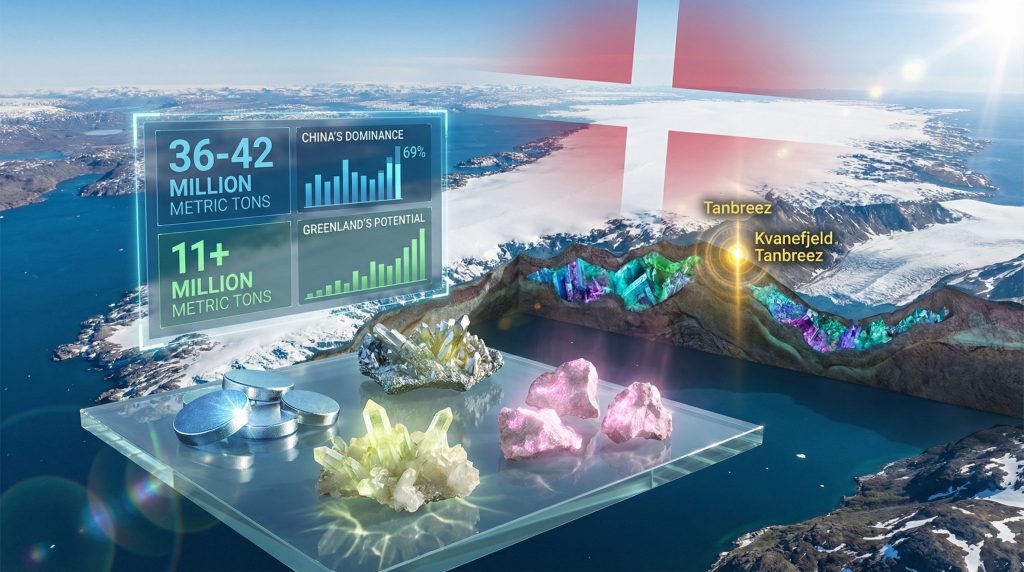
The global competition for critical minerals has intensified dramatically as nations seek to reduce dependence on concentrated supply chains. This competition has sparked renewed interest in previously marginal deposits located in remote regions, where harsh operating conditions historically made extraction economically unfeasible. The Arctic represents one such frontier, where climate change and geopolitical tensions are reshaping Greenland rare earths and geopolitical strategy.
Traditional mining economics relied heavily on accessible deposits with favourable processing characteristics. However, supply chain vulnerabilities exposed during recent global disruptions have forced strategic planners to reconsider projects that offer diversification benefits despite higher operational costs. This shift reflects a broader transformation in how governments and corporations evaluate mineral projects, weighing strategic security against pure economic returns.
When big ASX news breaks, our subscribers know first
Understanding Greenland's Critical Mineral Landscape
Geological Foundations and Resource Assessment
Greenland's mineral potential stems from its unique geological history, featuring ancient rock formations that concentrated rare earth elements through complex geological processes spanning millions of years. The island's geological structure contains multiple mineralisation zones, each presenting distinct characteristics that influence extraction strategies and economic viability.
The most significant deposits concentrate in specific geological formations where tectonic activity and volcanic processes created favourable conditions for rare earth accumulation. These formations exhibit varying mineral compositions, with some areas featuring higher concentrations of heavy rare earths that command premium pricing in global markets.
Key Geological Characteristics:
• Complex metamorphic rock formations hosting mineralisation
• Multiple deposit types requiring different extraction approaches
• Variable ore grade distributions across identified formations
• Co-occurrence of uranium and thorium presenting regulatory challenges
• Weathering patterns affecting mineral accessibility and processing requirements
Strategic Positioning Within Global Supply Networks
Greenland's geographical location creates unique strategic advantages for Western supply chains seeking alternatives to traditional sources. The Greenland critical minerals position within established security frameworks provides political stability that many other mineral-rich regions cannot guarantee.
However, this same Arctic location imposes operational constraints that significantly impact project economics. The combination of extreme weather conditions, limited infrastructure, and seasonal accessibility creates cost structures fundamentally different from temperate mining operations.
Operational Environment Factors:
| Challenge Category | Specific Impact | Seasonal Variation |
|---|---|---|
| Temperature extremes | Equipment winterisation requirements | High |
| Daylight availability | Work schedule limitations | Extreme |
| Weather windows | Transportation access | High |
| Energy costs | Power generation complexity | Medium |
| Workforce logistics | Personnel rotation needs | High |
Geopolitical Frameworks Driving Strategic Interest
Security Alliance Considerations and Access Rights
Greenland's integration within NATO's northern defence perimeter creates established frameworks for international cooperation that could facilitate strategic mineral development. Existing defence agreements already provide precedents for expanded collaboration between allied nations on critical infrastructure projects.
The island's strategic location for surveillance and communication systems adds another dimension to its value proposition. Military infrastructure requirements could potentially support dual-use development that benefits both security operations and civilian mineral extraction activities.
Current political rhetoric from U.S. officials reflects growing recognition of Greenland's strategic importance. Statements emphasising the island's resource potential indicate shifting policy priorities that view Arctic territories through the lens of long-term strategic competition rather than traditional territorial considerations, as analysed by security experts.
International Cooperation Mechanisms
The development of Greenlandic mineral resources requires coordination between multiple stakeholders, including the Danish government, Greenlandic authorities, and international partners. This multi-party dynamic creates both opportunities for collaborative development and potential sources of regulatory complexity.
Environmental considerations add another layer to international cooperation requirements. Arctic development projects face heightened scrutiny regarding climate impact and ecosystem protection, necessitating comprehensive environmental management frameworks that satisfy multiple jurisdictions.
Stakeholder Coordination Requirements:
• Danish constitutional authority over foreign affairs and security
• Greenlandic self-governance over natural resources and environmental regulation
• International partner investment and technology requirements
• Allied nation security and strategic supply considerations
• Environmental protection standards across multiple regulatory frameworks
Economic Viability Analysis
Cost Structure Challenges in Arctic Mining
Arctic mineral extraction faces fundamental cost disadvantages compared to operations in temperate regions. These cost premiums stem from multiple factors that compound throughout project lifecycles, creating economic barriers that traditional mining economics struggle to overcome.
The most significant cost drivers relate to logistics and infrastructure development. Remote locations require extensive transportation networks for both personnel and materials, while harsh weather conditions demand specialised equipment and operational procedures that increase both capital and operating expenses.
Furthermore, the implementation of AI in mining technology could help offset some operational challenges. However, the harsh Arctic environment presents unique obstacles that even advanced technologies must overcome.
Primary Cost Escalation Factors:
• Infrastructure Development: Roads, power generation, and processing facilities require Arctic-rated construction standards
• Equipment Specifications: Machinery must operate reliably in extreme cold conditions
• Supply Chain Complexity: Extended logistics chains increase transportation costs and inventory requirements
• Workforce Management: Higher labour costs due to rotation schedules and hazard premiums
• Environmental Compliance: Stringent environmental protection measures in sensitive ecosystems
Processing and Separation Challenges
The complexity of Greenlandic ore bodies presents significant challenges for mineral processing and separation. Many deposits contain complex mineral assemblages that require sophisticated separation techniques to produce marketable rare earth concentrates.
Uranium co-occurrence in several major deposits creates additional processing complications. The presence of radioactive materials requires specialised handling procedures and regulatory compliance measures that increase operational complexity and costs. Local political opposition to uranium extraction further complicates project development scenarios.
The economic reality of Arctic rare earth development extends far beyond simple extraction costs to encompass the entire value chain from ore processing to final product delivery.
Processing infrastructure requirements for Greenlandic projects differ substantially from conventional rare earth operations. The need for uranium separation capabilities, combined with the remote location and harsh operating environment, creates unique technical and economic challenges.
Global Supply Chain Integration Challenges
Downstream Processing Bottlenecks
Successful mineral extraction represents only the initial stage of rare earth supply chain development. The concentration of advanced processing capabilities in specific geographical regions creates bottlenecks that limit the strategic value of new mining operations regardless of their geological potential.
Current global processing capacity remains heavily concentrated in regions where established industrial infrastructure and technical expertise support complex separation and refining operations. This concentration creates dependencies that persist even when raw material sources diversify.
The development of integrated processing capabilities requires substantial capital investment and specialised technical knowledge that few organisations possess. These barriers to entry maintain existing supply chain configurations despite growing political pressure for diversification.
Critical Processing Capabilities:
| Process Stage | Technical Complexity | Current Concentration |
|---|---|---|
| Ore beneficiation | Medium | Distributed globally |
| Chemical separation | High | Limited to few regions |
| Metal production | High | Highly concentrated |
| Alloy manufacturing | Medium | Moderate concentration |
| Magnet production | Very High | Extremely concentrated |
Technology Transfer and Industrial Development
The establishment of new rare earth processing capabilities requires access to proprietary technologies and specialised knowledge that remain closely guarded by current industry leaders. Technology transfer agreements and joint venture structures offer potential pathways for capability development but require careful negotiation and long-term commitment.
Industrial development in remote Arctic locations faces additional challenges related to workforce training and technology adaptation. The combination of harsh operating conditions and sophisticated processing requirements demands highly specialised technical expertise that may be difficult to attract and retain in remote locations.
Alternative Development Scenarios
Selective High-Value Production Strategy
Rather than pursuing comprehensive rare earth production across all element categories, Greenlandic projects could focus on specific high-value materials where premium pricing justifies higher production costs. This selective approach could prioritise heavy rare earth elements that command significantly higher prices than light rare earth materials.
Heavy rare earth elements face more constrained global supply chains and higher price volatility, creating market conditions where Arctic production costs might be economically justified. The strategic importance of these materials for advanced technology applications also provides potential for government support or guaranteed purchase agreements.
Moreover, the uranium market volatility associated with some Greenlandic deposits adds another layer of complexity to project planning.
High-Value Target Elements:
• Dysprosium: Critical for high-performance permanent magnets
• Terbium: Essential for advanced electronics and green energy applications
• Europium: Required for specialised lighting and display technologies
• Yttrium: Important for various high-technology applications
• Scandium: Emerging applications in aerospace and advanced materials
Strategic Reserve Development Approach
Greenland's mineral resources could serve strategic reserve functions rather than immediate commercial production. This approach emphasises resource definition, infrastructure planning, and capability development while maintaining optionality for future activation when market conditions or geopolitical circumstances warrant increased production.
Strategic reserve development allows for gradual capability building without immediate pressure for commercial returns. This patient capital approach could support technology development, workforce training, and infrastructure construction over extended timeframes while preserving strategic optionality.
The reserve approach also provides flexibility to respond to future supply chain disruptions or geopolitical developments that might dramatically alter the strategic value of alternative production sources. This optionality has inherent value in uncertain geopolitical environments.
Integrated Arctic Development Framework
A comprehensive approach to Arctic development could link mineral extraction with broader infrastructure projects that improve overall project economics through cost sharing and multiple revenue streams. This integration could include renewable energy development, transportation infrastructure, and communication systems that serve multiple purposes.
Regional development frameworks could coordinate activities across multiple projects and countries to achieve economies of scale impossible for individual operations. Such coordination requires unprecedented international cooperation but could transform the economics of Arctic resource development.
Integrated Development Components:
• Renewable Energy Infrastructure: Wind and hydroelectric projects supporting multiple operations
• Transportation Networks: Road and port facilities serving regional development needs
• Communication Systems: Advanced telecommunications supporting remote operations
• Research Facilities: Technical centres supporting multiple mining and processing operations
• Workforce Development: Training programmes serving regional industry requirements
The next major ASX story will hit our subscribers first
Risk Assessment and Mitigation Strategies
Environmental and Regulatory Risk Factors
Arctic mineral development operates under intense environmental scrutiny due to ecosystem sensitivity and climate change concerns. Project approval processes require comprehensive environmental impact assessments and long-term monitoring commitments that add complexity and cost to development timelines.
Regulatory frameworks for Arctic mining continue evolving as governments balance resource development objectives with environmental protection mandates. This regulatory uncertainty creates planning challenges for long-term capital investments requiring decades to generate returns.
Additionally, advances in mine reclamation innovation could help address environmental concerns by demonstrating improved restoration techniques for Arctic conditions.
Local opposition to uranium extraction presents a persistent political challenge for projects where radioactive materials co-occur with rare earth minerals. This opposition reflects broader concerns about environmental impact and long-term contamination risks that resonate strongly with Arctic communities.
Environmental Risk Mitigation Approaches:
• Advanced waste management systems minimising environmental impact
• Continuous monitoring and reporting protocols exceeding regulatory requirements
• Community engagement and benefit-sharing agreements building local support
• Technology development focused on environmental impact reduction
• Restoration and remediation planning integrated into project design
Market and Financial Risk Management
Rare earth markets demonstrate significant price volatility driven by both demand fluctuations and supply chain disruptions. This volatility creates challenges for project financing and long-term economic planning, particularly for high-capital projects requiring extended development periods.
Currency risk adds another dimension to international mineral development projects. Arctic operations involving multiple countries and currencies face exchange rate exposures that can significantly impact project economics over multi-decade operational periods.
Financial risk mitigation requires sophisticated hedging strategies and diverse funding sources. Government support through grants, loan guarantees, or strategic partnerships can reduce private sector risk exposure while advancing national strategic objectives.
Financial Risk Management Tools:
| Risk Category | Mitigation Strategy | Implementation Timeline |
|---|---|---|
| Price volatility | Long-term offtake agreements | Development phase |
| Currency fluctuation | Multi-currency hedging programmes | Operational phase |
| Capital cost overruns | Staged development approaches | Throughout project |
| Technology risk | Joint venture partnerships | Development phase |
| Regulatory changes | Government partnership agreements | Planning phase |
Technology Development and Innovation Opportunities
Arctic Mining Technology Advancement
The unique challenges of Arctic mineral extraction drive innovation in mining technologies and operational procedures. These technological developments could have broader applications for other remote or challenging mining environments worldwide.
Automation and remote operation technologies become particularly important in Arctic conditions where human presence must be minimised during extreme weather periods. Advanced robotics and artificial intelligence applications could enable year-round operations despite seasonal access limitations.
Energy efficiency improvements offer multiple benefits for Arctic operations, including cost reduction and environmental impact minimisation. Renewable energy integration and advanced energy storage systems could provide sustainable power solutions for remote mining operations.
Innovation Focus Areas:
• Cold-weather equipment design: Machinery optimised for extreme temperature operation
• Remote operation systems: Advanced automation reducing personnel requirements
• Environmental monitoring technology: Real-time ecosystem impact assessment
• Sustainable energy systems: Renewable power generation for remote locations
• Advanced processing techniques: Improved separation and purification methods
Digital Infrastructure and Connectivity
Modern mining operations rely increasingly on digital technologies for optimisation and monitoring. Arctic locations require specialised communication infrastructure capable of reliable operation in extreme conditions while providing sufficient bandwidth for advanced operational systems.
Satellite communication systems and terrestrial networks must integrate to provide redundant connectivity supporting both operational requirements and regulatory reporting obligations. The development of Arctic communication infrastructure could support multiple industries beyond mineral extraction.
Data management and analysis capabilities become particularly important for optimising operations in challenging environments where traditional approaches may prove inadequate. Advanced analytics and machine learning applications could identify operational efficiencies impossible to achieve through conventional methods.
Long-Term Strategic Implications
Climate Change Impact on Arctic Accessibility
Climate change effects on Arctic regions present both opportunities and challenges for mineral development. Longer ice-free seasons could extend operational windows and reduce some transportation constraints, while changing weather patterns might create new operational challenges.
Infrastructure development must account for changing permafrost conditions and altered precipitation patterns that could affect long-term operational stability. These environmental changes require adaptive planning approaches that can accommodate evolving conditions over project lifecycles.
The intersection of climate change and resource development creates complex policy considerations for governments seeking to balance economic opportunities with environmental responsibilities. These considerations will likely influence regulatory frameworks and public acceptance of Arctic development projects.
Technological Evolution and Competitive Dynamics
Advancing technology could fundamentally alter the competitive landscape for rare earth production, potentially reducing the cost advantages of current dominant producers or creating new substitution possibilities that reduce overall demand.
Alternative technology pathways, including recycling improvements and substitute material development, could impact long-term demand projections for rare earth elements. These technological developments create uncertainty for long-term investment planning in new production capacity.
The pace of technological change in both mining and end-use applications requires flexible development strategies that can adapt to evolving market conditions. This flexibility argues for staged development approaches that preserve optionality while minimising early-stage capital exposure.
Technology Evolution Factors:
• Mining efficiency improvements: Enhanced extraction and processing techniques
• Substitute material development: Alternative materials reducing rare earth demand
• Recycling technology advancement: Improved recovery from end-of-life products
• End-use efficiency gains: Reduced material requirements in applications
• New application development: Emerging uses creating additional demand
Strategic Framework for Decision-Making
Balancing Strategic Value with Economic Reality
The evaluation of Greenlandic rare earth potential requires frameworks that integrate traditional mining economics with broader strategic considerations. This integration challenges conventional project evaluation methodologies that focus primarily on financial returns.
Strategic value creation through supply chain diversification and security enhancement may justify economic returns below traditional mining project thresholds. However, this strategic premium has limits, and projects must demonstrate credible pathways to economic viability even under optimistic scenarios.
Government support and international cooperation could provide mechanisms for sharing costs and risks while advancing collective strategic objectives. These arrangements require careful structuring to ensure equitable risk and benefit distribution among participating stakeholders.
Implementation Pathways and Timeline Considerations
Successful development of Greenlandic rare earth resources requires patient capital and long-term commitment extending beyond typical political and business planning horizons. This extended timeline creates challenges for maintaining political support and investor interest throughout development phases.
Staged development approaches offer potential solutions by demonstrating progress and building capabilities incrementally while preserving optionality for scaling operations based on evolving market conditions and strategic requirements.
International coordination mechanisms must account for changing political priorities and leadership transitions in multiple countries. Institutional frameworks that transcend individual political cycles will be essential for maintaining long-term development momentum.
Furthermore, the broader context of critical minerals energy security adds urgency to developing alternative supply sources. Recent analysis of Greenland's strategic significance in the global rare earth race highlights the increasing geopolitical importance of these resources.
Strategic Assessment and Future Outlook
The integration of Greenland rare earths and geopolitical strategy requires sophisticated understanding of both geological realities and strategic imperatives. Success demands patient capital, technological innovation, international cooperation, and realistic assessment of both opportunities and constraints.
Rather than viewing Greenlandic mineral development as either immediate panacea or irrelevant distraction, strategic planners must recognise it as long-term optionality requiring careful cultivation. This approach preserves strategic flexibility while avoiding premature commitments to economically marginal projects.
The convergence of climate change, technological advancement, and geopolitical competition creates a unique window of opportunity for Arctic resource development. However, this window requires careful navigation of environmental sensitivities, economic constraints, and political complexities that extend far beyond traditional mining considerations.
Ultimately, the development of Greenland rare earths and geopolitical strategy represents a test of international cooperation in addressing shared strategic challenges. The success or failure of these initiatives will likely influence broader patterns of resource development and strategic competition in the Arctic for decades to come.
This analysis is provided for educational purposes and does not constitute investment advice. Mineral exploration and development involve substantial risks, and potential investors should conduct thorough due diligence and consult qualified professionals before making investment decisions.
Want to Stay Ahead of Critical Mineral Discovery Trends?
Discovery Alert provides instant notifications on significant ASX mineral discoveries through its proprietary Discovery IQ model, helping investors identify actionable opportunities in critical minerals before the broader market responds. Begin your 30-day free trial today and position yourself at the forefront of the next generation of strategic mineral discoveries across Australia's emerging exploration sectors.