June 29, 2026
The Geological Trap That Could Reshape Western Rare Earth Strategy
Across the global critical minerals landscape, few stories illustrate the collision between resource urgency and regulatory reality as vividly as what has unfolded in southern Greenland. The world's industrial economies are locked in a race to secure rare earth supply chain importance that do not run through Chinese processing infrastructure, yet the very deposits capable of making a difference are proving extraordinarily difficult to bring into production. Geology, politics, environmental law, and post-colonial identity politics are converging in ways that no supply chain diversification strategy fully anticipated.
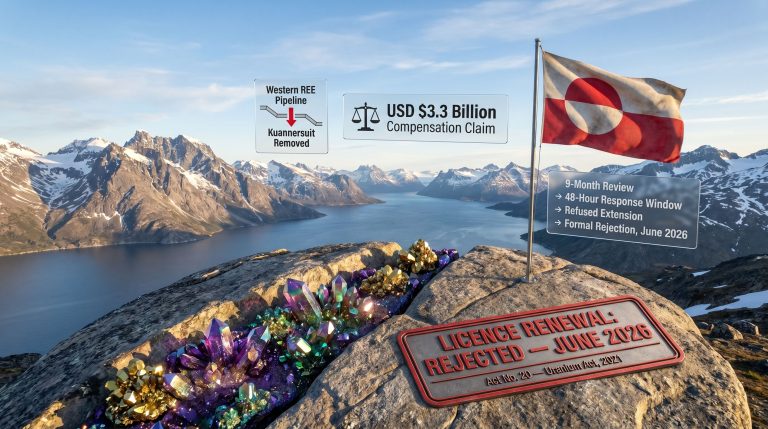
Greenland rejects Kvanefjeld licence renewal as a formal signal about the structural fragility of the rare earth supply pipeline that Western industrial and defence sectors are depending on. This is not merely a setback for one company — it reflects the broader tensions shaping critical mineral governance across the Arctic.
When big ASX news breaks, our subscribers know first
Why Kvanefjeld Was Considered Irreplaceable
Scale, Grade, and Strategic Positioning
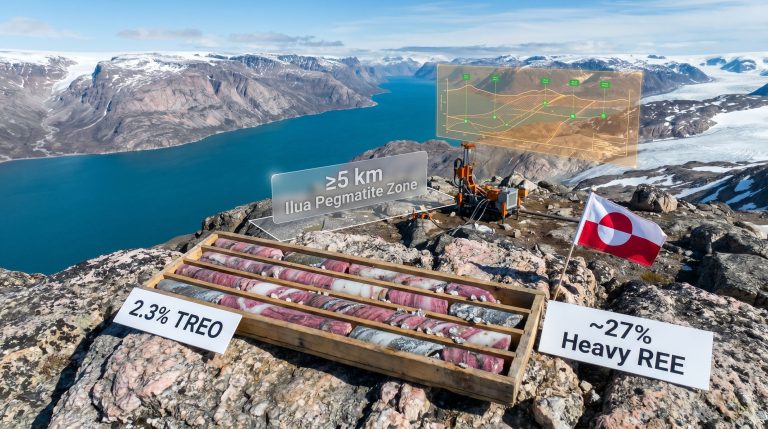
Kvanefjeld sits within the Ilímaussaq alkaline complex in southern Greenland, a geological formation that is unusual in both scale and mineralogical character. The deposit hosts one of the largest known concentrations of rare earth elements outside Chinese-controlled assets, alongside substantial zinc and fluorspar resources. The rare earth assemblage is particularly valuable because it includes elevated concentrations of the so-called "magnet metals" — neodymium, praseodymium, and dysprosium — which are the specific elements required for permanent magnets used in electric vehicle motors and wind turbine generators.
What made Kvanefjeld stand apart from many competing development projects was not just raw tonnage but the grade consistency across the deposit's footprint. In rare earth project evaluation, grade uniformity matters enormously because it determines processing predictability, plant design, and ultimately the unit cost of producing separated rare earth oxides.
The deposit's potential to supply magnet-grade rare earths at meaningful scale positioned it as a genuine alternative to Chinese supply in the medium term — a distinction very few undeveloped projects globally can credibly claim.
The Geochemical Complication That Changed Everything
The same geological conditions that created Kvanefjeld's rare earth wealth also embedded a structural problem. The Ilímaussaq complex formed through an unusual magmatic differentiation process that concentrated rare earth elements and uranium together within the same mineral phases, particularly in minerals such as steenstrupine and lujavrite. These are not simply adjacent mineralisation zones that could be selectively mined around one another.
The uranium and rare earth elements occupy the same crystal lattices in many cases, meaning that processing the ore to extract REEs will inevitably generate uranium-bearing process streams. This is the critical geological distinction that most mainstream coverage misses. The challenge at Kvanefjeld is not that uranium happens to exist nearby — it is that the uranium is chemically and mineralogically inseparable from the rare earth mineralisation using any currently commercially viable hydrometallurgical process.
This places Kvanefjeld in a regulatory category that most other rare earth projects do not occupy — a hybrid deposit requiring simultaneous compliance with both critical mineral development frameworks and nuclear material governance regimes.
Greenland's 2021 Uranium Act: A Law With Unintended Consequences
The Political Context Behind the Legislation
Greenland's 2021 legislative prohibition on uranium prospecting and extraction emerged from a domestic political environment shaped by environmental concern and a broader reassertion of Greenlandic sovereignty and identity. The Inuit Ataqatigiit party, which opposes uranium mining on environmental and cultural grounds, rose to governmental prominence partly on this platform. Furthermore, understanding the Greenland election and minerals dynamic is essential context for interpreting how this legislation came to pass.
The legislation was not designed with Kvanefjeld's specific geological complexity in mind. It was intended to prevent uranium from becoming a commercial product of Greenlandic mining. The legislative drafters likely did not anticipate that the Act would be interpreted broadly enough to capture a rare earth project where uranium was neither the target commodity nor economically material to the business case.
The Interpretive Expansion That Blocked Development
Greenland's government has taken the position that because uranium cannot be cleanly excluded from the processing stream at Kvanefjeld under current technology, any development of the deposit necessarily involves uranium handling. Under this interpretation, the Act's prohibition extends beyond uranium extraction as a commercial purpose and captures uranium management in any operational context, including storage as a tailings impurity.
This is a significant interpretive expansion. It means the relevant legal test is not whether a company intends to sell or commercialise uranium, but whether uranium will be physically handled at any stage of a mining and processing operation. For Kvanefjeld, that threshold cannot be avoided regardless of how the project's commercial scope is defined.
Key Regulatory Insight: The Uranium Act's application to Kvanefjeld effectively establishes that uranium co-occurrence in a mineral deposit is a disqualifying characteristic in itself, not merely a regulatory complication to be managed. This interpretation could apply to other Greenlandic deposits where uranium mineralisation is present as a geological associate rather than a target commodity, creating uncertainty across a much broader slice of Greenland's mineral endowment than the 2021 legislation may have originally intended.
Energy Transition Minerals' Modified Proposal and Why It Failed
The December 2022 Alternative Development Concept
In an effort to find a pathway through the regulatory blockage, Energy Transition Minerals submitted a revised development framework in December 2022. The modified proposal narrowed the project's commercial scope exclusively to rare earth elements, zinc, and fluorspar. Under this framework, uranium would be treated as a process impurity throughout the metallurgical circuit, segregated from the rare earth product streams, and permanently contained within an engineered tailings storage facility. No uranium would be sold, exported, or designated as a product.
From a purely commercial and radiological risk management perspective, this approach has precedent in other jurisdictions. Several operating rare earth facilities globally handle naturally occurring radioactive material within their tailings management systems without triggering nuclear material governance frameworks, because the activity concentrations remain within regulatory thresholds.
The Government's Reasoning and Its Implications
Greenland's authorities concluded that even this modified approach was inconsistent with the Uranium Act. According to reporting by Reuters, the government's determination suggests that physically concentrating and storing uranium-bearing material, regardless of commercial intent, constitutes a form of uranium handling that falls within the Act's scope.
This is the point where the Kvanefjeld situation becomes genuinely instructive for the broader mining industry. The regulatory conversation has moved beyond questions of intent, commerciality, or even radiological risk management. The presence of uranium in any operational context has become the determinative factor.
For rare earth project developers globally, this sets a precedent worth watching closely. Many REE deposits around the world contain naturally occurring radioactive material at varying concentrations. If other jurisdictions adopt similarly broad interpretive frameworks, the regulatory overhead associated with developing uranium-proximate rare earth deposits could increase substantially.
The Legal Challenge: Expropriation, Precedent, and Timeline Uncertainty
ETM's High Court Proceedings
Energy Transition Minerals has formally contested the rejection through Greenland's High Court, asserting that the government's decision constitutes direct expropriation of the company's legitimate commercial rights. A central pillar of ETM's legal argument is the fact that the company received licence renewals after the Uranium Act came into force in 2021, which ETM argues established a reasonable regulatory expectation that the project could continue to be evaluated under evolving frameworks.
The legal significance of this argument relates to a well-established principle in international investment law: investors who commit capital and operational expenditure based on an established regulatory environment are entitled to rely on the consistency of that environment. If a government changes its interpretive position in a way that retroactively eliminates the value of previously granted rights, that may constitute an expropriation regardless of whether a formal licence cancellation was issued.
| Legal Concept | Definition | Relevance to Kvanefjeld |
|---|---|---|
| Direct Expropriation | Formal government removal of property or licence rights | ETM argues the rejection eliminates legally acquired exploration rights without compensation |
| Legitimate Expectations | Investors may rely on regulatory consistency when committing capital | Post-2021 licence renewals support ETM's claim of established regulatory expectations |
| Regulatory Creep | Broadening of a law's application beyond its original intent | Uranium Act applied to uranium handling, not originally to REE projects with uranium impurities |
| Regulatory Freeze | Ground cannot be reallocated while legal proceedings are active | Kvanefjeld remains inaccessible to alternative developers pending court resolution |
The Extension Request and What It Signals
Following the draft rejection decision, ETM was given a two-week window to submit a formal response. The company requested an extension on the basis that the timeframe was insufficient to prepare a comprehensive legal and technical rebuttal. This request signals that ETM's response will not be a simple administrative objection but a substantive multi-disciplinary challenge likely involving independent geological evidence, hydrometallurgical expert testimony, and international investment law submissions.
Until all proceedings are resolved, the Kvanefjeld ground cannot be reallocated to any third party, meaning the deposit remains in effective suspension — unavailable to either ETM or any alternative developer.
The Supply Chain Consequences: Mapping the REE Pipeline Gap
Where Kvanefjeld Sits in the Global Development Context
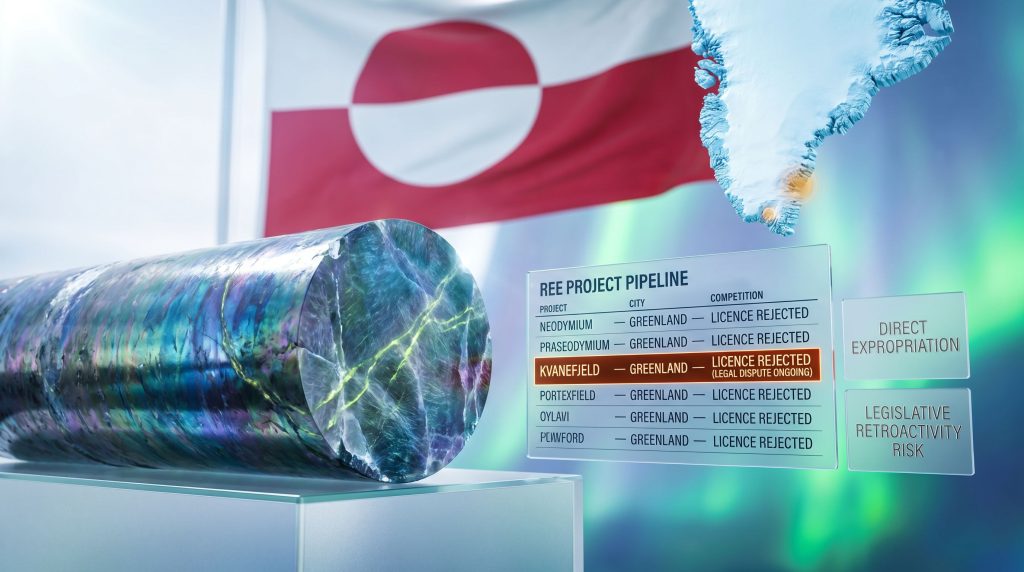
The rare earth project development pipeline outside China is thinner and more fragile than most policy discussions acknowledge. Most assessments of non-Chinese rare earth supply capacity rely on a small number of projects, many of which face their own regulatory, financial, or technical hurdles. Consequently, the rare earth geopolitical impact of losing Kvanefjeld from the near-term pipeline cannot be overstated.
| Project | Location | Status | Primary Target REEs | Key Development Constraint |
|---|---|---|---|---|
| Kvanefjeld | Greenland | Licence rejected, legal challenge active | Nd, Pr, Dy | Uranium co-occurrence, legislative conflict |
| Mount Weld / Lynas | Australia / Malaysia | Operational | La, Ce, Nd | Processing capacity and geopolitical scrutiny |
| Nolans Bore | Australia | Advanced development | Nd, Pr | Remote infrastructure, phosphate processing complexity |
| Songwe Hill | Malawi | Development stage | Nd, Pr | Project financing and logistics constraints |
| Round Top | USA | Development stage | Heavy REEs, Li | Low-grade, large-volume processing economics |
| Wicheeda | Canada | Prefeasibility | Nd, Pr, La | Early-stage infrastructure requirements |
Kvanefjeld's removal from the near-term pipeline is particularly consequential because it was one of the few projects with both the scale and the grade profile to meaningfully influence non-Chinese supply of magnet-grade rare earths within a foreseeable development window.
The Magnet Metal Deficit Problem
It is worth distinguishing between different categories of rare earth elements when assessing the supply chain impact. Lanthanum and cerium, the most abundant REEs, are not the critical bottleneck. The genuine supply vulnerability lies in the "magnet metals" — neodymium, praseodymium, terbium, and dysprosium — which are required in specific ratios for high-performance permanent magnets used in EV drivetrains and wind turbines.
Kvanefjeld's resource contained meaningful concentrations of these higher-value magnet metals, not simply the abundant light REEs that dominate many alternative projects. This distinction matters because the global supply gap most relevant to the energy transition is concentrated specifically in the magnet metals, and the number of development-stage projects with credible magnet metal grades outside China is genuinely small. Indeed, the West's dependence on Chinese rare earths only deepens as projects like Kvanefjeld are removed from the development pipeline.
Investor Perspective: The loss of Kvanefjeld from the near-term pipeline is not symmetrically replaceable. Projects with comparable magnet metal grades and scale are rare. Investors assessing non-Chinese REE exposure should model the specific rare earth element mix of any development-stage project they evaluate rather than treating all rare earth projects as equivalent supply chain solutions. A project rich in lanthanum and cerium offers a fundamentally different strategic value proposition than one with meaningful neodymium and dysprosium concentrations.
The next major ASX story will hit our subscribers first
Investor Risk Frameworks: What the Kvanefjeld Case Changes
Legislative Retroactivity as a Distinct Risk Category
Conventional project risk assessments in mining typically account for commodity price volatility, geological uncertainty, permitting timelines, and capital cost variability. The Kvanefjeld situation introduces a category of risk that sits outside these conventional parameters: legislative retroactivity risk, where a legal framework enacted after project initiation is subsequently interpreted in a way that eliminates the development pathway.
This is distinct from standard regulatory risk. Standard regulatory risk involves uncertainty about whether a permit will be granted. Legislative retroactivity risk involves a situation where permits were being granted and then a legislative interpretation change rendered the entire development concept non-compliant, regardless of the company's technical or environmental performance.
For investors in junior rare earth explorers, particularly those operating in jurisdictions with politically contested mineral development histories, this risk category deserves explicit incorporation into valuation models. Probability-weighted net present value calculations should include scenario modelling for legislative interpretation shifts, not just commodity price and cost assumptions.
Jurisdiction Quality and the Regulatory Premium
The Kvanefjeld outcome reinforces a principle that experienced mining investors have long applied but that is sometimes overlooked in cycles of resource optimism: jurisdictional quality commands a genuine economic premium that is independent of geological endowment.
A deposit in a politically stable jurisdiction with clear, consistently applied mineral development law is worth more than an objectively superior geological asset in a jurisdiction where the regulatory framework is contested, evolving, or subject to broad interpretive discretion. The market's reaction to the Kvanefjeld rejection, reflected in a sharp decline in ETM's share price, represents precisely this recalibration of probability-weighted value.
Greenland presents a particular version of jurisdictional complexity. It is a territory in active political transition, with growing aspirations toward greater autonomy from Denmark, a domestic electorate with strong environmental and sovereignty sensitivities, and a resource endowment that has attracted intense geopolitical interest from external powers. These factors combine to create a regulatory environment that is genuinely difficult to predict using conventional mining jurisdiction assessment frameworks.
The Geopolitical Dimension: Greenland at the Intersection of Competing Interests
Greenland's mineral estate has become a contested space in great power competition. The territory's rare earth, uranium, and other critical mineral resources have attracted significant strategic interest from the United States and other Western nations seeking alternatives to Chinese supply dominance. Furthermore, the Greenland critical minerals geopolitics have become a central consideration in how the territory navigates its relationships with external powers. This geopolitical interest adds a layer of complexity to domestic regulatory decision-making that does not exist in most other mining jurisdictions.
The Kvanefjeld rejection occurs in this charged context. Greenland's government faces simultaneous pressure from external interests seeking mineral access and internal constituencies prioritising environmental protection and self-determination. Navigating these competing pressures through mineral licensing decisions is an inherently political exercise, and the outcome reflects the current balance of those forces within Greenland's domestic political landscape.
For companies and investors seeking exposure to Greenlandic mineral assets, this geopolitical complexity needs to be treated as a first-order risk factor rather than background context. The regulatory environment in Greenland is not primarily shaped by mining law principles or geological merit — it is shaped by a political environment in which mineral development carries symbolic weight beyond its economic implications. As Mining Magazine notes, this broader pattern of regulatory uncertainty is now being watched closely by developers across the sector.
Frequently Asked Questions
What is the Kvanefjeld deposit and why does it matter?
Kvanefjeld is a large, undeveloped mineral deposit in southern Greenland containing significant concentrations of rare earth elements, uranium, zinc, and fluorspar. It has been considered one of the most strategically important non-Chinese rare earth projects in the world due to its scale, grade consistency, and magnet metal content.
Why did Greenland formally reject the Kvanefjeld licence renewal?
Greenland rejects Kvanefjeld licence renewal on the basis that the deposit's uranium co-occurrence makes any development scenario incompatible with the country's 2021 Uranium Act, which prohibits uranium prospecting, exploration, and extraction. This interpretation applies even where uranium is not a commercial target but an unavoidable process impurity.
What was the December 2022 alternative proposal and why was it rejected?
Energy Transition Minerals submitted a modified development concept targeting only rare earths, zinc, and fluorspar, with uranium to be isolated and stored as a non-commercial impurity in a tailings facility. Greenland's government concluded this approach still involved uranium handling inconsistent with the Uranium Act's requirements.
Can ETM still develop Kvanefjeld?
The project's future remains legally unresolved. ETM is actively contesting the rejection in Greenland's High Court, arguing the decision constitutes direct expropriation. The ground cannot be reallocated to any third party until all proceedings conclude.
What does the Kvanefjeld rejection mean for global rare earth supply?
It removes one of the world's largest undeveloped non-Chinese rare earth deposits — particularly one with meaningful magnet metal grades — from the near-term supply pipeline. This widens the supply gap for the specific REE categories most critical to EV and wind turbine manufacturing.
What should rare earth investors take from this outcome?
The Kvanefjeld case demonstrates that legislative retroactivity risk is a distinct and underappreciated category of investment risk in the mining sector. Investors should apply rigorous jurisdiction quality assessments and model REE-specific grade profiles rather than treating all rare earth projects as equivalent strategic assets. This article does not constitute financial advice. All investment decisions should be made in consultation with a qualified financial professional.
Want to Track the Next Major Mineral Discovery Before the Market Moves?
Discovery Alert's proprietary Discovery IQ model delivers real-time alerts on significant ASX mineral discoveries — transforming complex geological data into actionable investment insights for both short-term traders and long-term investors. Explore historic examples of exceptional discovery returns and begin your 14-day free trial at Discovery Alert to position yourself ahead of the market.