July 19, 2026
Understanding Greenland's Strategic Infrastructure Landscape
Arctic infrastructure development operates within a complex framework where geographic isolation, climate extremes, and geopolitical tensions converge to create unprecedented investment challenges. Greenland's infrastructure landscape represents a critical case study in how remote territories navigate sovereignty, economic development, and international cooperation pressures simultaneously.
With approximately 56,000 residents distributed across 2,166,086 square kilometers, Greenland maintains one of the world's lowest population densities while possessing strategic geographic positioning between North America and Europe. The territory's GDP per capita of approximately USD 93,500 reflects substantial Danish subsidy dependency, highlighting the economic imperative for infrastructure-driven diversification.
Co-investment in Greenlandic infrastructure emerges as a sophisticated mechanism that balances multiple stakeholder interests while preserving territorial autonomy. Unlike traditional bilateral development models that create dependency relationships, collaborative financing structures distribute risk and control across institutional investors, partner nations, and local authorities.
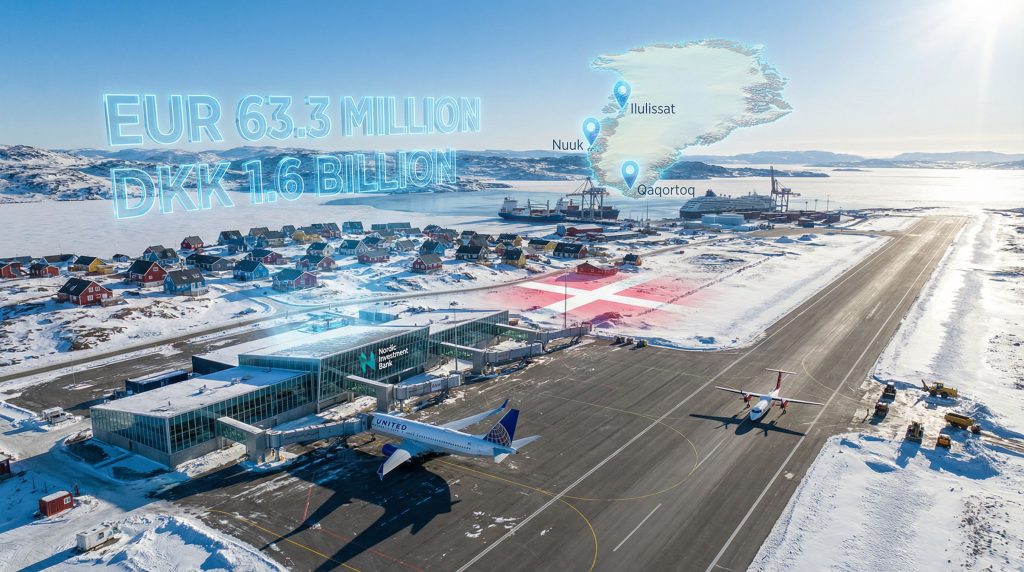
Contemporary infrastructure co-investment combines Nordic Investment Bank participation, Danish government commitments exceeding DKK 1.6 billion through 2029, and private sector engagement in tourism and logistics ventures. This multi-layered approach creates shared stakes while maintaining Greenlandic decision-making authority over project selection and implementation priorities.
When big ASX news breaks, our subscribers know first
What Makes Greenlandic Infrastructure Investment Strategically Unique?
The Arctic's changing accessibility fundamentally alters infrastructure investment calculations compared to temperate regions. Arctic sea ice extent has declined at approximately 13% per decade since 1979, with September minimum coverage dropping from 7.5 million km² to 3.6 million km² in recent measurements. This transformation creates new navigability windows while introducing operational uncertainties that require adaptive engineering solutions.
Furthermore, multi-stakeholder financing models in Greenland demonstrate sophisticated risk distribution mechanisms that differentiate Arctic development from single-creditor approaches. The Nordic Investment Bank's participation through verified EUR 63.3 million commitments exemplifies multilateral oversight standards requiring environmental impact assessments and community consultation processes.
| Financing Structure | Risk Distribution | Oversight Mechanism | Local Control |
|---|---|---|---|
| Multilateral Bank Participation | Spread across 8 Nordic/Baltic nations | Environmental and social safeguards | Project selection authority |
| Danish Government Framework | Bilateral partnership model | Parliamentary budget oversight | Autonomous territory consent |
| Private Sector Engagement | Market-driven capital allocation | Commercial viability requirements | Revenue-sharing agreements |
| International Development | Institutional investor participation | World Bank compliance standards | Sovereignty preservation |
Geographic positioning creates unique connectivity transformation opportunities unavailable in other Arctic territories. Greenland's location enables direct North America-Europe transatlantic routes that reduce flight times by 4-6 hours compared to current hub connections through Reykjavik or Copenhagen. This positioning advantage translates into operational cost savings and logistical efficiency improvements across multiple economic sectors.
In addition, climate adaptation requirements distinguish Greenlandic infrastructure from temperate zone projects through specialised engineering specifications. Winter operational downtime averages 15-20% annually due to weather constraints, compared to 2-3% at temperate airports. Infrastructure designs must accommodate temperature variations exceeding 60°C seasonally while maintaining year-round operational capability.
How Do Airport Infrastructure Projects Drive Economic Transformation?
Airport infrastructure development catalyses economic transformation through interconnected mechanisms that extend beyond transportation capacity expansion. The International Air Transport Association documents that airport infrastructure investment in remote regions correlates with 15-30% GDP growth acceleration in the 5-10 years following major capacity improvements.
Major aviation hub development across Greenland follows a phased approach connecting regional centres to international networks:
- Nuuk International Airport: Completed 2024 with 2,200-metre runway enabling transatlantic wide-body operations
- Ilulissat Airport: EUR 63.3 million Nordic Investment Bank financing for 2026 opening targeting tourism and logistics integration
- Qaqortoq Airport: Southern regional connectivity with 1,500-metre runway serving port integration objectives
- Ittoqqortoormiit Airport: Eastern territory access project addressing population service gaps
Runway specifications determine aircraft compatibility and operational scope. The 2,200-metre runways accommodate narrow-body transatlantic aircraft (Airbus A320 extended range, Boeing 737 MAX extended range) with payload restrictions, plus wide-body aircraft (Boeing 787, Airbus A350) at near-maximum range configurations. Regional 1,500-metre runways serve narrow-body operations with weight limitations.
Carrier network expansion demonstrates progressive international aviation integration. United Airlines announced Arctic route expansion strategies including Greenland connectivity optimisation for North Atlantic operations. Scandinavian Airlines develops Nordic network extensions contingent on Nuuk International runway capacity completion. However, the broader trade war impact continues to influence global aviation partnerships and route planning strategies.
Employment creation spans construction phases through permanent operations. Construction employment peaks during major project phases, transitioning to specialised maintenance and operations staffing requiring Arctic-specific technical training. The tourism multiplier effect generates accommodation, food service, and attraction employment as improved accessibility increases visitor arrivals.
Iceland's infrastructure transformation precedent demonstrates potential outcomes. Keflavík International Airport expansion (2000-2018) correlated with tourist arrivals growing from 487,000 to 2.3 million annually, while tourism's GDP contribution increased from 7.5% to 21%+. This transformation reduced dependency on traditional fishing and aluminium industries through economic diversification.
What Role Does Tourism Infrastructure Play in Economic Diversification?
Tourism infrastructure investment creates multiplier effects extending beyond direct visitor spending into logistics, supply chain, and service sector development. Greenland's pre-pandemic tourism baseline included approximately 64,000 international tourists and 18,000 cruise passengers annually, generating roughly DKK 800-900 million (USD 120-135 million) in annual revenue.
Cruise port development represents a significant co-investment opportunity requiring substantial capital commitments. Upgrading ports to accommodate 3,000+ passenger vessels demands deep-water berthing capabilities (16+ metres draft), passenger terminal facilities, and ground transportation integration with airport infrastructure.
Private investment attraction operates through integrated development models combining:
- Port facilities connected to airport accessibility improvements
- Accommodation ventures supported by guaranteed visitor volume growth
- Logistics infrastructure serving multiple economic sectors beyond tourism
- Supply chain facilities enabling seafood export and mining sector support
Revenue diversification strategies leverage tourism infrastructure for broader economic applications. Hotel and accommodation facilities serve mining industry evolution trends personnel during construction phases. Transportation infrastructure supports seafood processing and export operations. Communication and utility upgrades enable remote work and digital economy participation.
Seasonal operating models address Arctic accessibility constraints through flexible capacity management. Peak summer tourism operations transition to logistics and industrial support services during winter months, optimising infrastructure utilisation across annual cycles. This dual-purpose approach improves financial viability while serving diverse economic sectors.
The Svalbard precedent illustrates transformation potential. Longyearbyen's airport expansion during the 2010s corresponded with 250%+ tourist arrival growth through 2022, supporting economic diversification away from coal mining dependency toward hospitality and service sectors.
How Does Infrastructure Co-Investment Address Geopolitical Competition?
Co-investment in Greenlandic infrastructure provides strategic alternatives to unilateral development models that risk creating dependency relationships or coercive leverage scenarios. The existing U.S.-Denmark defence agreement from 1951 already provides extensive military access rights across Greenland, including base construction and personnel deployment authority through Pituffik Space Base operations.
Collaborative financing structures prevent several geopolitical risks:
- Single-creditor dependency that enables economic coercion through debt restructuring threats
- Asset control concentration by non-allied nations seeking strategic positioning
- Bilateral arrangement exclusivity that compromises multilateral cooperation frameworks
- Sovereignty erosion through infrastructure-linked territorial control mechanisms
"The winning strategy involves co-investment in Greenlandic infrastructure and transparent development agreements through allied consent, rather than territorial acquisition or coercive approaches that risk fracturing NATO cooperation frameworks."
Building allied consensus creates shared interests among NATO member nations with Arctic security concerns, Nordic countries prioritising regional stability, private investors seeking diversified risk exposure, and Greenlandic authorities maintaining development control. This multi-stakeholder approach distributes influence while preserving autonomous decision-making authority.
European leaders including representatives from France, Germany, and Canada have emphasised that unilateral approaches to Greenlandic development could threaten NATO unity. Furthermore, collaborative infrastructure investment addresses these concerns by creating transparent, multilateral oversight mechanisms that respect territorial sovereignty while advancing shared security objectives.
The approach counters aggressive infrastructure diplomacy models observed in other regions where single-nation funding creates political leverage and strategic asset control. Co-investment in Greenlandic infrastructure specifically avoids debt-trap scenarios while maintaining competitive alternatives to non-allied financing offers. These considerations intersect with broader energy transition security priorities that shape regional development strategies.
What Are the Critical Minerals and Resource Development Implications?
Strategic Supply Chain Diversification
Critical mineral supply chain security represents a primary driver for co-investment in Greenlandic infrastructure, particularly given Chinese dominance in rare earth element midstream processing. Approximately 85% of global rare earth separation and refining occurs in China despite China controlling only 37% of known global reserves.
The Tanbreez heavy rare earth deposit exemplifies upstream diversification potential, but transportation infrastructure limitations constrain development viability. Heavy rare earth elements command premium pricing due to supply concentration and specialised applications in permanent magnets, defence systems, and renewable energy technologies.
| Critical Mineral Category | Current Supply Dominance | Infrastructure Requirements | Strategic Value |
|---|---|---|---|
| Heavy Rare Earths | 85% Chinese processing | Deep-water port + rail connectivity | Defence and renewable energy applications |
| Light Rare Earths | 60% Chinese mining + 90% processing | Bulk handling facilities | Industrial and automotive applications |
| Lithium Processing | 70% Chinese midstream | Chemical processing infrastructure | Battery and energy storage systems |
| Graphite Processing | 65% Chinese purification | Specialised transportation | Battery electrode production |
Supply chain chokepoint analysis reveals that owning mineral resources without midstream processing capability provides limited strategic advantage. Rare earth value creation occurs primarily in separation, refining, alloy production, and permanent magnet manufacturing stages, all requiring substantial industrial infrastructure and specialised technical expertise.
Infrastructure Integration Opportunities
Infrastructure co-investment enables integrated resource development through:
- Processing facility development creating midstream value-added operations within allied territories
- Transportation cost optimisation improving extraction project economics
- Environmental compliance systems meeting international sustainability standards
- Quality control mechanisms ensuring material specifications for defence and technology applications
Port and logistics infrastructure specifically supports bulk commodity export capabilities while maintaining environmental monitoring systems. Deep-water port access enables direct large container ship loading versus current transshipment requirements through European or Canadian facilities. This development approach aligns with emerging critical minerals strategy frameworks established by allied nations.
Consequently, the global mining landscape continues to evolve as nations seek to diversify their critical mineral supply chains through strategic infrastructure investments in regions like Greenland.
The next major ASX story will hit our subscribers first
How Do Financing Mechanisms Balance Sovereignty and Development?
The Danish-Greenlandic partnership framework demonstrates sophisticated approaches to balancing development financing with territorial autonomy preservation. The DKK 1.6 billion commitment structure spans 2026-2029 while maintaining Greenlandic authority over project selection, implementation oversight, and operational control.
Graduated independence preparation operates through economic development that reduces subsidy dependency while building local technical capacity. Current Danish government transfers constitute a substantial portion of Greenland's budget, creating economic incentives for infrastructure-driven diversification without compromising political autonomy.
Nordic Investment Bank participation provides multilateral oversight ensuring project viability and transparency while distributing decision-making authority across eight Nordic and Baltic member nations. This structure prevents bilateral dependency while maintaining institutional lending standards and environmental compliance requirements.
Transparent governance structures include:
- Project selection committees with Greenlandic representation maintaining veto authority
- Implementation oversight combining local contractors with international technical expertise
- Revenue sharing mechanisms ensuring direct benefits to Greenlandic communities
- Environmental monitoring meeting both local and international sustainability standards
Risk distribution across multiple institutional investors reduces individual creditor influence while maintaining competitive financing terms. The World Bank documents that multilateral infrastructure financing shows lower rates of debt distress and stronger local governance outcomes compared to bilateral lending arrangements.
Performance benchmarking operates through international development standards ensuring project delivery meets technical specifications while respecting cultural and environmental priorities. This approach balances external financing with internal control authority.
What Challenges Must Co-Investment Models Address?
Environmental and climate adaptation present ongoing challenges requiring specialised engineering solutions. Arctic infrastructure operates under extreme temperature variations, seasonal accessibility constraints, and changing climate conditions that increase construction and maintenance costs substantially above temperate zone projects.
Specific environmental considerations include:
- Permafrost stability affecting foundation requirements for permanent structures
- Seasonal accessibility windows limiting construction timelines and material transport
- Wildlife impact mitigation particularly regarding marine mammal migration patterns
- Cultural heritage preservation ensuring development respects indigenous community priorities
Economic viability concerns centre on high upfront capital requirements with uncertain return timelines. Arctic construction costs typically exceed temperate zone equivalents by 100-300% due to logistics constraints, specialised equipment requirements, and weather-related delays.
Limited local workforce availability requires imported expertise and training programmes to develop sustainable local technical capacity. This creates additional costs while presenting opportunities for knowledge transfer and skills development supporting long-term economic independence.
Financing structure complexity requires ongoing coordination among multiple stakeholders with different priorities, timelines, and governance requirements. Multilateral oversight mechanisms must balance transparency with operational efficiency while maintaining respect for territorial autonomy.
Seasonal operational constraints affect project timelines and revenue projections. Tourism revenue concentrates in summer months while winter accessibility limitations reduce utilisation rates for transportation infrastructure, requiring financial models that account for significant seasonal variation.
How Does Co-Investment Support Long-Term Strategic Objectives?
Arctic security enhancement through collaborative infrastructure development strengthens allied presence in strategically important regions while respecting territorial sovereignty. Improved communication networks, transportation capacity, and logistical support infrastructure serve both civilian and defence applications.
Allied cooperation frameworks create shared stakes in regional stability while distributing costs and governance authority. This approach counters aggressive infrastructure diplomacy while maintaining competitive alternatives to non-allied development financing.
Economic independence pathway development reduces Danish subsidy dependency through diversified revenue generation. Infrastructure enabling tourism, resource extraction, and logistics services creates multiple income streams supporting fiscal autonomy while preserving political self-determination.
Long-term strategic benefits include:
- Technology transfer improving local technical capabilities and employment opportunities
- Supply chain integration connecting Greenland to international markets
- Human capital development through construction, operations, and maintenance training
- Revenue generation from user fees, resource extraction, and economic activity
Regional stability contributions support broader Arctic security objectives through economic development and international cooperation. Collaborative infrastructure investment demonstrates effective alternatives to territorial acquisition or coercive development models.
Early warning capabilities benefit from improved communication infrastructure while logistics support capacity serves both civilian and defence requirements. This dual-use approach optimises infrastructure investment while advancing multiple strategic objectives simultaneously. For instance, recent initiatives include Denmark's commitment to boost Greenland's infrastructure with substantial healthcare and transportation investments.
What Success Metrics Define Effective Co-Investment Outcomes?
Quantitative performance indicators provide measurable benchmarks for evaluating co-investment in Greenlandic infrastructure effectiveness across multiple dimensions. Infrastructure utilisation rates, economic diversification metrics, employment creation numbers, and revenue generation capacity offer concrete assessment frameworks.
Key performance metrics include:
- Airport passenger throughput measuring connectivity improvement and economic integration
- Port cargo volume indicating logistics capacity utilisation and resource export capability
- Tourism revenue growth demonstrating economic diversification beyond traditional sectors
- Employment creation in construction phases and permanent operations across skill levels
Strategic alignment measures assess broader geopolitical and sovereignty objectives beyond financial returns. Allied cooperation levels in ongoing infrastructure utilisation indicate successful multilateral engagement while sovereignty preservation indicators measure autonomous decision-making authority maintenance.
Environmental compliance performance ensures projects meet international sustainability standards while regional stability contributions support broader Arctic security frameworks. These qualitative measures complement quantitative metrics in comprehensive success evaluation.
Financial sustainability indicators track revenue generation capacity, operational cost management, and debt service coverage ratios. Break-even analysis for individual infrastructure components provides timeline estimates for self-sustaining operations.
Long-term success requires balancing immediate infrastructure development needs with sustainable economic transformation that reduces external dependency while preserving territorial autonomy. This comprehensive approach ensures co-investment in Greenlandic infrastructure achieves both strategic positioning and local development objectives.
Investment performance benchmarking compares Greenlandic infrastructure outcomes against similar Arctic development projects, including Iceland's airport expansion, Norway's northern port development, and Canada's Arctic transportation initiatives. These precedents provide realistic expectations and best practice frameworks.
However, the collaborative development model's effectiveness ultimately depends on maintaining stakeholder consensus while delivering measurable improvements in economic opportunity, international connectivity, and strategic positioning that serve both local priorities and broader allied security interests. Recent developments, such as the EU's first strategic mining investment in Greenland, exemplify how multilateral approaches can balance these complex requirements effectively.
Interested in Capitalising on Resource Development Opportunities?
Discovery Alert's proprietary Discovery IQ model delivers instant notifications on significant ASX mineral discoveries, empowering subscribers to identify actionable opportunities ahead of the broader market. Explore historic examples of exceptional returns from major discoveries at Discovery Alert's dedicated discoveries page and begin your 30-day free trial today to secure your market-leading advantage.