July 21, 2026
Greenland tensions and rare earth minerals have become a defining geopolitical flashpoint as nations scramble to secure access to resources essential for technological sovereignty. The convergence of renewable energy imperatives and critical mineral scarcity has fundamentally transformed how modern nations approach territorial sovereignty and resource security. As global supply chains confront unprecedented vulnerabilities, Arctic territories containing strategic mineral deposits have emerged as focal points of international competition.
The transformation from fossil fuel-dependent systems to renewable energy infrastructure requires vast quantities of rare earth elements, graphite, lithium, and other critical minerals. Unlike previous resource competitions focused primarily on energy commodities, today's strategic mineral requirements touch virtually every aspect of modern technology infrastructure, from defence systems to consumer electronics.
Arctic Mineral Resources and Strategic Competition
The melting of Arctic ice has fundamentally altered global shipping routes while simultaneously exposing previously inaccessible mineral deposits. This environmental change has coincided with increased military activity across Arctic regions, creating a complex intersection of climate effects, resource accessibility, and territorial security concerns.
Climate data from NOAA's Arctic Program indicates seasonal reductions in Arctic sea ice have expanded transit possibilities along both the Northeast and Northwest passages. These newly navigable routes reduce transit times from Europe to Asia by approximately 30-40% compared to traditional Suez Canal routing, while simultaneously providing access to mineral deposits that were previously cost-prohibitive to extract.
The strategic implications extend beyond simple resource access. Nations now view mineral-rich Arctic territories through the lens of technological sovereignty rather than conventional territorial expansion. This represents a fundamental shift in how governments calculate national security priorities, with critical minerals & energy security becoming as strategically important as traditional energy security considerations.
Critical Mineral Dependencies and Vulnerabilities
The global electronics and renewable energy industries depend heavily on rare earth elements, with demand projections indicating substantial increases through 2030. Heavy rare earth elements, including dysprosium and terbium, play essential roles in high-temperature permanent magnet applications crucial for wind turbine generators and electric vehicle motors.
Current global supply chain concentration creates significant vulnerabilities. China controls approximately 60% of global rare earth mining and 85% of processing capacity, according to the U.S. Geological Survey's 2024 Mineral Commodity Summaries. This concentration enables potential supply restrictions for political objectives, as demonstrated during the 2010-2011 rare earth export limitations that resulted in 300-500% price increases for dysprosium and terbium.
The processing bottleneck represents an even more critical vulnerability than mining capacity. Rare earth separation technology requires sophisticated chemical processing involving multiple stages: flotation, chemical leaching, solvent extraction, and precipitation. Each stage demands precision equipment and specialised technical expertise, with environmental controls mandatory for waste streams containing thorium and uranium byproducts.
Furthermore, the us-china trade war impact has demonstrated how geopolitical tensions can rapidly disrupt established supply chains for critical materials.
When big ASX news breaks, our subscribers know first
Greenland's Strategic Mineral Position
Greenland's strategic minerals contain 25 of the 34 minerals classified as critical by the European Commission under the Critical Raw Materials Act of 2024. The territory's mineral wealth includes rare earth elements, graphite, copper, nickel, zinc, cobalt, platinum, gold, iron ore, uranium, and titanium, positioning it as a comprehensive solution to Western supply chain diversification needs.
The territory's strategic value extends beyond simple reserve quantities. Greenland functions as a diversification anchor for Western supply chains within an allied political framework, offering geopolitically stable access to critical materials without dependence on potentially adversarial suppliers.
Exceptional Heavy Rare Earth Concentrations
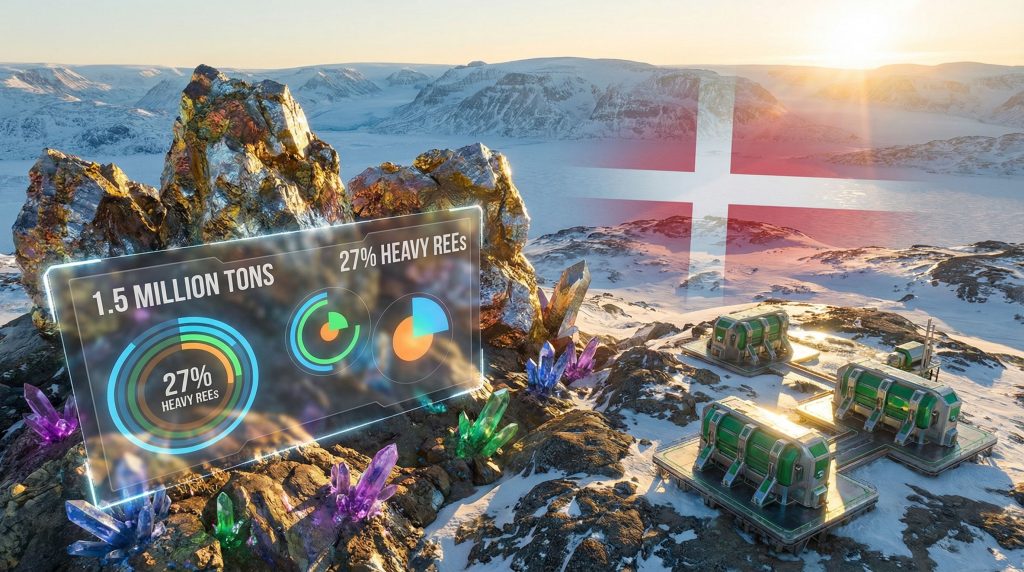
Greenland's Tanbreez deposit represents one of the most significant heavy rare earth concentrations globally, containing over 27% heavy rare earth elements within its 28.2 million metric ton reserve. This concentration far exceeds typical REE deposits, which generally contain 5-10% heavy rare earth elements.
Table: Greenland's Major REE Deposit Characteristics
| Deposit | Total Reserves (MT) | Heavy REE % | Key Minerals | Current Status |
|---|---|---|---|---|
| Tanbreez | 28.2 | 27%+ | Neodymium, Dysprosium, Tantalum | Development Assessment |
| Kvanefjeld | 11+ | Variable | Uranium, Zinc, Terbium | Suspended (Uranium Ban) |
| Southern Gardar Province | Multiple sites | TBD | Mixed REEs | Exploration Phase |
Heavy rare earth elements command significantly higher market values due to their specialised applications. Dysprosium enables permanent magnets to function at elevated temperatures required in wind turbine generators, while terbium provides essential properties for specialised lighting and aerospace applications. Erbium plays crucial roles in fiber optic telecommunications infrastructure.
The higher heavy REE concentrations in Greenland deposits reduce processing complexity and waste generation compared to lower-concentration alternatives. This operational advantage makes Tanbreez potentially superior to existing major REE producers like Mount Pass in California or Bayan Obo in China, despite similar challenging geological conditions.
Multi-Mineral Resource Complexity
Greenland's deposits present both opportunities and operational challenges through their multi-mineral composition. The Kvanefjeld site contains significant uranium reserves alongside rare earth elements, creating regulatory complications that have effectively suspended development since the territory's 2021 uranium mining ban.
Co-extraction complexity requires specialised processing infrastructure capable of handling multiple mineral types simultaneously. Different minerals demand varying extraction methodologies, processing temperatures, and chemical treatments, increasing both operational costs and technical requirements.
Environmental liability considerations multiply with multi-mineral extraction, as diverse waste streams create varying toxicity profiles requiring specialised containment and treatment systems.
Western Strategic Priorities and Supply Security
The intensification of Western interest in Greenland reflects broader supply chain security imperatives emerging from recent global disruptions. The 2021-2023 period saw multiple critical mineral supply interruptions, including COVID-19 related processing delays, semiconductor supply bottlenecks, and geopolitical export restrictions.
Key Supply Chain Vulnerability Factors:
- Geographic concentration of rare earth mining in China
- Processing technology dominance by single suppliers
- Limited alternative supplier development timelines
- Strategic material stockpile inadequacy
- Transportation bottlenecks for hazardous materials
Investment Pattern Evolution
The U.S. Export-Import Bank's consideration of a US$120 million loan to Critical Metals Corp for the Tanbreez project represents a significant shift toward direct government support for overseas mining ventures. This approach signals recognition of mineral security as requiring national priority status rather than purely market-driven investment decisions.
Moreover, the european supply chain strategy outlined in the Critical Raw Materials Act aims to reduce dependence on single suppliers by 2030. European companies increasingly view Greenland investments as strategic necessities rather than speculative mining ventures, driven by legislative requirements for supply chain diversification.
The timeline challenges remain substantial. Establishing independent rare earth processing capacity requires 15-20 years at scale, creating temporal lags between mining investment and actual supply chain independence. This asymmetry explains government intervention patterns focused on long-term strategic positioning rather than immediate supply solutions.
Arctic Security Integration
NATO's 2023 Strategic Concept explicitly references increased military activity and strategic competition in Arctic regions. As ice melt creates year-round navigable shipping routes, control over regional mineral resources becomes inseparable from maritime passage control, creating dual strategic value for Arctic territories.
The Northeast Passage provides seasonal shipping route alternatives that could become economically significant with consistent multi-month access windows. Recent Arctic shipping data from 2020-2023 shows increasing commercial vessel transits during summer months, with projections suggesting year-round navigability possibilities by 2050-2060 under current climate scenarios.
Military installation proximity adds complexity to civilian mining operations, requiring coordination between defence and commercial interests in territorial development planning.
Environmental Regulations and Development Constraints
Greenland tensions and rare earth minerals intersect significantly with environmental regulatory frameworks that create both opportunities and obstacles for resource development. The territory's 2021 uranium mining ban, implemented by the Inuit Ataqatigiit party following their electoral victory, effectively halted development of the Kvanefjeld project despite its massive rare earth potential.
This policy decision demonstrates how environmental and political considerations can override economic incentives in resource development. Greenlandic polling showed majority opposition to uranium mining due to environmental concerns, reflecting indigenous sovereignty prioritisation over short-term economic development opportunities.
Processing and Waste Management Challenges
Rare earth extraction requires intensive chemical processing that produces significant environmental waste, including radioactive byproducts from thorium and uranium content naturally occurring in REE deposits. Greenland's pristine Arctic environment and limited waste management infrastructure create additional complexity for environmental protection.
Environmental Processing Considerations:
- Acid mine drainage potential from sulfide-bearing deposits
- Radioactive waste containment requirements
- Tailings dam construction in permafrost conditions
- Water treatment system design for Arctic temperatures
- Wildlife habitat protection during extraction operations
Processing methodology comparisons between flotation and chemical leaching show varying efficiency rates at different mineral concentrations. Higher heavy REE concentrations like those found at Tanbreez reduce overall processing waste generation per ton of valuable minerals extracted.
What Role Does Climate Change Play in Greenland Mining?
While climate change has made Greenland's deposits more accessible through reduced ice cover, the territory's environmental commitments create tension between resource development and climate protection goals. This paradox reflects broader global challenges in balancing critical raw materials & green transition requirements with environmental stewardship.
Indigenous community perspectives often emphasise long-term environmental protection over short-term economic gains, creating political dynamics that external investors must navigate carefully through sustained relationship building rather than purely transactional approaches.
Infrastructure Development Requirements
Greenland's harsh Arctic conditions and limited existing infrastructure present significant logistical challenges for large-scale mining operations. Most potential mining sites lack road access, requiring expensive helicopter or ship transport for equipment and personnel.
Energy requirements for mining operations create opportunities for renewable energy development. Hydroelectric potential in southern Greenland could support environmentally conscious mining approaches that align with both economic development and environmental protection objectives.
Transportation and Processing Infrastructure
Successful mineral extraction would require substantial investment in port facilities and potentially on-site processing capabilities to reduce transportation costs and increase economic viability. Processing infrastructure development involves multi-year construction timelines complicated by seasonal weather restrictions.
Infrastructure Development Timeline Factors:
- Seasonal construction windows limited by weather
- Equipment transportation logistics via ice-capable vessels
- Power grid extension or independent generation requirements
- Communications infrastructure for remote operations
- Housing and support facilities for operational personnel
Port facility requirements depend significantly on processing decisions. Raw ore shipment requires different infrastructure than processed concentrate shipment, with processed materials offering higher value per ton transported but requiring additional on-site investment.
Market Forces and Investment Dynamics
Rare earth element prices have experienced significant volatility driven by geopolitical tensions and supply-demand imbalances. Recent geopolitical uncertainties have driven gold prices to record levels above $4,800 per ounce, demonstrating how political tensions affect precious metals markets with similar dynamics influencing REE valuations.
Technology demand projections show exponential growth in electric vehicle production and renewable energy installations driving unprecedented rare earth element requirements. The International Energy Agency's Critical Minerals Market Review indicates substantial increases in mineral demand driven by clean energy transitions, though specific growth rates vary by element and geographic region.
How Do Investors Assess Greenland Mining Risks?
Despite favourable market conditions, Greenland's challenging operating environment creates complex risk-reward calculations for potential investors. Risk factors include regulatory uncertainty, infrastructure development costs, environmental compliance requirements, and operational challenges in Arctic conditions.
Investment Risk Categories:
- Regulatory risks: Policy changes affecting mining permissions
- Operational risks: Arctic weather impacts on operations
- Market risks: REE price volatility and demand fluctuations
- Environmental risks: Compliance costs and liability exposure
- Geopolitical risks: International tensions affecting investment climate
Market psychology factors include investor sentiment toward Arctic mining projects, ESG considerations in institutional investment decisions, and government policy support levels for critical mineral development initiatives.
The next major ASX story will hit our subscribers first
Geopolitical Competition and Strategic Scenarios
Chinese companies maintain significant positions in Greenland's mineral sector despite Western concerns about strategic asset control. Shenghe Resources holds the second-largest shareholder position in the Kvanefjeld mine, having signed agreements in 2018 for processing and marketing leadership of extracted materials.
China's Polar Silk Road policy, launched in 2018, involves Arctic infrastructure investments and natural resource acquisitions as part of broader geopolitical positioning. While major Chinese projects have faced security-related restrictions, China's dominant rare earth processing capabilities maintain persistent influence in Greenland's economic landscape.
Scenario Analysis Framework
Cooperative Development Scenario: Western allies could establish Greenland as a strategic mineral hub through coordinated investment while respecting environmental and sovereignty concerns. This approach would require unprecedented multilateral coordination between governments and private sector entities.
Competitive Resource Scenario: Escalating international tensions could trigger aggressive competition for Greenland resources, potentially destabilising the territory's political balance and environmental commitments. This scenario involves higher investment costs but faster development timelines.
Technology-Driven Innovation Scenario: Advances in extraction technology and processing efficiency could make previously uneconomical deposits viable while reducing environmental impacts. This pathway requires sustained research and development investment with longer implementation timelines.
Sovereignty and Governance Implications
As an autonomous territory within the Kingdom of Denmark, Greenland maintains control over mineral rights while Denmark handles foreign policy and defence responsibilities. This governance structure creates complex dynamics when international powers seek resource access through varying diplomatic channels.
Indigenous rights and self-determination remain central to Greenland's political discourse. The predominantly Inuit population maintains strong influence over resource development decisions, as demonstrated by the uranium mining ban implementation despite external economic pressures.
Independence Pathway Considerations
Mineral wealth could provide economic foundations for Greenlandic independence from Denmark, but would simultaneously attract increased international attention and potential interference in domestic affairs. Independence scenarios require careful balance between economic development and political autonomy maintenance.
Current governance arrangements allow Greenland to benefit from Danish administrative support while maintaining control over natural resource decisions. This balance could shift with substantial mineral revenue generation or changing international political dynamics.
Strategic Preparation for Stakeholders
Policy framework evolution requires governments to develop coherent strategies balancing resource security needs with environmental protection and indigenous rights. This demands new approaches to international cooperation and investment frameworks beyond traditional bilateral trade relationships.
Technology and innovation investment continues essential for cleaner extraction technologies and alternative material development. Research priorities include reducing dependence on traditional rare earth mining while maintaining technological capabilities for defence and industrial applications.
Diplomatic Engagement Priorities
Sustained diplomatic engagement with Greenlandic and Danish authorities remains essential for successful resource development strategies. This requires long-term relationship building approaches rather than transactional negotiations focused solely on immediate resource access.
Stakeholder Engagement Framework:
- Indigenous community consultation and consent processes
- Environmental impact assessment and mitigation planning
- International cooperation agreements for shared development
- Technology transfer and capacity building initiatives
- Long-term economic development partnerships
"The future of Greenland's mineral resources will be determined not just by geological potential, but by how successfully all stakeholders can balance economic development with environmental stewardship and indigenous sovereignty."
Understanding Greenland tensions and rare earth minerals requires appreciation for the complex intersection of environmental stewardship, indigenous sovereignty, technological requirements, and international strategic competition. Success in this domain demands sustained commitment to relationship building, environmental responsibility, and long-term strategic thinking rather than short-term resource extraction approaches.
Looking for Strategic Mineral Investment Opportunities?
Discovery Alert's proprietary Discovery IQ model provides instant notifications on significant ASX mineral discoveries, particularly in critical minerals that are shaping global supply chains and technological sovereignty. Gain immediate access to actionable trading opportunities and position yourself ahead of major market movements by beginning your 30-day free trial today.