July 14, 2026
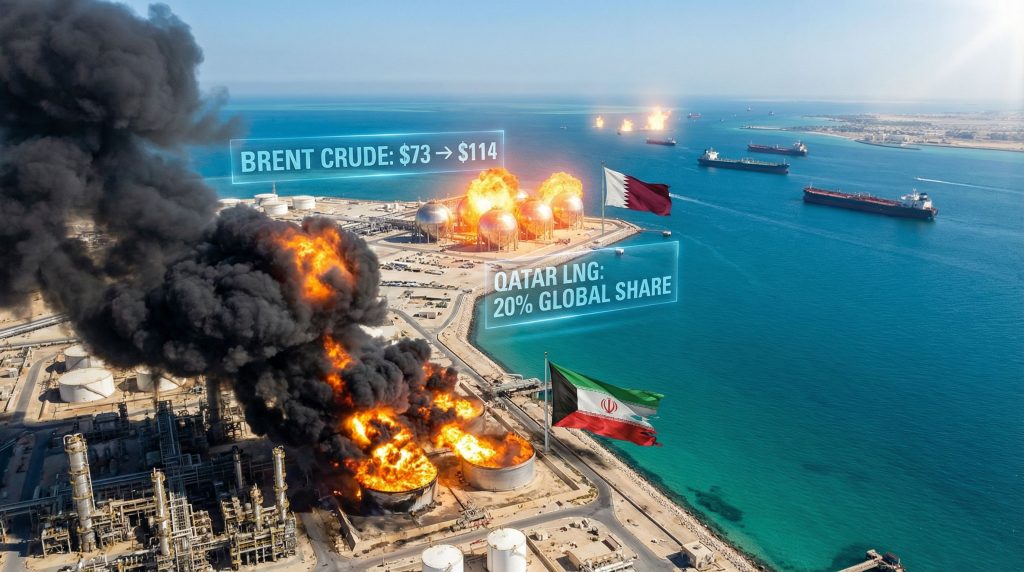
Global energy infrastructure vulnerability has reached unprecedented levels as coordinated attacks across multiple Gulf nations expose critical weaknesses in the world's most concentrated energy production zones. The interconnected nature of modern petroleum and natural gas distribution systems creates cascade effects that extend far beyond regional borders, transforming localised disruptions into global market earthquakes that reshape international energy flows and economic relationships. These developments directly influence oil price movements and highlight the fragility of global energy security.
Modern energy markets operate through complex networks where geographic concentration meets technological interdependence, creating systemic risks that can trigger worldwide supply shocks. Understanding these mechanisms becomes essential as energy security transitions from theoretical concern to immediate economic reality affecting billions of consumers and trillions in global economic output.
How Do Gulf Energy Infrastructure Attacks Reshape Global Oil Markets?
Critical Energy Chokepoint Vulnerabilities Exposed
The Strait of Hormuz represents one of the world's most critical energy transit points, handling approximately 21 million barrels per day of crude oil and condensates according to the U.S. Energy Information Administration. This narrow waterway facilitates roughly 20-25% of global petroleum transit, creating a single point of failure for international energy security that extends from Asian manufacturing centres to European refineries.
When Iran attacks Gulf energy facilities, the immediate impact cascades through multiple commodity streams simultaneously. Qatar's Ras Laffan terminal, the world's largest LNG export facility with 110 million tons per annum capacity, supplies approximately 20% of global LNG consumption. The facility processes natural gas from the North Field, which ranks among the world's largest proven reserves alongside Russia's Yamal Peninsula deposits.
The coordinated targeting strategy maximises market disruption by simultaneously constraining both upstream liquefied gas exports and downstream refined product availability. Furthermore, this dual-vector approach creates compounded supply shocks across different commodity markets, amplifying price volatility beyond what single-facility attacks typically generate. These disruptions are closely linked to broader natural gas trends affecting global markets.
Key vulnerability indicators include:
• Geographic concentration risk: 40% of world oil reserves concentrated within a 500-mile radius
• Transit bottleneck dependency: Single chokepoint handling quarter of global petroleum flows
• Infrastructure clustering: Multiple facility types (LNG, refineries, crude terminals) in proximity
• Alternative routing limitations: 2-3 weeks additional transit time via Cape of Good Hope
Price Volatility Mechanisms in Crisis Scenarios
Energy commodity markets exhibit asymmetric price responses to geopolitical supply disruptions, with crude oil pricing incorporating forward-looking supply scarcity premiums that extend beyond immediate disruption periods. Brent crude surged from under $73 to near $114 per barrel, representing a 54% price spike that reflects market participants' assessment of extended supply constraints rather than temporary disruption.
The European TTF natural gas benchmark experienced a 24% intraday spike following the attacks, demonstrating how regional pricing mechanisms transmit global supply shocks. According to recent geopolitical analysis, TTF prices increasingly correlate with Asian LNG prices due to shipping route flexibility, though complete price convergence remains limited by liquefaction, transportation, and regasification costs of approximately $3-5 per million BTU for the complete LNG value chain.
Historical precedent provides context for current price movements. The 1973 Yom Kippur War oil embargo resulted in crude prices rising from approximately $3 to $12 per barrel over several months, representing a 300% increase. Current attack scenarios show comparable immediate percentage movements, suggesting market participants are pricing extended supply constraints rather than temporary disruptions.
Price transmission mechanisms operate through:
• Forward curve backwardation: Near-term contracts trading at premium to longer-dated futures
• Geopolitical risk premium activation: Additional pricing buffer for supply uncertainty
• Inventory drawdown acceleration: Strategic and commercial stock releases to maintain supply
• Demand destruction thresholds: Price levels that trigger industrial consumption reductions
When big ASX news breaks, our subscribers know first
What Are the Strategic Economic Implications of Energy Infrastructure Targeting?
Regional Energy Security Architecture Under Stress
The Gulf Cooperation Council's integrated energy architecture faces systemic vulnerability through coordinated multi-nation targeting strategies. Combined GCC crude oil production exceeds 13 million barrels per day, with significant LNG export capacity concentrated in Qatar and regional refined product distribution networks spanning multiple borders through pipeline and maritime infrastructure.
Kuwait operates multiple refineries with combined capacity of approximately 936,000 barrels per day, making it a significant regional refined product producer. The attack on two Kuwaiti refineries represents direct assault on regional fuel supply infrastructure, forcing Gulf nations into unprecedented refined product import dependency despite their crude oil abundance. These challenges reflect broader energy export challenges affecting multiple regions globally.
Cross-border energy interdependency vulnerabilities become exposed when facilities across separate GCC nations face simultaneous targeting. Consequently, this approach maximises economic shock by creating supply constraints across different commodity types and geographic production zones, disrupting the region's integrated supply networks that have developed over decades.
Regional vulnerability factors include:
• Integrated pipeline networks: Cross-border crude and refined product flows
• Shared maritime infrastructure: Common shipping lanes and terminal facilities
• Coordinated production systems: Integrated upstream and downstream operations
• Concentrated refining capacity: Limited geographic distribution of processing facilities
Global Supply Chain Disruption Modeling
Energy infrastructure concentration creates cascading disruption patterns that extend through global manufacturing, transportation, and power generation systems. The simultaneous targeting of facilities across multiple countries exposes how interconnected modern energy systems amplify localised disruptions into worldwide supply chain shocks.
LNG shipping route alternatives face significant capacity constraints when primary export terminals go offline. Alternative routing requires either Suez Canal transit or significantly longer southern passages around Africa, creating de facto export blockades for regional LNG supply. However, spare regasification capacity exists primarily in western European facilities, but routing additional LNG volumes to Asia requires longer shipping times and substantially higher transportation costs.
The geographic clustering of global energy infrastructure creates concentration risk where approximately 20% of global crude oil production, 25% of LNG exports, and 40% of world oil reserves concentrate within a single regional zone. This clustering provides economic efficiency during normal operations but creates systemic vulnerability during coordinated attacks, particularly when considering OPEC market influence on global energy dynamics.
The distinction between temporary supply disruption and structural market reordering depends on facility recovery timelines. Extended offline periods of 3-6+ months force buyers to activate long-term alternative sourcing, potentially reshaping trade flows permanently.
Which Energy Markets Face the Greatest Long-Term Disruption Risk?
Natural Gas Market Structural Shifts
Qatar's Ras Laffan terminal shutdown creates immediate structural impacts across global LNG trade patterns. With liquefaction capacity representing 20% of global LNG trade volumes offline, alternative suppliers must activate dormant capacity or increase utilisation rates to maintain global supply balance.
European natural gas import dependency creates particular vulnerability, with Europe importing approximately 32-40% of consumption from external sources in recent years. LNG provides 40-50% of total European gas imports when including liquefied supplies, concentrating import capacity at major regasification terminals in Spain, France, Italy, and Poland.
Asian LNG import concentration compounds global supply rebalancing challenges. Japan, South Korea, and China collectively account for 60-65% of global LNG imports, with Japan alone importing approximately 75 million tons per year and LNG providing roughly 70% of Japan's natural gas supply. In addition, China's LNG imports reached approximately 65 million tons in recent periods.
Natural gas price transmission mechanisms operate through:
- Hub pricing convergence: TTF and Asian LNG prices correlating through arbitrage opportunities
- Transportation cost arbitrage: Shipping route flexibility enabling price equalisation
- Regasification bottlenecks: Terminal capacity constraints limiting supply responsiveness
- Long-term contract indexation: Oil-linked pricing creating delayed price transmission
Crude Oil Refining Capacity Constraints
Middle East refining concentration creates supply vulnerability when multiple facilities face simultaneous attacks. The region produces approximately 8-9 million barrels per day of refined products, with facilities concentrated in Saudi Arabia, UAE, Kuwait, and Iran. This geographic concentration reverses the traditional energy surplus position of Gulf oil exporters during infrastructure disruptions.
Global refining capacity utilisation typically operates at 85-90% during normal conditions, providing limited spare capacity to offset major facility shutdowns. Attacks on Kuwait refineries remove approximately 300,000-400,000 barrels per day of processing capacity, representing 0.3-0.4% of global refining capacity but creating disproportionate regional impact. These developments contribute to broader concerns about oil production decline impact across different regions.
Refining margin volatility amplification occurs when processing capacity constraints enable refiners to capture wider margins between crude input costs and refined product prices. However, constrained capacity also creates supply shortages that filter through to final consumers in transportation, heating, and power generation sectors.
Regional fuel supply impacts include:
• Import dependency reversal: Traditional exporters becoming product importers
• Transportation fuel shortages: Diesel and gasoline supply constraints
• Industrial feedstock limitations: Petrochemical and power generation impacts
• Emergency logistics activation: Military and strategic reserve deployments
How Do Geopolitical Energy Attacks Influence Investment Strategies?
Energy Sector Risk Premium Recalibration
Infrastructure vulnerability assessments become critical for institutional investors as geopolitical targeting strategies evolve toward coordinated multi-facility attacks. Energy sector stocks historically trade at premium valuations during elevated geopolitical risk periods, with the 2022 Russia-Ukraine conflict causing European energy sector stocks to appreciate 30-50% year-over-year through combined commodity price appreciation and geopolitical risk premiums.
Investment strategy recalibration mechanisms include:
• Geographic diversification requirements: Spreading exposure across multiple production regions
• Infrastructure resilience screening: Evaluating facility hardening and redundancy measures
• Supply chain stress testing: Modelling disruption scenarios for portfolio companies
• Alternative energy acceleration: Renewable infrastructure as security-premium investments
Geopolitical risk pricing in energy commodity futures creates forward curve distortions that experienced investors can exploit through strategic positioning. Energy commodity markets incorporate asymmetric risk premiums that often exceed actual supply disruption impacts, creating arbitrage opportunities for sophisticated market participants.
Strategic Reserve and Emergency Response Economics
National strategic petroleum reserve deployment economics become activated during coordinated infrastructure attacks. The International Energy Agency coordinates member nation releases to stabilise global markets, though reserve capacities vary significantly across nations and provide temporary rather than structural supply solutions.
Emergency response mechanism deployment includes:
- Bilateral energy security agreement activations: Nation-to-nation supply arrangements
- Regional energy sharing protocols: GCC and EU internal distribution systems
- Commercial inventory releases: Private sector strategic stock drawdowns
- Alternative supply route development: Emergency shipping and pipeline arrangements
Central bank energy price inflation response strategies must balance currency stability with domestic energy cost management during extended supply disruptions. Furthermore, government fuel subsidy emergency deployment creates fiscal pressures that compound economic impacts beyond direct energy costs.
What Emergency Response Mechanisms Activate During Energy Infrastructure Crises?
International Energy Coordination Frameworks
IEA emergency response protocol implementation provides coordinated international response to major supply disruptions. Member nations maintain strategic petroleum reserves totalling approximately 1.5 billion barrels, though release coordination requires consensus building that can delay market intervention during rapid crisis development.
Regional energy sharing mechanisms operate through existing infrastructure networks and bilateral agreements. The Gulf Cooperation Council maintains internal energy trading arrangements, whilst European Union energy security protocols enable member state cooperation during supply emergencies.
Market stabilisation intervention tools include:
• Strategic reserve release coordination: Synchronised inventory deployment across nations
• Emergency import facility activation: Dormant terminals and processing capacity
• Alternative supplier engagement: Diplomatic and commercial rapid sourcing arrangements
• Demand management protocols: Industrial consumption reduction incentives
Market Stabilisation Intervention Tools
Strategic reserve release coordination timing becomes critical for market effectiveness. Historical analysis shows optimal intervention occurs within 72-96 hours of initial supply disruption to prevent speculative price spirals and maintain market confidence in supply security.
Commercial inventory drawdown patterns complement strategic reserve releases through market-driven mechanisms. Private sector strategic stock deployment typically responds to price signals rather than government coordination, creating natural supply buffering during crisis periods.
Alternative energy transition acceleration receives strategic value quantification during energy security crises, as renewable energy infrastructure provides security premium advantages through reduced geopolitical vulnerability exposure.
How Do Energy Infrastructure Attacks Reshape Regional Economic Relationships?
Gulf State Economic Diplomacy Realignments
Qatar-Iran diplomatic relationship implications become complicated following attacks on Qatari energy infrastructure by Iranian forces. Despite shared North Field/South Pars gas reservoir development cooperation, infrastructure targeting creates diplomatic tensions that reshape regional energy cooperation frameworks. Reports from the region suggest that trust between regional partners has been severely compromised.
Saudi Arabia energy security cooperation expansion accelerates through crisis response coordination with Gulf partners and international allies. Consequently, UAE energy diversification strategy acceleration includes both geographic supply diversification and renewable energy infrastructure development to reduce dependency on concentrated fossil fuel infrastructure.
Regional diplomatic realignment factors include:
• Defence cooperation intensification: Military infrastructure protection agreements
• Alternative supply route development: Non-Strait shipping and pipeline arrangements
• Technology transfer acceleration: Renewable energy and efficiency partnerships
• Economic integration deepening: Cross-border energy infrastructure investment
Global Energy Trade Route Reconfiguration
Alternative shipping corridor development receives accelerated investment priority as traditional routes face security threats. Pipeline infrastructure investment toward non-Gulf export terminals and cross-border supply arrangements gain strategic importance for energy security diversification.
Energy hub geographic distribution rebalancing shifts investment toward regions with lower geopolitical risk profiles. For instance, North American LNG export capacity, Australian natural gas infrastructure, and African energy development projects receive enhanced investor attention as portfolio diversification requirements.
The next major ASX story will hit our subscribers first
What Long-Term Energy Security Lessons Emerge From Gulf Infrastructure Targeting?
Infrastructure Hardening Investment Requirements
Critical energy facility protection upgrade costs require substantial capital investment for comprehensive security enhancement. Physical security integration with cybersecurity frameworks creates multi-layered defence requirements that significantly increase infrastructure development costs but provide essential resilience capabilities.
Redundant capacity development economic justification becomes clearer when analysing disruption costs versus prevention investments. Distributed energy system resilience benefits provide both security advantages and economic efficiency through reduced single-point-of-failure vulnerabilities.
Infrastructure protection investment areas include:
• Physical hardening measures: Facility defensive capabilities and rapid repair systems
• Geographic distribution enhancement: Spreading facilities across multiple secure locations
• Alternative transportation infrastructure: Multiple export routes and backup systems
• Emergency response capability development: Rapid deployment repair and security teams
Energy Transition Acceleration Drivers
Renewable energy investment security premium advantages become quantifiable through infrastructure vulnerability analysis. Energy independence strategic value receives enhanced economic weighting as geopolitical supply disruption risks increase across traditional fossil fuel infrastructure.
Distributed energy system development provides resilience benefits that complement traditional centralised infrastructure. However, local energy production capacity reduces dependency on vulnerable long-distance supply chains and concentrated production facilities.
Energy security considerations increasingly influence renewable energy investment decisions as infrastructure vulnerability concerns drive strategic diversification toward less geopolitically exposed energy sources.
Frequently Asked Questions About Gulf Energy Infrastructure Attacks
How Long Do Energy Price Spikes Typically Last After Infrastructure Attacks?
Historical recovery timeline analysis shows significant variation depending on facility damage extent and alternative supply activation speed. The 2019 Saudi Abqaiq attack caused Brent crude to spike 12% intraday but recovered within 4-5 trading sessions through rapid repairs and spare production capacity deployment.
Market normalisation factors include:
• Facility repair completion timelines: Technical restoration versus full capacity recovery
• Alternative supply source activation: Spare capacity utilisation and emergency arrangements
• Strategic reserve deployment effectiveness: Government intervention timing and scale
• Demand response mechanisms: Industrial consumption adjustments and efficiency measures
Price volatility duration forecasting models suggest current attack scenarios show larger immediate percentage movements than historical precedents, indicating market assessment of prolonged disruption periods rather than rapid recovery expectations.
Which Countries Are Most Vulnerable to Gulf Energy Supply Disruptions?
Import dependency ranking by nation reveals varying vulnerability levels based on supply diversification and strategic reserve capacity. Asian economies show highest vulnerability due to concentrated LNG import dependency and limited alternative supplier access during Gulf supply disruptions.
Alternative supply source availability assessment includes:
- North American LNG export capacity: US Gulf Coast and Canadian facilities
- Australian natural gas infrastructure: Multiple LNG export terminals
- Russian pipeline and LNG capacity: Despite geopolitical complications
- African emerging suppliers: Nigeria, Mozambique, and other developing exporters
Economic impact severity varies based on energy intensity of national economies, strategic reserve adequacy, and alternative energy infrastructure development levels. These impacts also influence how quickly Iran attacks Gulf energy facilities can reshape global supply chains.
What Investment Opportunities Emerge During Energy Infrastructure Crises?
Energy security-focused investment themes gain prominence during infrastructure vulnerability periods. Alternative energy acceleration beneficiaries include renewable energy developers, energy storage technology companies, and distributed generation infrastructure providers.
Infrastructure resilience sector opportunities encompass:
• Facility protection technology: Security systems and hardening equipment manufacturers
• Alternative transportation infrastructure: Pipeline and shipping companies serving non-Gulf routes
• Emergency response services: Rapid repair and logistics capability providers
• Energy storage and grid flexibility: Technologies enabling supply disruption resilience
Investment strategy considerations must balance security premium opportunities with fundamental value analysis during periods of elevated energy price volatility and infrastructure uncertainty.
Disclaimer: This analysis is for informational purposes only and should not be construed as investment advice. Energy market investments carry significant risks including price volatility, geopolitical instability, and regulatory changes. Readers should conduct independent research and consult qualified financial advisors before making investment decisions. Historical price movements and crisis responses may not predict future market behaviour during infrastructure disruption events.
Considering Energy Infrastructure Investments During Market Volatility?
Discovery Alert's proprietary Discovery IQ model delivers real-time alerts on significant ASX mineral discoveries, instantly empowering subscribers to identify actionable opportunities ahead of the broader market. Begin your 14-day free trial today and secure your market-leading advantage.