June 26, 2026
When One Dependency Ends, Another Begins: The Mineral Question Behind the Energy Shift
Every major shift in how the world powers itself has carried a hidden assumption: that the vulnerabilities of the old system disappear alongside it. The move from coal to oil freed industrialised economies from the physical constraints of solid fuel transport, but it tied them instead to a handful of politically volatile producing regions. Today, as the Guyana president warns of mineral dependence as Iran war speeds shift from oil, a similar dynamic is emerging. The fuels are changing. The dependency, critics argue, is not.
This is not a fringe position. It is increasingly the view expressed by leaders of nations that sit at the intersection of both worlds — countries rich enough in hydrocarbons to understand exactly what resource dependence looks like, and positioned closely enough to the energy transition to see where the next concentration risks are forming.
When big ASX news breaks, our subscribers know first
The Strait of Hormuz and the Anatomy of a Price Shock
The Strait of Hormuz has long been described by energy analysts as the world's most consequential geographical chokepoint. Approximately 20% of globally traded oil and liquefied natural gas transits this narrow passage each year, making any disruption to its navigability a systemic event rather than a regional one. When Iranian forces struck energy infrastructure in the United Arab Emirates in early May 2026, the consequences reverberated almost instantly through commodity markets.
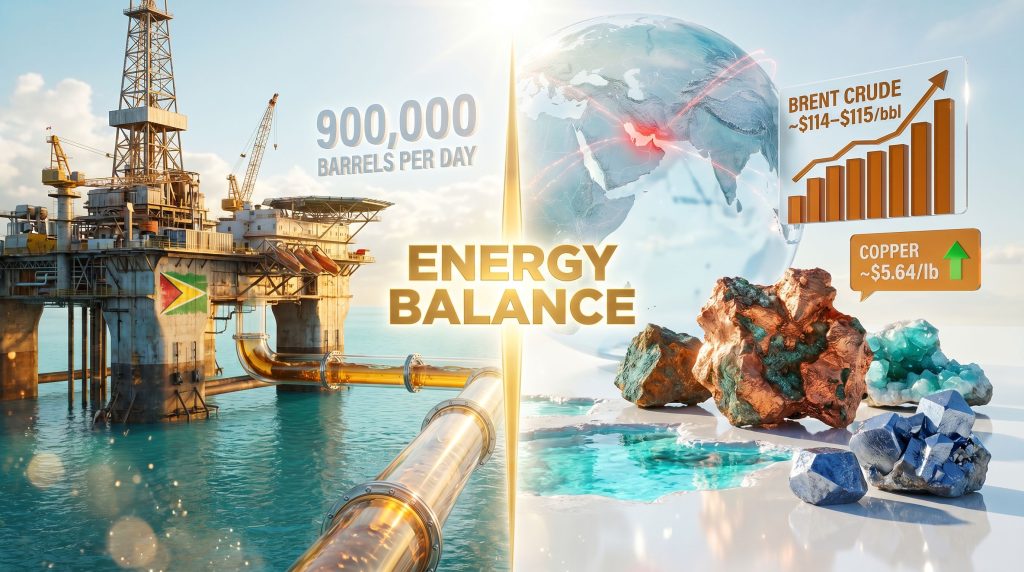
Brent crude surged approximately 6% to around $114 per barrel, reaching multi-year highs and reigniting inflation concerns across import-dependent economies. Qatar's LNG export capacity, which represents a significant share of global supply, faces acute uncertainty in this environment, compressing gas supply at a moment when industrial demand remains elevated.
The downstream implications extend well beyond petrol prices:
- Fertilizer production costs, heavily tied to natural gas input prices, face upward pressure that threatens agricultural input affordability
- Shipping costs across virtually all traded goods categories are rising in response to higher bunker fuel prices
- Petrochemical feedstocks, which underpin plastics, pharmaceuticals, and industrial chemicals, become more expensive throughout the supply chain
- Food security in import-dependent developing nations faces compounding pressure from multiple directions simultaneously
What the Hormuz disruption has made undeniable is the structural fragility of an energy architecture built around geographically concentrated production nodes. Consequently, energy security has moved from a background policy consideration to a first-order political priority across multiple continents simultaneously.
The Case Against the Linear Transition Narrative
In response to the price shock, governments across the EU and China are accelerating domestic renewable energy investment. The logic is straightforward: wind and solar represent indigenous energy sources that reduce exposure to geopolitical chokepoints. In strategic terms, building a solar park in Bavaria or a wind farm in Shandong creates energy that cannot be embargoed, priced at will by a foreign state, or disrupted by a missile strike on a distant oil facility.
However, Guyana President Irfaan Ali, speaking at the Offshore Technology Conference in Houston on May 4, 2026, challenged the assumption that this shift eliminates vulnerability rather than relocating it. Speaking as the leader of one of the world's fastest-growing oil-producing nations, Ali argued that the global rush toward electrification risks substituting dependence on fuel-exporting states with dependence on mineral-exporting ones. The critical minerals demand underpinning this transition is, in many ways, the central issue of our era.
His argument rests on a straightforward material reality: every solar panel, wind turbine, electric vehicle, and grid-scale battery requires physical inputs that are no less geographically concentrated than the oil reserves they are meant to replace.
The core tension Ali identified is not between fossil fuels and renewables. It is between two different maps of where the world's critical resource dependencies are located, and how exposed each one is to political leverage, supply disruption, and price volatility.
What a Mineral-Intensive Energy System Actually Requires
The transition from a fuel-intensive to a mineral-intensive global energy system is not a metaphor. It has specific material implications that are already visible in commodity markets.
| Critical Mineral | Primary Energy Transition Application | Market Context (May 2026) |
|---|---|---|
| Copper | Electrical wiring, grid infrastructure, EV motors | Trading near all-time highs at approximately $5.64/lb |
| Lithium | Battery storage, electric vehicles | Significantly below 2022 peak levels |
| Cobalt | Battery cathodes, energy storage systems | Remains structurally volatile |
| Nickel | Battery anodes, stainless steel in infrastructure | Below 2022 highs |
| Rare Earths | Permanent magnets in wind turbines and EV motors | Processing dominated by a single nation |
Why Copper's Price Signal Matters
Copper's trajectory is particularly instructive. The metal's price signal reflects market anticipation of accelerating electrification demand in a world where supply expansions face long permitting timelines, declining ore grades at existing mines, and increasing capital intensity. Furthermore, a new copper mine from discovery to production typically requires 10 to 20 years under normal regulatory conditions, meaning the supply response to current price signals will arrive late relative to the demand curve. The ongoing copper supply crunch represents one of the most significant structural challenges facing the clean energy buildout.
Lithium, Nickel, and the Volatility Problem
Lithium and nickel, by contrast, have retreated sharply from their 2022 peaks. This reflects a combination of supply expansion in response to earlier price spikes, and demand timing uncertainty as EV adoption curves vary by region. The price weakness in these metals illustrates a key dynamic in critical mineral markets: they can be simultaneously essential and volatile, creating significant planning challenges for both governments and industrial consumers.
Rare earth processing presents a distinct category of concern. While rare earth minerals are geographically distributed across multiple continents, the processing infrastructure required to convert raw ore into usable materials is overwhelmingly concentrated in China. This creates what analysts describe as a single-point-of-failure dynamic, where physical ore supply could theoretically be diversified, but the pathway from mine to magnet remains narrowly controlled. Indeed, China's rare earth restrictions have already demonstrated how quickly this leverage can be applied.
Resource Nationalism: The Emerging Fault Line
Ali explicitly identified resource nationalism as an accelerating trend accompanying the energy transition. This is not a new phenomenon in commodity markets, but its application to critical minerals represents a qualitatively different challenge than historical episodes involving oil or coal.
The pattern follows a recognisable sequence:
- A mineral is identified as strategically critical to energy transition or national security objectives
- Demand projections cause prices to rise
- Host governments reassess the terms under which foreign companies extract that mineral
- Royalty rates, ownership requirements, export restrictions, or taxation frameworks are revised upward
- Investment uncertainty increases, potentially delaying supply expansion at exactly the moment demand is accelerating
This dynamic is already observable across the lithium sector. The so-called Lithium Triangle, encompassing Chile, Argentina, and Bolivia, contains an estimated more than half of the world's known lithium reserves. Each of these nations has, to varying degrees, taken steps to assert greater state control over lithium development. Bolivia nationalised its lithium industry entirely, while Chile expanded state enterprise involvement in new concessions. These decisions were driven by the same logic that has motivated oil-producing states for decades: the recognition that scarcity creates leverage.
Cobalt presents an even sharper concentration risk. The DRC cobalt export ban has illustrated precisely how politically exposed this supply chain has become. Unlike oil, where the OPEC framework at least provides a degree of coordinated predictability, there is no equivalent institutional structure governing critical mineral supply policy.
For investors and policymakers alike, the resource nationalism risk in critical minerals may prove more disruptive than the equivalent dynamic in oil, precisely because the institutional frameworks for managing it are far less developed.
Guyana's Position: Fiscal Winner, Strategic Thinker
Guyana commenced oil production approximately six years ago and has scaled with remarkable speed to approximately 900,000 barrels per day, anchored primarily by the Stabroek Block operated in partnership with major international energy companies. The country's ascent has been among the fastest in the history of petroleum development, and the Iran war's impact on crude prices has transformed that production into a significant fiscal windfall.
Government oil revenues for 2026 are projected at approximately US$2.79 billion, with the Natural Resource Fund accumulating reserves that provide Guyana with a macroeconomic buffer that most small nations lack. In an environment where Brent crude is trading well above $100 per barrel, the country's fiscal position has materially strengthened.
However, as Guyana's president has noted publicly, Guyana's oil has characteristics that limit its role as a direct substitute for disrupted Middle Eastern supply. The country produces light sweet crude, a grade that is chemically distinct from the heavier crude grades that dominate Persian Gulf exports and that many Asian refineries are specifically configured to process.
Light sweet crude is characterised by lower sulphur content and lower density relative to heavy sour crude. It commands a premium in some markets but requires different refinery configurations than heavy grades. This technical distinction matters because global refining infrastructure has been built around specific crude slate assumptions, and substitution between grades is not instantaneous or cost-free.
Ali's dual-track strategy — extracting maximum value from hydrocarbon assets while simultaneously investing in renewable and lower-carbon energy infrastructure domestically — positions fossil fuel revenues as transitional capital rather than permanent income. For a nation of approximately 850,000 people whose domestic energy infrastructure currently struggles to meet basic demand, this sequencing reflects a pragmatic acknowledgment that energy development cannot skip stages.
The next major ASX story will hit our subscribers first
Energy Balance: A Reframing With Real Policy Consequences
The conceptual shift Ali proposed at the Offshore Technology Conference — replacing the term energy transition with energy balance — carries implications that extend beyond semantics. The conventional transition narrative implies a directional journey with a clear endpoint: a world running primarily on renewables, with fossil fuels progressively phased out. This framing is coherent for wealthy, energy-secure economies with the capital, infrastructure, and institutional capacity to manage the transition costs.
For developing nations, however, the calculus is fundamentally different. A country where reliable electricity access remains incomplete cannot treat the transition as a linear process. These nations face simultaneous imperatives:
- Meeting present energy demand for populations with legitimate development aspirations
- Building future-oriented infrastructure that is compatible with a lower-carbon global economy
- Avoiding fiscal exposure to stranded assets if transition timelines accelerate faster than projected
- Navigating multilateral financing frameworks that increasingly condition development capital on emissions commitments
The energy balance framing acknowledges this complexity. It implicitly challenges the assumption, embedded in many international climate finance structures, that the pathway appropriate for decarbonised wealthy economies translates universally. As Ali noted, the world does not simply need cleaner energy — it needs significantly more energy, a distinction that matters enormously when baseline access remains unresolved for hundreds of millions of people.
This perspective has significant implications for how development banks, sovereign wealth vehicles, and climate finance institutions assess project eligibility. An energy balance framework would require these institutions to accommodate hydrocarbon investment in developing nations as a legitimate transitional mechanism rather than treating all fossil fuel development as categorically incompatible with climate objectives.
The Supply Chain Geography of Risk
Where Critical Minerals Are Actually Produced
Understanding the mineral dependency argument requires a clear view of where critical minerals are extracted and processed. In addition to geographic concentration, the processing infrastructure adds another layer of vulnerability:
- Lithium: Production dominated by Australia and the Lithium Triangle nations (Chile, Argentina, Bolivia), with direct lithium extraction technologies emerging as a potential game-changer for supply timelines
- Cobalt: Overwhelmingly sourced from the Democratic Republic of Congo, creating acute single-country dependency
- Copper: More geographically distributed, with major production in Chile, Peru, the Democratic Republic of Congo, and Australia, but facing structural supply constraints from declining ore grades and long development timelines
- Rare Earth Processing: China processes the substantial majority of global rare earth output regardless of where ore is mined, giving it effective control over a critical step in clean energy manufacturing
- Nickel: Indonesia has emerged as the dominant producing nation following substantial investment in nickel laterite processing, with geopolitical implications for supply security
Each of these concentration patterns creates a leverage point that producing nations are increasingly aware of. The historical parallel with oil is imperfect but instructive: OPEC demonstrated that coordinated supply management by resource-rich states can fundamentally reshape global economic and political relationships.
What This Means for Investment Risk
For investors evaluating exposure to critical mineral supply chains, the relevant risk framework now incorporates not just price volatility and project execution risk, but political and regulatory exposure in host countries that are reassessing their resource terms. As energy investment flows into both fossil fuel and mineral sectors remain insufficient relative to long-term demand, the structural case for diversified exposure to this thematic strengthens considerably. This represents a structural shift in how mining project risk profiles should be constructed — one that the broader investment community is still in the process of pricing in.
The Guyana president warns of mineral dependence as Iran war speeds shift from oil, and this warning deserves to be heard as more than the self-interested commentary of a hydrocarbon producer. It reflects a sophisticated reading of how resource dependency actually functions — not as a characteristic of any particular fuel type, but as a structural feature of any energy system built on geographically concentrated inputs. The challenge ahead is not simply to transition, but to do so with a clear-eyed understanding of which vulnerabilities are being exchanged and for which others.
Disclaimer: This article contains forward-looking statements, price projections, and analysis of geopolitical scenarios. These represent assessments based on information available at the time of writing and should not be construed as financial advice. Commodity prices, political developments, and energy transition timelines are subject to rapid and unpredictable change. Readers should conduct independent research before making investment decisions.
Want to Capitalise on the Next Major Critical Minerals Discovery Before the Broader Market?
As geopolitical pressures accelerate demand for copper, lithium, cobalt, and rare earths, Discovery Alert's proprietary Discovery IQ model delivers real-time alerts on significant ASX mineral discoveries — turning complex commodity data into actionable investment insights the moment they hit the market. Explore historic examples of exceptional discovery returns and begin your 14-day free trial at Discovery Alert to position yourself ahead of the next major find.