
June 7, 2026
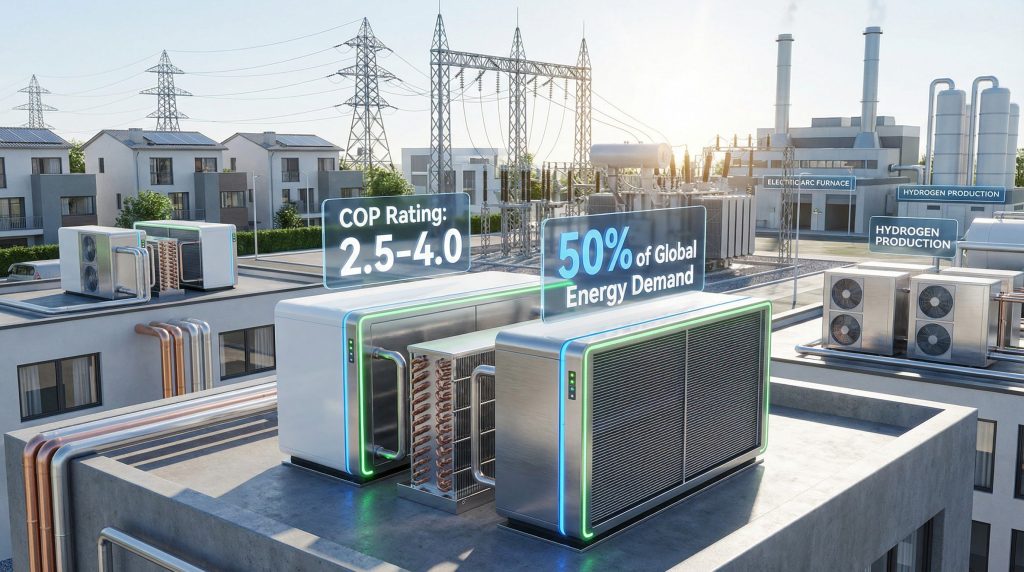
The global challenge of heat decarbonisation represents one of the most complex puzzles in the transition to clean energy systems. As nations grapple with reducing emissions across all sectors, the question is electrification the answer to heat decarbonisation becomes increasingly urgent. Heat accounts for approximately 50% of global final energy consumption, with roughly 90% currently relying on fossil fuels. This massive thermal demand spans everything from residential heating to steel production, creating diverse technical requirements that resist universal solutions. The complexity of heat applications, coupled with varying temperature needs and regional differences, suggests that successful decarbonisation will require multiple coordinated approaches rather than a single technological pathway.
What Makes Heat Decarbonisation So Challenging?
Thermal energy systems present some of the most complex engineering challenges in modern decarbonisation efforts. Unlike electricity generation, where renewable technologies can directly replace fossil fuel plants, heat applications span an enormous range of technical requirements that resist universal solutions.
The Scale of Global Heat Consumption
Heat represents approximately 50% of global final energy consumption, significantly outpacing electricity demand across all sectors. According to the International Energy Agency's World Energy Outlook 2023, roughly 90% of this thermal demand currently relies on fossil fuels, creating a massive decarbonisation challenge that dwarfs the power sector transformation.
Industrial processes alone account for 74% of total heat demand, with temperature requirements ranging from 80°C for food processing to over 2,000°C for steel production. This vast spectrum of thermal applications creates fundamental barriers to implementing unified decarbonisation strategies across different sectors.
The geographic distribution of heat demand adds another layer of complexity. Northern European and North American regions experience heating demands that can increase 40-60% during peak winter periods, while tropical regions focus primarily on industrial process heat. These variations require regionally adapted solutions rather than globally standardised approaches. The energy transition challenges faced by different countries highlight the need for tailored decarbonisation strategies.
Temperature-Dependent Technology Requirements
Different thermal applications demand fundamentally distinct decarbonisation pathways based on their operating temperatures:
- Low-temperature heating (below 100°C): Heat pumps achieve 300-400% efficiency through coefficient of performance ratings
- Medium-temperature processes (100-400°C): Industrial heat pumps or concentrated solar thermal systems
- High-temperature applications (above 1,000°C): Hydrogen combustion, electric arc furnaces, or alternative synthetic fuels
Modern air-source heat pumps deliver coefficient of performance (COP) ratings between 2.5-4.0 under standard testing conditions, meaning they produce 2.5-4 units of heat for every unit of electricity consumed. Ground-source systems achieve even higher efficiencies, reaching COP values of 4-6 under optimal soil conditions and design specifications.
However, COP performance degrades significantly with temperature differential increases. For every 5°C increase in output temperature, COP decreases by approximately 15-20%, limiting high-temperature applications for electric heat pump systems. This temperature dependency illustrates why electrification alone cannot address all thermal applications effectively.
When big ASX news breaks, our subscribers know first
How Effective Is Electrification for Building Heat?
Building heat electrification represents the most technically feasible pathway for decarbonising residential and commercial thermal demand. Heat pump technologies have matured rapidly, offering both environmental benefits and operational efficiency improvements over conventional heating systems.
Heat Pump Performance Metrics
Table: Heat Pump Efficiency Comparison
| Heat Pump Type | COP Rating | Annual CO₂ Savings (tons) | Grid Carbon Intensity Dependency |
|---|---|---|---|
| Air-source | 2.5-4.0 | 1.0-1.8 | High |
| Ground-source | 4.0-6.0 | 1.6-2.4 | High |
| Hybrid systems | 3.2-4.2 | 1.3-1.9 | Medium |
Modern cold-climate heat pumps maintain functional efficiency down to -25°C, though seasonal performance coefficients decline significantly below -15°C. Advanced refrigerant technologies and variable-speed compressors enable these systems to operate effectively in harsh winter conditions where traditional heat pumps previously failed.
Real-world performance varies substantially from laboratory testing conditions due to:
- Cycling losses: Frequent on/off cycling in mild climates reduces effective COP by 10-15%
- Installation quality: Poor insulation and ductwork design can reduce effective performance by 20-30%
- Maintenance factors: Dirty filters and refrigerant leaks decrease efficiency over time
Emissions Reduction Potential
Electrification delivers heat decarbonisation at approximately $19 per ton of avoided emissions in regions with clean electricity grids, compared to $116 per ton for synthetic gas alternatives. However, emissions benefits depend entirely on regional grid carbon intensity.
Furthermore, the decarbonisation benefits extend beyond direct emissions reductions to include improved air quality and reduced dependence on fossil fuel imports. In decarbonised grids such as Denmark (22% fossil fuels in 2023) and France (less than 3% coal), heat pumps provide 60-80% emissions reductions versus natural gas heating.
"The effectiveness of heat pump deployment hinges critically on the carbon intensity of electricity generation. In coal-heavy grids, heat pumps may initially produce higher lifetime emissions than efficient gas heating systems."
Conversely, in coal-heavy grids like Poland (72% coal) and parts of Germany (33% coal as of 2024), heat pump emissions benefits remain marginal until grid decarbonisation progresses further. This dependency highlights the interconnected nature of electricity and heat decarbonisation efforts.
Cost-Effectiveness Analysis
Residential heat pump installation costs vary from $8,000-15,000 USD in North America, including removal of existing heating systems. Learning curve projections indicate 15% cost reductions expected by 2030 through manufacturing scale and supply chain optimisation.
Supply chain constraints present significant scaling challenges. Global heat pump manufacturing capacity reached approximately 5 million units annually in 2023, while building decarbonisation targets require 7-8 million units annually by 2030 according to IEA Net Zero Roadmap projections. These capacity limitations could delay widespread deployment and maintain elevated costs longer than anticipated.
Where Does Electrification Fail in Industrial Applications?
Industrial heat applications expose the fundamental limitations of electrification as a universal decarbonisation solution. Temperature requirements, process chemistry constraints, and energy density demands create technical barriers that current electric technologies cannot overcome.
Temperature Limitations of Electric Technologies
Conventional electric resistance heating reaches maximum temperatures of 1,200-1,300°C in standard industrial applications. Specialised electric arc furnaces and induction systems can exceed these temperatures, but cost, energy density, and power supply requirements become prohibitive for most industrial processes.
This temperature ceiling excludes electrification from critical industrial applications:
- Steel production: Requires 2,000°C+ for blast furnace operations
- Cement manufacturing: Kiln operating temperature of 1,450°C with specific thermal profiles
- Glass production: Furnace temperatures of 1,700°C for melting operations
- Aluminium smelting: 960°C but requiring massive continuous power demand
These limitations demonstrate why the question is electrification the answer to heat decarbonisation cannot be answered with a simple yes. Industrial processes require diverse technological approaches tailored to their specific thermal and chemical requirements.
Process-Specific Constraints
Beyond temperature limitations, industrial electrification faces operational barriers that resist technological solutions. Energy density requirements present a significant challenge, with high-temperature industrial processes requiring sustained power densities of 1-5 MW/m³. Current electrical infrastructure supports these levels only at limited industrial sites, requiring substantial distribution network investments for scaling.
Process chemistry integration creates additional complexity. Steel production exemplifies this challenge, where direct reduction processes require not just high temperature but reactive carbon for ore reduction. Simply replacing heat sources without addressing chemical requirements proves insufficient for complete decarbonisation.
Continuous operation needs further complicate electrification efforts. Manufacturing facilities require 24/7 reliability unsuitable for variable renewable electricity sources without substantial storage systems. Grid stability concerns for continuous high-demand processes create additional infrastructure requirements.
Industrial electric arc furnaces for steel production cost $800M-1.2B USD for integrated facilities with 1 million ton/year capacity. Operating costs per ton of steel reach approximately $120-150/ton via electric arc versus $90-110/ton via blast furnaces under 2024 market conditions. These economic factors significantly impact the feasibility of electrification in heavy industry.
What Are the Grid Infrastructure Requirements?
Widespread heat electrification would fundamentally reshape electricity demand patterns, requiring massive infrastructure investments and grid modernisation efforts. The scale of required changes extends far beyond simple generation capacity additions.
Electricity Demand Projections
Heat electrification would increase electricity demand by 20-30% by 2050 in developed economies according to IEA Net Zero Scenario projections, with significant regional variations:
- Nordic countries: 15-20% increase (already 90%+ renewable electricity)
- Central/Eastern Europe: 35-45% increase (coal dependency, legacy infrastructure)
- Western Europe: 25-35% increase (coal phase-outs ongoing, grid modernisation)
These projections require coordinated infrastructure development addressing distribution network upgrades, grid flexibility solutions, and energy storage systems. The energy exports challenges facing many resource-rich nations highlight the complexity of balancing domestic electrification needs with export commitments.
Moreover, the infrastructure requirements must handle peak heating loads concentrated during coldest periods, manage seasonal demand variations and renewable intermittency, and bridge supply-demand gaps during peak heating periods through advanced energy storage systems.
Regional Grid Carbon Intensity Impact
Table: Grid Carbon Intensity by Region (2024)
| Region | Coal Percentage | Renewable Percentage | Heat Pump Emissions Benefit |
|---|---|---|---|
| Denmark | 22% | 68% wind/solar | 60-80% reduction |
| France | <3% | 70% nuclear | 70-85% reduction |
| Germany | 33% | 45% wind/solar | 30-50% reduction |
| Poland | 72% | 15% renewable | Marginal/negative |
Grid modernisation requirements extend beyond generation capacity. Advanced metering and demand response systems can reduce required capacity additions by 20-30%, reducing infrastructure investment needs from estimated $500-800 billion to $350-550 billion for EU-wide implementation.
Seasonal Storage Requirements
Meeting winter heating demand via electrification requires unprecedented energy storage deployment:
- Battery storage: 2-3 TWh capacity (current global production approximately 0.7 TWh annually)
- Thermal storage: 100-150 million cubic metres of hot water storage or equivalent
- Green hydrogen capacity: 50-80 GW electrolysis capacity for seasonal storage
These storage requirements highlight the enormous infrastructure challenges associated with full heat electrification. The current global battery production capacity falls far short of requirements, whilst thermal and hydrogen storage solutions remain largely undeveloped at the required scale.
Which Alternative Technologies Complement Electrification?
Recognition of electrification limitations has accelerated development of complementary decarbonisation technologies. These alternatives address specific applications where electric solutions prove technically or economically infeasible.
Hydrogen for High-Temperature Applications
Green hydrogen enables decarbonisation of steel, cement, and chemical production through high-temperature combustion capabilities reaching 2,000-2,100°C. Hydrogen flame temperature in air reaches approximately 2,000-2,100°C, though industrial applications typically operate at 1,500-1,800°C for process stability and equipment durability.
Direct reduction processes using hydrogen replace 60-80% of coking coal requirements in steel production. This represents process redesign rather than simple fuel substitution, requiring substantial capital investment and operational modifications. The development of critical minerals energy transition infrastructure becomes crucial for supporting these hydrogen-based industrial processes.
Chemical feedstock replacement in ammonia and methanol production offers additional decarbonisation pathways. Hydrogen serves dual roles as both energy source and chemical input, addressing process chemistry requirements that electrification cannot fulfil.
Green hydrogen costs are declining rapidly, with 50% cost reductions projected by 2030 through electrolyzer scaling and renewable electricity cost decreases. Current production costs of $3-6/kg are expected to reach $1.50-3/kg by 2030 in optimal renewable resource regions.
Carbon Capture and Storage Integration
Carbon capture, utilisation, and storage (CCUS) technology allows continued use of existing industrial infrastructure while capturing 85-95% of process emissions. This approach proves particularly valuable for cement and steel production, where process emissions derive from chemical reactions rather than just fuel combustion.
CCUS costs are declining through scale deployment, with 30% cost reductions anticipated by 2030. Current capture costs of $50-100/ton CO₂ are projected to decrease to $35-70/ton CO₂ through technological improvements and deployment experience. Additionally, electrification deployment strategies are being developed to optimise the integration of electric heating with carbon capture systems.
How Do Costs Compare Across Decarbonisation Pathways?
Table: Comprehensive Decarbonisation Cost Comparison
| Application | Electrification Cost ($/ton CO₂) | Hydrogen Cost ($/ton CO₂) | CCUS Cost ($/ton CO₂) |
|---|---|---|---|
| Residential heating | $19-35 | Not applicable | Not applicable |
| Low-temp industrial | $25-45 | $85-120 | $65-90 |
| Medium-temp industrial | $45-80 | $90-140 | $70-100 |
| High-temp industrial | Not feasible | $120-180 | $75-110 |
Learning curve effects are accelerating cost reductions across all decarbonisation pathways:
- Heat pump costs: 15% reduction expected by 2030 through manufacturing scale
- Green hydrogen: 50% cost reduction projected by 2030 via electrolyzer improvements
- CCUS: 30% cost reduction anticipated through deployment experience
Regional variations significantly impact cost competitiveness. Areas with abundant renewable resources favour electrification and green hydrogen, whilst regions with existing industrial infrastructure and geological storage potential favour CCUS integration. The critical minerals strategy plays a crucial role in determining regional cost competitiveness for different decarbonisation pathways.
The next major ASX story will hit our subscribers first
What Does Successful Implementation Look Like?
Real-world deployment examples provide valuable insights into effective heat decarbonisation strategies. These case studies demonstrate the importance of integrated planning and coordinated infrastructure development.
Copenhagen's District Heating Model
Copenhagen achieved 85% renewable heat supply as of 2023 through comprehensive district heating integration. The system incorporates:
- Large-scale heat pump deployment: Industrial-scale systems with COP ratings of 3.5-4.5
- Waste heat recovery systems: Capturing industrial and data centre waste heat
- Integrated renewable electricity and heating planning: Coordinated wind power and heating demand
- 600+ km of distribution pipes: Serving 400,000 residents with reliable thermal supply
This district heating approach reduces individual building heating costs by 30-40% compared to individual heat pump installations, whilst providing greater system resilience and efficiency. Furthermore, this model demonstrates how coordinated planning can address the question is electrification the answer to heat decarbonisation through integrated systems rather than isolated technologies.
Industrial Cluster Approaches
Successful industrial decarbonisation requires coordinated infrastructure development addressing multiple facilities simultaneously. Shared hydrogen production facilities reduce per-unit production costs by 25-35% compared to individual facility installations through centralised electrolysis plants serving multiple industrial users.
Common CCUS transport and storage networks reduce per-ton capture costs by 20-30% through economies of scale via shared pipeline and storage infrastructure. Integrated renewable electricity supply agreements provide price stability and enable renewable project financing through long-term power purchase agreements for industrial clusters.
Frequently Asked Questions About Heat Electrification
Can Heat Pumps Work in Cold Climates?
Modern cold-climate heat pumps maintain efficiency down to -25°C, though backup heating systems are recommended for extreme conditions. Advanced refrigerant technologies and variable-speed compressors enable reliable operation in harsh winter conditions where traditional systems previously failed.
Seasonal performance factors (SPF) decline significantly below -15°C, requiring hybrid system designs combining heat pumps with supplementary heating for optimal performance and cost-effectiveness. However, recent developments in heat decarbonisation solutions are expanding the temperature ranges where heat pumps remain viable.
What About Existing Gas Infrastructure?
Existing natural gas distribution networks can be repurposed for hydrogen distribution, though pipeline upgrades and safety modifications are required. Steel pipelines require replacement or liner installation to prevent hydrogen embrittlement, whilst plastic pipes may require upgrading for hydrogen compatibility.
Conversion costs range from $100-300 per metre of pipeline, depending on pipe material and diameter. Safety systems require substantial upgrades due to hydrogen's different combustion characteristics and leak detection requirements.
How Long Does Heat Pump Installation Take?
Typical residential installations require 1-2 days for straightforward replacements, whilst commercial systems may need 1-2 weeks depending on system complexity and building modifications required.
Retrofit installations often require electrical service upgrades, ductwork modifications, and building envelope improvements, extending installation timelines to 3-5 days for residential applications.
Future Outlook: Integrated Decarbonisation Strategies
Optimal heat decarbonisation strategies combine multiple technological approaches rather than relying on single solutions. This integrated approach addresses the diverse requirements of different thermal applications whilst maximising cost-effectiveness and emissions reductions.
Technology Integration Requirements
Comprehensive decarbonisation frameworks incorporate:
- Electrification for 90%+ of building applications: Heat pumps for residential and commercial heating
- Hydrogen for high-temperature industrial processes: Steel, cement, and chemical production
- CCUS for transitional industrial applications: Existing facilities requiring immediate emissions reductions
- Renewable thermal for medium-temperature processes: Solar thermal and biomass integration
Disclaimer: Future technology deployment scenarios involve significant uncertainty regarding cost reductions, infrastructure development timelines, and policy support mechanisms. Actual implementation rates may vary substantially from current projections based on technological breakthroughs, regulatory changes, and economic conditions.
Policy Support Mechanisms
Successful deployment requires coordinated policy frameworks addressing infrastructure investment, technology subsidies, and carbon pricing mechanisms. Heat decarbonisation represents a complex challenge demanding integrated planning, substantial capital investment, and coordinated policy support across multiple sectors and stakeholders.
In conclusion, the question is electrification the answer to heat decarbonisation reveals a nuanced reality: whilst electric solutions excel for building applications and lower-temperature industrial processes, comprehensive decarbonisation requires diverse technological pathways tailored to specific thermal applications and regional conditions. The path forward demands coordinated deployment of electrification, hydrogen, and carbon capture technologies, supported by massive infrastructure investments and policy frameworks that recognise the complexity of thermal energy systems.
Want to Capitalise on the Energy Transition's Investment Opportunities?
The energy transition and heat decarbonisation present significant investment opportunities across emerging technologies, from heat pump manufacturers to hydrogen infrastructure developers. Discovery Alert's proprietary Discovery IQ model delivers real-time alerts on significant ASX mineral discoveries, instantly empowering subscribers to identify actionable opportunities in critical minerals and energy transition stocks ahead of the broader market. Begin your 14-day free trial today and secure your market-leading advantage in this rapidly evolving sector.