May 18, 2026
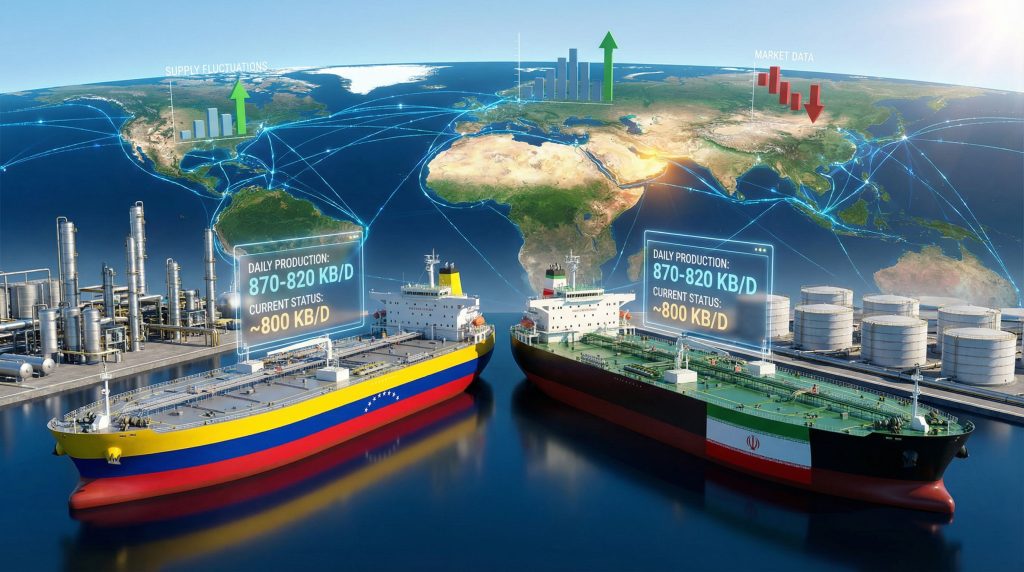
The global energy landscape continues to experience unprecedented volatility as geopolitical tensions reshape fundamental supply-demand relationships across commodity markets. Modern energy systems operate within an interconnected framework where regional disruptions cascade through international trade networks, creating ripple effects that extend far beyond immediate production zones. Understanding these macro-economic forces requires examining how strategic resource dependencies intersect with political instability, financial market dynamics, and technological constraints that define contemporary energy security. Furthermore, recent developments highlight how supply disruptions in Venezuela and Iran create cascading effects throughout global markets.
Understanding the Strategic Importance of Heavy Crude Supply Chains
Venezuela and Iran occupy unique positions within global energy markets due to their substantial proven reserves and specialised crude oil characteristics. Venezuela holds approximately 303.8 billion barrels of proven oil reserves, representing roughly 17.9% of global proven reserves, while Iran controls about 157.8 billion barrels, accounting for approximately 9% of worldwide reserves. These figures underscore the strategic significance of both nations despite their current production constraints.
The quality profile of Venezuelan crude presents particular challenges for global refiners. Characterised as heavy crude with API gravity ranging from 8-12 degrees, Venezuelan oil requires specialised refining infrastructure equipped with coking capacity. This technical requirement creates supply chain bottlenecks because heavy crude cannot be easily substituted with lighter grades without significant operational modifications.
Chinese independent refineries, often referred to in industry circles as "teapot refiners," have developed specialised capabilities to process these heavier crude grades. These facilities account for approximately 50-55% of China's total refining capacity, representing roughly 6-7 million barrels per day of the country's 15+ million barrels per day total refining capacity. Their preference for discounted heavy crude sources reflects economic optimisation strategies that prioritise cost advantages over supply security considerations.
Geographic Chokepoint Vulnerabilities
Iran's strategic control over the Strait of Hormuz creates asymmetric leverage in global energy markets. Approximately 20-21% of globally traded crude oil transits this waterway, representing daily volumes of 21-23 million barrels per day. Historical precedent demonstrates Iran's willingness to threaten closure during periods of escalated tensions, as witnessed during confrontations in 2012 and 2019.
Alternative routing scenarios present significant logistical challenges:
- Suez Canal routing adds approximately 7-10 days versus Strait of Hormuz routing
- Cape of Good Hope routing extends journey times by 20-25 days
- War-risk insurance premiums escalate from 0.125-0.25% to 0.5-2.0% of cargo value during tensions
- Limited global storage capacity constrains buffering capabilities against extended disruptions
Moreover, these chokepoint vulnerabilities contribute to oil price movements under trade war conditions, as market participants factor in potential supply disruptions.
When big ASX news breaks, our subscribers know first
Current Production Realities and Infrastructure Constraints
Venezuela's oil production has experienced dramatic decline over the past two decades. From peak production levels of approximately 3.2 million barrels per day in 1997, output fell to roughly 440-480 thousand barrels per day by late 2023. This represents a decline of more than 85% from historical capacity.
| Metric | Historical Peak | Current Status | Key Constraints |
|---|---|---|---|
| Daily Production | 3.2 mb/d (1997) | 440-480 kb/d (2023) | Infrastructure degradation |
| Refinery Utilisation | 70%+ (historical) | 15-25% (current) | Maintenance deficits |
| Export Terminal Capacity | Normal operations | Reduced throughput | Equipment limitations |
Iran faces different but equally challenging constraints. Despite maintaining production capacity of approximately 3.8-4.0 million barrels per day under sanctions, the country exported roughly 2.5 million barrels per day before comprehensive sanctions reduced exports to 0.4-0.6 million barrels per day within twelve months during 2018-2019. Consequently, this US oil production decline analysis becomes particularly relevant when considering global supply balances.
Currency Devaluation and Import Capacity Constraints
Iran's rial has experienced severe depreciation, falling from approximately 10,000-12,000 rials per USD in 2011 to 84,000-100,000+ rials per USD by 2023, depending on official versus parallel market rates. This devaluation has severely constrained the country's ability to import essential equipment and supplies required for oil sector operations.
Venezuela faces similar challenges with bolivar devaluation reducing purchasing power for:
- Replacement equipment for oil infrastructure
- Specialised chemicals and catalysts for crude processing
- Energy supplies (fuel, electricity) for production facilities
- International financing for capital expenditure projects
What Drives Market Psychology and Investment Flow Dynamics?
Supply disruptions in Venezuela and Iran create psychological pressure on energy markets that often exceeds immediate physical impact. Market participants demonstrate heightened sensitivity to geopolitical developments affecting these regions due to their historical significance and potential for rapid escalation. Additionally, oil price rally dynamics often reflect these psychological factors alongside fundamental supply concerns.
Risk premium calculations reflect multiple uncertainty factors:
- Probability assessment of extended supply disruptions
- Timeline estimates for production restoration
- Alternative sourcing availability and cost premiums
- Storage capacity constraints limiting market buffering
Investment flows respond to perceived supply security through:
- Capital allocation shifts toward stable production jurisdictions
- Strategic reserve policies prompting government stockpiling responses
- Technology acceleration in enhanced recovery and alternative energy sectors
- Supply chain diversification initiatives reducing dependency on high-risk sources
Heavy Crude Substitutability Challenges
The limited substitutability of heavy crude grades creates structural market rigidities during supply disruptions in Venezuela and Iran. Processing heavy crude requires:
- Specialised coking capacity not available in all refineries
- Higher thermal energy input increasing operational costs
- Capital-intensive equipment modifications for grade switching
- Significantly different yield structures affecting product economics
Heavy crude typically trades at $10-20 per barrel discount to light sweet crude benchmarks like Brent, reflecting processing complexity and infrastructure requirements. This price differential provides economic incentives for refiners with appropriate capabilities but limits market flexibility during supply disruptions. However, these dynamics can quickly shift, as demonstrated in recent oil price crash analysis studies.
Shipping and Insurance Market Implications
Maritime logistics face multiple pressure points during geopolitical tensions affecting supply disruptions in Venezuela and Iran. War-risk insurance markets respond rapidly to perceived threats, with premiums historically escalating during Middle East tensions. For instance, oil prices rise on supply disruption concerns as markets react to developing situations.
Insurance market dynamics include:
- P&I club premiums increasing during regional conflicts
- London market and specialised providers adjusting coverage terms
- Cargo value percentages ranging from baseline 0.125% to crisis levels of 2.0%
- Route-specific assessments reflecting varying threat levels
Multi-sector spillover effects extend beyond energy markets:
- Shipping cost increases affecting all containerised freight
- Bunker fuel price escalation impacting maritime transport economics
- Port congestion resulting from alternative routing implementations
- Insurance cost increases for broader maritime commerce categories
Strategic Reserve and Policy Response Mechanisms
Government intervention capabilities vary significantly across consuming nations. Strategic Petroleum Reserve protocols enable emergency market interventions during supply crises, but effectiveness depends on several factors:
- Reserve volume capacity relative to import dependency
- Release coordination with international partners through IEA arrangements
- Market timing to maximise price stabilisation impact
- Replenishment strategies for maintaining long-term supply security
Central bank responses to energy-driven inflation present complex policy trade-offs. Interest rate adjustments aimed at controlling inflation may conflict with economic growth objectives, particularly when supply shocks create stagflationary pressures. Furthermore, OPEC meeting impacts often influence these policy decisions.
Financial System Protection Measures
Banking sector exposure to energy price volatility requires careful management during supply disruptions in Venezuela and Iran. Financial institutions face multiple risk vectors:
- Direct energy sector lending exposure to production companies
- Trade financing complications from sanctions and payment restrictions
- Currency stability pressures from energy import costs
- Economic recession risks from prolonged high energy prices
Technology and Alternative Energy Acceleration
Supply disruption events historically accelerate investment in alternative energy sources and enhanced recovery technologies. Market participants recognise that geopolitical supply risks create business cases for energy security investments that might not justify purely on cost grounds during stable periods.
Technology integration advancements include:
- Digital monitoring systems for supply chain transparency
- Enhanced recovery techniques increasing production from existing fields
- Energy storage technologies enabling greater supply flexibility
- Renewable energy adoption reducing fossil fuel dependency
Recent developments show how supply disruption concerns in Iran and Venezuela drive innovation in these alternative technologies.
The next major ASX story will hit our subscribers first
Regional Economic Adaptation Strategies
Consuming economies implement various adaptation mechanisms to manage supply disruptions in Venezuela and Iran. Regional bloc formation represents one strategic response, with allied nations developing closer energy partnerships to reduce dependency on unstable suppliers.
Energy security considerations increasingly drive diplomatic and economic relationships, with supply reliability often taking precedence over purely economic efficiency in sourcing decisions.
Geographic diversification strategies focus on:
- Multiple sourcing arrangements spreading supply risk across regions
- Infrastructure investment in pipeline and storage capacity expansion
- Contract term modifications including force majeure and supply security clauses
- Emergency cooperation agreements with neighbouring countries
How Are Market Structures Evolving?
Supply disruptions in Venezuela and Iran contribute to fundamental changes in global energy market structure. Traditional supply-demand relationships face disruption from sanctions regimes, technological changes, and shifting geopolitical alignments.
Price discovery mechanisms evolve to incorporate:
- Geopolitical risk premiums reflecting supply uncertainty
- Quality differentials based on crude characteristics and processing requirements
- Logistics premiums accounting for transportation and insurance costs
- Counterparty risk assessments for suppliers under sanctions
Market mechanism evolution includes:
- Enhanced hedging instruments for managing geopolitical risks
- Physical trading adaptations for sanctions compliance
- Alternative payment systems reducing US dollar dependency
- Regional pricing benchmarks reflecting local supply-demand dynamics
Investment Strategy Considerations During Supply Volatility
Portfolio managers face complex decisions during periods of heightened supply uncertainty. Traditional energy sector investments may benefit from higher prices but face operational risks in affected regions. Alternative energy investments gain attractiveness but require longer-term perspective alignment.
Hedging strategies must account for:
- Time horizon considerations balancing short-term volatility versus long-term trends
- Correlation changes between energy prices and broader market indices
- Liquidity constraints during periods of extreme market stress
- Regulatory risks from potential sanctions or policy changes
Sector rotation strategies require careful analysis of:
- Direct energy exposure through oil and gas company investments
- Indirect exposure via transportation, chemicals, and manufacturing sectors
- Geographic allocation weighting stable versus high-risk production regions
- Alternative energy positioning for long-term energy transition trends
Regulatory and Compliance Considerations
International sanctions regimes create complex compliance requirements for market participants. Supply disruptions in Venezuela and Iran often result from or coincide with expanded sanctions that affect not only direct business relationships but also secondary and tertiary commercial connections.
Financial institutions must navigate:
- OFAC compliance requirements for US dollar transactions
- EU sanctions affecting European-based trading and financing
- Secondary sanctions risks for non-US entities transacting with sanctioned parties
- Due diligence requirements for supply chain transparency
Trading companies face operational challenges including:
- Vessel tracking to avoid sanctions violations
- Documentation requirements proving origin and ownership
- Payment mechanisms that comply with financial sanctions
- Insurance coverage availability under sanctions constraints
Scenario Planning for Energy Market Participants
Effective risk management during supply disruptions in Venezuela and Iran requires robust scenario planning capabilities. Market participants must prepare for multiple potential outcomes ranging from diplomatic resolution to escalated confrontation.
Base case scenarios typically assume:
- Limited global impact from Venezuela's reduced export capacity
- Continued Iranian exports at constrained levels under sanctions
- Market adaptation through alternative sourcing and inventory management
- Short-term volatility followed by price normalisation
Stress case planning considers:
- Strait of Hormuz closure affecting 20% of global oil transit
- Compound disruption with multiple suppliers affected simultaneously
- Extended duration conflicts requiring sustained alternative arrangements
- Economic recession triggered by sustained high energy costs
Recovery scenarios focus on:
- Sanctions relief timelines and market reintegration phases
- Infrastructure restoration requirements and investment needs
- Production ramp-up capabilities after extended shutdown periods
- Market normalisation factors affecting return to pre-disruption patterns
The dynamic nature of supply disruptions in Venezuela and Iran requires continuous monitoring and adaptive strategies. Market participants who develop comprehensive understanding of technical constraints, geopolitical drivers, and economic relationships position themselves more effectively to navigate ongoing volatility while identifying opportunities within evolving market structures. Success depends on balancing short-term risk management with long-term strategic positioning in an increasingly complex global energy landscape.
Ready to Capitalise on Global Energy Market Volatility?
Discovery Alert's proprietary Discovery IQ model delivers real-time alerts on significant ASX mineral and energy discoveries, instantly empowering subscribers to identify actionable opportunities ahead of the broader market during periods of global supply uncertainty. Begin your 30-day free trial today at Discovery Alert and secure your market-leading advantage whilst energy markets navigate unprecedented volatility.