July 21, 2026
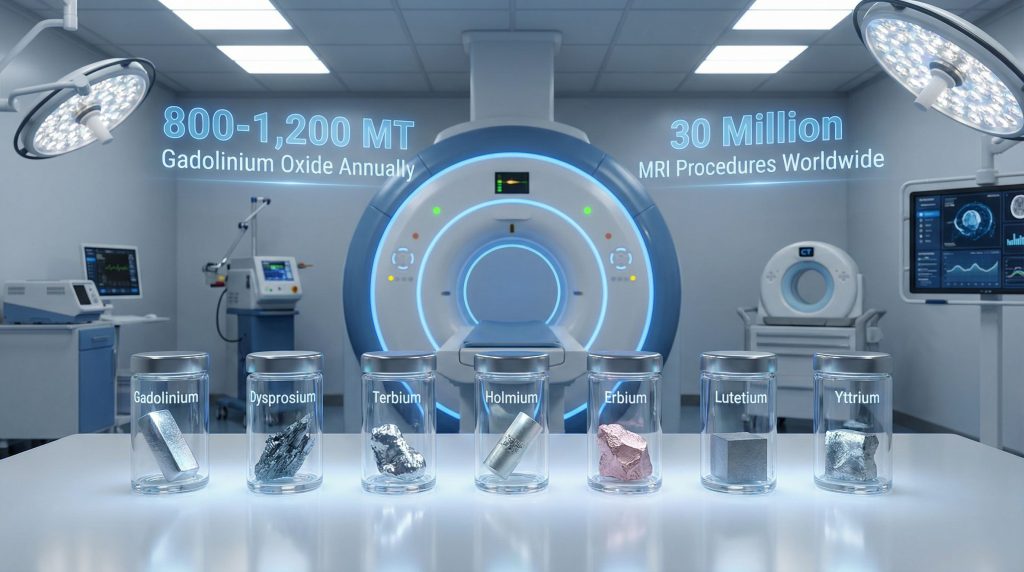
Heavy rare earth elements serve as fundamental components in modern healthcare technology, particularly in heavy rare earths in medical imaging systems that enable life-saving diagnostic procedures. These specialized minerals provide the magnetic, optical, and therapeutic properties essential for MRI scanners, CT detectors, surgical lasers, and advanced cancer treatments. However, the global healthcare infrastructure has evolved to depend on these materials without establishing resilient supply chains or alternative sourcing strategies.
This dependency creates systemic vulnerabilities that extend far beyond individual medical facilities, affecting entire healthcare networks and patient care delivery systems worldwide. Furthermore, the current geopolitical landscape has intensified concerns about supply security for these critical materials.
Understanding Heavy Lanthanides in Healthcare Applications
Heavy rare earth elements encompass a specific subset of lanthanides that possess unique magnetic, optical, and nuclear properties essential for medical applications. Gadolinium, dysprosium, terbium, holmium, erbium, and lutetium each contribute distinct capabilities that enable advanced medical technologies to function at the precision levels demanded by modern healthcare.
These elements share common 4f electron configurations that produce the specialized characteristics required for medical imaging, therapeutic delivery, and surgical precision. Their paramagnetic properties, narrow-band luminescence, and controlled radioactive decay patterns make them irreplaceable components in healthcare technology development.
Global Production and Medical Consumption Patterns:
- Annual gadolinium oxide production ranges between 800-1,200 metric tons globally
- Medical imaging applications consume approximately 25-40% of total gadolinium oxide supply
- Heavy rare earth elements support over 30 million MRI procedures annually worldwide
- Healthcare systems demonstrate 80% import dependency for critical medical minerals
The production of heavy rare earths follows a by-product recovery model rather than targeted extraction. This means medical supply security depends entirely on upstream rare earth mining and separation operations, regardless of specific medical demand levels. In addition, the critical minerals supply crisis has highlighted how healthcare planners must understand that gadolinium availability connects directly to broader rare earth market dynamics and geopolitical supply chain decisions.
Regional discharge monitoring studies reveal that healthcare facilities collectively release significant quantities of these elements into wastewater systems. This indicates both the operational scale of medical rare earth utilization and the need for enhanced recovery technologies to support circular economy initiatives.
Critical Infrastructure Dependencies
Modern medical facilities integrate heavy rare earths across multiple operational systems simultaneously. MRI suites require gadolinium-based contrast agents, permanent magnets enhanced with dysprosium and terbium, and supporting electronic systems that incorporate additional rare earth components throughout their architecture.
Emergency departments rely on CT scanners with terbium-doped detector arrays, while surgical suites utilise erbium and holmium laser systems for precision procedures. Oncology departments increasingly depend on lutetium-based radiopharmaceuticals for targeted cancer therapies, creating overlapping dependencies that amplify supply chain risks across multiple medical specialties.
When big ASX news breaks, our subscribers know first
Advanced Medical Imaging Technologies
Heavy rare earths in medical imaging enable diagnostic capabilities that fundamentally transformed healthcare delivery over the past several decades. These elements provide the technical foundation for non-invasive visualisation of internal anatomical structures, physiological processes, and pathological conditions with unprecedented clarity and precision.
MRI Technology and Gadolinium Enhancement Systems
Gadolinium-based contrast agents function through paramagnetic enhancement of magnetic resonance imaging signals. When administered intravenously, chelated gadolinium compounds alter the local magnetic field environment around water molecules in target tissues. Consequently, this shortens T1 relaxation times and increases signal intensity on T1-weighted imaging sequences.
This mechanism enables superior differentiation between healthy and pathological tissues, particularly for detecting tumours, inflammatory conditions, vascular abnormalities, and neurological disorders. The clinical impact extends across multiple medical specialties, from neurology and cardiology to oncology and musculoskeletal imaging.
Gadolinium Administration and Consumption Analysis:
| Application Area | Annual Procedures | Gadolinium Dose Range | Total Consumption Estimate |
|---|---|---|---|
| Brain and Spine MRI | 12-15 million | 0.1-0.2 mmol/kg | 180-300 metric tons |
| Cardiac MRI | 3-5 million | 0.15-0.25 mmol/kg | 90-150 metric tons |
| Abdominal MRI | 8-10 million | 0.1-0.15 mmol/kg | 120-180 metric tons |
| Specialised Studies | 2-3 million | Variable | 60-90 metric tons |
Chelation chemistry represents a critical safety consideration in gadolinium-based contrast agent development. Linear chelates demonstrate higher rates of gadolinium release in physiological conditions compared to macrocyclic structures. This has led to regulatory preferences for more stable formulations despite higher manufacturing costs.
Permanent Magnet Systems and Heavy REE Enhancement
Neodymium-iron-boron (NdFeB) permanent magnets form the foundation of MRI system magnetic field generation, with dysprosium and terbium additives providing essential thermal stability improvements. These heavy rare earth dopants prevent magnetic field degradation at elevated operating temperatures and extend operational lifespans of imaging systems.
Global NdFeB production approaches 200,000 metric tons annually, with medical applications representing a specialised but critical market segment requiring the highest performance grades. Heavy rare earth content in medical-grade magnets typically ranges from 2-8% by weight, depending on specific performance requirements and operating environment conditions.
The transition toward portable and low-field MRI systems has increased demand for optimised permanent magnet designs. These maintain field strength while reducing overall system weight and power consumption. This technological evolution requires precise control of heavy rare earth additive concentrations to balance performance, cost, and supply chain security considerations.
X-Ray and CT Detection Systems
Scintillator materials incorporating terbium, europium, and lutetium enable high-resolution X-ray and computed tomography imaging through efficient conversion of high-energy photons into visible light signals. These detector systems require precise control of luminescent properties to maximise image quality while minimising patient radiation exposure.
Terbium-doped yttrium silicate crystals produce green luminescence through 4f electronic transitions when struck by X-ray photons. The resulting light output is captured by photodiode arrays and converted into electrical signals for digital image reconstruction. This process demands exceptional purity and homogeneity in rare earth dopant distribution throughout the crystal matrix.
Scintillator Performance Characteristics:
- Light output enhancement: 300-500% improvement over undoped materials
- Energy resolution: <10% FWHM for medical imaging applications
- Decay time optimisation: <1 microsecond for high-speed imaging protocols
- Temperature stability: Maintained performance across clinical operating ranges
Modern CT scanner detector arrays contain thousands of individual scintillator elements, each incorporating carefully controlled quantities of rare earth dopants. A typical 64-row CT system requires 50-200 grams of terbium or lutetium compounds distributed across detector assemblies, representing significant cumulative demand when scaled across global medical imaging infrastructure.
Surgical Laser Systems and Precision Medicine
Heavy rare earth elements enable surgical laser technologies that provide unprecedented precision in tissue ablation, coagulation, and therapeutic delivery. Erbium and holmium-doped crystal systems generate specific wavelengths optimised for different surgical applications. These range from dermatological procedures to complex ophthalmological and urological interventions.
Erbium:YAG Laser Applications
Erbium-doped yttrium aluminium garnet (Er:YAG) lasers operate at 2.94 micrometers wavelength, corresponding to peak water absorption characteristics in biological tissues. This wavelength selection enables precise tissue ablation with minimal thermal damage to surrounding structures. Consequently, Er:YAG systems are ideal for dermatological resurfacing, dental procedures, and ophthalmological applications.
The crystal host material requires high-purity erbium incorporation at precise dopant concentrations to achieve optimal laser performance. Manufacturing tolerances demand erbium purity levels exceeding 99.9% with strict limits on competing rare earth contaminants that could interfere with lasing action or reduce operational efficiency.
Holmium:YAG Surgical Platforms
Holmium-doped YAG lasers generate 2.1 micrometer wavelength output that provides excellent penetration characteristics for urological and arthroscopic procedures. These systems excel in lithotripsy applications for kidney stone fragmentation and precise tissue cutting in minimally invasive surgical techniques.
Crystal manufacturing for Ho:YAG systems requires specialised holmium processing capabilities due to the element's limited global production and high purity requirements. Each surgical laser system contains 10-50 grams of high-grade holmium compounds, creating concentrated demand spikes when new installations occur across healthcare networks.
Surgical Laser Market Integration:
- Dermatology and cosmetic procedures: 40% of Er:YAG laser utilisation
- Ophthalmology applications: 25% market share for precision eye surgery
- Urology and stone management: 60% of Ho:YAG system deployments
- Arthroscopic and orthopaedic surgery: Growing adoption for joint procedures
Revolutionary Cancer Treatment Technologies
Heavy rare earth elements have enabled breakthrough developments in targeted cancer therapy through radiopharmaceutical applications that combine diagnostic imaging with therapeutic delivery in single treatment protocols. These theranostic approaches represent the cutting edge of personalised medicine and precision oncology.
Lutetium-177 Therapeutic Applications
Lutetium-177 produces beta radiation with optimal tissue penetration characteristics for targeted radionuclide therapy, particularly in neuroendocrine tumours and prostate cancer metastases. The isotope's 6.7-day half-life provides sufficient time for manufacturing, distribution, and patient administration while limiting long-term radiation exposure concerns.
Novartis Lutathera and Pluvicto treatments have demonstrated significant clinical efficacy in patients with limited treatment options, creating substantial demand for high-specific-activity lutetium-177 production. Each treatment course requires multiple doses administered over several months, with individual dose activities reaching 7-8 gigabecquerels per administration.
The production pathway for medical-grade lutetium-177 begins with high-purity lutetium-176 targets that undergo neutron activation in specialised nuclear reactors. This process demands exceptional purity levels in the target material to minimise competing nuclear reactions that could reduce therapeutic efficacy or introduce unwanted radioactive contaminants.
Yttrium-90 Microsphere Therapies
Yttrium-90 selective internal radiation therapy (SIRT) delivers targeted beta radiation directly to liver tumours through arterial microsphere injection. The treatment approach concentrates therapeutic radiation in tumour tissue while sparing healthy liver parenchyma. This enables treatment of patients with advanced hepatocellular carcinoma or liver metastases.
Each SIRT procedure requires 2-4 gigabecquerels of yttrium-90 activity incorporated into biocompatible microspheres ranging from 20-60 micrometers in diameter. Manufacturing specifications demand precise control of microsphere size distribution and uniform yttrium-90 incorporation to ensure predictable therapeutic delivery and minimise complications.
Radiopharmaceutical Production Requirements:
- Lutetium-176 target purity: >99.95% to minimise competing isotope production
- Specific activity targets: >500 GBq/mg for therapeutic applications
- Chemical purity standards: Pharmaceutical-grade processing and quality control
- Regulatory compliance: FDA and EMA approval for manufacturing facility operations
"The integration of diagnostic imaging with therapeutic delivery represents a paradigm shift in cancer treatment, enabling personalised dose planning and real-time treatment monitoring through combined nuclear medicine approaches."
Emerging Theranostic Platforms
Research development continues advancing additional heavy rare earth isotopes for specialised cancer treatment applications. Terbium-161 shows promise for combination therapy protocols, while lutetium-177 conjugation techniques are expanding to target additional cancer types through novel peptide and antibody delivery systems.
Clinical trials are investigating multi-isotope treatment regimens that utilise different heavy rare earth elements for complementary therapeutic mechanisms. These advanced protocols require sophisticated production capabilities and specialised handling procedures that further increase demands on already constrained supply chains.
Supply Chain Vulnerabilities and Geopolitical Risks
Healthcare systems worldwide face unprecedented supply chain exposure through their dependency on heavy rare earth elements sourced primarily from single-country production systems. This concentration creates systemic vulnerabilities that extend beyond normal market fluctuations into strategic resource availability concerns. Moreover, the US–China trade war impact has further complicated these supply dynamics.
Export Control Implementation and Healthcare Impact
China's April 2025 implementation of export licensing requirements for gadolinium, terbium, dysprosium, lutetium, samarium, scandium, and yttrium establishes discretionary government control over critical medical material supplies. Healthcare organisations must now consider geopolitical factors in strategic planning for medical equipment procurement and operational continuity.
The licensing system enables supply disruption scenarios that could affect multiple medical technologies simultaneously. MRI contrast agent availability, detector system manufacturing, surgical laser maintenance, and radiopharmaceutical production all face potential limitations under coordinated export restrictions.
Healthcare System Exposure Analysis:
- MRI facilities: 30 million annual procedures requiring consistent gadolinium supply
- CT imaging centres: Detector replacement cycles dependent on terbium availability
- Surgical centres: Laser system maintenance requiring holmium and erbium components
- Oncology departments: Radiopharmaceutical treatment protocols using lutetium-177
Medical OEM Response Strategies
Major medical equipment manufacturers are implementing China+1 diversification strategies to reduce single-source dependencies while maintaining cost competitiveness and technical performance standards. GE HealthCare, Siemens Healthineers, Philips, and Canon Medical have initiated supply chain resilience programmes targeting critical material sources.
These diversification efforts face significant technical and economic challenges. Alternative suppliers must demonstrate equivalent purity levels, consistent quality control, and sufficient production capacity to support global medical equipment manufacturing requirements. The specialised nature of medical-grade rare earth materials limits the number of qualified suppliers capable of meeting these stringent specifications.
Manufacturing relocation initiatives require substantial capital investment and multi-year timeline implementation. Medical device companies must balance supply chain security improvements against cost increases that ultimately affect healthcare system procurement decisions and patient care accessibility.
Alternative Supply Development and Recycling Technologies
Industry and government initiatives are advancing alternative supply sources through non-Chinese processing facilities, domestic separation capabilities, and circular economy approaches. These recover heavy rare earth elements from end-of-life medical equipment and waste streams. The energy transition in critical minerals has also driven innovation in sustainable sourcing approaches.
Non-Chinese Processing Facility Development
Lynas Corporation operates the only significant non-Chinese rare earth separation facility, though their Malaysian plant focuses primarily on light rare earth production with limited heavy rare earth output. Iluka Resources is developing heavy rare earth processing capabilities, but production timelines remain uncertain for medical-grade material availability.
MP Materials is expanding U.S.-based processing infrastructure to include separation capabilities for the full rare earth spectrum, including critical heavy elements required for medical applications. However, scaling to meaningful production volumes requires substantial capital investment and regulatory approval processes that extend implementation timelines.
Alternative Supply Timeline Projections:
- Non-Chinese separation capacity: 2-3 years for meaningful heavy REE production
- Medical-grade purity qualification: Additional 1-2 years for certification processes
- Supply chain integration: 6-12 months for OEM qualification and adoption
- Cost competitiveness achievement: Variable depending on scale and efficiency optimisation
Recycling and Recovery Technology Implementation
Medical equipment recycling programmes are developing specialised processes for recovering rare earth elements from MRI magnets, detector systems, and other healthcare technologies. Apple's collaboration with MP Materials demonstrates successful magnet recycling approaches that could be adapted for medical equipment applications.
Gadolinium recovery from medical wastewater presents both environmental compliance opportunities and potential supply supplementation benefits. Healthcare facilities discharge significant quantities of gadolinium through patient elimination following contrast agent administration. This creates concentrated recovery targets in wastewater treatment systems.
Ionic Rare Earths and similar companies are developing advanced separation technologies that could enable efficient recovery of heavy rare earth elements from diverse waste streams. These include medical equipment and pharmaceutical manufacturing byproducts.
Recycling Technology Development Status:
- Magnet recycling: Demonstrated commercial viability for permanent magnet materials
- Contrast agent recovery: Research phase with pilot programme development
- Equipment component recovery: Early development for specialised medical applications
- Waste stream processing: Emerging technologies for concentrated source capture
The next major ASX story will hit our subscribers first
Safety Considerations and Regulatory Framework
Heavy rare earth utilisation in medical applications requires careful consideration of patient safety, environmental impact, and long-term health effects. Regulatory agencies continue refining approval processes and safety monitoring requirements as clinical experience expands with rare earth-based medical technologies.
Gadolinium Retention and Long-Term Safety
Clinical studies have identified gadolinium retention in brain tissue, bone, and other organs following repeated contrast agent administration. While the clinical significance remains under investigation, regulatory agencies have implemented enhanced labelling requirements and usage guidelines for gadolinium-based contrast agents.
Macrocyclic contrast agents demonstrate superior stability profiles compared to linear formulations, leading to preferential clinical adoption despite higher costs. The enhanced stability reduces free gadolinium release and associated retention risks. This is particularly important for patients requiring multiple imaging studies over extended periods.
Patient Safety Monitoring Requirements:
- Renal function assessment prior to gadolinium administration
- Contrast agent selection based on patient risk factors and clinical indications
- Post-administration monitoring for immediate hypersensitivity reactions
- Long-term follow-up protocols for patients with multiple exposures
Radiopharmaceutical Safety and Handling
Lutetium-177 and yttrium-90 therapeutic applications require specialised radiation safety protocols throughout production, distribution, administration, and waste management processes. Healthcare facilities must maintain appropriate shielding, monitoring equipment, and trained personnel to ensure safe handling of these materials.
Patient release criteria following radiopharmaceutical therapy depend on residual activity levels and radiation exposure calculations for family members and healthcare workers. These protocols require sophisticated dosimetry calculations and individualised safety planning for each treatment protocol.
Waste management systems must accommodate radioactive decay periods and appropriate disposal pathways for contaminated materials generated during radiopharmaceutical preparation and administration procedures.
Future Innovation Pathways and Market Development
Ongoing research continues expanding heavy rare earths in medical imaging applications while addressing supply chain vulnerabilities and safety optimisation requirements. Innovation focuses on enhanced therapeutic efficacy, reduced material consumption, and alternative technology approaches that maintain performance while improving supply security.
Advanced Theranostic Platform Development
Next-generation radiopharmaceuticals are incorporating multiple heavy rare earth isotopes in combination therapy protocols designed to optimise therapeutic delivery while enabling real-time treatment monitoring. These platforms integrate diagnostic imaging capabilities with therapeutic radiation delivery through sophisticated targeting mechanisms.
Artificial intelligence integration enables personalised dose planning and treatment optimisation based on individual patient characteristics and real-time imaging feedback. This approach maximises therapeutic efficacy while minimising radiation exposure to healthy tissues and reducing overall rare earth material consumption per treatment.
Innovation Development Timeline:
- Multi-isotope combination therapies: Clinical trials underway with 3-5 year approval timelines
- AI-guided treatment planning: Pilot programmes demonstrating enhanced efficacy outcomes
- Personalised dosimetry protocols: Research phase with regulatory pathway development
- Combination diagnostic/therapeutic systems: Early commercial deployment in specialised centres
Alternative Material Research and Substitution
Research programmes are investigating non-rare earth alternatives for specific medical applications. However, complete substitution remains challenging due to unique physical properties required for optimal performance. Iron oxide nanoparticles show promise as MRI contrast agents with different imaging characteristics compared to gadolinium-based systems.
Manganese-based contrast agents are advancing through clinical development as potential alternatives to gadolinium for specific imaging applications. While not direct substitutes, these materials could reduce overall gadolinium consumption through selective application in appropriate clinical scenarios.
Synthetic material development focuses on creating engineered compounds that replicate critical heavy rare earth properties through alternative chemical compositions and crystalline structures.
Strategic Recommendations for Healthcare System Resilience
Healthcare organisations must develop comprehensive strategies addressing supply chain security, cost management, and operational continuity for heavy rare earth-dependent medical technologies. These approaches require coordination across multiple stakeholders including medical equipment manufacturers, healthcare systems, and government agencies. Furthermore, Australia's strategic mineral reserve initiatives could provide valuable models for other nations.
Supply Chain Risk Management
Healthcare systems should implement diversified supplier strategies that reduce dependency on single-source critical materials while maintaining quality standards and cost effectiveness. This requires collaboration with medical OEMs to understand supply chain vulnerabilities and develop contingency planning for potential disruptions.
Inventory management optimisation can provide buffer capacity for critical materials without excessive capital investment or material degradation concerns. Strategic stockpiling should focus on highest-impact, longest-lead-time materials that support essential diagnostic and therapeutic capabilities.
Risk Mitigation Framework:
- Supplier diversification: Multiple qualified sources for critical materials
- Inventory optimisation: Strategic buffer stock for high-impact applications
- Alternative technology evaluation: Backup capabilities for essential functions
- Supply chain transparency: Comprehensive visibility into material sources and dependencies
Innovation Investment Priorities
Healthcare organisations should prioritise investments in recycling technologies, alternative materials research, and efficiency improvements that reduce overall heavy rare earth consumption while maintaining or enhancing clinical capabilities. These investments support long-term sustainability while reducing supply chain exposure.
Collaboration with research institutions and technology companies can accelerate development of alternative approaches that address specific healthcare applications. This ensures solutions don't compromise patient care quality or safety standards.
Public-private partnerships offer opportunities to share development costs and risks while ensuring that resulting technologies meet healthcare system requirements and regulatory approval standards.
The future of medical technology depends significantly on resolving heavy rare earth supply challenges through innovation, diversification, and strategic planning. Healthcare stakeholders must balance immediate operational requirements against long-term sustainability and security considerations to ensure continued advancement in patient care capabilities. Moreover, the development of European CRM facility initiatives represents a crucial step toward supply chain resilience that could serve as a model for global healthcare systems.
Need to Track Mining Opportunities in Medical Technology Materials?
Discovery Alert's proprietary Discovery IQ model provides instant notifications when significant rare earth and critical mineral discoveries hit the ASX, giving healthcare technology investors immediate insight into companies developing the materials essential for medical imaging and surgical systems. With heavy rare earths facing serious supply chain disruptions, monitoring mineral discoveries can help investors position themselves ahead of market movements in this critical sector.