July 19, 2026
The global helium supply crisis presents significant challenges for medical technology infrastructure, with the helium shortage impact on medical sector operations extending far beyond typical supply chain disruptions. Critical materials supply chains face unprecedented vulnerabilities as global tensions reshape access to essential industrial inputs. While energy markets capture headlines during geopolitical crises, specialised commodities with unique storage constraints create cascading effects across sectors dependent on continuous supply flows.
Physical Properties Driving Medical Technology Dependencies
Liquid helium serves an irreplaceable function in modern diagnostic imaging through its extraordinary cooling capabilities. Medical-grade MRI systems require sustained temperatures of -269°C to maintain superconducting magnetic field generation, creating magnetic fields between 1.5-3.0 Tesla for clinical applications. The superconducting state collapses at temperatures above 9.3 Kelvin for niobium-titanium alloys used in medical MRI construction, making precise temperature control absolutely critical.
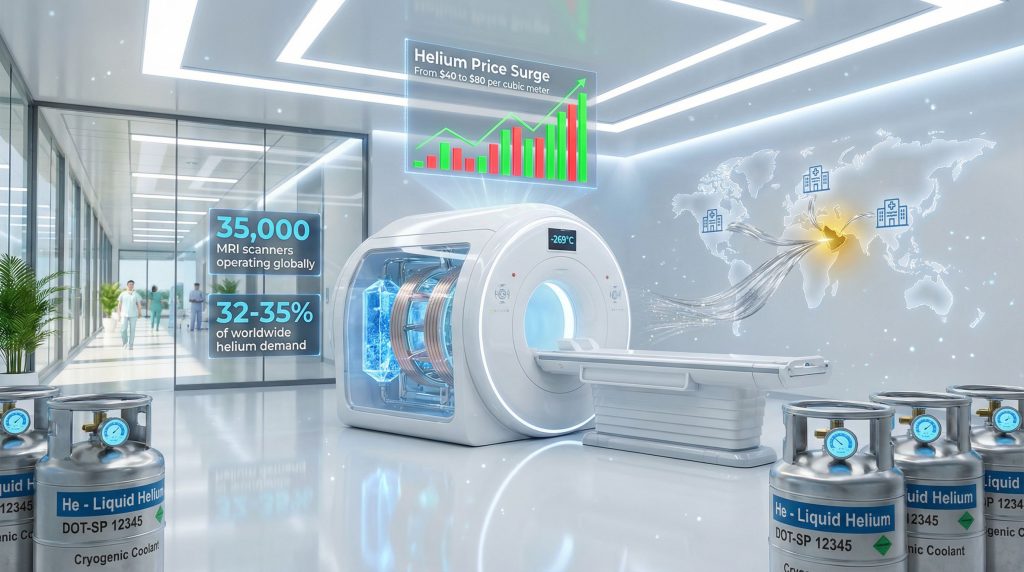
The global healthcare infrastructure depends heavily on this cooling technology, with medical applications accounting for approximately 25-32% of worldwide helium consumption. Over 35,000 MRI units operate globally, each requiring continuous helium supply to maintain diagnostic capabilities. Unlike many industrial applications where alternative cooling methods exist, medical imaging equipment faces fundamental physics constraints that prevent easy substitution.
Superconducting Magnet Technology Limitations
MRI manufacturers including Siemens Healthineers, Philips Healthcare, and GE Healthcare all utilise superconducting magnet designs that transfer heat away from magnet coils through liquid helium circulation. This prevents electrical resistance that would dissipate the magnetic field essential for high-resolution medical imaging. The technology requires persistent cooling to maintain the superconducting state, with any temperature increase above critical thresholds causing immediate system failure.
Mechanical cryocoolers represent emerging alternatives under development, but face significant technical barriers for medical-grade equipment requiring consistent field homogeneity. Current helium-free designs struggle to match the magnetic field stability necessary for precise diagnostic imaging, particularly in neurological and oncological applications where image quality directly impacts treatment decisions.
When big ASX news breaks, our subscribers know first
Supply Concentration Creating System-Wide Vulnerabilities
Qatar's Ras Laffan facility functions as the world's largest helium producer, extracting helium as a byproduct from liquefied natural gas operations. This production concentration creates geographic vulnerability for critical medical infrastructure dependencies, particularly when regional conflicts disrupt energy facilities across the Middle East.
Helium pricing has roughly doubled since geopolitical tensions escalated in February 2026, according to corporate ratings analysis from Fitch. The pricing surge demonstrates how quickly supply disruptions cascade through markets with inelastic demand characteristics. Medical institutions cannot easily reduce consumption without compromising patient care, creating sustained upward price pressure.
Storage and Transport Constraints Amplifying Crisis Conditions
Unlike crude oil or grain commodities, liquid helium experiences constant boil-off with an effective transport window of approximately 45 days. This physical property fundamentally limits inventory strategies and creates dependency on consistent supply flows. Healthcare facilities cannot implement extended stockpiling approaches, making them vulnerable to immediate supply disruptions.
The combination of geographic concentration, storage limitations, and transport constraints creates what supply chain analysts describe as a perfect storm for market volatility. Helium markets rely on rapid throughput and logistics rather than long-term stockpiling, meaning any production interruption immediately affects end users without buffer periods available in other commodity markets.
Healthcare System Exposure Analysis Across Regions
Medical institutions worldwide face varying degrees of vulnerability based on import dependencies and geographic proximity to production facilities. Research universities and major medical centres report receiving direct notifications of supply reductions, with some facilities experiencing supply cuts of 50% or more for annual helium requirements.
The University of Missouri's virology programme exemplifies institutional exposure, where faculty received official notices that helium supplies would be "at least cut in half" due to production disruptions. This represents direct operational constraints rather than theoretical risks, affecting research capabilities and potentially diagnostic services.
MRI Service Continuity Risks
The United States performs approximately 30-40 million MRI examinations annually, creating substantial exposure to supply chain disruptions. Emergency rationing protocols prioritise critical medical procedures, but diagnostic delays cascade through cancer detection programmes and neurological condition monitoring where early intervention significantly affects patient outcomes.
Healthcare facilities in regions with greater geographic distance from production centres face compounded challenges. Each day of transport reduces available helium inventory upon arrival due to constant boil-off rates, creating particular vulnerabilities for African and Eastern European healthcare systems dependent on Middle Eastern supplies.
Economic Impact Mechanisms Across Healthcare Markets
The helium shortage impact on medical sector operations extends beyond immediate supply concerns to fundamental cost structure changes for diagnostic imaging providers. Helium represents a variable operating cost that directly impacts facility margins, with price escalation creating multiple adjustment mechanisms throughout healthcare systems.
Cost transfer approaches include increased scan fees for patients, higher insurance premiums to cover elevated operational expenses, or reduced frequency of elective diagnostic procedures. Medical institutions face upward price pressure without corresponding ability to reduce demand due to clinical necessity requirements for MRI-dependent diagnoses.
Healthcare Investment Exposure Assessment
Medical technology manufacturers experience stock volatility correlating with supply crisis intensity, though specific market capitalisation effects require detailed analysis of individual company helium dependencies. Healthcare Real Estate Investment Trusts (REITs) with significant imaging centre portfolios face revenue impact risks through operational cost increases at tenant facilities.
The medical equipment leasing market encounters particular challenges as lessors must account for variable operating costs in contract structures. Traditional lease agreements may not adequately address dramatic input cost fluctuations, creating potential disputes between equipment providers and healthcare facilities.
Institutional Adaptation Strategies Under Development
Healthcare institutions implement multiple approaches to manage supply uncertainty, though options remain constrained by technical and economic factors. Helium recycling systems can recover and reliquefy boil-off, but require substantial capital investments ranging from $500,000 to over $2 million per installation depending on facility size and capacity requirements.
Specialised cryogenic recycling systems from manufacturers like Linde and Air Liquide offer partial solutions, but face cooling capacity limitations tied to individual facility requirements. Smaller imaging centres often cannot justify cost-benefit thresholds for recycling infrastructure investment, maintaining dependency on external supply chains.
Technology Migration Timelines and Constraints
MRI equipment typically operates 10-15 years before replacement, creating multi-decade transition timelines even if all new purchases shifted to helium-free alternatives. The current installed base of over 35,000 units globally represents substantial capital investment that healthcare systems cannot rapidly abandon without significant financial impact.
Capital replacement cycles for existing superconducting equipment require careful evaluation of cost-benefit analysis comparing traditional helium-dependent systems with emerging dry-cooling alternatives. Clinical validation studies must demonstrate equivalent diagnostic performance before widespread adoption becomes feasible across healthcare networks.
Long-Term Supply Security Development Initiatives
Supply diversification efforts focus on reducing dependence on Middle Eastern production through alternative extraction sites and technological innovations. However, critical minerals energy security challenges extend beyond helium to encompass broader strategic material dependencies. Helium extraction requires specific geological conditions and substantial infrastructure investment, limiting rapid capacity expansion options.
Helium occurs as a byproduct of natural gas production, meaning new supply sources depend on broader energy sector development rather than standalone helium projects. This creates timing dependencies where helium supply expansion follows energy infrastructure investment cycles, potentially taking years to materialise.
Alternative Technology Adoption Challenges
Helium-free MRI technology development progresses through multiple manufacturers, but faces regulatory approval processes and clinical validation requirements before widespread implementation. Diagnostic performance validation remains critical for medical applications where image quality directly affects treatment decisions and patient outcomes.
Cost comparisons between traditional and alternative systems must account for total lifecycle expenses including maintenance, operational efficiency, and clinical outcome equivalency. Healthcare facilities evaluate technology migration strategies within broader capital planning cycles that span multiple years of budget allocation.
The next major ASX story will hit our subscribers first
Investment Risk Framework for Healthcare Exposure
Healthcare investors must evaluate helium dependency across multiple portfolio components including medical technology manufacturers, healthcare facilities, and specialised service providers. An investment risk framework should incorporate supply chain resilience scoring alongside traditional financial metrics when evaluating healthcare sector investments.
Medical technology companies with reduced helium dependency represent potential value opportunities as supply constraints create competitive advantages for alternative cooling technologies. Patent portfolios covering dry-cooling systems and helium recycling innovations offer investment exposure to solution providers rather than vulnerable end users.
Market Psychology and Timing Considerations
Healthcare facility operational cost sensitivity modelling becomes essential for investors evaluating exposure to supply chain volatility. Facilities with higher MRI utilisation rates face greater economic impact from input cost increases, affecting revenue predictability and margin stability.
Investment opportunity identification should focus on companies providing supply chain resilience solutions rather than those dependent on vulnerable input materials. Helium recycling technology companies and alternative cooling system developers offer portfolio diversification benefits during supply constraint periods.
Future Market Dynamics and Demand Projections
Global healthcare infrastructure expansion continues despite supply challenges, with surging critical demand from emerging market development driving diagnostic imaging demand growth. Ageing population demographics across developed economies increase MRI utilisation rates, creating sustained demand pressure that supply diversification efforts must address.
The medical imaging market growth trajectory depends on balancing expanding diagnostic needs with supply security requirements. Healthcare systems must develop strategic planning approaches that account for both clinical capacity requirements and input material availability constraints.
Policy Implications for Medical Supply Chain Protection
Strategic helium reserve establishment for healthcare sectors represents one policy approach to managing critical material supply security. International cooperation frameworks, such as the planned European CRM facility, could protect medical supply chains through coordinated inventory management and emergency allocation protocols during crisis periods.
Regulatory incentives for helium-efficient medical technology development might accelerate adoption of alternative cooling systems through tax credits, accelerated depreciation schedules, or research funding support. Healthcare supply chain protection policies require balancing free market mechanisms with essential service continuity requirements.
Implications for Global Healthcare Security
The helium shortage impact on medical sector operations demonstrates how geopolitical risks intersect with supply chain vulnerability and healthcare accessibility. With limited immediate substitutes for liquid helium in MRI technology, healthcare systems must balance short-term adaptation strategies with long-term technological transformation to ensure diagnostic service continuity.
"The medical sector's helium crisis demonstrates how geopolitical risks intersect with supply chain vulnerability and healthcare accessibility. With limited immediate substitutes for liquid helium in MRI technology, healthcare systems must balance short-term adaptation strategies with long-term technological transformation to ensure diagnostic service continuity."
Investment approaches should emphasise supply chain resilience and alternative technology development rather than dependence on geographically concentrated critical materials. Furthermore, healthcare institutions must develop comprehensive risk management strategies that account for both immediate operational needs and future technological transitions.
Disclaimer: This analysis contains forward-looking statements regarding technology development, market conditions, and supply chain evolution. Healthcare investment decisions should consider multiple risk factors beyond supply chain considerations, and technological substitution timelines remain subject to regulatory approval and clinical validation requirements. Material price projections and geopolitical risk assessments involve substantial uncertainty and should not constitute the sole basis for investment decisions.
Looking to Invest in Critical Materials Healthcare Solutions?
Discovery Alert's proprietary Discovery IQ model delivers instant notifications on significant ASX mineral discoveries, including helium and other critical materials essential to healthcare infrastructure. With supply chain vulnerabilities creating substantial investment opportunities across medical technology and alternative solutions sectors, subscribers gain immediate access to actionable insights that position them ahead of market movements in this rapidly evolving landscape. Begin your 14-day free trial at Discovery Alert today to secure your competitive advantage in critical materials investing.