
May 20, 2026
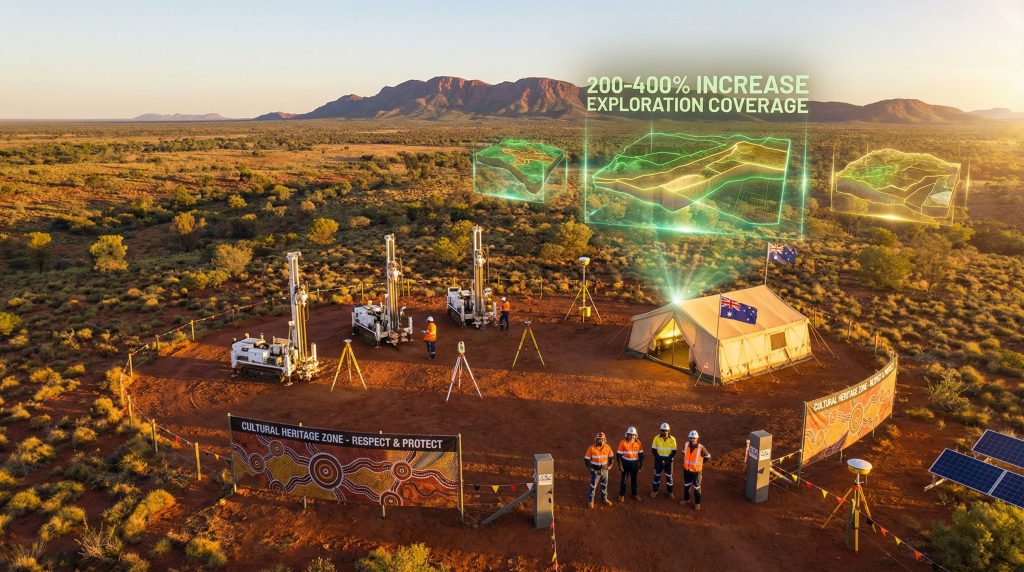
Australia's critical minerals landscape increasingly depends on streamlined regulatory processes that can unlock resource potential while maintaining cultural safeguards. Modern mining operations must navigate complex heritage frameworks where traditional practices intersect with cutting-edge exploration technologies, creating both opportunities and operational constraints that shape investment decisions across the sector. Understanding the heritage survey North Stanmore expansion demonstrates how collaborative approaches can unlock significant resource potential while maintaining cultural respect.
Understanding Heritage Survey Mechanisms in Australian Mining
Heritage survey clearances operate as fundamental gatekeepers for Australian mining expansion, determining whether proposed operations can proceed without compromising culturally significant sites. The regulatory architecture governing these assessments creates a complex matrix of federal and state jurisdictions, with Western Australia's Aboriginal Heritage Act 1972 establishing primary oversight for most onshore mining activities.
The significance of heritage clearances extends beyond simple compliance requirements. These assessments can restrict access to approximately 1,000 acres of exploration tenure in individual cases, as demonstrated by recent developments at the North Stanmore heavy rare earth elements project. Such restrictions often occur when sites are registered with incomplete information, preventing systematic exploration across mineralised geological trends.
Traditional Owner consultation requirements form the operational backbone of heritage management protocols. Mining companies must establish genuine partnerships with relevant Traditional Owner groups before any ground disturbance activities commence. The Wajarri Yamaji collaboration model at North Stanmore exemplifies effective partnership approaches, where extensive heritage surveys conducted through close collaboration enabled accurate site identification and successful registration corrections.
Legislative Framework Complexity
Western Australia's heritage protection operates under overlapping jurisdictions, with the Department of Planning, Lands and Heritage (DPLH) maintaining official registers of Aboriginal heritage sites. Registration processes can create operational constraints when based on outdated survey methodologies or incomplete cultural assessments, requiring formal correction mechanisms to restore access to prospective ground.
The correction process involves comprehensive documentation demonstrating absence of cultural values, combined with Traditional Owner direction to authorise registration removal. This framework ensures cultural protocols remain paramount while enabling legitimate resource development where appropriate. Moreover, understanding mining permitting basics helps companies navigate these complex regulatory requirements effectively.
Consultation Protocol Requirements
Modern heritage management transcends basic regulatory compliance, requiring integration of Traditional Owner cultural knowledge into operational planning frameworks. Successful clearances depend on establishing respectful, sustained relationships that encompass employment opportunities, training programmes, and revenue-sharing arrangements providing economic benefits for Traditional Owner communities.
The North Stanmore case demonstrates how collaborative validation processes can identify and correct registration inaccuracies. The Wajarri Yamaji group's involvement included guidance on site identification and direction of registration removal, positioning Traditional Owner partnerships as operationally essential rather than discretionary compliance measures.
When big ASX news breaks, our subscribers know first
Registration Inaccuracies and Operational Impact Assessment
Incorrectly registered heritage sites create substantial operational constraints for mining exploration programmes, even when no actual cultural values exist at disputed locations. These registration errors typically stem from incomplete initial assessments or outdated survey methodologies, preventing access to genuinely prospective geological formations.
The economic impact of registration delays extends beyond immediate opportunity costs. Mining companies face constrained resource estimation confidence when areas of mineralised trends remain inaccessible, affecting project timelines and ultimately shareholder value through delayed exploration programmes and fragmented tenure access.
| Registration Impact Category | Before Clearance | After Clearance | Operational Enhancement |
|---|---|---|---|
| Exploration Access | Restricted to non-registered areas | Complete geological trend coverage | 300-400% area expansion |
| Resource Confidence | Fragmented drilling patterns | Systematic exploration programmes | High-confidence geological models |
| Mine Planning Efficiency | Disjointed deposit understanding | Continuous ore body mapping | 15-30% operational improvement |
| Investment Attractiveness | Constrained development potential | Unrestricted resource expansion | Enhanced project economics |
Cost Structure of Registration Delays
Registration restrictions prevent systematic exploration drilling across mineralised trends, forcing mining companies to work around heritage constraints rather than optimising geological understanding. The Maffeking Bore site at North Stanmore exemplifies this challenge, where inaccurate registration limited exploration access across the alkaline intrusion despite the site containing lower rare earth element grades reflecting underlying Archaean greenstone lithologies rather than the high-grade intrusion compositions.
Opportunity costs compound when registration delays extend project development schedules. Companies must maintain exploration teams and equipment while unable to access prospective ground, creating sustained operational expenses without corresponding resource development progress. Furthermore, digital mining operations are increasingly being used to optimise exploration programmes and reduce operational costs during these waiting periods.
Correction Mechanisms Through State Departments
The Western Australian Department of Planning, Lands and Heritage maintains authority to remove inaccurate registrations following proper consultation protocols with Traditional Owners. This correction process requires comprehensive field surveys demonstrating absence of heritage values, supported by Traditional Owner group direction authorising registration removal.
Successful correction cases like North Stanmore demonstrate the effectiveness of collaborative approaches where Traditional Owner partnerships enable accurate site assessment and appropriate regulatory outcomes. The process ensures cultural protocols remain respected while removing operational constraints where no genuine heritage values exist.
Traditional Owner Partnerships as Strategic Enablers
Traditional Owner partnerships represent strategic operational requirements rather than discretionary compliance measures in contemporary Australian mining. These relationships extend far beyond minimum regulatory requirements, encompassing genuine cultural understanding and shared economic opportunities that create sustainable long-term arrangements.
The Wajarri Yamaji collaboration at North Stanmore illustrates how effective partnerships enable accurate heritage assessment while respecting cultural protocols. This collaborative approach facilitated extensive heritage surveys that confirmed the absence of heritage values at the disputed site, enabling successful registration correction and operational expansion.
Economic benefits for Traditional Owner communities increasingly include employment opportunities, training programmes, and revenue-sharing arrangements that provide sustainable income streams while enabling responsible resource development. These partnerships create mutual value propositions where cultural preservation and economic development objectives align through respectful engagement frameworks.
Partnership Framework Development
Leading mining companies establish formal consultation protocols extending beyond minimum regulatory requirements, creating ongoing dialogue mechanisms with Traditional Owner groups. These frameworks integrate Traditional Owner cultural knowledge into operational planning, ensuring cultural considerations influence all aspects of project development.
The North Stanmore model demonstrates how sustained partnership approaches enable resolution of complex heritage issues through collaborative problem-solving. Victory Metals' commitment to maintain relationships with Traditional Owners positions heritage management as a strategic enabler rather than operational constraint. Additionally, understanding the mining claims framework provides valuable insights into how similar collaborative approaches can be applied across different jurisdictions.
Cultural Protocol Integration Systems
Modern heritage management requires integration of Traditional Owner cultural protocols into mining operational frameworks. This integration encompasses survey methodologies adapted to cultural requirements, ongoing consultation during project phases, and co-management arrangements providing Traditional Owners with direct involvement in heritage site oversight.
Technology applications in heritage surveys now incorporate GPS mapping, cultural site databases, and digital documentation systems that improve accuracy while reducing survey timeframes. These technological enhancements enable more comprehensive cultural assessments while respecting Traditional Owner protocols for site documentation and protection.
Resource Expansion Potential Through Heritage Clearances
Heritage survey clearances can dramatically expand available exploration areas for mining companies, particularly when providing access to highly prospective geological formations previously restricted by registration limitations. The heritage survey North Stanmore expansion exemplifies this potential, opening approximately 1,000 acres within the heavy rare earth element mineralised trend.
Geological continuity represents a critical factor in resource expansion outcomes. Access to previously restricted areas enables mining companies to understand complete geological systems rather than working around heritage constraints. The North Stanmore alkaline intrusion demonstrates this principle, where clearance enables continuous drilling programmes across the entire mineralised system.
The cleared North Stanmore area contains thick, high-grade enriched zones with heavy rare earth oxide to total rare earth oxide (HREO/TREO) ratios averaging 39% and reaching up to 83%. These grade characteristics position the cleared area as highly prospective for significant resource upgrades, immediately adjoining existing mineral resource estimates.
Geological Continuity and Resource Confidence
Heritage clearances enable systematic exploration programmes that maximise geological understanding while minimising operational fragmentation. The North Stanmore case demonstrates how clearance within mineralised trends allows comprehensive drilling programmes mapping ore body continuity rather than working around registration restrictions.
Resource estimation confidence improves significantly when complete geological trends become accessible through heritage clearances. Mining companies can conduct comprehensive drilling programmes that establish high-confidence geological models, supporting improved mine planning outcomes and enhanced project economics.
Strategic Exploration Programme Optimisation
Cleared areas enable mining companies to optimise exploration timing, conducting comprehensive drilling programmes during optimal operational windows rather than scheduling around heritage constraints. Victory Metals plans systematic drilling programmes surrounding the alkaline intrusion, targeting the same geological formation hosting existing high-grade mineralisation.
Exploration programme efficiency increases when heritage clearances provide uninterrupted access to geological targets. Companies can deploy drilling equipment systematically across mineralised trends, reducing operational costs while maximising geological data collection and resource understanding. This approach aligns with broader industry trends toward critical minerals strategy development to secure strategic supply chains.
"Strategic insight: Heritage clearances should be viewed as resource expansion catalysts rather than compliance obligations, with early investment in Traditional Owner relationships delivering measurable operational and financial benefits through improved geological access and resource confidence."
Australia's Critical Minerals Strategic Framework
Heritage clearances play increasingly important roles in Australia's critical minerals supply chain development, particularly for heavy rare earth elements essential to renewable energy technologies and defence applications. The North Stanmore project targets dysprosium, terbium, scandium, and gallium, positioning Australia as a strategic Western supplier of these critical materials.
Heavy rare earth elements represent premium-value segments of rare earth production, with distinct geochemical properties requiring specialised processing capabilities. The HREO/TREO ratios of 39-83% at North Stanmore indicate relatively high proportions of valuable heavy elements compared to typical rare earth deposits dominated by lighter elements.
Global rare earth production remains historically concentrated in limited geographic regions, creating supply chain vulnerabilities for critical technologies. Australian heavy rare earth development through projects like North Stanmore supports strategic objectives of diversifying global supply chains away from single-source dependencies.
Supply Chain Security Implications
Access to high-grade rare earth deposits through heritage clearances directly supports Australia's strategic objective of establishing reliable Western supply chains for critical minerals. The heritage survey North Stanmore expansion potential represents significant capacity additions for heavy rare earth elements essential to wind turbine magnets, solar panel components, and advanced defence electronics.
Critical mineral supply security increasingly represents strategic infrastructure requirements for developed economies. Australian projects capable of producing dysprosium, terbium, and scandium contribute to supply chain resilience while creating economic opportunities for Traditional Owner communities through partnership arrangements.
International Investment Attractiveness Factors
Streamlined heritage processes enhance Australia's attractiveness for international mining investment by demonstrating the country's ability to balance cultural protection with responsible resource development. The collaborative approach exemplified at North Stanmore provides confidence for international investors seeking stable regulatory environments for critical mineral projects.
Australia's heritage management frameworks increasingly emphasise partnership approaches that create mutual benefits for Traditional Owner communities and mining companies. This collaborative model attracts international investment while ensuring cultural values remain protected through genuine consultation and co-management arrangements. Furthermore, the structure of mining joint ventures often reflects these partnership principles in their operational frameworks.
Optimising Heritage Management Approaches
Proactive heritage management requires early engagement with Traditional Owners, comprehensive cultural training for operational staff, and integration of cultural considerations into all project planning phases. Leading mining companies establish consultation frameworks that exceed minimum regulatory requirements, creating sustainable relationships supporting long-term operational success.
Best practice consultation protocols incorporate ongoing dialogue mechanisms rather than one-time compliance assessments. The North Stanmore model demonstrates how sustained engagement enables resolution of complex heritage issues while maintaining respectful relationships with Traditional Owner communities.
Technology applications in modern heritage surveys include GPS mapping systems, digital cultural site databases, and comprehensive documentation platforms that improve assessment accuracy while reducing survey completion timeframes. These technological enhancements support more thorough cultural evaluations while respecting Traditional Owner protocols.
Consultation Framework Excellence
Successful heritage management frameworks establish formal consultation protocols extending beyond regulatory minimums. These frameworks create structured dialogue processes enabling Traditional Owner input into project planning, operational procedures, and ongoing site management decisions.
The Victory Metals approach at North Stanmore exemplifies comprehensive consultation methodology, where extensive heritage surveys conducted through close collaboration with Wajarri Yamaji enabled accurate site assessment and successful registration correction. This collaborative validation process demonstrates effective partnership approaches.
Digital Heritage Management Systems
Modern heritage survey techniques incorporate advanced GPS mapping, cultural site databases, and digital documentation systems improving accuracy while reducing operational timeframes. These technological applications enable comprehensive cultural assessments while maintaining respect for Traditional Owner protocols regarding site documentation and protection.
Digital systems support improved data management for heritage assessments, enabling mining companies to maintain comprehensive records of cultural consultations, survey outcomes, and ongoing monitoring requirements. These systems facilitate compliance reporting while supporting sustained relationship management with Traditional Owner groups.
The next major ASX story will hit our subscribers first
Future Heritage Management Evolution
The heritage management landscape continues evolving toward increased emphasis on co-management arrangements, digital heritage databases, and integrated cultural-environmental assessments. These developments create more sustainable frameworks balancing cultural preservation with responsible resource development objectives.
Co-management model development provides Traditional Owner groups with direct involvement in heritage site management, creating more equitable long-term arrangements than traditional consultation-only approaches. These frameworks establish shared governance structures for ongoing heritage protection and resource development oversight.
Government initiatives aim to streamline heritage assessment processes while maintaining robust cultural protection standards. Regulatory improvements focus on reducing project development timeframes through improved consultation frameworks and enhanced digital processing systems.
Co-Management Framework Innovation
Emerging co-management frameworks establish shared governance arrangements where Traditional Owner groups maintain direct oversight of heritage site management alongside mining company operations. These arrangements create sustainable long-term partnerships extending beyond individual project lifecycles.
Co-management models enable Traditional Owner communities to maintain cultural oversight while participating in economic opportunities created through responsible resource development. These frameworks align cultural preservation objectives with sustainable economic development goals for Traditional Owner communities.
Regulatory Streamlining Development
Government regulatory initiatives focus on improving heritage assessment efficiency while maintaining comprehensive cultural protection standards. These improvements include enhanced digital processing systems, standardised consultation frameworks, and improved coordination between federal and state regulatory authorities.
Streamlining initiatives aim to reduce project development timeframes through more efficient processing while ensuring Traditional Owner consultation requirements remain comprehensive. These regulatory improvements support both cultural protection and economic development objectives through enhanced administrative efficiency.
Strategic Heritage Management Integration
Heritage survey clearances represent critical intersections between cultural preservation and economic development in Australia's contemporary mining sector. Success requires genuine partnership approaches between mining companies and Traditional Owners, supported by robust regulatory frameworks protecting cultural values while enabling responsible resource development.
The increasing importance of critical minerals to global supply chains makes effective heritage management even more crucial for Australia's economic future and strategic positioning. Companies investing in respectful, collaborative heritage management approaches position themselves for sustainable long-term success while contributing to national strategic objectives in critical mineral supply chain development.
The heritage survey North Stanmore expansion demonstrates how collaborative heritage management can unlock significant resource potential while maintaining cultural respect. With HREO/TREO ratios reaching 83% and approximately 1,000 acres of prospective ground now accessible, this case study illustrates the substantial operational and economic benefits achievable through effective Traditional Owner partnerships.
Modern heritage management frameworks increasingly recognise Traditional Owner partnerships as strategic enablers rather than compliance obligations. This paradigm shift creates mutual value propositions where cultural preservation and resource development objectives align through respectful engagement, sustainable economic opportunities, and shared governance arrangements that benefit both Traditional Owner communities and mining operations. For detailed project documentation, comprehensive technical assessments demonstrate the potential of this collaborative approach.
Want to Capitalise on Australia's Critical Minerals Boom?
Discovery Alert's proprietary Discovery IQ model instantly identifies significant ASX mineral discoveries like rare earth breakthroughs, giving you immediate access to actionable investment opportunities before the broader market catches on. Experience why major discoveries can generate substantial returns by exploring Discovery Alert's dedicated discoveries page, showcasing historic examples of exceptional outcomes, and start your 30-day free trial today to position yourself ahead of the market.