
June 13, 2026
Understanding Modern Mine Safety Technology Integration
Underground mining environments present some of the world's most challenging workplace safety conditions, where traditional safety measures often fall short of protecting workers from vehicle-related incidents. The deployment of hindustan zinc mine safety technology represents a fundamental shift from reactive safety protocols to proactive risk prevention systems that integrate seamlessly with existing mining operations and boosting safety operations across the industry.
The transformation of mine safety through digital technology adoption requires sophisticated integration approaches that account for harsh environmental conditions, legacy equipment compatibility, and operational continuity requirements. Mining companies increasingly recognise that effective safety technology deployment depends not just on the technology itself, but on comprehensive integration strategies that address both technical and human factors.
Core Components of Digital Safety Systems
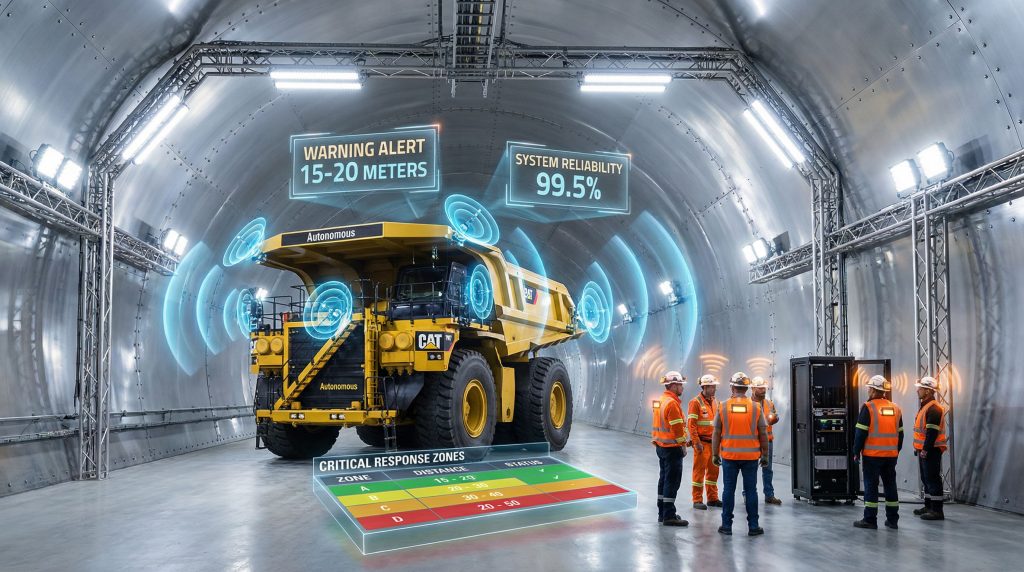
Advanced collision avoidance systems utilise multi-layered detection networks that combine proximity sensors, real-time communication protocols, and centralised monitoring platforms. These systems create comprehensive safety zones around mobile equipment and personnel, providing graduated warning systems that escalate from initial alerts to automatic intervention when necessary.
The integration challenge extends beyond simple equipment installation. Mining operations must establish robust communication networks capable of functioning reliably in electromagnetically challenging underground environments while maintaining compatibility with diverse vehicle fleets spanning multiple manufacturers and equipment generations.
Central monitoring platforms serve as the operational backbone for these systems, processing real-time data from hundreds of individual sensors and communication devices. These platforms employ predictive analytics capabilities to identify potential collision scenarios before they develop into immediate threats, enabling proactive intervention rather than reactive response.
Operational Requirements for Underground Implementation
Underground mining environments subject safety technology to extreme operational stresses including pervasive dust, high moisture levels, and significant electromagnetic interference from heavy machinery and metal-rich geological formations. Equipment specifications must account for these environmental factors while maintaining consistent performance over extended operational periods.
Power supply infrastructure presents particular challenges in remote underground locations where traditional electrical distribution may be limited or unreliable. Safety systems require redundant power sources and efficient energy management protocols to ensure continuous operation during critical safety scenarios.
Network connectivity requirements demand robust communication protocols capable of maintaining data transmission integrity despite physical obstacles and electromagnetic interference common in underground mining operations. Furthermore, maintenance protocols must address harsh industrial conditions while minimising system downtime during routine servicing procedures.
When big ASX news breaks, our subscribers know first
What Are the Key Features of Advanced Collision Avoidance Systems?
Modern collision avoidance systems employ sophisticated multi-sensor architectures that combine radar, ultrasonic, and optical detection technologies to create comprehensive situational awareness around mobile mining equipment. These integrated sensor networks provide redundant detection capabilities that maintain operational effectiveness even when individual sensors experience degraded performance due to environmental conditions.
Multi-Layer Detection Technology
Radar-based detection systems offer superior performance in dusty underground conditions where optical systems may experience reduced effectiveness. In addition, ultrasonic sensors provide precise short-range detection capabilities particularly valuable for low-speed manoeuvring operations common in confined underground spaces.
Vehicle-to-vehicle communication protocols enable mining equipment to share location, speed, and operational status information in real-time, creating networked awareness that extends beyond individual sensor ranges. These communication systems establish dynamic safety zones that adjust based on operational conditions and equipment proximity.
Wearable personnel tracking systems integrate with vehicle-based detection networks to provide comprehensive protection for workers operating in proximity to mobile equipment. For instance, these systems utilise dedicated communication frequencies to ensure reliable connectivity even in electromagnetically challenging environments, supporting data-driven mining operations.
Automated Response Capabilities
Advanced collision avoidance systems implement graduated response protocols that provide increasingly urgent interventions as potential collision scenarios develop. Initial warning stages typically activate at detection ranges of 15-20 metres, providing operators with early awareness of approaching personnel or equipment.
Intermediate caution zones trigger enhanced alerting systems and may initiate automatic speed reduction protocols when objects are detected within 8-15 metres of mobile equipment. These systems require operator acknowledgment to ensure human awareness of developing safety situations while maintaining operational flexibility.
Critical intervention zones, typically within 8 metres of equipment, activate automatic braking or stopping systems designed to prevent collisions when human reaction time may be insufficient. However, these systems include emergency override capabilities for unusual operational circumstances while maintaining default protective responses.
How Do Mining Companies Implement Safety Technology at Scale?
The hindustan zinc mine safety technology deployment demonstrates sophisticated implementation strategies that balance operational continuity with comprehensive safety enhancement. The company's approach involves systematic rollout across five Rajasthan mining facilities, beginning with the Sindesar Khurd operation as a pilot deployment site.
This initial implementation encompasses 30 low-profile dump trucks and provides protection for up to 100 mine workers, establishing measurable deployment parameters that enable performance assessment and optimisation before broader rollout phases. The Sindesar Khurd facility produces approximately 5.5 million tonnes of ore annually, representing a significant operational scale that provides comprehensive testing conditions for the collision avoidance system.
Phased Deployment Strategies
Effective large-scale implementation requires systematic pilot programme development that establishes performance baselines and identifies optimisation opportunities before broader deployment. Site selection criteria typically prioritise facilities with existing automation experience and demonstrated change management capabilities, as evidenced by Hindustan Zinc's pioneering approach in automation and digitalisation technologies.
Equipment compatibility testing becomes critical when deploying OEM-agnostic systems across diverse vehicle fleets. Consequently, Epiroc's collision avoidance system operates across multiple equipment manufacturers, reducing integration complexity while enabling deployment across heterogeneous mining fleets without requiring proprietary system modifications.
Workforce training and change management processes must address both technical operation of new safety systems and cultural adaptation to enhanced safety monitoring. Successful implementations typically involve comprehensive training programmes that emphasise safety benefits while addressing worker concerns about monitoring and operational changes.
Cost-Benefit Analysis Framework
Strategic safety technology investments require comprehensive financial analysis that accounts for initial capital expenditure, ongoing operational costs, and quantifiable benefits including incident reduction, insurance premium adjustments, and productivity improvements through reduced safety-related downtime.
Mining companies must evaluate return on investment calculations that incorporate both direct financial benefits and indirect operational advantages such as improved worker retention, enhanced regulatory compliance, and reduced legal liability exposure. These calculations become particularly complex when assessing technology deployments across multiple facilities with varying operational characteristics.
Insurance premium reductions often represent significant long-term financial benefits, as carriers increasingly recognise the risk mitigation value of advanced safety technology deployments. Moreover, regulatory compliance benefits may include reduced inspection frequency and enhanced operational approvals for safety-critical mining activities.
What Role Does Automation Play in Underground Mine Safety?
Automation technologies fundamentally transform underground mining safety by reducing personnel exposure to high-risk operational environments while maintaining or enhancing operational productivity. The integration of tele-remote operation capabilities enables mining companies to position operators in safer locations while maintaining precise control over heavy machinery and excavation equipment.
Hindustan zinc mine safety technology deployment of tele-remote drilling and excavation systems at Sindesar Khurd demonstrates practical automation implementation that achieves dual safety and productivity objectives. The company reports that these remote operation systems have substantially improved both safety and productivity metrics, reflecting broader industry evolution trends towards automated operations.
Remote Operation Technologies
Tele-remote drilling systems enable operators to control sophisticated drilling equipment from protected control stations, eliminating direct personnel exposure to drill face hazards including rock falls, equipment malfunctions, and atmospheric hazards common in underground mining environments. Furthermore, these systems incorporate AI in drilling operations to enhance precision and safety.
Raise-bore machine operations benefit significantly from remote control capabilities, as these operations often involve working in confined vertical spaces where emergency evacuation may be challenging. Remote operation provides equivalent operational control while maintaining operator safety in readily accessible locations.
Centralised control room operations create opportunities for enhanced safety monitoring through consolidated oversight of multiple remote operations. These facilities typically incorporate advanced monitoring systems that provide operators with comprehensive situational awareness exceeding what would be available through direct operational control.
Integration with Existing Mining Operations
Successful automation integration requires careful consideration of existing workflow patterns and operational dependencies that may be affected by remote control implementation. Mining companies must ensure that automated systems enhance rather than disrupt established operational efficiency while providing meaningful safety improvements.
Training programmes for remote operation systems must address both technical operation skills and situational awareness techniques that compensate for reduced direct sensory input during remote equipment operation. Operators require enhanced understanding of equipment status indicators and remote monitoring systems to maintain operational effectiveness.
System reliability becomes critically important when operators depend on remote control systems for safe equipment operation. Consequently, backup control systems and emergency shutdown protocols must ensure that equipment remains controllable even during communication system failures or technical malfunctions.
How Do Wearable Technologies Enhance Mine Worker Protection?
Wearable safety technologies create personal protection networks that extend beyond fixed infrastructure systems to provide individualised safety monitoring and emergency response capabilities. These systems integrate with broader mine safety networks to create comprehensive protection frameworks that account for worker location, environmental conditions, and potential hazard exposure.
The Epiroc collision avoidance system deployment at Sindesar Khurd incorporates protection for up to 100 workers through integration with vehicle-based detection systems, demonstrating practical implementation of personal safety technology at operational scale.
Personal Safety Device Capabilities
Real-time location tracking systems provide continuous awareness of worker positions throughout underground mining operations, enabling rapid emergency response and evacuation coordination when safety incidents occur. These systems typically utilise dedicated communication frequencies that maintain connectivity despite electromagnetic interference common in underground environments.
Environmental monitoring capabilities integrated into wearable devices can provide early warning of atmospheric hazards including gas accumulation, oxygen depletion, and air quality degradation. For instance, these monitoring systems typically include automatic alerting protocols that notify both individual workers and central monitoring stations when hazardous conditions are detected.
Two-way communication systems enable isolated workers to maintain contact with surface operations and emergency response teams, providing critical safety backup for personnel working in remote or hazardous locations where direct supervision may not be practical.
Data Privacy and Worker Acceptance Considerations
Implementation of comprehensive worker monitoring systems requires careful balance between safety enhancement and personal privacy rights, particularly regarding location tracking and health status monitoring that may extend beyond immediate safety requirements.
Transparent data usage policies and clear worker consent protocols help establish trust and acceptance for safety monitoring systems while ensuring compliance with applicable privacy regulations and employment law requirements. However, training programmes that demonstrate clear safety benefits and explain data protection measures typically improve worker acceptance of monitoring technologies while reducing implementation resistance that might otherwise compromise system effectiveness.
What Are the Technical Challenges in Mine Safety System Implementation?
Underground mining environments present unique technical challenges that significantly exceed those encountered in surface industrial applications. Signal propagation through metal-rich geological formations creates electromagnetic interference patterns that can disrupt communication systems and sensor networks essential for collision avoidance system operation.
Power distribution requirements in remote underground locations often necessitate specialised electrical infrastructure capable of supporting safety-critical systems while maintaining reliability during normal mining operations and emergency conditions.
Environmental and Infrastructure Obstacles
Pervasive dust accumulation affects optical sensor performance and may require enhanced maintenance protocols or alternative sensor technologies to maintain consistent detection capabilities. Furthermore, moisture infiltration from groundwater or atmospheric humidity can compromise electronic system reliability unless properly protected through environmental sealing and climate control measures.
Network reliability challenges arise from physical cable routing requirements through active mining areas where excavation activities may damage communication infrastructure. Wireless communication systems must account for signal attenuation through rock formations and interference from heavy machinery operation.
Equipment durability specifications must exceed normal industrial standards to withstand constant vibration, impact, and exposure to corrosive substances common in underground mining environments. Consequently, component selection typically requires specialised industrial ratings that may limit available technology options or increase system costs.
System Integration and Compatibility Issues
OEM-agnostic safety systems like Epiroc's collision avoidance technology offer significant advantages by enabling deployment across diverse vehicle fleets without requiring manufacturer-specific modifications. However, integration complexity increases when systems must interface with multiple control architectures and communication protocols across different equipment brands.
Legacy equipment retrofitting presents particular challenges when existing vehicles lack electronic control systems or standardised communication interfaces necessary for safety system integration. Retrofit solutions may require significant modification to older equipment or partial fleet replacement to achieve comprehensive safety coverage.
Software platform standardisation across multiple vendors becomes essential for effective system management and maintenance, particularly when mining operations utilise equipment from multiple manufacturers with different control system architectures and communication protocols.
The next major ASX story will hit our subscribers first
How Do Companies Measure Safety Technology Effectiveness?
Comprehensive safety technology assessment requires systematic measurement frameworks that track both immediate operational improvements and long-term safety culture development. Mining companies must establish baseline performance metrics before technology implementation to enable accurate assessment of improvement outcomes.
Incident reduction measurement typically focuses on near-miss events, property damage incidents, and personnel injury frequency as primary indicators of collision avoidance system effectiveness. However, comprehensive assessment requires consideration of leading indicators that predict safety performance before incidents occur.
Key Performance Indicators for Safety Systems
System reliability metrics including uptime percentages and response time performance provide essential operational effectiveness indicators. Mining operations typically require 99.5% or greater operational availability for safety-critical systems to ensure consistent protection during all operational periods.
Emergency response activation times become critical performance indicators, with target response times typically specified at less than 30 seconds from hazard detection to initial intervention. These metrics require real-time monitoring capabilities and regular system testing to verify performance maintenance.
Training effectiveness measurement through safety protocol compliance rates typically targets 95% or higher adherence rates to ensure that human factors support rather than compromise technology-based safety systems. In addition, these metrics align with broader mining sustainability transformation initiatives.
Safety Technology Performance Metrics
| Metric Category | Measurement Parameter | Typical Target | Reporting Frequency |
|---|---|---|---|
| Incident Reduction | Near-miss events per month | 50% year-over-year reduction | Monthly assessment |
| Response Performance | Emergency activation time | <30 seconds average | Real-time monitoring |
| System Reliability | Operational uptime | >99.5% availability | Daily verification |
| Training Compliance | Safety protocol adherence | >95% compliance rate | Quarterly review |
Long-term Safety Culture Development
Behavioural change measurement requires assessment of worker attitudes toward safety technology adoption and integration with existing safety practices. Successful implementations typically show measurable improvements in voluntary safety reporting and proactive hazard identification by workers.
Cross-site knowledge sharing and best practice development become essential for maximising return on safety technology investments across multiple mining operations. Companies typically establish formal knowledge transfer programmes that share implementation experiences and optimisation strategies across different facilities.
Integration with broader corporate safety initiatives ensures that technology deployments support rather than compete with existing safety culture development programmes, creating comprehensive safety improvement frameworks that address both technological and human factors.
What Are the Future Trends in Mining Safety Technology?
Advanced artificial intelligence applications represent the next evolutionary step in mining safety technology, with machine learning algorithms increasingly capable of predicting potential safety incidents before they develop into immediate threats. These predictive systems analyse historical incident data, environmental conditions, and operational patterns to identify emerging risk scenarios.
Sensor fusion technologies that combine multiple detection methods into unified awareness systems offer enhanced reliability and reduced false alarm rates compared to single-sensor approaches. Furthermore, these integrated systems typically demonstrate superior performance in challenging environmental conditions common in underground mining operations.
Emerging Technologies and Applications
Machine learning algorithms applied to safety system data can identify subtle patterns in near-miss incidents and operational conditions that may not be apparent through traditional analysis methods. These systems continuously improve their predictive accuracy through exposure to operational data and incident outcomes.
Augmented reality applications for safety training provide immersive learning experiences that enable workers to practice emergency response procedures and hazard recognition skills without exposure to actual safety risks. These training systems typically demonstrate improved learning retention compared to traditional classroom-based safety education.
Blockchain-based safety record management offers enhanced data integrity and compliance tracking capabilities that may become increasingly important as regulatory requirements for safety documentation and incident reporting continue to evolve.
Industry-Wide Standardisation Efforts
International safety protocol harmonisation initiatives aim to establish consistent safety technology standards across different mining jurisdictions, potentially reducing implementation complexity for multinational mining operations while improving overall industry safety performance.
Technology certification and testing standards development ensures that safety systems meet consistent performance requirements regardless of manufacturer or deployment location. These standards typically address environmental performance requirements, reliability specifications, and interoperability protocols.
Cross-industry knowledge transfer from other high-risk sectors including aviation, maritime, and chemical processing offers opportunities to adapt proven safety technologies and methodologies to mining applications, potentially accelerating safety improvement timelines.
How Can Mining Companies Optimise Their Safety Technology Investments?
Strategic safety technology investment optimisation requires comprehensive risk assessment and priority area identification that accounts for both immediate safety needs and long-term operational objectives. Mining companies must balance capital allocation between immediate safety improvements and systematic technology upgrades that support broader operational modernisation goals.
The hindustan zinc mine safety technology implementation strategy demonstrates systematic geographic deployment across multiple facilities, with Sindesar Khurd serving as the initial deployment site before broader rollout across five Rajasthan mining operations. This approach enables performance validation and system optimisation before full-scale investment commitment.
Strategic Planning and Implementation Roadmaps
Technology vendor evaluation and selection criteria must account for long-term support capabilities, system scalability, and integration compatibility with existing operational infrastructure. OEM-agnostic solutions like Epiroc's collision avoidance system offer strategic advantages by reducing vendor dependency while enabling deployment across diverse equipment fleets.
Phased rollout timelines require careful coordination with operational schedules to minimise disruption during implementation while ensuring systematic coverage expansion that maintains safety improvement momentum. Milestone tracking systems enable management oversight of implementation progress and early identification of potential delays or technical challenges.
Budget allocation strategies must account for both initial capital expenditure and ongoing operational costs including system maintenance, training requirements, and potential equipment upgrades necessary to support safety technology integration.
Building Internal Capabilities and Expertise
Technical team training and certification programmes ensure that mining operations develop internal expertise necessary for effective safety technology operation and maintenance. These programmes typically require specialised technical education that may not be available through traditional mining industry training channels.
Partnerships with technology providers and research institutions create opportunities for knowledge transfer and collaborative development of specialised solutions addressing unique operational challenges. Consequently, these relationships often provide access to advanced technical support and early adoption of emerging safety technologies.
Knowledge management systems for safety innovation enable mining companies to capture and share lessons learned from safety technology implementations, reducing implementation risks and accelerating deployment timelines for subsequent installations.
Investment Optimisation Insight: Successful safety technology investments require comprehensive strategic planning that balances immediate protective benefits with long-term operational modernisation objectives, while building internal capabilities necessary for sustained technology adoption success.
Disclaimer: This analysis is based on publicly available information and industry observations. Mining companies should conduct thorough due diligence and consult with qualified safety professionals before making technology investment decisions. Safety technology effectiveness may vary based on operational conditions, implementation quality, and workforce training.
Source References:
[1] Mines and Money. "Hindustan Zinc Opts for Epiroc Mine Safety Tech." August 29, 2025. https://minesandmoney.com/news/industry/hindustan-zinc-opts-for-epiroc-mine-safety-tech
Want to Position Yourself Ahead of the Next Mining Technology Breakthrough?
Discovery Alert's proprietary Discovery IQ model delivers instant notifications on significant ASX mineral discoveries, including cutting-edge mining technology companies developing revolutionary safety solutions like those transforming modern operations. With advanced AI scanning technology developments and breakthrough announcements daily, subscribers gain actionable insights into the companies pioneering the future of mining safety and automation before broader market recognition occurs.