August 21, 2026
The New Geography of Gold: How Physical Settlement Infrastructure Is Redrawing the Map
For most of modern financial history, gold's gravitational centre has been firmly anchored in the West. London's over-the-counter bullion market set the global benchmark. New York's COMEX provided the world's most liquid gold futures venue. However, the architecture of global commodity markets rarely stays fixed forever, and the forces reshaping it today are as much geopolitical as they are financial.
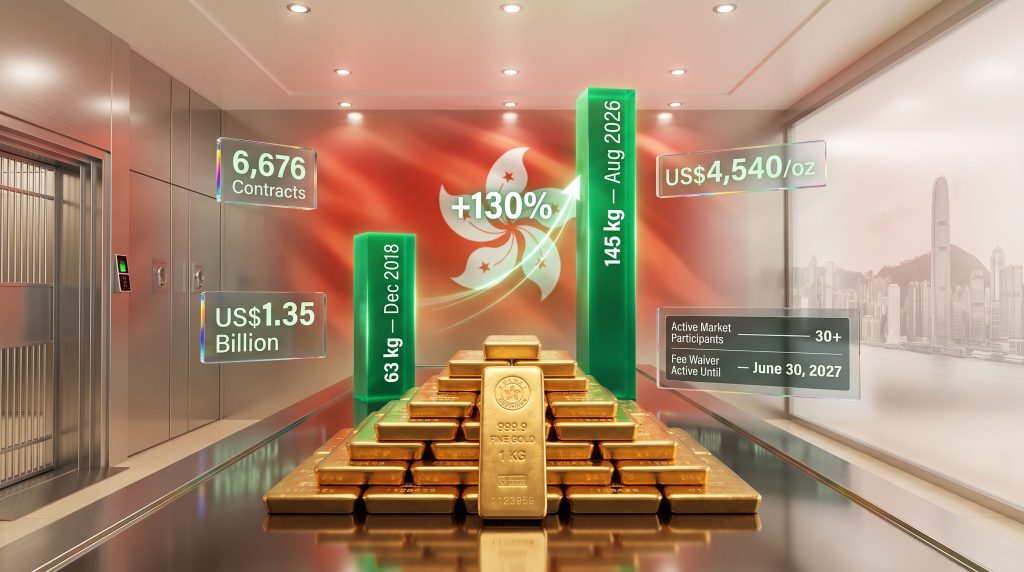
Against this backdrop, a single trading day in August 2026 produced a data point that deserves closer examination than it has received. The HKEX gold futures delivery record saw Hong Kong Exchanges and Clearing record 145 kilograms of physical gold delivered under its US dollar-denominated gold futures contract, more than doubling the previous single-day record of 63 kg set in December 2018. The number itself is modest by London or Shanghai standards. But in the context of Hong Kong's long and largely frustrated ambition to build a credible gold trading hub, the milestone carries disproportionate strategic weight.
When big ASX news breaks, our subscribers know first
Why Physical Delivery Is the True Measure of a Gold Hub
Paper Volume Versus Real Metal: A Critical Distinction
Trading volume figures are the most commonly cited metric for evaluating a derivatives market's health, but for commodity markets specifically, volume without physical delivery is an incomplete picture. Any well-capitalised venue can attract speculative traders chasing price exposure. What distinguishes a genuine commodity hub is the willingness and operational capacity of participants to actually move physical metal.
Physical delivery requires an interconnected ecosystem: approved depositories with vault capacity, logistics frameworks for certified metal, rigorous bar specifications, and institutional counterparties prepared to commit capital to custody rather than merely rolling paper positions. Building that ecosystem takes years and demands sustained institutional confidence.
"Physical delivery demonstrates that market participants are treating a futures contract as a real operational tool, not merely a financial instrument. A market where metal actually changes hands in a regulated depository is categorically different from one used purely for price speculation."
This distinction matters enormously for Hong Kong's aspirations. The city has made four attempts since the 1980s to establish a viable gold futures market. Each prior attempt generated initial activity before volume faded. The August 2026 delivery record signals something the earlier attempts never produced: institutional participants actually taking ownership of physical gold through the HKEX settlement mechanism.
The HKEX USD Gold Futures Contract: How It Actually Works
Understanding what happened in August 2026 requires understanding the contract's mechanics. HKEX's USD gold futures product is denominated in US dollars and physically settled, with a minimum delivery unit of 1 kilogram. Settlement occurs through HKEX-approved depositories located in Hong Kong, and delivered metal must meet certified purity and bar specifications.
The physical delivery process follows a structured sequence:
- A contract holder elects physical delivery at or approaching contract expiry.
- The seller arranges delivery of certified gold to an HKEX-approved Hong Kong depository.
- The metal is verified against deliverable specifications covering purity and bar certification.
- HKEX's settlement framework processes the transfer of legal title from seller to buyer.
- The buyer holds custody of the metal through the approved depository arrangement.
This structure differs fundamentally from cash-settled derivatives, where no metal ever moves and the contract simply closes with a cash payment reflecting the price difference. Cash settlement is efficient for speculation and hedging, but it contributes nothing to physical gold infrastructure. Physically settled contracts, by contrast, require and reinforce the vaulting, logistics, and custodial networks that define a genuine trading hub.
Breaking Down the August 2026 Record
The Numbers in Full Context
The August 2026 delivery milestone did not arrive in isolation. Furthermore, it came alongside a broader surge in HKEX gold futures activity following the contract's relaunch on July 6, 2026, the exchange's fourth formal attempt to establish a sustainable gold futures market.
| Metric | Previous Record / Baseline | August 2026 Figure | Change |
|---|---|---|---|
| Single-Day Physical Delivery | 63 kg (Dec 2018) | 145 kg | +130% |
| Peak Day-Session Trading Volume | 3,039 contracts (Nov 2022) | 6,676 contracts | +119.5% |
| Average Daily Volume (Post-Relaunch) | Prior baseline | 9,974 contracts | New benchmark |
| Total Trading Value (Jul 6 to Aug 19) | N/A | US$1.35 billion | Since relaunch |
| Active Market Participants | N/A | 30+ | Since Jul 6 relaunch |
A 130% jump over the prior delivery record is not an incremental improvement. It represents a qualitative shift in how participants are engaging with the contract. Similarly, the appearance of more than 30 distinct market participants within six weeks of the relaunch suggests a genuine broadening of the participant base, even if it remains modest by global hub standards.
What Triggered the August Surge?
The record delivery day coincided with a specific macroeconomic catalyst. The US Treasury announced it would at least double the size of its liquidity-support buyback operations for long-dated bonds, a move that immediately sent gold prices higher. With gold trading near US$4,540 per troy ounce, the economic calculus around physical delivery shifted materially.
At that price level, the dollar value of physical metal held in an approved Hong Kong depository increases substantially, making the decision to take delivery, rather than simply rolling to the next futures contract, more financially meaningful for institutions with genuine demand for physical gold custody.
Layered on top of this price catalyst was HKEX's structural incentive: a marketwide waiver of its US$1-per-contract trading fee, scheduled to remain in place until June 30, 2027. Fee waivers lower the barrier to entry, particularly for participants testing a new venue's liquidity before committing larger positions.
"However, fee incentives alone cannot manufacture a 130% delivery record. The convergence of elevated gold prices, institutional readiness, and geopolitical pressure on commodity settlement infrastructure suggests the August milestone reflects genuine structural demand rather than promotional activity alone."
Geopolitical Forces Reshaping Gold's Settlement Geography
Why US Sanctions Are an Indirect Catalyst for Asian Gold Infrastructure
The HKEX gold futures relaunch did not occur in a geopolitical vacuum. Broadening US trade and financial sanctions have created tangible incentives for market participants to develop commodity settlement infrastructure that operates outside US-anchored systems. In this context, gold as a safe haven has taken on an additional dimension, encompassing not just price protection but also settlement sovereignty.
This pattern has appeared before. Oil trade flows shifted following sanctions on major producers. Rare earth supply chains were restructured in response to export controls. Gold is now exhibiting a similar dynamic, with physical flows increasingly gravitating toward settlement venues in jurisdictions outside the direct reach of US financial enforcement mechanisms.
A USD-denominated futures contract settled in Hong Kong represents a specific structural response to this environment. It preserves dollar pricing, which remains essential for international gold trade, while locating the physical settlement infrastructure in a jurisdiction with its own regulatory framework and established connections to mainland Chinese gold demand. Furthermore, central bank gold demand from Asian institutions has amplified the urgency of developing robust regional settlement infrastructure.
Hong Kong's Physical Gold Infrastructure: What Has Changed
Hong Kong gold imports reached multi-year highs in 2025 and into 2026, reflecting the city's growing role as a physical transit and storage point for gold flowing between Western producers and Asian end-users. The city has introduced a range of measures in recent years aimed at developing gold trading infrastructure, including expanded depository capacity and regulatory frameworks designed to facilitate international participation in HKEX gold products.
The geographic logic is compelling:
- Hong Kong operates in the Asian time zone, filling a liquidity gap between London's close and New York's open.
- Its regulatory framework is internationally recognised and distinct from mainland China's, making it accessible to foreign institutional participants who face constraints trading on the Shanghai Gold Exchange.
- Its established financial infrastructure, including clearing systems, legal frameworks, and custodial networks, provides the operational foundation that a physical delivery hub requires.
Three Scenarios for HKEX Gold Futures Over the Next Five Years
Mapping the Possible Trajectories
The August 2026 delivery record is a milestone, but milestones do not guarantee momentum. The following scenario framework captures the range of plausible outcomes:
Scenario 1: Accelerated Hub Consolidation
If US sanctions pressure persists, Asian central bank gold accumulation continues at its recent pace, and HKEX successfully broadens its market maker network, the conditions exist for Hong Kong to emerge as the primary USD gold pricing reference for the Asia-Pacific region. This scenario requires sustained physical delivery volumes, deeper liquidity, and critically, the entry of global custodians and sovereign wealth funds as active participants.
Scenario 2: Stable Regional Niche
In this outcome, HKEX establishes a credible but secondary role in global gold markets, capturing a defined share of Asian physical settlement flows without threatening LBMA or COMEX dominance. This is arguably the most probable near-term scenario, and it would still represent a meaningful improvement over Hong Kong's historical track record in gold futures.
Scenario 3: Structural Stall
If geopolitical tensions ease, the fee waiver expiry in June 2027 triggers a volume retreat, or regulatory friction limits international participation, HKEX gold futures could plateau in a pattern consistent with prior relaunch attempts. The June 2027 deadline is the clearest near-term inflection point for this risk.
"The distinction between Scenarios 1 and 2 will likely hinge on whether international banks and sovereign funds begin using HKEX contracts for price discovery rather than purely for physical settlement. Price discovery participation is the defining characteristic of a benchmark venue."
What a Mature HKEX Gold Hub Would Look Like
| Indicator | Current State (Aug 2026) | Mature Hub Benchmark |
|---|---|---|
| Daily Physical Delivery | 145 kg (record) | Consistent multi-hundred kg baseline |
| Active Market Participants | 30+ | 100+ including global custodians |
| Average Daily Volume | ~9,974 contracts | 25,000+ contracts |
| Price Discovery Role | Regional reference | Global co-benchmark with LBMA/COMEX |
| Fee Structure | Waiver active | Self-sustaining at commercial rates |
Who Is Participating, and Who Needs to Arrive Next?
The Current Participant Profile
With more than 30 market participants active since the July 2026 relaunch, the HKEX gold futures contract has attracted a base that likely includes commodity trading houses, regional bullion banks, arbitrageurs exploiting price differentials between Hong Kong and other venues, and Asian institutional investors seeking physical gold custody solutions.
This is a functional starting point, but it falls short of what a genuine global hub requires. The participant categories most conspicuously absent from the current base include:
- Major international custodian banks with global gold operations.
- Sovereign wealth funds with strategic gold allocation mandates.
- Central bank reserve managers looking for Asian settlement alternatives.
- Large commodity trading firms using HKEX for price discovery rather than just settlement.
The fee waiver period running to June 2027 functions as a critical window for building the network effects that attract these higher-tier participants. Each additional major institution that commits to the venue improves liquidity, which in turn reduces the cost of participation for the next institution, creating a self-reinforcing cycle.
Key Risks That Could Derail the Momentum
Several structural risks warrant serious consideration:
- Fee waiver expiry: The June 2027 deadline is the clearest near-term test. If volume retreats materially after commercial fees resume, it raises serious questions about underlying demand.
- Shanghai competition: The Shanghai Gold Exchange and Shanghai Futures Exchange operate competing gold contracts. Regulatory arbitrage between Hong Kong and mainland China could fragment Asian gold liquidity rather than consolidating it.
- Geopolitical normalisation: A de-escalation of US-China trade tensions or a reduction in sanctions pressure would reduce the urgency of alternative settlement infrastructure.
- Liquidity fragmentation: Multiple Asian venues developing competing gold futures contracts simultaneously could dilute the network effects that any single hub needs to achieve benchmark status.
The next major ASX story will hit our subscribers first
Benchmarking HKEX Against the Established Gold Trading World
Where Hong Kong Sits on the Global Spectrum
Any honest assessment of HKEX's gold futures progress requires calibrating it against the venues it aspires to complement or eventually challenge. Understanding the differences between LBMA vs COMEX gold markets provides essential context for appreciating where HKEX fits within the broader global structure.
The London Bullion Market Association remains the world's dominant gold trading venue by volume, operating an over-the-counter market with daily turnover that dwarfs any exchange-based contract. The LBMA's unallocated gold system, while periodically criticised for its opacity, provides unmatched liquidity depth. In addition, London vault gold reserves underpin the LBMA's physical settlement credibility in a way that newer venues must work to replicate.
COMEX in New York is the world's largest gold futures exchange by open interest, with contract specifications that have made it the global benchmark for futures-based price discovery. Consequently, COMEX warehouse trends are closely watched as indicators of physical market tightness or availability.
The Shanghai Gold Exchange operates the world's largest physical gold exchange by volume, reflecting China's position as both the world's largest gold producer and consumer. However, the SGE's restricted access for foreign participants limits its role as a global benchmark.
HKEX's positioning is distinct from all three. It offers a physically settled, USD-denominated contract with international accessibility in an Asian time zone. No other venue combines all three of these characteristics, which is precisely the structural gap HKEX is attempting to fill.
Key Takeaways: Reading the August 2026 Signal Correctly
The HKEX gold futures delivery record is worth examining carefully because it sits at the intersection of several powerful and potentially durable forces:
- The 145 kg single-day delivery record represents a 130% increase over the prior 2018 peak, a jump too large to attribute to promotional incentives alone.
- A 119.5% surge in day-session trading volume to 6,676 contracts and a total trading value of US$1.35 billion in the six weeks following the July 2026 relaunch indicate genuine market engagement.
- The June 2027 fee waiver expiry is the most important near-term test of whether the liquidity build is self-sustaining or incentive-dependent.
- Geopolitical trade friction is functioning as a structural catalyst for Asian gold infrastructure development, with Hong Kong's unique regulatory positioning making it a logical beneficiary.
- The transition from a physical settlement venue to a genuine price discovery hub remains the critical unachieved milestone, and it will require a materially different class of institutional participant than those currently active.
Disclaimer: This article is intended for informational purposes only and does not constitute financial or investment advice. References to price levels, trading volumes, and scenario projections involve inherent uncertainty. Past trading records and volume milestones are not indicative of future performance. Readers should conduct their own due diligence before making any investment decisions related to gold markets or exchange-traded products.
Want to Stay Ahead of the Next Major Mineral Discovery on the ASX?
While global gold market infrastructure continues to evolve, Discovery Alert's proprietary Discovery IQ model delivers real-time alerts the moment significant mineral discoveries are announced on the ASX — explore historic discoveries and their returns to see what's possible, then begin your 14-day free trial at Discovery Alert and position yourself ahead of the broader market.