July 14, 2026
The global energy sector stands at a critical juncture where conventional extraction methods increasingly fail to meet rising demand, forcing nations to embrace sophisticated drilling technologies that can unlock previously inaccessible hydrocarbon reserves. Egypt's petroleum industry exemplifies this technological evolution, as the country systematically deploys horizontal drilling Egypt oil gas extraction methods to transform its energy production capacity and reduce dependence on imports.
Revolutionary Drilling Technologies Reshape Egypt's Energy Landscape
Egypt's transition toward advanced extraction methods represents more than incremental improvement in existing operations. The systematic adoption of horizontal drilling and hydraulic fracturing technologies addresses fundamental challenges in accessing tight formations and maximising recovery rates from complex geological structures across the Western Desert and Mediterranean offshore regions.
Traditional vertical drilling methods in Egypt have historically achieved limited reservoir contact, constraining production potential from formations containing substantial hydrocarbon reserves. Horizontal drilling Egypt oil gas projects now enable operators to access extended reservoir sections, dramatically increasing the productive area contacted by individual wells and optimising field development economics.
Technical Advantages Driving Egypt's Horizontal Drilling Adoption
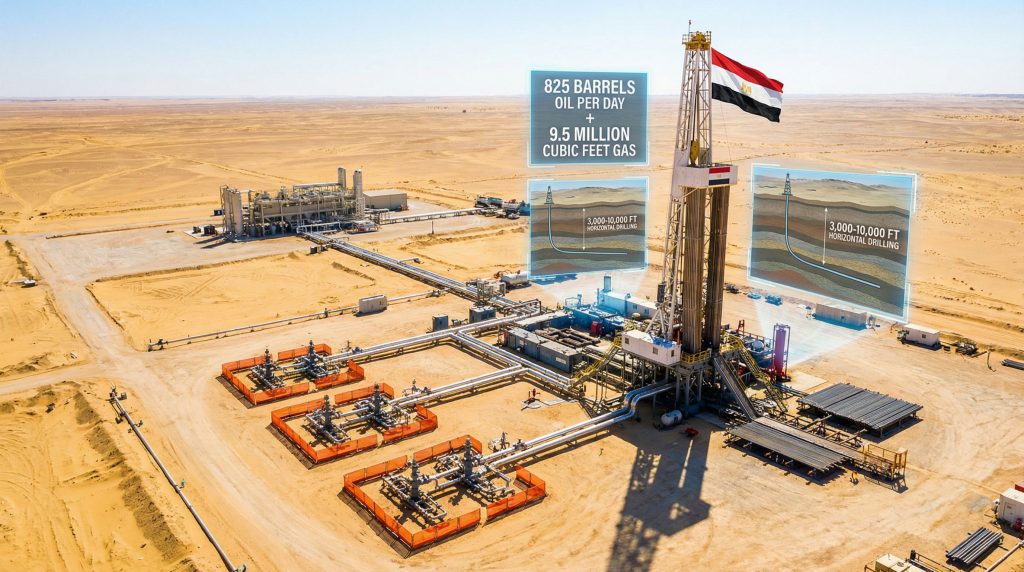
The fundamental physics of horizontal drilling creates substantial advantages over conventional vertical approaches. Where vertical wells typically contact 50-100 feet of productive formation, horizontal applications can access 3,000-10,000 feet of reservoir rock, representing a 30-100 fold increase in hydrocarbon-bearing contact area.
This expanded reservoir exposure translates directly into enhanced production rates. Industry data indicates horizontal wells in comparable formations achieve initial production rates of 800-1,500 barrels per day, compared to 100-300 barrels daily from vertical completions. The performance differential becomes more pronounced in low-permeability formations where conventional drilling struggles to achieve commercial flow rates.
Recovery factor improvements represent another critical advantage. Vertical drilling typically recovers 15-25% of original oil in place, while properly designed horizontal completions can achieve 35-60% recovery factors through enhanced drainage patterns and reduced bypassed reserves. These improvements are particularly relevant given the current oil market movements affecting global energy economics.
Strategic Geological Targets Across Egyptian Basins
Egypt's horizontal drilling Egypt oil gas initiatives focus on several prime geological formations that exhibit characteristics favourable for directional drilling applications. The Abu Roash Formation, consisting of Cretaceous limestone and sandstone sequences in the Western Desert, presents ideal conditions for horizontal development due to its extensive lateral continuity and proven hydrocarbon productivity.
The Bahariya Formation offers significant potential through its oil-bearing sequences with naturally enhanced fracture networks that respond favourably to horizontal drilling and completion techniques. These formations demonstrate consistent reservoir properties across broad areas, enabling predictable horizontal well performance and economic returns.
Deep Nubian Sandstone formations represent emerging targets for both oil and gas extraction, with substantial thickness and lateral extent that can support long horizontal laterals. The complexity of Mediterranean offshore structures requires precise directional control to navigate fault systems and optimise well placement within productive intervals.
When big ASX news breaks, our subscribers know first
International Service Company Partnerships Enable Technical Implementation
Egypt's horizontal drilling expansion relies heavily on strategic partnerships with global oilfield service providers who bring advanced technologies and operational expertise essential for successful implementation. According to official government statements, the country emphasises cooperation with major global oilfield service companies and production partners to accelerate technology transfer and capability development.
President Abdel Fattah Al-Sisi has emphasised the importance of localising modern extraction technologies and drawing on successful international and regional experiences through these strategic partnerships. This approach ensures access to cutting-edge drilling systems, formation evaluation tools, and completion technologies required for optimal horizontal well performance.
Advanced Technology Deployment in Egyptian Operations
Modern horizontal drilling Egypt oil gas projects incorporate sophisticated rotary steerable systems that enable precise directional control during drilling operations. These systems allow operators to maintain optimal wellbore trajectory whilst navigating complex geological structures and avoiding drilling hazards, similar to AI drilling innovations being deployed globally.
Real-time formation evaluation represents another critical technology component. Logging-while-drilling services provide continuous geological data that enables operators to optimise well placement within productive zones and maximise reservoir contact. This capability proves particularly valuable in heterogeneous formations where reservoir quality varies significantly.
Multi-stage completion technologies enable operators to selectively stimulate different reservoir sections along horizontal laterals. This approach optimises production from varied formation properties and ensures maximum recovery from the entire horizontal section.
Technology Transfer and Local Capability Development
The strategic emphasis on technology localisation creates opportunities for Egyptian companies and personnel to develop advanced drilling capabilities. Training programmes and certification pathways enable local workforce development whilst reducing long-term dependence on foreign technical expertise.
Supply chain development for specialised equipment and services represents another key benefit from international partnerships. Local manufacturing and service capabilities can evolve to support ongoing horizontal drilling operations, creating sustainable economic benefits beyond initial technology deployment.
Production Enhancement Potential Through Horizontal Implementation
The production impact from horizontal drilling Egypt oil gas projects demonstrates the transformative potential of advanced extraction technologies. Petroleum Minister Karim Badawi has confirmed the petroleum sector's acceleration of horizontal drilling and hydraulic fracturing technology deployment to achieve significant increases in crude oil and natural gas output.
Early results from Egyptian horizontal drilling initiatives provide concrete evidence of the technology's effectiveness. Recent Western Desert operations have achieved impressive production rates that substantially exceed conventional vertical well performance in comparable formations. These developments occur against a backdrop of broader regional energy transition challenges affecting global markets.
Quantifying Production Improvements
Individual horizontal wells in Egypt's Western Desert have demonstrated daily production rates exceeding 800 barrels of oil plus substantial associated gas volumes. These results represent significant improvements over historical vertical well performance and validate the economic justification for horizontal drilling investment.
Combined production impacts from multiple horizontal wells create substantial aggregate increases in field-level output. The cumulative effect of systematic horizontal development across multiple formations and fields positions Egypt for meaningful increases in total hydrocarbon production.
Scaling Scenarios for Future Development
Conservative development scenarios project deployment of 50 new horizontal wells annually across Egypt's key producing regions. Assuming average initial production rates of 1,000 barrels per day per well, this development pace could generate cumulative production increases of 150,000 barrels daily within three years.
More aggressive scaling scenarios envision 100 annual horizontal well completions combined with enhanced recovery applications in existing fields. Such intensive development could potentially boost total Egyptian production by 400,000 barrels per day or more, representing a substantial contribution to the country's energy independence objectives.
These projections depend on successful resolution of infrastructure, financing, and operational challenges that could constrain development pace. However, the fundamental geological and technological prerequisites for such expansion appear favourable based on current results and international experience in comparable formations.
Priority Field Development Opportunities
Egypt's horizontal drilling Egypt oil gas expansion focuses on fields with proven geological characteristics and existing infrastructure that can support advanced drilling operations. The Badr Oil Field Complex exemplifies successful horizontal implementation with documented production improvements and confirmed potential for additional development.
Technical analysis indicates the Badr field contains identified locations suitable for horizontal drilling, with estimated recoverable reserves that justify continued development investment. Multi-stage fracturing compatibility in the field's formations provides additional production enhancement opportunities.
Apollonia Field Development Plans
The Apollonia field represents another priority target for horizontal development, with planned wells designed to access mature reservoir sections through enhanced oil recovery techniques. Integration with existing production infrastructure minimises development costs whilst maximising economic returns.
Field development plans emphasise accessing previously bypassed reserves and optimising recovery from existing productive intervals. This approach leverages existing geological knowledge and infrastructure investment whilst applying advanced drilling techniques for improved performance.
Western Desert Exploration Expansion
Exploration activities across Egypt's Western Desert blocks specifically evaluate horizontal drilling potential in newly discovered reserves. All successful exploration discoveries undergo assessment for horizontal development opportunities, ensuring optimal field development from initial planning stages, particularly considering the Alaska drilling shift occurring globally.
This systematic approach maximises the value of exploration investment by identifying the most effective extraction methods during early development phases. The integration of horizontal drilling considerations into exploration planning reflects the technology's central role in Egypt's future energy development strategy.
Hydraulic Fracturing Integration with Horizontal Drilling
The combination of horizontal drilling Egypt oil gas applications with hydraulic fracturing creates synergistic effects that dramatically enhance production from low-permeability formations. This integrated approach addresses fundamental reservoir engineering challenges that limit conventional extraction effectiveness.
Multi-stage fracturing along horizontal laterals enables operators to stimulate extensive reservoir volumes and create enhanced permeability networks. Typical designs incorporate 8-12 fracture stages across 1,000-metre lateral sections, with proppant selection optimised for specific formation characteristics.
Fluid Systems and Environmental Management
Egyptian hydraulic fracturing operations employ water-based fluid systems adapted to desert operating conditions and high-temperature reservoir environments. Chemical additives are optimised for local formation characteristics whilst maintaining environmental compatibility and regulatory compliance.
Water management protocols address the unique challenges of desert operations through produced water treatment and reuse systems. These approaches minimise freshwater consumption whilst managing flowback fluids in an environmentally responsible manner.
Environmental and Regulatory Framework Development
Egypt's regulatory framework for hydraulic fracturing continues evolving to address environmental protection requirements whilst enabling efficient operations. Technical standards for horizontal drilling operations ensure safety and environmental compliance throughout the development process.
Environmental impact assessment requirements provide comprehensive evaluation of potential effects from horizontal drilling and fracturing operations. Surface water protection measures and groundwater monitoring programmes maintain environmental integrity during development activities.
Economic Analysis of Horizontal Drilling Investment
The financial justification for horizontal drilling Egypt oil gas projects depends on balancing higher initial costs against substantially improved production performance and recovery rates. Typical horizontal wells require $8-12 million investment, with additional fracturing costs of $3-5 million per well.
Despite higher upfront costs, horizontal wells demonstrate superior economic returns through enhanced production rates and extended productive life. Break-even oil prices for horizontal developments typically range from $45-55 per barrel, competitive with international unconventional development projects, especially considering the broader oil price rally impact on market conditions.
Return on Investment Calculations
Payback periods for horizontal wells generally range from 18-24 months under current oil price environments, with net present value improvements of 200-300% compared to vertical completions in the same formations. These economics support aggressive development programmes and justify the required technology investment.
The superior recovery factors achieved through horizontal drilling create additional value through increased ultimate recovery from existing reserves. This benefit extends project economics beyond initial production rates and improves long-term field development returns.
Employment and Economic Development Impact
Horizontal drilling expansion creates significant employment opportunities across technical and operational disciplines. An estimated 2,000 new technical positions support the expanding programme, with advanced training programmes developing local expertise in sophisticated drilling technologies.
Technology localisation initiatives reduce dependence on foreign services whilst building Egyptian engineering capabilities. Supply chain development for specialised equipment creates additional economic benefits and supports sustainable industry growth beyond initial development phases.
The next major ASX story will hit our subscribers first
Regional Competition and Market Positioning
Egypt's horizontal drilling Egypt oil gas development occurs within a competitive regional environment where neighbouring countries pursue similar advanced extraction strategies. The UAE, Saudi Arabia, and other regional producers have established substantial horizontal drilling programmes with proven success records.
Egypt's approach emphasises geological diversity across multiple formation targets and comprehensive service provider partnerships. This strategy enables rapid scaling whilst building sustainable local capabilities and maximising technology transfer benefits.
Competitive Advantages and Strategic Positioning
Egypt's horizontal drilling programme leverages several unique advantages, including diverse geological formations across different basins and established petroleum infrastructure. The country's strategic location and existing energy export capabilities support efficient development and marketing of increased production.
Aggressive deployment timelines position Egypt to capture maximum market benefits from horizontal drilling technology whilst oil prices remain favourable. Emphasis on workforce development and technology transfer creates sustainable competitive advantages beyond initial implementation phases.
Implementation Challenges and Risk Management
Successful horizontal drilling Egypt oil gas expansion must address several technical and operational challenges. Geological complexity across Egyptian formations requires adaptive drilling strategies and sophisticated formation evaluation capabilities.
Equipment transportation to remote desert locations presents logistical challenges that require careful planning and infrastructure development. Water sourcing and management for fracturing operations demand sustainable approaches that minimise environmental impact and operational costs.
Financial and Regulatory Considerations
President Al-Sisi has emphasised the importance of timely payments to international oil companies to encourage further exploration and production activity. Resolution of outstanding payment obligations to foreign partners remains critical for maintaining service provider relationships and ensuring continued technology access.
Investment capital requirements for horizontal drilling programmes necessitate careful financial planning and potentially innovative funding mechanisms. Technology acquisition costs and infrastructure development needs require substantial upfront investment to achieve desired scaling objectives.
Regulatory Framework Evolution
Environmental permitting processes must evolve to accommodate horizontal drilling and hydraulic fracturing operations whilst maintaining rigorous environmental protection standards. Safety standard implementation and enforcement require ongoing development to match international best practices.
International best practice adaptation ensures Egyptian operations meet global standards for safety and environmental performance. This approach maintains access to international technology and financing whilst building sustainable operational capabilities.
Strategic Roadmap for Egypt's Horizontal Drilling Future
Egypt's path toward horizontal drilling leadership follows a systematic three-phase development approach spanning the next decade. The foundation building phase through 2027 focuses on establishing 100 horizontal wells across 10 major fields whilst completing regulatory framework development and service company partnerships.
The scaling operations phase from 2028-2029 targets 200+ wells annually with optimised designs and enhanced local service capabilities. Advanced completion technology deployment during this phase positions Egypt for sustained high-volume development with improved economics and operational efficiency.
Long-term Market Leadership Objectives
The market leadership phase beginning in 2030 envisions Egypt developing regional technology export capabilities and integrating enhanced oil recovery applications. Carbon capture and storage compatibility ensures long-term sustainability and positions Egyptian operations for evolving environmental requirements.
Furthermore, according to recent government announcements, Egypt is accelerating its horizontal drilling and hydraulic fracturing technology deployment to achieve significant increases in crude oil and natural gas output. This strategic progression transforms Egypt from a technology adopter to a regional leader in advanced extraction methods.
The systematic deployment of horizontal drilling and hydraulic fracturing technologies across Egypt's diverse geological formations positions the country as an emerging leader in Middle Eastern unconventional resource development. Success in implementing these advanced extraction methods will substantially contribute to Egypt's energy independence objectives whilst creating sustainable economic benefits through technology transfer and capability development.
This analysis examines potential scenarios based on current development trends and should not be considered investment advice. Readers should conduct independent research and consider multiple perspectives when evaluating energy sector investments or policy decisions.
Ready to Capitalise on the Next Major Energy Discovery?
Discovery Alert's proprietary Discovery IQ model delivers real-time alerts on significant ASX mineral discoveries, empowering investors to identify actionable opportunities ahead of the broader market before major announcements move prices. Start your 14-day free trial today and position yourself ahead of the market with instant notifications on breakthrough discoveries that could transform your investment portfolio.