
August 20, 2026
Economic Dependencies and Critical Infrastructure Vulnerabilities
Global energy markets operate through a delicate network of transportation arteries, none more critical than the narrow waterways that channel petroleum flows between producers and consumers. The Hormuz crisis and global oil supply disruption demonstrates how these strategic passages represent fundamental weaknesses in the international economic system, where geographic constraints create disproportionate leverage for regional powers and expose importing nations to supply disruptions that cascade far beyond energy sectors.
The mathematics of energy dependency reveal how seemingly modest disruptions trigger amplified economic consequences. When transportation networks carrying substantial portions of global crude oil face interruption, the resulting supply shortages don't simply raise prices proportionally. Instead, they activate complex feedback loops involving futures markets, strategic reserve deployments, and emergency policy responses that can reshape entire economic landscapes within weeks.
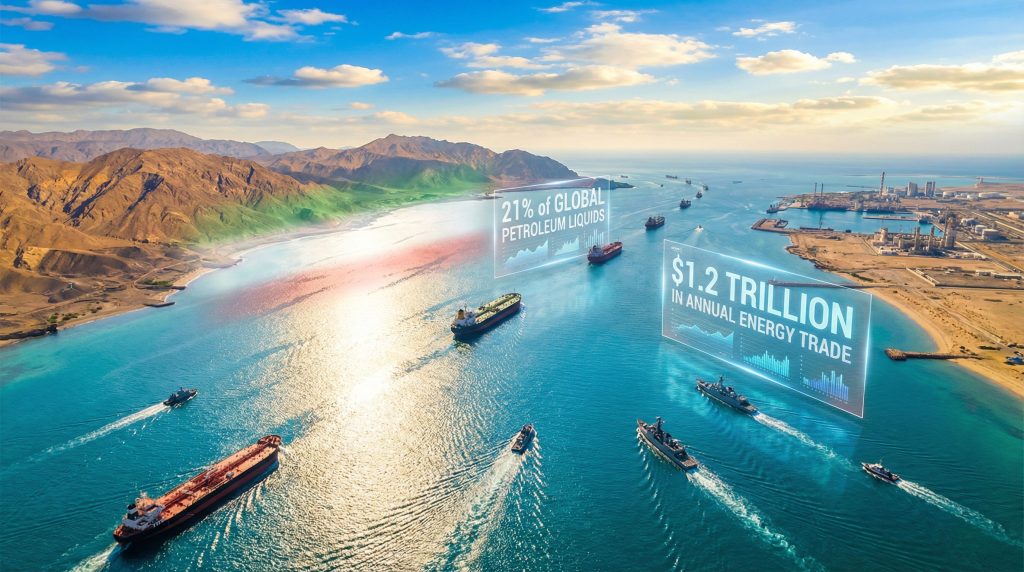
Current market conditions demonstrate this vulnerability in real-time. The Strait of Hormuz, measuring just 21 miles at its narrowest point, channels approximately one-third of global oil shipments and about one-fifth of liquefied natural gas flows. This geographic bottleneck controls access to energy resources for major economies across Asia, Europe, and beyond, creating a single point of failure for international energy security transition.
When big ASX news breaks, our subscribers know first
Supply Disruption Mathematics and Market Psychology
Quantifying Energy Market Shock Scenarios
The World Bank has developed comprehensive frameworks for understanding how supply disruptions translate into price volatility across different severity levels. Their analysis reveals that energy markets don't respond linearly to supply constraints, but instead exhibit dramatic price acceleration as shortages intensify.
Furthermore, recent oil price movements demonstrate how geopolitical tensions create amplified market responses:
- Small disruption scenario (500,000 to 2 million barrels per day loss): Oil price increases of 3-13%
- Medium disruption scenario (3 to 5 million barrels per day loss): Oil price increases of 21-35%
- Large disruption scenario (6 to 8 million barrels per day loss): Oil price increases of 56-75%
These percentages, when applied to baseline crude oil prices around $73 per barrel before recent Middle Eastern tensions, suggest potential price ranges of $113-127 per barrel under severe supply constraints.
Strategic Reserve Deployment Timelines
International Energy Agency recommendations for strategic petroleum reserve releases represent unprecedented scales of intervention. The 400 million barrel release proposed in response to current supply threats dwarfs previous collective releases, with the largest historical deployment reaching 180 million barrels across two tranches in 2022.
The United States has authorised 172 million barrels from the Strategic Petroleum Reserve, though the full impact requires significant time to materialise. Energy Secretary Chris Wright indicated that the complete quota of additional oil would likely take up to 120 days to enter global markets.
| Reserve Deployment Phase | Timeline | Market Impact |
|---|---|---|
| Authorisation | Immediate | Limited price moderation |
| Initial Release | 7-14 days | Moderate supply increase |
| Full Deployment | 60-120 days | Maximum supply augmentation |
Price Transmission Mechanisms
Energy price shocks propagate through economic systems via multiple channels, with transportation costs representing the most immediate transmission vector. Historical analysis indicates that every $10 per barrel change in oil prices results in approximately 25-30 cent changes in gasoline prices per gallon.
Consumer spending patterns amplify these effects, as every 1 cent increase in average gasoline prices eliminates more than $1 billion annually in consumer spending. This relationship creates compounding economic effects that extend far beyond energy sectors into retail, transportation, and manufacturing industries.
However, the current situation differs from previous disruptions due to the scale of supply constraints affecting critical shipping routes.
Asymmetric Warfare and Naval Security Challenges
Operational Constraints on Military Solutions
Traditional naval escort operations face unprecedented complexity when confronting asymmetric threats in narrow waterways. Senior Treasury Department sources indicate that ensuring safe passage through contested shipping lanes would require ground-based military presence, creating political and operational challenges that constrain policy options.
Without ground forces positioned around strategic chokepoints, naval escort operations remain vulnerable to drone attacks, missile strikes, and fast attack craft deployed by regional powers.
Naval mine clearance operations add additional complications, requiring extensive demining efforts before conventional escort missions can commence. The Islamic Revolutionary Guard Corps has demonstrated capabilities including:
- Drone swarm coordination: Multiple unmanned aerial vehicles overwhelming defensive systems
- Fast attack boat deployment: High-speed vessels launching surprise attacks on merchant shipping
- Naval mining operations: Underwater explosive devices blocking shipping channels
Insurance Market Responses and Risk Pricing
Global shipping insurance markets have begun repricing risk premiums for Middle Eastern routes, with the U.S. Development Finance Corporation exploring insurance provision for vessels transiting contested waters. However, comprehensive insurance solutions remain limited without definitive security guarantees.
Recent incidents affecting major oil terminals demonstrate the persistent nature of shipping disruptions. Multiple attacks have forced temporary closure of critical loading facilities, while Japanese strategic reserve activation and Omani port evacuations highlight the widespread impact of escalating regional tensions.
Economic Policy Trilemma and Central Bank Constraints
Stagflation Dynamics in Energy-Dependent Economies
Central banks face unprecedented challenges when supply-side price shocks coincide with economic growth concerns. Traditional monetary policy tools prove inadequate for addressing energy-driven inflation, as interest rate increases cannot resolve physical supply shortages while potentially exacerbating economic downturns.
Political economy constraints compound central bank difficulties. Historical election data reveals that sitting U.S. presidents have won re-election 11 times out of 11 when the economy avoided recession within two years of elections, compared to only 1 victory out of 7 occasions when entering re-election campaigns during recessions.
Regional Economic Impact Differentiation
| Economic Region | Import Dependency | Strategic Reserves | Alternative Sources |
|---|---|---|---|
| United States | 12% Middle East exposure | 180-day capacity | Domestic shale production |
| European Union | 65% import dependency | 90-day minimum reserves | Norwegian, North Sea supplies |
| East Asia | 75% crude dependency | 60-90 day reserves | Russian pipeline options |
European Union responses demonstrate coordinated policy mechanisms, with ministers implementing emergency industry protection measures. Recent headlines indicate EU Ministers Race to Shield Industry From an Escalating Energy Shock, suggesting comprehensive regional coordination frameworks.
Industrial Sector Adjustments
Energy-intensive industries exhibit immediate responses to supply disruptions, with major companies implementing operational adjustments. Sinopec has implemented significant refining rate reductions as crude supply constraints impact operations. China's largest petrochemical company is slashing refining runs as Hormuz disruption squeezes crude supply.
European Energy Company Adaptations: TotalEnergies has frozen fuel prices in France amid 'exceptional volatility', indicating expectations of sustained elevated energy costs. Meanwhile, RWE announced $1.9 billion investments in U.S. gas power as demand jumps, suggesting long-term supply constraint anticipations and affecting the broader natural gas forecast.
Alternative Supply Route Development and Geopolitical Realignment
Emergency Pipeline Restoration Projects
Iraq has initiated emergency pipeline restoration to circumvent blocked shipping routes. The Kirkuk-Turkey pipeline restoration project represents critical infrastructure adaptation to supply chain disruptions, enabling crude exports to bypass contested maritime routes.
These alternative route developments require significant time and investment to achieve meaningful capacity. Pipeline infrastructure modifications, terminal upgrades, and transportation network enhancements typically require months or years to implement fully.
Russian Energy Partnership Expansion
Temporary sanctions waivers have enabled increased Russian crude exports to Asian markets, with India receiving specific authorisation for 30-day waiver periods expiring April 11, 2026. Russia has indicated willingness to resume natural gas and LNG exports to countries affected by Middle Eastern supply disruptions.
However, analysts caution that even increased volumes from Russia will not compensate for continued supply losses from the Strait of Hormuz, indicating that alternative sources provide only partial mitigation for regional supply disruptions.
Banking Sector Price Forecasting
Major financial institutions have revised energy price forecasts significantly upward:
- Goldman Sachs: Raised Brent oil forecasts to over $100 for March
- Bank of America: Issued guidance to "Sell Oil Above $100"
- Macquarie Group: Projects potential crude prices reaching $150 per barrel
Vikas Dwivedi, global energy strategist at Macquarie Group, characterised the situation as "an impulse function on pricing, meaning the reduced transit is creating the action and will require numerous policy, military, and logistical responses to mitigate the upward price move which we believe could reach $150 per barrel along the path".
Investment Strategy Implications and Sector Analysis
Energy Infrastructure Investment Opportunities
Supply disruption scenarios create substantial investment opportunities in alternative energy infrastructure. In addition to traditional energy investments, the current crisis accelerates interest in domestic production capabilities.
Pipeline and Transportation Companies: Companies operating non-Middle Eastern transportation networks benefit from increased utilisation rates and premium pricing for secure routing options.
Strategic Storage Facilities: Underground storage capacity and above-ground tank facilities experience increased demand as companies and governments expand strategic reserves.
Alternative Energy Acceleration: Solar, wind, and nuclear energy projects receive additional investment interest due to energy security premiums attached to domestic production capabilities.
Shipping and Maritime Sector Dynamics
Tanker rates experience dramatic increases during supply disruptions, as vessel availability becomes constrained and insurance costs escalate. Companies operating tanker fleets outside contested regions capture significant rate premiums for secure transportation services.
Jones Act Waiver Considerations: President Trump is reportedly considering rare Jones Act waivers to increase domestic shipping capacity as regional conflicts drive fuel prices higher.
Volatility and Risk Management Frameworks
Energy market volatility requires sophisticated hedging strategies for companies with significant energy input costs. Options strategies, futures contracts, and supply diversification become critical risk management tools during sustained uncertainty periods.
Currency exposure management gains importance as energy transactions potentially shift toward yuan-denominated contracts, challenging traditional dollar-based energy trading patterns. Consequently, the oil price rally creates additional complexity for international trading relationships.
The next major ASX story will hit our subscribers first
Long-term Structural Market Transformation
Energy Security Architecture Evolution
The Hormuz crisis and global oil supply disruption is accelerating permanent changes to international energy architecture. Countries are implementing diversification strategies that reduce dependence on single chokepoints, though such transformations require years to complete.
Strategic alliance structures are evolving around energy security priorities, with traditional diplomatic relationships supplemented by energy partnership agreements that guarantee supply access during crisis periods. Furthermore, these developments may prevent future oil price stagnation scenarios by creating more resilient supply chains.
Financial System Realignment
Reserve currency dynamics face pressure as energy-importing nations explore alternatives to dollar-denominated transactions. China and India are racing for Russian crude through bilateral arrangements that may utilise yuan settlement mechanisms.
Commodity trading hub development outside traditional Western financial centres represents another structural shift, as regional powers establish alternative trading platforms and settlement systems.
Regional Power Redistribution
| Strategic Capability | Advantaged Nations | Disadvantaged Regions |
|---|---|---|
| Alternative Transportation | Russia, Norway, Canada | Gulf Cooperation Council |
| Naval Security Projection | United States, United Kingdom | Landlocked European nations |
| Payment System Control | China, Russia | Traditional Western allies |
The Hormuz crisis and global oil supply disruption demonstrates how geographic constraints and regional conflicts can fundamentally alter global economic relationships within relatively short timeframes. While immediate responses focus on strategic reserve deployments and alternative supply arrangements, the long-term implications involve permanent shifts toward diversified energy infrastructure and modified international trading systems.
Investment positioning for post-crisis energy markets requires understanding both immediate supply shortage opportunities and longer-term structural transformation trends. Companies and investors prepared for sustained energy security premiums and alternative supply chain development are likely to benefit most from the current disruption period.
This analysis is provided for informational purposes only and does not constitute investment advice. Energy markets involve significant risks, and investors should conduct thorough due diligence before making investment decisions.
Ready to Capitalise on Energy Market Volatility?
Discovery Alert's proprietary Discovery IQ model delivers real-time alerts on significant ASX mineral discoveries, instantly empowering subscribers to identify actionable opportunities in critical minerals and energy resources ahead of the broader market. Begin your 14-day free trial today and secure your market-leading advantage during these unprecedented times of global energy disruption.