
July 27, 2026
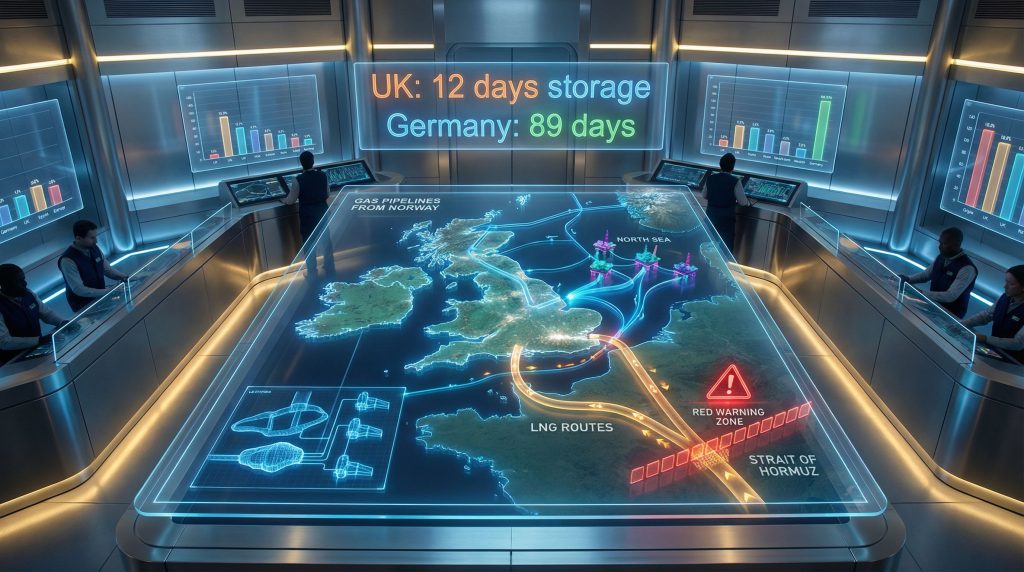
Global energy systems face mounting pressure as interconnected vulnerabilities expose the fragility of international supply chains. Recent disruptions have highlighted how single points of failure can cascade through continental markets, creating ripple effects that extend far beyond their geographic origins. Furthermore, the Hormuz crisis sparks urgent call to boost UK gas storage as policymakers recognise the critical need for enhanced energy security infrastructure. Understanding these dynamics becomes crucial as nations reassess their strategic energy frameworks and investment market impacts priorities.
What Makes Britain's Gas Storage Infrastructure So Vulnerable?
Britain's energy security architecture operates on razor-thin margins that transform routine supply fluctuations into potential crisis scenarios. The nation maintains approximately 6,700 GWh of gas storage capacity, representing just 1.5 days of peak winter consumption. This operational framework contrasts sharply with continental European approaches that prioritise strategic reserves over continuous flow dependency.
Storage Capacity Comparison Across Europe
| Country | Storage Capacity (Days) | Strategic Classification |
|---|---|---|
| Germany | 89 days | High Reserve Buffer |
| France | 103 days | Strategic Stockpile |
| Netherlands | 74 days | Adequate Reserves |
| United Kingdom | 12 days | Critical Vulnerability |
The stark disparity in storage approaches reflects different philosophical frameworks towards energy security. Continental European nations developed extensive underground storage networks following historical supply disruptions, whilst Britain's privatised energy system evolved around market-based continuous supply models.
Technical constraints limiting UK storage expansion include geological factors, regulatory frameworks, and historical investment patterns. Salt cavern formations suitable for large-scale gas storage exist in limited quantities compared to Germany's extensive geological advantages. Additionally, the legacy of North Sea production created an infrastructure designed for immediate consumption rather than strategic stockpiling.
Current 12-day storage capacity effectively means Britain operates without meaningful supply disruption buffers during peak demand periods. Winter consumption patterns can reach 400 GWh daily, making the existing infrastructure insufficient for managing extended supply interruptions.
When big ASX news breaks, our subscribers know first
How Global Supply Disruptions Create Cascading Market Effects
The Strait of Hormuz crisis demonstrates how chokepoint vulnerabilities can destabilise entire continental energy systems through interconnected supply chains. 21% of global LNG shipments transit this strategic waterway, creating single-point failure risks that extend far beyond direct supply relationships.
Market data from March 2026 illustrates these cascading effects in real-time. Brent crude reached $90.63 per barrel, representing a $2.83 (+3.35%) daily increase and approximately $9 weekly gain. Similarly, WTI crude climbed to $86.10 per barrel, showing $2.65 (+3.18%) daily growth and nearly $12 weekly advancement, reflecting broader oil price rally insights.
Critical Supply Chain Vulnerabilities
- Qatar's LNG dominance: 77 million tonnes annually (22% of global capacity)
- Ras Laffan complex: 20% of global LNG production at single location
- European price volatility: 67% weekend surge following disruption announcements
- Recovery timeline projections: 2-8 weeks minimum for full operational restoration
The interconnected nature of global LNG markets means supply disruptions create bidding competitions among importing nations. Countries with limited storage capacity, like Britain, become particularly vulnerable during these competitive scenarios as they cannot rely on stockpiled reserves to weather temporary supply constraints.
Technical analysis reveals that LNG supply chains operate with minimal redundancy margins. When major production facilities face operational disruptions, the global system lacks sufficient spare capacity to compensate without significant price adjustments and demand rationing mechanisms.
However, natural gas trends show varying patterns across different markets, illustrating the complexity of global energy dynamics.
What Strategic Infrastructure Investment Scenarios Could Transform UK Energy Resilience?
Three primary investment pathways could fundamentally reshape Britain's energy security profile, each addressing different aspects of supply vulnerability and strategic independence objectives.
Domestic Production Acceleration Framework
UK Continental Shelf reserves contain an estimated 456 billion cubic metres of recoverable resources, potentially doubling official government assessments. Unlocking this potential requires comprehensive regulatory reform and fiscal incentive restructuring to encourage private sector development investment.
Current windfall tax structures create disincentives for new field development, particularly for marginal discoveries that require significant capital investment with uncertain returns. Accelerated depreciation schedules and production incentives tied to domestic supply security could catalyse development activity.
Key domestic production metrics:
- Current domestic supply: 38% of total consumption
- Potential expansion: 456 billion cubic metres available
- Investment requirements: £3-5 billion over 5-year timeline
- Risk assessment: Low political and supply security risk
Strategic Storage Infrastructure Expansion
Underground storage facility development could increase Britain's capacity from the current 12-day supply to 45-60 days, aligning with European strategic reserve standards. This transformation would require identifying suitable geological formations and developing regulatory frameworks for strategic storage obligations.
Salt cavern storage offers the most promising expansion pathway, though Britain's geological profile provides fewer optimal sites compared to continental European formations. Aquifer storage and depleted hydrocarbon reservoir conversion represent alternative technical approaches requiring different investment profiles.
Storage expansion investment analysis:
- Underground facility development: £2-4 billion capital requirement
- Capacity increase target: From 12 to 45-60 days supply
- European alignment: Matches continental strategic standards
- Crisis management capability: Genuine supply disruption resilience
Import Infrastructure Diversification Strategy
Enhanced LNG terminal capacity and additional pipeline connections could reduce dependency on volatile spot markets during supply disruptions. Norway represents the most reliable expansion opportunity, given existing pipeline infrastructure and stable political relationships.
LNG import terminal expansion provides flexibility for accessing global supply sources, though it requires significant port infrastructure investment and long-term commercial arrangements to justify capital expenditure.
Infrastructure diversification components:
- Enhanced LNG terminals: £800 million – £1.2 billion investment
- Norwegian pipeline redundancy: £1.5-2.5 billion development costs
- Supply source diversification: Reduced single-point failure exposure
- Commercial flexibility: Access to global LNG markets
How Do Current Import Dependencies Shape UK Energy Security Risks?
Britain's energy import profile reveals both strengths and vulnerabilities in its supply diversification strategy. 62% import dependency creates exposure to international market volatility, though source diversification provides some risk mitigation.
UK Energy Import Analysis Framework
| Import Source | Supply Percentage | Risk Classification | Strategic Assessment |
|---|---|---|---|
| North Sea (Domestic) | 38% | Low | Reliable baseline |
| Norway | 42% | Low-Medium | Stable partnership |
| Qatar/Middle East | 1.8% | High | Crisis vulnerable |
| European Interconnectors | 12% | Medium | Market dependent |
| Other LNG Sources | 6.2% | Medium-High | Spot market exposure |
Norwegian supply relationships provide the most stable import foundation, supported by existing pipeline infrastructure and long-term commercial agreements. However, 42% dependency on a single import source creates concentration risk during Norwegian maintenance periods or unexpected production disruptions.
The 1.8% direct Middle Eastern exposure appears minimal, but indirect exposure through European trading hubs and LNG market pricing mechanisms creates larger vulnerability during regional crises. Consequently, global LNG pricing tends to move in coordination, meaning Middle Eastern disruptions affect all LNG sources regardless of geographic origin.
Government policy responses emphasise supply source diversity without addressing the fundamental "river versus reservoir" operational model. This approach maintains continuous flow dependency rather than developing strategic stockpiling capabilities that could provide genuine crisis management tools, as outlined in a recent assessment of the UK's energy vulnerabilities.
Technical Limitations of Current Supply Framework
Britain's energy system operates on just-in-time delivery principles that work effectively during normal market conditions but become vulnerable during supply disruptions. The 12-day storage capacity provides minimal buffering against extended supply interruptions.
European interconnector capacity provides some supply flexibility, though these connections primarily serve arbitrage opportunities rather than crisis management functions. During continental supply stress, interconnector flows may reverse, reducing rather than enhancing British supply security.
What Investment Requirements Could Enable Energy Infrastructure Transformation?
Comprehensive infrastructure modernisation requires coordinated investment across multiple energy security dimensions, with total capital requirements potentially reaching £8-12 billion over the next decade.
Strategic Investment Portfolio Analysis
High-Impact Infrastructure Categories:
- Underground gas storage: £2-4 billion (strategic reserves development)
- Enhanced LNG terminals: £800 million – £1.2 billion (import capacity expansion)
- Pipeline redundancy: £1.5-2.5 billion (Norwegian connection enhancement)
- Domestic production: £3-5 billion (North Sea field development)
Total Investment Range: £8-12 billion
Risk-adjusted return calculations demonstrate that infrastructure investment costs remain modest compared to potential economic disruption from extended supply interruptions. Historical analysis of previous energy crises suggests that investment prevention costs typically represent 10-15% of crisis management expenses.
Economic Multiplier Effects
Strategic energy infrastructure investment creates broader economic benefits beyond direct supply security improvements. Construction activity, technological development, and operational employment generate induced economic activity across multiple sectors.
Investment impact projections:
- Direct infrastructure spending: £8-12 billion (primary capital)
- Induced economic activity: £15-20 billion (multiplier effects)
- Energy security value: £25-40 billion (10-year crisis avoidance)
Private sector participation requires regulatory certainty and commercial incentive structures that align investment returns with strategic objectives. Current energy market frameworks may need modification to support strategic infrastructure development that provides public goods benefits.
How Could Winter 2026 Storage Competition Reshape European Energy Dynamics?
The approaching storage refill season presents unprecedented challenges for European energy cooperation as nations compete for limited global LNG supplies. Britain's minimal storage capacity means direct competition with continental European buyers for available cargoes.
Critical Timeline Considerations
- Q2 2026: Storage refill period initiation (April-June critical months)
- Summer 2026: Peak LNG competition (maximum import requirements)
- October 2026: Pre-winter optimisation (final storage preparations)
- Winter 2026-27: First full season testing (new supply arrangement validation)
European storage facilities typically require 6-month refill cycles to reach optimal winter capacity levels. Countries with extensive storage infrastructure gain competitive advantages during tight supply periods as they can defer purchases and wait for favourable pricing conditions.
Britain's limited storage capacity eliminates this strategic flexibility, forcing continuous market participation regardless of price conditions. During supply-constrained periods, this creates systematic disadvantages in LNG cargo competition with European buyers who can optimise purchase timing.
Market Competition Dynamics
LNG cargo allocation during supply constraints follows commercial priority systems that favour buyers with flexible delivery timing and payment terms. Countries with strategic storage can offer suppliers more attractive commercial arrangements, including seasonal purchase programmes and volume commitments.
The Hormuz crisis sparks urgent call to boost UK gas storage as policymakers recognise these structural competitive disadvantages. Without storage expansion, Britain faces perpetual spot market exposure during global supply disruptions.
Competitive positioning factors:
- Storage flexibility: Continental advantage over UK
- Purchase timing: Strategic vs. continuous buying patterns
- Commercial terms: Volume commitments vs. spot purchases
- Delivery scheduling: Seasonal optimisation vs. immediate consumption
The next major ASX story will hit our subscribers first
What Regulatory Reforms Could Unlock Domestic Energy Production Potential?
Domestic production acceleration requires coordinated regulatory and fiscal policy reforms that address current investment disincentives whilst maintaining environmental standards and revenue generation objectives.
Tax Structure Optimisation Framework
Current windfall tax arrangements create uncertainty for new field development investment, particularly for marginal discoveries requiring significant upfront capital. Modified tax structures could differentiate between existing production and new development investment to encourage expansion activity.
Proposed fiscal incentive mechanisms:
- New field development exemptions (windfall tax modifications)
- Accelerated depreciation schedules (exploration investment incentives)
- Production security incentives (domestic supply priority arrangements)
- Regulatory streamlining (expedited licensing for proven reserves)
Furthermore, these reforms must also consider the broader implications of energy transition challenges that nations worldwide are grappling with.
Environmental Assessment Coordination
Offshore energy development faces complex environmental regulatory frameworks that can create lengthy approval processes. Coordinated assessment procedures for strategic energy security projects could accelerate development timelines whilst maintaining environmental protection standards.
Integration between offshore wind and gas infrastructure development offers potential efficiency gains through shared environmental assessments and coordinated development planning. Both energy sources often utilise similar offshore areas and infrastructure support systems.
Regulatory streamlining opportunities:
- Expedited licensing frameworks (strategic project designation)
- Coordinated environmental assessments (multi-use offshore development)
- Infrastructure sharing agreements (wind and gas development coordination)
- Fast-track approval processes (proven reserve development)
Could Crisis Conditions Accelerate Long-Term Energy Independence Strategies?
Current supply disruptions may catalyse infrastructure investments that successive governments have deferred during stable market conditions. Economic modelling suggests strategic storage expansion and domestic production acceleration could reduce import dependency from 62% to 35% within a decade.
Crisis-driven policy momentum often enables infrastructure investment decisions that peacetime political processes struggle to prioritise. The Hormuz crisis sparks urgent call to boost UK gas storage and provides political justification for strategic investments in energy security infrastructure that normal market conditions rarely support.
Energy Independence Pathway Analysis
10-Year Independence Scenario:
- Import dependency reduction: From 62% to 35%
- Domestic production increase: 38% to 50% of consumption
- Strategic storage development: 12 to 45-60 days capacity
- Infrastructure investment: £8-12 billion total
Historical analysis demonstrates that energy security investments initiated during crisis periods often exceed their original strategic objectives as infrastructure capacity enables broader economic development opportunities.
Geopolitical Strategy Implications
Enhanced energy autonomy would strengthen Britain's diplomatic flexibility and economic resilience during international conflicts. Reduced dependency on volatile international markets enables independent foreign policy positions without domestic energy security constraints.
Strategic storage capacity could position Britain as a regional energy hub, potentially exporting surplus capacity during continental shortage periods. This transformation from energy import dependency to regional supply security leadership represents a fundamental strategic reorientation, particularly important given US economic pressures affecting global trade relationships.
Strategic autonomy benefits:
- Diplomatic independence (reduced foreign policy energy constraints)
- Economic resilience (domestic crisis management capability)
- Regional leadership (continental energy security contributions)
- Commercial opportunities (strategic storage and supply services)
How Should Crisis Management Integrate with Long-Term Infrastructure Strategy?
Effective energy security policy requires coordination between immediate crisis response capabilities and comprehensive infrastructure modernisation programmes. Current disruption management provides political momentum for investments that peacetime conditions rarely justify.
Integrated Policy Framework Components
Immediate Response Protocols:
- Emergency supply diversification (spot market access maximisation)
- Demand management systems (industrial and commercial prioritisation)
- International coordination (European supply sharing arrangements)
- Strategic reserve utilisation (existing capacity optimisation)
Medium-Term Infrastructure Development:
- Storage facility expansion (2-5 year development timeline)
- LNG terminal enhancement (import capacity increases)
- Pipeline redundancy projects (Norwegian connection expansion)
- Regulatory framework modernisation (strategic project facilitation)
Long-Term Independence Objectives:
- Domestic production maximisation (North Sea potential realisation)
- Technology integration (renewable and conventional coordination)
- Regional hub development (continental supply security leadership)
- Strategic export capability (surplus capacity commercialisation)
Policy Integration Mechanisms
Crisis management experience provides valuable insights for long-term infrastructure planning, particularly regarding supply disruption scenarios and market response mechanisms. Current emergency protocols should inform strategic infrastructure design specifications and operational requirements.
International cooperation frameworks developed during crisis periods often evolve into permanent strategic partnerships that enhance long-term energy security. For instance, European gas prices have surged in response to the ongoing crisis, demonstrating the need for enhanced continental energy integration and cooperation mechanisms.
Integration success factors:
- Crisis learning application (emergency response insights for infrastructure design)
- International partnership development (temporary cooperation to permanent agreements)
- Market mechanism evolution (crisis response tools to strategic capabilities)
- Regulatory adaptation (emergency procedures to standard frameworks)
The current energy supply disruption demonstrates both the vulnerability of existing infrastructure and the potential for strategic transformation through coordinated investment and policy reform. Success requires balancing immediate crisis management with comprehensive long-term infrastructure modernisation that addresses fundamental energy security vulnerabilities.
Disclaimer: This analysis involves forecasts, predictions, and speculative assessments regarding energy infrastructure investment and policy developments. Actual outcomes may differ significantly from projections presented. Investment decisions should consider multiple risk factors and seek professional financial advice.
Looking to Invest in the Energy Infrastructure Revolution?
Discovery Alert's proprietary Discovery IQ model delivers real-time alerts on significant mining and resource discoveries across the ASX, including critical materials essential for energy transition infrastructure. Begin your 14-day free trial today and discover why major mineral discoveries can generate substantial returns by exploring Discovery Alert's dedicated discoveries page.