July 17, 2026
The Rules That Hold Global Trade Together Are Being Tested at Sea
The international maritime order has never been held together by military force alone. For decades, the system has functioned because of a shared acceptance of foundational legal principles, chief among them the unconditional right of all vessels to transit through international straits without payment, permission, or political interference. That consensus is now under direct pressure at one of the most consequential waterways on the planet, and the implications extend far beyond the Persian Gulf.
When US Secretary of State Marco Rubio attended the Gulf Cooperation Council ministerial meeting in Manama, Bahrain on June 25, 2026, his central message was not about bilateral tensions or sanctions relief. It was a structural warning: that accepting any fee mechanism for passage through the Strait of Hormuz would create a legal template replicable by every coastal nation bordering a strategic waterway. Rubio warns Hormuz tolls on ships would, in his framing, spread through global maritime commerce like a contagion, introducing systemic disorder into a system that has underpinned trillions of dollars in trade for generations.
When big ASX news breaks, our subscribers know first
Why the Strait of Hormuz Cannot Be Compared to Ordinary Toll Roads
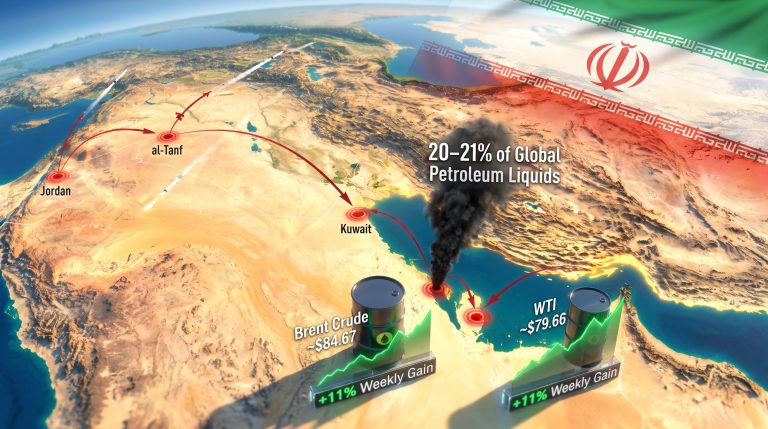
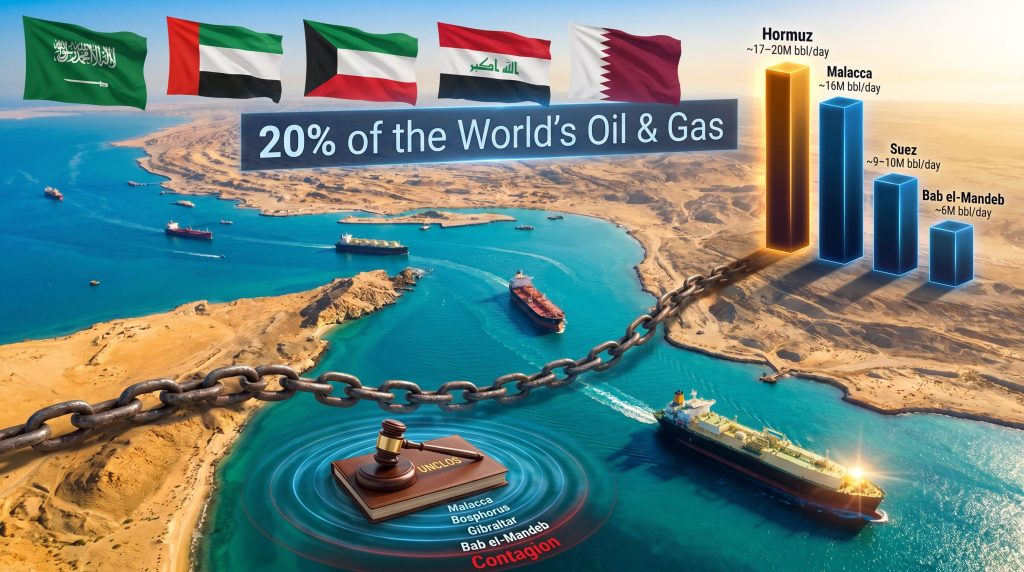
The Strait of Hormuz is not simply a busy shipping lane. It is the sole maritime exit for energy exports from some of the world's largest hydrocarbon producers, including Saudi Arabia, Iraq, Kuwait, the UAE, and Qatar. Approximately 17 to 20 million barrels of oil per day transited this narrow corridor prior to the recent regional conflict escalation, representing roughly 20% of the world's combined oil and natural gas supplies. There is no alternative routing.
Unlike the Suez Canal, where cargo can theoretically be rerouted around the Cape of Good Hope at additional cost, Gulf energy producers have no bypass option for the Strait of Hormuz. Furthermore, the oil price geopolitics surrounding this region make any disruption here uniquely consequential for global markets.
This geographic reality transforms any tolling or fee mechanism from a nuisance into an instrument of economic coercion. The table below illustrates how Hormuz compares to other strategic maritime chokepoints in terms of daily throughput and the nature of risks each faces:
| Chokepoint | Est. Daily Oil Flow | Key Dependent Economies | Primary Risk Factor |
|---|---|---|---|
| Strait of Hormuz | ~17-20 million barrels/day | Asia, Europe, US | Tolling, blockade, conflict |
| Strait of Malacca | ~16 million barrels/day | China, Japan, South Korea | Piracy, congestion |
| Suez Canal | ~9-10 million barrels/day | Europe, North America | Political instability |
| Bab el-Mandeb | ~6 million barrels/day | Europe via Red Sea | Houthi/proxy attacks |
What makes Hormuz uniquely vulnerable is the combination of geographic bottleneck status and the absence of any viable rerouting option. A modest per-vessel fee, compounded across thousands of annual transits, would generate substantial revenue while simultaneously establishing a precedent that no other waterway can insulate itself from.
Iran's "Environmental Fee" Strategy and Why the Legal Framing Matters
Iran's proposed mechanism is not formally labelled a transit toll. Iranian authorities have framed the charges as environmental protection fees levied on vessels passing through the strait. This distinction is legally significant, and deliberately so.
Under the United Nations Convention on the Law of the Sea (UNCLOS), which codifies the right of transit passage through international straits used for international navigation, coastal states cannot suspend, restrict, or impose conditions on that passage, including financial conditions. The environmental fee framing is an attempt to categorise the charge as a service levy rather than a transit tax, thereby sidestepping UNCLOS prohibitions.
This is not a novel legal manoeuvre. Environmental justifications for waterway fees have been tested in international maritime jurisprudence before, and they have consistently failed to override transit passage rights. The US government's position, and that of international maritime law experts more broadly, is that the label attached to the fee carries no legal weight if the practical effect is to condition passage on payment.
Iran also reportedly sought to bring Oman into the fee collection framework. Oman's coastline forms the southern boundary of the Strait of Hormuz, and its participation would have provided geographic legitimacy and enforcement reach to an arrangement that, operating from Iranian territory alone, would be practically difficult to implement against non-compliant vessels.
The strategic logic here is important to understand: by recruiting Oman as a co-administrator of any fee system, Iran would have transformed a unilateral assertion of authority into a bilateral arrangement with the appearance of legitimate governance over the strait's full navigable width.
The Contagion Argument: Rubio's Structural Warning Explained
The reason Rubio warns Hormuz tolls on ships with language as stark as "total chaos" is not rhetorical excess. It reflects a precise understanding of how international legal norms erode. According to reporting on his remarks, the argument runs as follows:
- Acceptance sets precedent. If the international community fails to reject Iran's fee mechanism, the silence is legally interpreted as acquiescence.
- Precedent becomes template. Every nation bordering a strategic strait gains a tested legal and political model for imposing similar arrangements.
- Template spreads. States with maximalist territorial claims and geographic leverage begin implementing their own fee structures, citing the Hormuz precedent.
- The system fractures. International maritime commerce, which depends on predictable, cost-certain routing, becomes subject to unpredictable national levies at multiple chokepoints simultaneously.
The waterways most exposed to this cascade effect include:
- Strait of Malacca — bordered by Malaysia, Singapore, and Indonesia, critical for Asian energy imports from the Middle East
- Bab el-Mandeb — bordered by Yemen and Djibouti, already under active pressure from Houthi maritime aggression
- Turkish Straits (Bosphorus and Dardanelles) — governed by the Montreux Convention but subject to ongoing renegotiation pressure from Ankara
- Strait of Gibraltar — connecting the Atlantic to the Mediterranean, shared between Spain and Morocco
- South China Sea passages — where expansive territorial claims have already generated sustained freedom of navigation disputes
Each of these corridors has at least one adjacent state with a documented history of asserting maximalist territorial interpretations. A successful Hormuz tolling model, consequently, hands all of them a playbook. The geopolitical risks in mining and energy sectors are similarly shaped by these same precedent-setting dynamics.
The US-Iran MoU: What the Interim Framework Covers and What It Does Not
Rubio's GCC tour takes place in the immediate aftermath of the US and Iran signing a Memorandum of Understanding to bring an end to active hostilities across the Middle East theater. His visits to the UAE, Kuwait, and Bahrain represent the first high-level US diplomatic engagement with Gulf partners following the MoU's execution.
The MoU is explicitly an interim framework. It suspends active conflict but does not constitute a final peace settlement, and the Hormuz tolling and authorisation disputes sit entirely outside its current scope. This creates a parallel negotiating track of significant economic and geopolitical consequence.
Rubio was direct about the US negotiating position: the country is seeking a deal, but not one accepted regardless of terms. The standard articulated publicly is that any final agreement must be substantive, verifiable, and actually implemented rather than signed and selectively honoured.
Gulf states have specific requirements for any final settlement framework:
- Binding security guarantees against Iranian proxy activity targeting Gulf infrastructure
- Explicit prohibition on any fee, authorisation requirement, or administrative mechanism that conditions commercial passage through Hormuz
- Robust verification architecture allowing Gulf states and international partners to confirm Iranian compliance in real time
- Non-interference clauses protecting Gulf economic zones from Iranian administrative overreach
The distinction between declaratory and binding assurances matters enormously here. Gulf states have watched previous diplomatic frameworks collapse under the weight of unenforceable commitments. The political pressure on Rubio is to deliver language with teeth, not intent.
Iran's Authorization Requirement: A Separate but Equally Significant Pressure Tool
Running parallel to the tolling debate is a separate Iranian measure that has received less international attention: the requirement that vessels obtain prior Iranian authorisation before transiting the Strait of Hormuz. This mechanism is legally distinct from a fee but operationally produces a similar gatekeeping effect.
The comparison between these two instruments is worth examining directly:
| Mechanism | Iran's Stated Justification | International Legal Position | Practical Shipping Impact |
|---|---|---|---|
| Environmental Protection Fee | Environmental stewardship of the strait | Constitutes an unlawful transit toll under UNCLOS | Adds per-voyage cost; creates compliance uncertainty |
| Authorization Requirement | Sovereign security interests | Violates unconditional transit passage rights | Introduces delays, bureaucratic gatekeeping, potential denial |
Both mechanisms, despite their different legal framings, achieve the same strategic objective: converting the Strait of Hormuz from a universally accessible international waterway into a corridor that Iran administratively controls. Talks involving Iran, Gulf states, and Iraq have been convened to address the future operational framework for Hormuz passage, signalling that the dispute has moved into a multilateral diplomatic phase.
The next major ASX story will hit our subscribers first
Economic Exposure and the Insurance Market as an Early Warning System
For Gulf producers, the financial stakes of any Hormuz restriction extend beyond direct transit costs. Shipping insurance markets are an often-overlooked but highly sensitive indicator of geopolitical risk in strategic waterways. During previous periods of Iranian pressure on the Strait of Hormuz, war risk insurance premiums for transiting vessels have spiked sharply, adding indirect costs to every cargo that accumulates through the supply chain and ultimately reaches end consumers.
Even a modest tolling mechanism, if accepted, would introduce a new category of commercial uncertainty. Shipping companies would need to factor potential fee liability, authorisation delays, and compliance risk into voyage planning and freight pricing. These costs do not disappear at the strait; they compound across every downstream market that depends on Gulf energy supply.
In addition, the resulting supply chain disruption from even short-term Hormuz restrictions would reverberate across industries far beyond energy, affecting manufacturing, logistics, and consumer goods globally. The UAE, which sustained significant infrastructure damage during the recent conflict period, has acute sensitivity to any framework that normalises Iranian administrative authority over adjacent waterways. For Abu Dhabi and Dubai, which have built substantial portions of their economic model around trade and logistics, the principle at stake is not abstract.
Three Scenarios for How the Hormuz Dispute Resolves
The following scenarios are speculative projections based on current diplomatic trajectories and should not be read as predictions or financial guidance.
Scenario A: Partial Acceptance with Delayed Legal Challenge
Iran collects environmental fees; major shipping companies pay under commercial protest while legal challenges proceed through international arbitration over a three-to-five year horizon. Precedent is partially established. Other states begin exploring analogous frameworks at adjacent waterways.
Scenario B: Coordinated Rejection with Naval Enforcement
The US and GCC states coordinate to refuse payment and provide naval escort for vessels that decline to comply with Iranian fee demands. Iran retreats from the fee mechanism but retains the authorisation requirement as a lower-intensity pressure tool.
Scenario C: Multilateral Governance Framework
Iran, Gulf states, and international partners negotiate a new Hormuz operational framework through the International Maritime Organization or UN channels. This would establish clear rules that preserve unconditional transit rights while addressing legitimate Iranian environmental concerns through a monitored, non-fee-based mechanism.
Scenario C represents the most durable resolution but requires the highest degree of diplomatic trust and institutional capacity among parties who have just emerged from active conflict. However, the broader context of global trade tensions makes multilateral cooperation considerably more difficult to achieve at this juncture.
Frequently Asked Questions
Can Iran legally charge fees for ships passing through the Strait of Hormuz?
Under UNCLOS, vessels enjoy an unconditional right of transit passage through international straits used for international navigation. This right cannot be suspended or made contingent on payment. Iran's environmental fee framing is widely regarded by international maritime law experts and the US government as incompatible with this framework regardless of how the charge is labelled.
What does Rubio's contagion warning actually mean in practice?
It is a precedent argument. Once the international community accepts that a coastal state can charge fees for transit through an adjacent international waterway, every nation bordering a strategic strait acquires a tested legal and political model for similar demands. Rubio's warning to Gulf allies makes clear the concern is not limited to Hormuz; it encompasses the entire architecture of maritime freedom of navigation.
What is the current status of US-Iran negotiations?
As of June 25, 2026, the US and Iran have signed a Memorandum of Understanding to end active hostilities. This is an interim framework. Final agreement terms, including the Hormuz passage question, remain under active negotiation. Rubio warns Hormuz tolls on ships remain a central sticking point, and his GCC tour is designed to ensure Gulf allies are consulted and their interests protected before any final settlement is reached.
Why did Rubio visit Bahrain, Kuwait, and the UAE specifically?
These nations represent the front line of both Iranian military pressure and Hormuz passage risk. The UAE sustained significant damage during the recent conflict. Furthermore, the global LNG supply flowing from the Gulf region makes these states critical partners in any framework that seeks to preserve maritime access. Rubio's diplomatic itinerary signals that the US views Gulf partner security and economic interests as non-negotiable elements of any final Iran agreement rather than secondary considerations.
This article is based on publicly available reporting and does not constitute legal, financial, or geopolitical advice. Scenario projections are speculative in nature and reflect one analytical framework among several possible interpretations of an evolving diplomatic situation. Readers seeking ongoing coverage of the US-Iran diplomatic track and Hormuz developments can follow Arab News' Middle East section at arabnews.com.
Want to Stay Ahead of Commodity Market Disruptions Driven by Geopolitical Risk?
Discovery Alert's proprietary Discovery IQ model delivers real-time alerts on significant ASX mineral discoveries, instantly transforming complex market data into actionable insights — ensuring subscribers are positioned ahead of the broader market when geopolitical events like Hormuz disruptions reshape commodity dynamics. Explore historic discoveries and their exceptional market returns, then begin your 14-day free trial to secure a genuine market-leading edge.