
July 17, 2026
When Energy Chokepoints Become Battlegrounds: The Iran-U.S. Conflict and What It Means for Global Markets
Throughout modern history, the world's most consequential military conflicts have shared one defining characteristic: they unfold along the arteries of global commerce. Iran attacks U.S. forces in Syria and Bahrain represent the latest and most alarming chapter in this pattern, as what began as a concentrated bilateral standoff has rapidly evolved into something far more complex. The escalation is now touching multiple sovereign territories and threatening the foundational infrastructure of global energy supply.
Understanding this conflict requires more than tracking troop movements and missile trajectories. It demands a close examination of the economic architecture that makes this region so strategically irreplaceable, and why markets are reacting with such conviction.
When big ASX news breaks, our subscribers know first
How the Conflict Expanded Across Multiple Theatres
The Iran-U.S. military confrontation has broken well beyond its original geographic boundaries. What was once framed as a Persian Gulf-centric standoff has transformed into a multi-theatre engagement spanning Syria, Bahrain, Kuwait, Jordan, and Qatar simultaneously.
Iran's Islamic Revolutionary Guard Corps positioned its latest wave of operations as part of a structured retaliatory framework it has called Operation Truthful Promise 4, framing the campaign as a direct response to sustained U.S. and Israeli military activity. The deliberate expansion of strike targets across multiple sovereign jurisdictions represents a calculated strategic shift from reactive defensive posturing toward active force projection at scale.
The al-Tanf Strike and Its Strategic Significance
Among the most consequential claims to emerge on July 17, 2026, was Iran's assertion that its IRGC conducted a targeted strike on a U.S. command centre in Syria's al-Tanf region, a corridor sitting precisely at the convergence of the Syrian, Iraqi, and Jordanian borders.
Iranian state media reported the destruction of radar infrastructure and helicopter assets used in special operations missions, alongside claims of a significant number of U.S. personnel casualties. These claims have not been confirmed by U.S. military officials.
The timing compounds the complexity. The U.S. military had formally announced the completion of its withdrawal from the al-Tanf base in February 2026, making the nature and scale of any remaining American presence at the site a matter of immediate strategic ambiguity. Meanwhile, Syria's President Ahmed al-Sharaa had stated publicly at a Chatham House event in March 2026 that Damascus intended to remain outside the conflict unless subjected to direct attack, a position now under severe pressure.
The al-Tanf corridor has long been recognised as a critical node in Iran's strategic ambition to establish a continuous land corridor connecting Tehran to Beirut via Iraq and Syria. Military activity in this zone carries implications far beyond any immediate tactical exchange.
Furthermore, the crude oil geopolitical factors at play here extend well beyond the immediate theatre of conflict, with energy infrastructure and transit routes increasingly central to military strategic calculus.
What Happened at Sakhir Airbase in Bahrain
Iran simultaneously claimed strikes targeting U.S. aircraft at the Sakhir Airbase in Bahrain, one of the most significant U.S. air power concentration points in the Gulf region. Bahrain's Defence Force confirmed the activation of air raid sirens and acknowledged the interception of multiple aerial attacks involving both drones and ballistic missiles launched from Iranian territory.
Reports of large plumes of black smoke visible near the headquarters of the U.S. Navy Fifth Fleet in Manama added further gravity to the situation. The Fifth Fleet serves as the command nerve centre for all U.S. naval operations across the Middle East, East Africa, and South Asia, making it one of the highest-value military targets in the entire region.
The breadth of simultaneous targeting across Gulf states is captured in the table below:
| Country | Confirmed Action |
|---|---|
| Bahrain | Air raid sirens activated; multiple drones and missiles intercepted |
| Kuwait | Defence Ministry confirmed active response to Iranian missile and drone attacks |
| Jordan | Confirmed interception of Iranian missiles |
| Qatar | Confirmed interception of Iranian missiles |
| Syria | Official neutrality declared; no confirmed military response |
The operational pattern here is analytically significant. Striking Bahrain, Kuwait, Jordan, and Qatar within a single coordinated wave suggests Iran is executing a multi-vector pressure campaign designed to stress regional air defence networks simultaneously, while signalling to Gulf Cooperation Council member states that hosting U.S. forces carries direct security costs.
Six Consecutive Nights of U.S. Strikes: The Operational Picture
U.S. Central Command confirmed the completion of its sixth consecutive night of strikes against Iranian military infrastructure as of July 17, 2026. The confirmed target categories paint a picture of a sequenced degradation strategy:
- Air defence systems: Dismantling Iran's ability to protect its own airspace and military assets
- Logistics and supply infrastructure: Severing the operational chains that support Iranian military sustainment
- Maritime capabilities: Targeting naval assets and port infrastructure critical to Iran's ability to threaten Gulf shipping lanes
CENTCOM simultaneously confirmed that more than 50,000 U.S. service members are actively deployed and operating across the Middle East theatre, a number that underscores the unprecedented scale of the current American military commitment to the region.
Iranian state media alleged the most recent U.S. strike wave caused eight fatalities and 20 injuries, with reported damage to civilian infrastructure including bridges, a train station, and an airport. These claims could not be independently verified by major Western news organisations at the time of reporting.
Editorial note: Casualty figures and infrastructure damage claims originating from state-controlled media on either side of an active conflict must be treated as contested information pending independent verification from neutral third parties.
The Collapsing Ceasefire and the Hormuz Question
The interim truce negotiated between the U.S. and Iran in the weeks prior to July 2026 had two core objectives: reopening the Strait of Hormuz to international commercial shipping and halting active hostilities between the two nations. As of mid-July 2026, neither objective is being met.
President Trump publicly warned that Iran must return to the negotiating table or face escalated strikes targeting bridges and power plants, representing a significant expansion of threatened target sets into civilian energy and transport infrastructure.
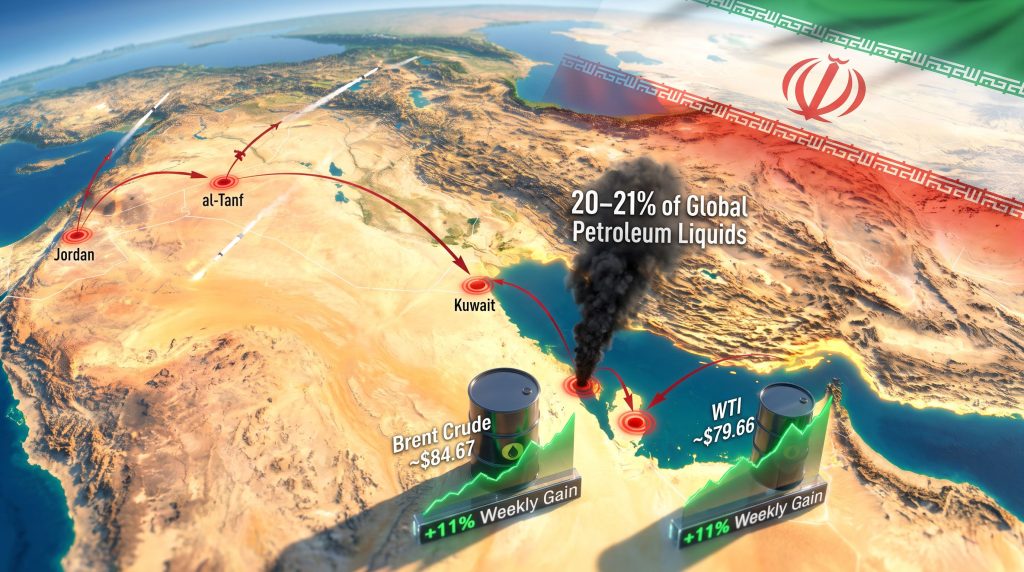
The Strait of Hormuz sits at the centre of this crisis for reasons that extend well beyond regional politics. Approximately 20 to 21% of global petroleum liquids transit the Strait of Hormuz on any given day, making it the world's single most critical oil chokepoint. A sustained closure would trigger immediate and severe supply shocks across Asian, European, and global energy markets with no readily available alternative routing at equivalent scale.
Analysts have specifically warned that a simultaneous closure of both the Strait of Hormuz and the Bab el-Mandeb Strait at the southern mouth of the Red Sea would constitute an economic catastrophe, effectively severing two of the world's most critical maritime energy corridors at the same time. The Bab el-Mandeb has already experienced significant disruption from Houthi activity in recent years, meaning global shipping insurers and energy traders are acutely sensitised to the compounding risk scenario. Indeed, the broader geopolitical risk landscape affecting commodities extends well beyond oil alone, with metals and mining sectors equally exposed to regional instability.
Oil Market Response: What the Price Action Reveals
Energy markets have responded to the escalating conflict with notable conviction. As of July 17, 2026, the price movements across both major crude benchmarks reflect a market repricing risk rather than reacting to actual supply disruptions, which distinguishes this from typical supply-shock dynamics.
| Benchmark | Price (July 17, 2026) | Session Move | Weekly Gain | Notable Context |
|---|---|---|---|---|
| Brent Crude (Sep delivery) | ~$84.67/bbl | +0.5% | +11%+ | Best weekly performance since late April 2026 |
| WTI Crude (Aug delivery) | ~$79.66/bbl | +0.9% | +11%+ | Highest settlement since June 15, 2026 |
The 11%+ weekly gain across both benchmarks in a single week is a striking data point. To contextualise this, oil markets rarely move this aggressively on geopolitical risk alone unless traders genuinely believe supply disruption is entering the realm of probability rather than theoretical tail risk. This degree of oil price volatility is particularly noteworthy given that no confirmed physical supply disruption has yet occurred.
Several structural mechanisms drive oil price sensitivity during Middle East conflicts of this nature:
- Supply disruption risk premium: Futures markets begin pricing Hormuz closure probability well before any physical disruption occurs, often creating a price response that precedes the actual event
- War-risk insurance escalation: Tanker operators face dramatically higher insurance premiums for Gulf routes during active hostilities, elevating effective transportation costs even when ships continue to transit
- OPEC+ production flexibility uncertainty: Markets assess whether Gulf producers can maintain or reroute output capacity if conflict spreads, with uncertainty itself adding a price floor
- Strategic Petroleum Reserve signalling: U.S. government decisions regarding SPR releases can temporarily suppress price spikes, but the market understands SPR capacity is finite
A critical insight often underappreciated in mainstream coverage is the asymmetry of oil price response in conflict scenarios. Markets price in risk premiums rapidly on escalation news but tend to retrace those gains slowly even after de-escalation, creating a structurally higher price floor that persists well beyond the immediate event window. Consequently, the broader commodity market volatility resulting from sustained conflict requires sophisticated hedging strategies that many market participants are only now beginning to implement.
Iran's Escalation Logic: Strategic Objectives Behind Multi-Country Strikes
Understanding why Iran would simultaneously target assets in Syria, Bahrain, Kuwait, Jordan, and Qatar requires moving beyond tactical analysis into strategic motivation. Several objectives become apparent when the operation is examined through a strategic framework:
- Force projection demonstration: Simultaneous multi-country strikes prove that Iran's operational reach extends across the entire GCC geography, not merely to immediate neighbours
- Defensive network saturation: Forcing multiple countries to activate air defence systems simultaneously stresses interoperability and resource allocation across the U.S.-aligned regional security architecture
- GCC political pressure: Every interception by Kuwait, Jordan, or Qatar places pressure on those governments to reassess the domestic political cost of hosting U.S. military forces
- Domestic narrative maintenance: Sustaining visible retaliatory operations is essential for Iran's government to maintain internal credibility as a resistance actor
- Negotiating leverage: Escalation before negotiation is a recognised coercive diplomacy technique, designed to extract better terms from a position of demonstrated capability
The Syria Complication
Syria's formal neutrality declaration introduces a genuinely complex diplomatic problem. If Iranian forces are launching strikes from or routing operations through Syrian territory, Damascus faces a binary choice: enforce its declared neutrality by challenging IRGC operations on its soil, or tacitly permit the activity and effectively abandon its neutral position.
President al-Sharaa's Chatham House commitment is being tested not in the abstract but in real operational terms. However, Syria's capacity to enforce its declared neutrality against a well-resourced IRGC presence remains deeply uncertain given the country's ongoing post-conflict fragility.
The next major ASX story will hit our subscribers first
Scenario Analysis: Pathways Forward
Given the current operational tempo and the absence of confirmed active diplomatic back-channels, three primary scenarios merit consideration. The oil market disruption implications differ substantially across each pathway.
Scenario 1: Negotiated Return to Talks
Iran signals re-engagement through intermediary states such as Oman or Qatar. The U.S. pauses strikes in exchange for renewed Hormuz transit guarantees. Oil markets partially retrace weekly gains as the risk premium deflates.
Scenario 2: Infrastructure Escalation
The U.S. follows through on threats to strike Iranian bridges and power plants. Iran expands retaliatory operations across additional GCC host nations. Brent crude breaches the $90 per barrel threshold as Hormuz transit risk becomes acute rather than probabilistic.
Scenario 3: Proxy Network Activation
Iran activates proxy networks in Iraq, Lebanon, and Yemen to open additional conflict fronts. The bilateral U.S.-Iran exchange transitions into a full regional proxy war. Global shipping insurers suspend Gulf route coverage, triggering a cascading supply chain crisis that extends well beyond energy markets.
The most analytically defensible near-term trajectory, based on current operational tempo and the structural absence of functioning diplomatic communication, is a continuation of the escalation cycle with episodic attempts at negotiated pauses. The window for a durable ceasefire is narrowing materially with each successive night of strikes.
Key Facts: Iran-U.S. Conflict Status as of July 17, 2026
- Iran has expanded its retaliatory campaign to include confirmed strike claims against Syria and Bahrain, marking a significant geographic escalation in the broader Iran attacks U.S. forces in Syria and Bahrain narrative
- The U.S. has completed six consecutive nights of strikes on Iranian military infrastructure across air defence, logistics, and maritime target categories
- More than 50,000 U.S. service members are actively deployed across the Middle East theatre
- The interim Hormuz ceasefire is effectively non-functional, with both sides sustaining active military operations
- Brent and WTI crude both gained more than 11% in a single week, placing them on track for their strongest weekly performance since late April 2026
- The conflict now directly involves at least six countries as active or affected parties, with potential for further geographic expansion
- Diplomatic resolution pathways remain theoretically available but practically narrow, contingent on back-channel engagement through neutral intermediary states such as those monitored by international observers
Disclaimer: This article contains forward-looking analysis, scenario projections, and market commentary based on information available as of July 17, 2026. Geopolitical situations evolve rapidly and the scenarios described represent analytical frameworks, not predictions. Readers should not treat any content herein as financial or investment advice. Independent verification of casualty figures and infrastructure damage claims attributed to state media sources has not been possible at time of publication.
Want to Know Which ASX Mineral Discoveries Are Being Triggered by This Global Instability?
Geopolitical upheaval of this magnitude routinely reshapes commodity markets and accelerates demand for critical minerals — Discovery Alert's proprietary Discovery IQ model scans ASX announcements in real time, delivering instant alerts on significant mineral discoveries across more than 30 commodities so subscribers can act ahead of the broader market. Explore historic discovery returns to understand the scale of opportunity, then begin a 14-day free trial at Discovery Alert to position yourself before the next major find is priced in.