July 15, 2026
When Chinese Capital Meets West African Lithium: Understanding the Forces Behind a $210 Million Deal
The global race to control battery metals has entered a new and decisive phase. Across sub-Saharan Africa, a pattern has solidified over the past decade: Chinese industrial conglomerates identifying development-stage mineral assets, pricing in long-term strategic value that short-term commodity markets fail to capture, and moving decisively while Western capital hesitates. The Huayou Cobalt takeover of Atlantic Lithium is not simply a corporate transaction. It is a case study in how upstream supply chain control is being contested, asset by asset, across the African continent.
For investors, policymakers, and battery material strategists alike, this deal offers a precise lens through which to examine how Chinese firms value African lithium, what motivates a junior developer to accept an all-cash exit, and what the downstream consequences look like for Western manufacturers seeking non-Chinese-controlled raw material supply. Furthermore, understanding the broader context of the global lithium market helps explain why this transaction carries such significant strategic weight.
When big ASX news breaks, our subscribers know first
The $210 Million Deal: Strategic Weight Beyond the Headline Number
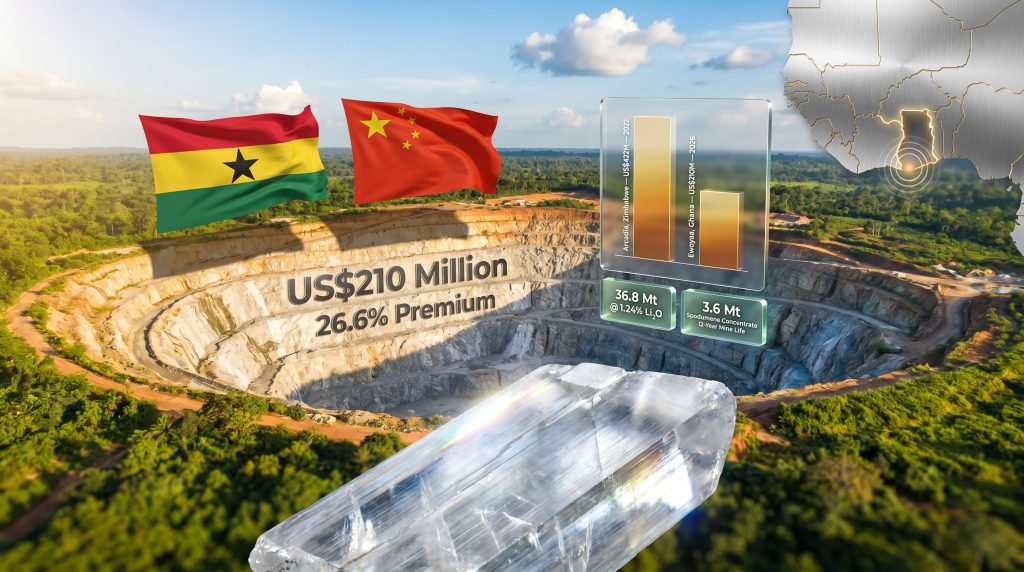
Zhejiang Huayou Cobalt's agreement to acquire all issued shares of Atlantic Lithium at US$0.25486 per share produces a fully diluted equity valuation of approximately US$210 million (A$292 million). The offer represents a 26.6% premium to Atlantic Lithium's last ASX closing price and a 21.8% premium to the company's 30-day volume-weighted average price, according to the deal announcement.
These figures tell only part of the story. The premium Huayou is willing to pay reflects a valuation methodology that extends well beyond current spodumene concentrate spot pricing. Chinese battery material producers have consistently demonstrated a willingness to price African mineral assets against decade-long supply security calculus rather than near-term commodity cycles. In that context, a 26.6% premium on a development-stage asset in a depressed lithium market reveals something important about how Huayou perceives Ewoyaa's long-run strategic worth.
The acquisition structure is an all-cash scheme of arrangement under Part 5.1 of Australia's Corporations Act 2001, providing Atlantic Lithium shareholders with certainty of exit at a defined premium rather than exposure to ongoing price risk, development financing uncertainty, or governance complexity.
Atlantic Lithium's board unanimously recommended the deal, and Assore International Holdings, which controls approximately 26.4% of the company's issued shares, has formally confirmed its intention to vote in favour of the scheme. The combination of board unanimity and anchor shareholder endorsement materially reduces execution risk and establishes a strong probability of completion. The Ewoyaa lithium project and Atlantic Lithium's wider exploration assets in Côte d'Ivoire are, moreover, viewed as key emerging supply sources within West Africa's developing lithium corridor.
Transaction Architecture: How the Scheme Is Structured and What Must Happen Before Completion
Breaking Down the Regulatory Clearance Map
Deals of this nature involving an Australian-listed company, a Chinese acquirer, and assets in West Africa require multi-jurisdictional regulatory clearance before implementation. The following approvals must be obtained:
| Jurisdiction | Regulatory Body |
|---|---|
| Australia | Foreign Investment Review Board (FIRB) |
| China | Chinese regulatory authorities |
| West Africa | ECOWAS Regional Competition Authority |
| Ghana | Securities and Exchange Commission (SEC) |
| Australia (Court) | Federal Court under Corporations Act 2001 |
The FIRB process is particularly significant given Australia's increasingly active screening of foreign acquisitions in critical minerals. China's domestic regulatory approval adds a further layer of process dependency. Ghana's SEC must also formally approve the transaction's implications for the Ewoyaa mining lease, and the ECOWAS Regional Competition Authority introduces a regional dimension that reflects the project's broader relevance to West African economic architecture.
Implementation Timeline
| Milestone | Expected Date |
|---|---|
| First Court Hearing | October 2026 |
| Scheme Meeting / Shareholder Vote | November 2026 |
| Effective Implementation Date | December 2026 |
The timeline is compact but achievable, assuming regulatory reviews proceed without material conditions or objections. The existing anchor shareholder commitment effectively anchors the shareholder vote outcome before the meeting is convened.
Why the Joint Venture Complexity Mattered
Prior to the acquisition announcement, Atlantic Lithium was navigating an existing joint venture arrangement with Elevra Lithium, which introduced governance complexity and divergent capital allocation priorities. These factors can slow project advancement in development-stage mining considerably.
The Huayou Cobalt takeover of Atlantic Lithium effectively resolves this complexity by consolidating ownership under a single, well-capitalised strategic acquirer. Consequently, this removes the friction that multi-party JV structures routinely impose on development timelines. This is one of the less-discussed but commercially meaningful aspects of why the board assessed the deal as a superior path forward compared to independent development.
Ewoyaa: What Makes This Ghana Lithium Asset Worth a Chinese Industrial Giant's Attention
Parliamentary Ratification as a Commercial Turning Point
Ghana's Parliament formally ratified the Ewoyaa Lithium Project mining lease in March 2026, making Ewoyaa the first lithium project in the country's history to receive full parliamentary endorsement. The approval granted Atlantic Lithium exclusive rights to mine and process lithium in Ghana's Central Region for an initial 15-year tenure, transforming what had previously been a development-stage prospect into a legally grounded, bankable asset.
This distinction matters enormously in the context of project financing and acquirer valuation. A mining asset without ratified tenure is valued against development risk. A project with parliamentary approval and defined legal rights is, however, assessed against production potential. The ratification process, which ended years of regulatory delays, effectively upgraded Ewoyaa's risk classification in the eyes of international capital markets and strategic acquirers simultaneously.
Resource Scale and Quality
The deposit's credentials are substantial:
- Total mineral resource: 36.8 million tonnes of ore
- Grade: 1.24% lithium oxide (Li2O)
- Implied contained Li2O: approximately 456,000 tonnes (derived from published resource figures)
- Projected spodumene concentrate output: 3.6 million tonnes
- Projected mine life: 12 years, based on the 2023 Definitive Feasibility Study (DFS)
Hard-rock spodumene deposits like Ewoyaa are generally valued above brine-based lithium sources by technical acquirers for a specific reason: processing consistency. Spodumene concentrate grades are relatively stable from mine to plant, whereas brine operations can vary significantly based on evaporation rates, aquifer recharge, and seasonal conditions. For a vertically integrated battery material producer seeking predictable feedstock supply, that consistency has tangible economic value.
The West African Lithium Corridor: An Emerging Geological Frontier
Ewoyaa project progress over recent years has highlighted its position within a broader West African lithium belt, which is one of the less commonly understood aspects of this transaction. Atlantic Lithium also holds exploration licences in Côte d'Ivoire, and geological continuity across the Ghana-Côte d'Ivoire boundary creates optionality for resource expansion beyond the currently defined deposit.
This is speculative at this stage and not quantified in available resource estimates, but it represents a strategic dimension that a well-resourced acquirer like Huayou is better positioned to investigate and develop than a capital-constrained junior miner.
Speculative note: If geological continuity between Ewoyaa and the Côte d'Ivoire licences can be demonstrated through further drilling, the combined resource base could meaningfully exceed current estimates. This possibility, while unconfirmed, may partially explain the willingness of Huayou to price the deal at a premium relative to prevailing lithium market conditions. Investors should treat resource expansion potential as speculative until supported by independent geological assessment.
Huayou Cobalt's African Lithium Strategy: Two Hard-Rock Assets, One Vertical Integration Play
Comparing Huayou's Two Major African Lithium Acquisitions
| Metric | Arcadia Project (Zimbabwe) | Ewoyaa Project (Ghana) |
|---|---|---|
| Acquisition Price | ~US$422 million | ~US$210 million |
| Year | 2022 | 2026 |
| Deposit Type | Hard-rock spodumene | Hard-rock spodumene |
| Regulatory Status at Acquisition | Operational | Parliamentary approval secured |
| Strategic Purpose | Upstream feedstock security | Upstream feedstock + West Africa positioning |
Huayou's combined investment across these two African lithium assets now totals approximately US$632 million over a four-year period. Both are hard-rock spodumene deposits, suggesting that Huayou's technical processing infrastructure and refining expertise can be applied consistently across both assets, generating operational synergies that a non-integrated buyer could not extract with the same efficiency.
Vertical Integration as the Core Logic
The strategic rationale for the Huayou Cobalt takeover of Atlantic Lithium is rooted in mine-to-cathode vertical integration. Spodumene concentrate extracted at Ewoyaa feeds downstream refining processes that produce lithium hydroxide and lithium carbonate — the precursor compounds used in cathode material production for electric vehicle batteries.
By controlling the full value chain from resource extraction through refining, Huayou insulates its battery material supply from spot market price exposure and removes its dependence on third-party suppliers. Furthermore, the critical minerals demand trajectory underpinning this deal reinforces why Huayou views upstream ownership as strategically non-negotiable. Huayou confirmed this framing in its deal announcement, describing the acquisition as a strengthening of its position in the new energy materials sector, as reported by Mining Technology.
Strategic Scenarios: What This Acquisition Opens and Closes
Scenario 1: Accelerated Development Under Chinese Capital
Atlantic Lithium, as a dual-listed junior developer, faced the structural constraints common to smaller mining companies: limited access to project-scale financing, exposure to commodity price volatility, and difficulty competing for capital against diversified majors. Under Huayou's ownership, these constraints largely disappear.
Chinese state-adjacent capital structures have demonstrated, across multiple African resource projects, the capacity to move development timelines faster than Western capital markets typically permit for junior developers.
Scenario 2: Western Supply Chain Exclusion from Ewoyaa's Output
If Ewoyaa's spodumene concentrate flows exclusively into Huayou's vertically integrated processing network, Western battery manufacturers seeking non-Chinese-controlled lithium supply face structural exclusion from this particular resource. This mirrors patterns already visible in cobalt supply chains emanating from the Democratic Republic of Congo, where Chinese ownership of upstream assets has progressively narrowed the pool of material available to non-Chinese cathode producers.
Scenario 3: Ghana's Downstream Value-Addition Ambitions
Ghana's government has signalled interest in capturing greater downstream processing value from its mineral resources, a position consistent with broader African resource nationalism trends. Chinese ownership of Ewoyaa creates a tension between the capital and development expertise that Huayou brings and Ghana's long-term ambition to retain sovereign influence over where and how its lithium is refined.
Precedents from Zimbabwe's lithium export restrictions and the DRC's cobalt royalty adjustments suggest this tension is not merely theoretical, and Ghana's regulatory posture toward Ewoyaa's output stream warrants close monitoring.
Scenario 4: Accelerated Western Counter-Positioning in West Africa
The Huayou Cobalt takeover of Atlantic Lithium may serve as a catalyst for competing engagement by US, European, Japanese, and Korean battery material companies seeking to secure African lithium supply outside Chinese control. The US Inflation Reduction Act's critical minerals provisions create specific financial incentives for sourcing battery materials from non-Chinese-controlled supply chains.
However, the lithium market downturn has made Western capital more hesitant, which could in turn intensify competition for remaining undeveloped West African lithium assets. The commercial viability signal sent by Huayou's pricing of the Ewoyaa deal may accelerate that competitive dynamic considerably.
The next major ASX story will hit our subscribers first
Why Atlantic Lithium's Board Said Yes: The Seller's Calculus
Understanding why a company accepts an acquisition offer requires examining the alternative it is choosing not to pursue. For Atlantic Lithium, the independent development path carried three compounding challenges:
-
Lithium price environment: Spodumene concentrate and lithium carbonate prices experienced severe compression from their 2022 to 2023 peaks, reducing junior developer equity valuations and making project-scale debt financing more difficult to secure on acceptable terms.
-
Joint venture governance complexity: The existing arrangement with Elevra Lithium created decision-making friction that could delay project advancement when partners hold divergent capital priorities, a structural disadvantage relative to single-owner development models.
-
Capital market competition: Junior lithium developers face a structural disadvantage when competing for institutional capital against diversified majors with operating cash flows and diversified asset portfolios.
Against this backdrop, the board's assessment that a 26.6% premium all-cash offer represented a superior risk-adjusted outcome for shareholders is commercially defensible. The deal provides shareholders with certainty of return without exposure to the speculative timeline and financing risk associated with taking Ewoyaa through construction to production independently.
Disclaimer: This analysis reflects publicly available information and deal-specific disclosures. It does not constitute financial advice. Investors should conduct their own due diligence and consider independent financial advice before making investment decisions related to any securities or transactions discussed in this article.
The Geopolitical Dimension: China, Africa, and the Battery Metals Contest
Layered Control Across the Supply Chain
China's strategic approach to African critical minerals operates across multiple dimensions simultaneously: direct equity acquisition of mining assets, infrastructure-linked financing arrangements, and long-term offtake agreements that lock in supply flows before any ore is extracted. Each mechanism alone provides influence; together they create layered, durable control over mineral supply chains that is difficult for competing interests to displace once established.
The Huayou Cobalt takeover of Atlantic Lithium fits the equity acquisition layer of this strategy, adding a West African hard-rock lithium asset to a continental portfolio that already encompasses cobalt, nickel, and Southern African lithium holdings.
The US-China Critical Minerals Rivalry
US diplomatic engagement with African nations on critical minerals partnerships has intensified as Washington seeks supply chain diversification away from Chinese-controlled sources. The Ewoyaa transaction, by placing one of West Africa's most commercially advanced lithium developments under Chinese ownership, narrows the available pool of development-ready African lithium assets for Western-aligned supply chain strategies.
This may consequently accelerate both US bilateral mineral diplomacy in West Africa and the deployment of development finance institution capital to support alternative project development models in the region.
Ghana's Position and Precedent-Setting Role
Ghana now faces a defining choice in how it structures its relationship with Chinese capital in the Ewoyaa context. The terms on which it negotiates local content requirements, downstream processing ambitions, royalty structures, and community benefit arrangements will serve as a reference case for how other West African nations approach foreign-controlled resource development.
How that negotiation unfolds will, in addition, be at least as consequential as the acquisition transaction itself.
Key Facts at a Glance
| Data Point | Figure |
|---|---|
| Total deal value | US$210 million (A$292 million) |
| Per-share offer price | US$0.25486 |
| Premium to last ASX closing price | 26.6% |
| Premium to 30-day VWAP | 21.8% |
| Assore International Holdings stake | 26.4% |
| Ewoyaa mineral resource | 36.8 million tonnes at 1.24% Li2O |
| Projected spodumene concentrate output | 3.6 million tonnes |
| Mine life (2023 DFS basis) | 12 years |
| Mining tenure granted | 15 years initial period |
| Arcadia Lithium acquisition (2022) | ~US$422 million |
| Combined African lithium investment | ~US$632 million |
| Scheme meeting | November 2026 |
| Target implementation | December 2026 |
Frequently Asked Questions
What is the Huayou Cobalt takeover of Atlantic Lithium?
It is an all-cash acquisition by Zhejiang Huayou Cobalt of all issued shares in Atlantic Lithium through an Australian scheme of arrangement, valuing the company at approximately US$210 million. The deal centres on the Ewoyaa Lithium Project in Ghana and Atlantic Lithium's exploration assets in Côte d'Ivoire.
Why did Atlantic Lithium's board recommend accepting the offer?
The board unanimously assessed the all-cash offer, which carries a 26.6% premium to the last ASX closing price, as a more stable and de-risked path forward than independent development in a volatile lithium price environment, particularly given existing joint venture governance complexity and development financing pressures.
What makes the Ewoyaa project strategically significant?
Ewoyaa is Ghana's first parliamentary-ratified lithium mine, holding a resource of 36.8 million tonnes at 1.24% Li2O and projected to yield 3.6 million tonnes of spodumene concentrate across a 12-year mine life based on the 2023 Definitive Feasibility Study. Its ratified legal tenure and hard-rock deposit characteristics make it one of West Africa's most commercially advanced lithium developments.
When is the deal expected to complete?
The shareholder vote is scheduled for November 2026, with implementation targeted for December 2026, subject to regulatory clearances from FIRB, Chinese authorities, Ghana's SEC, the ECOWAS Regional Competition Authority, and the Australian Federal Court.
What other African lithium assets does Huayou Cobalt own?
Huayou acquired the Arcadia Lithium Project in Zimbabwe for approximately US$422 million in 2022, making Ewoyaa its second major African hard-rock lithium asset and bringing total African lithium investment to approximately US$632 million.
What are the geopolitical implications of the deal?
The transaction advances Chinese upstream control over West African lithium supply, reduces the pool of development-ready African lithium assets available to Western-aligned supply chains, and creates a reference case for how other African nations negotiate with Chinese investors over critical mineral development terms.
For ongoing coverage of African critical minerals investment flows, regulatory developments, and strategic shifts across the resource economy, MyJoyOnline provides regular analysis of Ghana-specific developments at myjoyonline.com.
Want to Stay Ahead of the Next Major Mineral Discovery Before the Broader Market Catches On?
Discovery Alert's proprietary Discovery IQ model delivers real-time alerts on significant ASX mineral discoveries, instantly translating complex mineral data into actionable investment insights for traders and long-term investors alike — begin your 14-day free trial at Discovery Alert today, or explore how historic discoveries have generated substantial market returns on the dedicated discoveries page.