June 13, 2026
Australia's Critical Supply Gap: The Strategic Case for Domestic Hydrogen Fluoride Production
Advanced manufacturing nations face an increasingly complex web of supply chain dependencies that expose critical industrial vulnerabilities. Within this landscape, Australia confronts a particularly striking paradox: as the world's largest aluminium producer, the nation maintains zero domestic capacity for hydrogen fluoride manufacturing, despite this chemical serving as an essential precursor for aluminium processing operations.
This industrial gap extends beyond simple economic inefficiency into strategic vulnerability territory. Australia's five major aluminium smelters rely entirely on imported hydrogen fluoride derivatives, creating exposure to supply disruptions, price volatility, and geopolitical tensions affecting global fluorochemical markets. The development of a hydrogen fluoride pilot plant Australia represents more than manufacturing diversification, it constitutes a fundamental shift toward industrial self-sufficiency in critical chemical processing.
The emergence of waste management solutions offers a transformative pathway for addressing this strategic gap while simultaneously creating circular economy value from existing industrial operations. Rather than following traditional resource extraction models, innovative approaches focus on converting aluminium smelting waste into valuable hydrogen fluoride precursors, fundamentally altering the economics and environmental profile of domestic production.
When big ASX news breaks, our subscribers know first
Technical Innovation in Fluorochemical Production: Beyond Traditional Mining Models
Conventional hydrogen fluoride production relies on fluorspar extraction from fluorite minerals, followed by high-temperature chemical conversion processes. This methodology requires extensive mining operations, international feedstock procurement, and energy-intensive processing systems that create both cost pressures and environmental considerations for manufacturers.
Australian development efforts focus on revolutionary waste-stream utilisation technologies that transform aluminium smelting residues into hydrogen fluoride precursors. Furthermore, this approach addresses multiple strategic objectives simultaneously: reducing industrial waste disposal requirements, creating domestic feedstock sources, and establishing circular economy production models that minimise environmental impact compared to traditional mining-based approaches.
Process Engineering Fundamentals
The technical requirements for hydrogen fluoride production demand specialised equipment systems capable of handling extreme chemical corrosivity and maintaining precise process control. Reaction vessels require fluoropolymer linings specifically designed to withstand hydrofluoric acid exposure over extended operational periods. Temperature control systems must maintain consistent 250-300°C processing conditions while managing heat distribution across large-scale reaction chambers.
Distillation systems represent critical components for achieving the 99.9%+ purity standards required for semiconductor and solar cell applications. These systems incorporate multiple theoretical plates and specialised column materials that resist fluorine-based corrosion while maintaining separation efficiency across extended operational cycles.
Advanced Safety Integration
Process safety management for hydrogen fluoride production requires multiple redundant containment systems integrated into fundamental facility design rather than implemented as secondary additions. Automated shutdown protocols monitor temperature, pressure, and vapour concentration parameters continuously, triggering immediate process isolation when parameters exceed predetermined safety thresholds.
Personnel protection frameworks incorporate specialised emergency response systems including deluge shower stations, eyewash facilities, and medical treatment protocols specifically designed for hydrofluoric acid exposure incidents. Air monitoring systems provide real-time vapour detection with sensitivity levels capable of identifying dangerous concentrations well below exposure thresholds.
Strategic Location Analysis: Tasmania's Industrial Infrastructure Advantages
Tasmania's selection as the optimal location for Australia's hydrogen fluoride pilot plant Australia reflects comprehensive evaluation of industrial infrastructure, regulatory frameworks, and strategic resource access. The Bell Bay industrial precinct provides established aluminum smelting operations that generate fluoride-containing waste streams suitable for conversion to hydrogen fluoride precursors.
Geographic and Logistical Benefits
Proximity to Feedstock Sources:
- Direct access to Bell Bay Aluminium Smelter waste streams
- Elimination of long-distance feedstock transportation requirements
- Established industrial handling and safety protocols for hazardous materials
- Existing workforce experienced in chemical processing operations
Infrastructure Capacity:
- Available industrial land zoned for chemical manufacturing
- Electrical supply systems capable of supporting continuous high-energy operations
- Port facilities enabling efficient import of specialised equipment and export of finished products
- Environmental monitoring systems already operational for industrial oversight
Regulatory and Environmental Framework
Tasmania's environmental assessment processes provide streamlined pathways for industrial development while maintaining rigorous safety and environmental protection standards. The Environmental Effects Report submission demonstrates integration of environmental management into foundational process design, addressing regulatory requirements through engineering solutions rather than compliance retrofitting.
Consequently, the isolated industrial zone configuration minimises population exposure risks while providing access to skilled technical personnel and support services essential for specialised chemical manufacturing operations. This balance between safety isolation and operational efficiency represents optimal site selection for hazardous chemical production facilities.
Market Dynamics and Commercial Opportunity Assessment
Australia's hydrogen fluoride market represents a complex intersection of domestic industrial demand and export opportunity that creates multiple pathways for commercial viability. The global hydrogen fluoride market exceeds US$3 billion annually, with growth drivers including semiconductor manufacturing expansion, renewable energy technology advancement, and continued aluminium production growth across Asia-Pacific markets.
Domestic Demand Structure
| Application Sector | Current Status | Growth Potential |
|---|---|---|
| Aluminium Smelting | 100% import dependent | Stable demand from 5 major smelters |
| Semiconductor Manufacturing | Limited domestic capacity | Expanding local tech production |
| Solar Panel Production | Emerging Australian facilities | Rapid growth projected |
| Battery Chemical Production | Early development stage | Significant long-term potential |
Critical Supply Chain Analysis:
Australia's aluminum smelters currently source aluminum fluoride (derived from hydrogen fluoride) entirely through international suppliers, creating vulnerability to supply disruptions and price volatility. Moreover, the development of Australia's critical minerals reserve initiatives further emphasises the strategic importance of domestic production capabilities providing supply security while potentially offering cost advantages through reduced transportation and import duty expenses.
Export Market Positioning
The Asia-Pacific region represents the world's largest hydrogen fluoride consumption market, driven by semiconductor manufacturing concentrations in Taiwan, South Korea, and mainland China. Australian hydrogen fluoride production projects benefit from geographic proximity to these major consumption centres while offering supply chain diversification away from traditional Chinese and European production sources.
Strategic export opportunities include:
- High-purity hydrogen fluoride for semiconductor applications commanding premium pricing
- Aluminum fluoride for regional metal processing operations
- Fluoropolymer precursors for advanced materials manufacturing
- Battery electrolyte components for lithium-ion production facilities
Environmental and Safety Protocol Implementation
The hydrogen fluoride pilot plant Australia development requires comprehensive environmental management systems addressing air emissions, wastewater treatment, and solid waste handling throughout the production cycle. The extreme toxicity of hydrogen fluoride demands multiple containment barriers and monitoring systems operating continuously during facility operations.
Emission Control Technologies
Vapour Capture Systems:
Advanced scrubbing technologies incorporate multiple stages of chemical neutralisation designed to capture hydrogen fluoride vapours before atmospheric release. These systems achieve greater than 99.5% capture efficiency while maintaining operational flexibility for varying production volumes.
Wastewater Management:
Fluoride removal systems utilise specialised ion exchange and precipitation technologies to reduce wastewater fluoride concentrations to acceptable discharge levels. Treatment systems incorporate multiple processing stages with real-time monitoring to ensure consistent compliance with environmental discharge standards.
Operational Safety Protocols
Emergency Response Framework:
Comprehensive emergency protocols address potential hydrogen fluoride release scenarios through immediate containment, evacuation, and medical response procedures. Emergency response teams receive specialised training in hydrogen fluoride exposure treatment and containment technologies specific to production facility operations.
Continuous Monitoring Systems:
Real-time air quality monitoring throughout the facility provides immediate detection of hydrogen fluoride vapour concentrations with automated alarm systems triggering at predetermined safety thresholds. These systems incorporate multiple detection points and redundant sensor arrays to ensure reliable operation under all conditions.
Economic Analysis and Investment Implications
The economics of domestic hydrogen fluoride production reflect complex interactions between capital requirements, operational costs, market pricing, and strategic value considerations that extend beyond simple financial return calculations. Capital investment requirements for pilot-scale operations indicate substantial equipment and safety system costs reflecting the specialised nature of hydrogen fluoride production.
Capital Investment Structure
Pilot Plant Development:
Initial capital requirements focus on specialised equipment procurement, safety system installation, and regulatory compliance infrastructure. In addition, pilot plant operations serve as technology validation and market development platforms rather than immediate commercial production facilities.
Commercial Scale Expansion:
Scaling from pilot to commercial production involves significant additional investment in production capacity, storage systems, and distribution infrastructure. Commercial facilities require substantially larger containment and safety systems proportional to increased production volumes and handling requirements.
Operational Economics
| Cost Component | Traditional Production | Waste-Stream Innovation |
|---|---|---|
| Feedstock Procurement | Imported fluorspar dependency | Domestic waste utilisation |
| Transportation Costs | International shipping | Local waste collection |
| Environmental Compliance | Standard industrial protocols | Enhanced circular economy benefits |
| Energy Requirements | High-temperature processing | Optimised waste conversion |
Revenue Diversification Opportunities:
Domestic hydrogen fluoride production creates multiple revenue streams through direct product sales, waste processing services, and technology licensing opportunities. Furthermore, aligning with industry evolution trends provides additional value through waste disposal cost reductions for aluminium smelting operations.
The next major ASX story will hit our subscribers first
Technical Implementation Timeline and Milestones
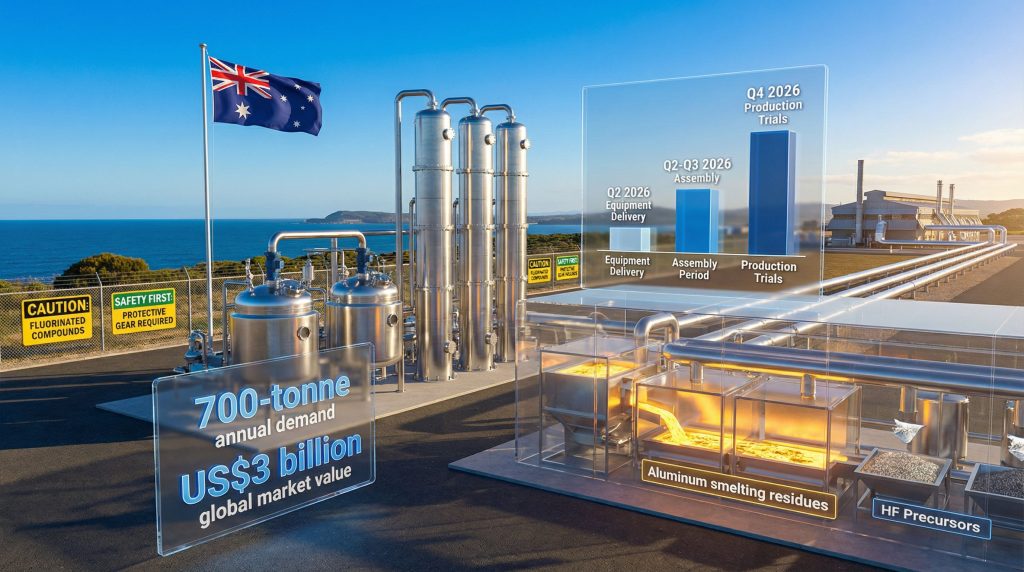
The hydrogen fluoride pilot plant Australia development follows a structured timeline designed to validate technology performance while building operational expertise essential for commercial-scale expansion. Equipment delivery and installation phases require specialised handling and installation procedures reflecting the unique requirements of fluorochemical production systems.
Development Phase Progression
Equipment Integration Period (Q2-Q3 2026):
- Specialised reactor vessel installation and commissioning
- Distillation system integration and performance testing
- Safety system validation and emergency protocol implementation
- Environmental monitoring system activation and baseline establishment
Commissioning and Optimisation (Late Q3 2026):
- Process parameter optimisation for waste-stream feedstock conversion
- Product quality validation against industry purity standards
- Operational safety protocol validation under production conditions
- Environmental compliance verification through monitoring data analysis
Production Trial Phase (Q4 2026):
- Commercial viability assessment through sustained production trials
- Customer qualification programmes for domestic and export markets
- Technology performance validation for commercial scale-up planning
- Economic model refinement based on operational cost data
Critical Success Factors
Technology Validation Metrics:
Success criteria include achieving consistent product purity levels, maintaining safe operational parameters, and demonstrating economic viability compared to imported alternatives. These metrics provide foundation data for commercial-scale investment decisions and market development strategies.
Market Development Milestones:
Commercial success requires establishing customer relationships with domestic aluminium smelters and identifying export market opportunities in Asia-Pacific semiconductor and chemical manufacturing sectors. Market validation through pilot plant production enables scaling strategies and investment planning for expanded production capacity.
Strategic Implications for Australian Industrial Development
The development of domestic hydrogen fluoride production capabilities represents broader strategic implications for Australian industrial self-sufficiency and advanced manufacturing competitiveness. Success in fluorochemical production provides foundation capabilities for expanded chemical manufacturing across related product categories including refrigerants, fluoropolymers, and battery chemicals.
Technology Transfer and Capability Development
Establishing domestic hydrogen fluoride production creates intellectual property protection and technical expertise applicable to broader fluorochemical manufacturing opportunities. This technology base enables potential expansion into high-value specialty chemicals that leverage similar production processes and safety management systems.
Workforce Development Impact:
Specialised chemical manufacturing operations require skilled technical personnel across engineering, operations, safety management, and quality control functions. Developing these capabilities domestically creates human capital resources applicable to expanded advanced manufacturing initiatives across multiple industrial sectors.
Regional Industrial Integration
Successful hydrogen fluoride production enables integration with existing aluminium processing operations while creating opportunities for expanded rare earth element processing capabilities. Hydrogen fluoride serves essential functions in rare earth separation and purification processes, positioning domestic production facilities to support multiple strategic mineral processing operations.
Supply Chain Resilience Enhancement:
However, domestic hydrogen fluoride production reduces Australian industrial dependence on international supply chains while providing strategic stockpiling capabilities for national security considerations. This sustainability transformation becomes increasingly valuable amid global trade tensions and supply chain disruption risks affecting critical industrial chemicals.
The pilot plant development phase serves as a crucial validation point for broader Australian fluorochemical industry development, with implications extending across semiconductor manufacturing, renewable energy technology production, and advanced materials processing sectors essential for economic competitiveness in technology-driven global markets. For instance, ongoing hydrogen fluoride construction projects demonstrate the momentum building behind these strategic industrial capabilities.
This analysis is based on publicly available information and should not be considered investment advice. Readers should conduct independent research and consult qualified professionals before making investment decisions. Industrial chemical production involves significant risks including safety, environmental, and market considerations that require careful evaluation.
Interested in Australia's Industrial Chemical Investment Opportunities?
Discovery Alert's proprietary Discovery IQ model delivers real-time alerts on significant ASX mineral discoveries, including companies developing critical industrial chemical production capabilities that could benefit from Australia's strategic manufacturing initiatives. Begin your 14-day free trial today and gain a market-leading advantage by identifying actionable investment opportunities before they reach mainstream attention.